Author: Tayef

  • 14 Coastal Dining Room Ideas That Bring the Beach Home

    14 Coastal Dining Room Ideas That Bring the Beach Home

    If you’ve been searching for 14 coastal dining room ideas that actually work in a real house (not just a magazine spread), you’re in the right spot. I’ve spent a lot of time digging through what makes this style tick, and I’m going to walk you through every piece of it.

    A coastal dining room uses light woods, breezy textiles, and ocean-inspired colors like blue, white, and sandy tan to create a relaxed, beach-like eating space. It works in beach houses and inland homes alike.

    Stick around, because I’m also going to show you the mistakes people make when they try this look and end up with something that feels more “tacky souvenir shop” than “beachside bungalow.”

    What Even Is Coastal Style, Anyway?

    Coastal style is basically what happens when a beach vacation moves into your house and never leaves. Think light, airy, and a little worn in a good way. It’s not about seashell everything or nautical rope on every surface (please, no). It’s about color, texture, and light doing the heavy lifting. Whites and blues show up a lot, but so do warm sandy tones and driftwood browns. The goal is a room that feels calm, sunny, and a little bit like you just walked in from the boardwalk. Once you get the formula, you can use it anywhere, even if your closest beach is three states away.

    1. Start With a Whitewashed Wood Table
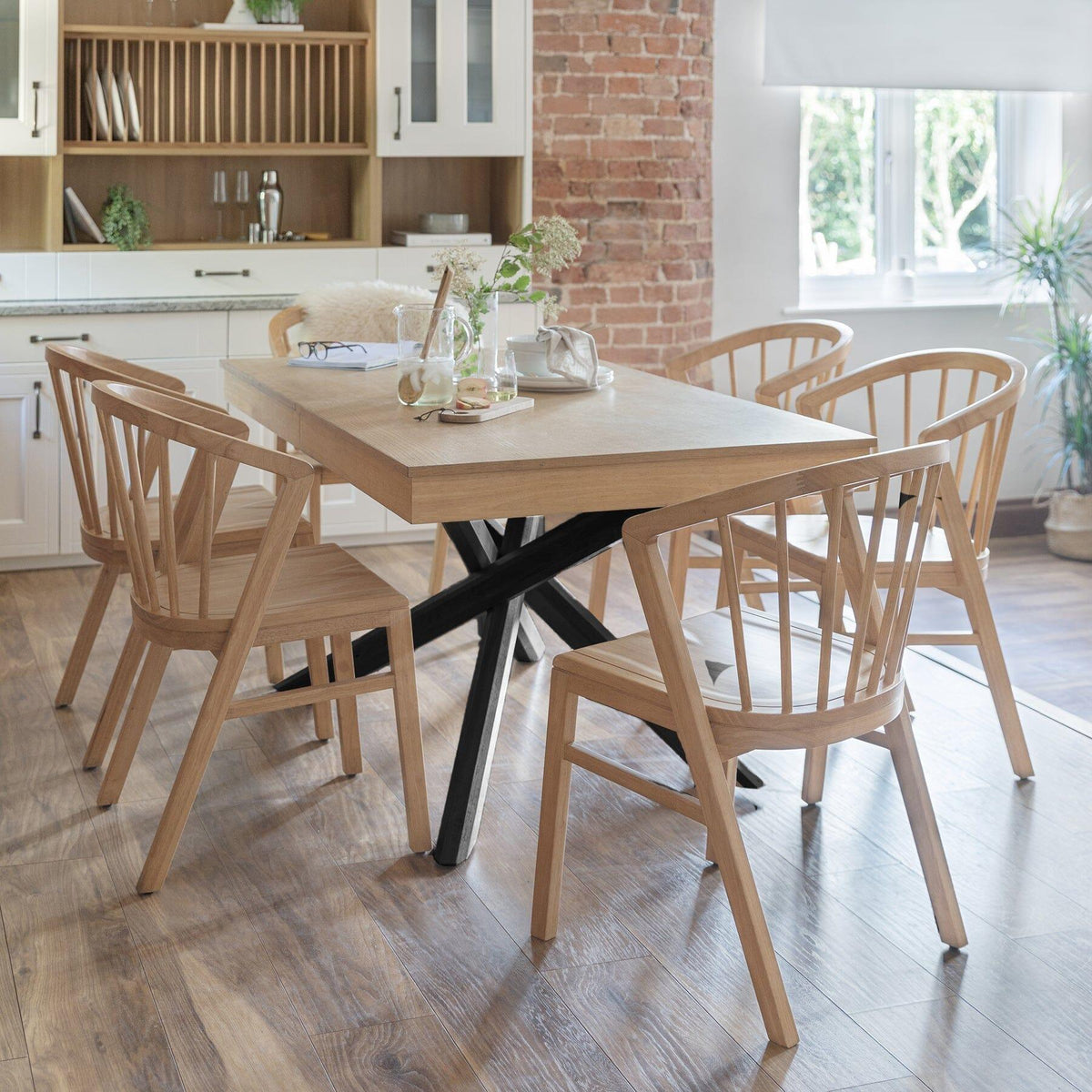
    Amelia Whitewash Dining Set with Light Oak Chairs - Laura James
    Credit: Laura James

    The dining table is the anchor of the whole room, so pick one that already feels coastal on its own. Whitewashed or weathered wood tables do a lot of the visual work without you needing to add much else. The grain shows through a little, giving it that sun-bleached, salt-air look.

    A round or oval table softens the room and keeps traffic flowing better than sharp corners. If you’re working with a smaller space, a drop-leaf table in a whitewashed finish gives you flexibility without sacrificing style.

    Practical tip: look for reclaimed wood or “farmhouse coastal” tables at furniture stores, they’re built for this exact look.

    This idea flexes well too. Add darker wood tones and it leans more traditional. Keep it pale and simple, and it stays firmly coastal. Once your table is set, the chairs around it need to match that same relaxed energy.

    2. Mix Woven and Wood Dining Chairs

    How to Mix and Match Dining Chairs in a Coastal Modern Style
    Credit: Mix And Max

    Matching chair sets can feel stiff in a coastal room. Instead, mix woven rattan or wicker chairs with a couple of wood ones. This creates texture and keeps things from looking too matchy.

    Woven chairs bring in that natural, beachy texture instantly. They’re lightweight, they photograph beautifully, and they pair with almost any table style. Wood chairs on the ends or interspersed add a bit of grounding weight so the room doesn’t feel too flimsy.

    Actionable tip: if buying new chairs feels pricey, swap out just two or four chairs from your current set with rattan ones for an instant refresh.

    In a more modern coastal home, go with clean-lined woven chairs. In a traditional coastal space, choose ones with curved backs and turned legs. Now that your seating has texture, let’s talk about what goes above the table.

    3. Hang a Rope or Woven Pendant Light
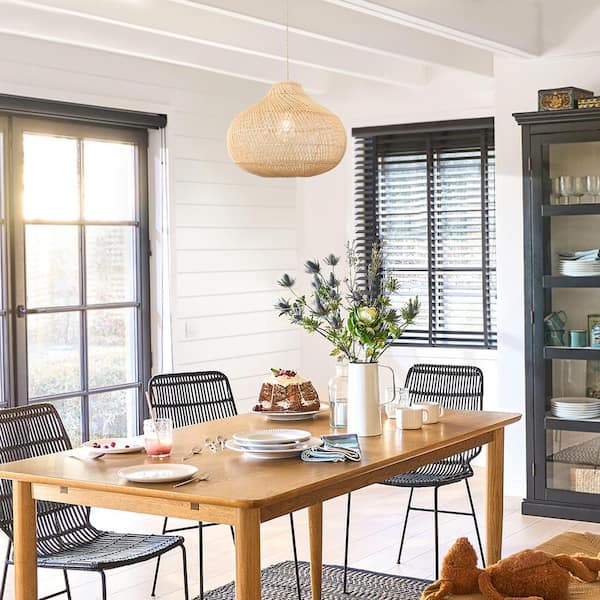
    Black Rattan Ceiling Light 16-Inch Hand-Woven Abaca Rope Pendant Light –  Coastal Black Hanging Lamp For Dining Room, Living Room, Bedroom, E26 Bulb  Compatible
    Credit: Landoo

    Lighting sets the mood, and a woven or rope-wrapped pendant does double duty. It gives off warm, soft light and adds a sculptural, natural element hanging right where everyone will notice it.

    These lights often come in rattan, jute, or seagrass, and they cast a really pretty dappled light across the table and walls. That little detail makes dinners feel cozier without you doing much.

    Practical tip: hang the pendant about 30 to 36 inches above the table so it lights the space without blocking sightlines across the table.

    For a more modern coastal look, pick a fixture with a simple geometric shape. For traditional coastal spaces, a lantern-style woven fixture feels right at home. Once the lighting’s sorted, it’s time to think about what’s under everyone’s feet.

    4. Layer a Jute or Seagrass Rug

    Keeping It Natural | A Guide to Jute, Sisal, and Seagrass Rugs - Molly in  Maine
    Credit: Molly In Miane

    A natural fiber rug adds texture underfoot and ties the whole room together. Jute and seagrass rugs are coastal staples because they mimic the look of sand and dried grasses, without being scratchy or hard to maintain.

    These rugs are also super durable, which matters a lot in a dining room where spills happen. Go with a rug big enough that the front legs of your chairs stay on it even when pulled out.

    Practical tip: measure your table and add at least 24 inches on all sides before buying your rug size, this keeps chairs from sliding off the edge.

    Rug Size Guide by Table Size

    Table SizeRecommended Rug SizeShape
    4-seat round (42″)6′ x 6′ round or squareRound or square
    6-seat rectangle (60-72″)8′ x 10′Rectangle
    8-seat rectangle (84-96″)9′ x 12′Rectangle
    Oval table (70-84″)8′ x 11′ ovalOval

    Jute works better in casual, beachy spaces, while a flatweave seagrass rug fits slightly more polished coastal rooms. With the flooring handled, let’s move up to the walls.

    5. Paint Walls in Soft Ocean Blues or Warm Whites

    Coastal Color Palette and Paint Ideas | Benjamin Moore
    Credit: Benjamin Moore

    Color is where coastal style really shows up. Soft blues, seafoam greens, and warm off-whites make a room feel airy and calm. Skip stark bright white, it can feel cold and clinical instead of beachy.

    I always tell people to test paint samples on the wall for a few days before committing. Light changes throughout the day, and a color that looks perfect at noon might feel totally different at dinner time.

    Practical tip: try a warm white with a hint of beige or gray undertone, like “Swiss Coffee” or “Alabaster,” for walls that feel soft, not sterile.

    Modern coastal rooms often go for a single soft blue accent wall. Traditional coastal spaces tend to paint the whole room in a pale tone with white trim. Once your wall color is set, it’s time to bring in some pattern.

    6. Add Striped or Textured Table Linens

    15 Coastal Decorating Ideas for 2026 That Bring Breezy Texture and Relaxed  Contrast Into Every Room
    Credit: Homedit

    Table linens are an easy, low-cost way to bring in pattern. Blue and white stripes are the classic coastal choice, but subtle textures like linen or waffle weave work just as well if you want something quieter.

    Cloth napkins in a natural fiber like linen or cotton feel more relaxed than stiff, formal fabric. They also wash easily, which matters if you’re using your dining room often.

    Practical tip: rotate a few tablecloth options (striped, solid, textured) so you can change the room’s feel without buying new furniture.

    In a more formal coastal dining room, use crisp white linen with subtle blue trim. In a laid-back beach cottage style, go with a slightly wrinkled linen tablecloth, that relaxed texture is part of the charm. Speaking of texture, let’s look at window treatments next.

    7. Choose Light, Breezy Curtains

    Neutral Curtains in White, Beige & Patterned Styles
    Credit: The Shade Store

    Heavy drapes feel wrong in a coastal room. You want something light that lets sunlight filter through and moves a little with the breeze. Linen or cotton curtains in white, cream, or soft blue work best.

    Sheer curtains alone can work if privacy isn’t a big concern. If you need more coverage, layer a sheer with a slightly heavier linen panel that you can pull closed at night.

    Practical tip: hang curtain rods a few inches above the window frame and extend them wide, this makes windows look bigger and lets in more light.

    Modern coastal spaces often skip curtains entirely and use simple woven blinds instead. Traditional coastal rooms lean toward soft curtain panels with a bit of movement. Now let’s bring some life into the room, literally.

    8. Bring in Coastal Greenery, Not Just Shells

    23 Inspiring Coastal Dining Rooms Ideas for Modern Beach Home Interiors
    Credit: Finding Sea Turtles

    A lot of people go straight for shells and starfish, but greenery actually does more for the coastal vibe. Palms, ferns, and even simple olive branches in a woven basket planter bring life and color without looking like a souvenir shop.

    Fresh or faux, greenery softens hard edges in the room and adds a natural pop of color against all those whites and blues.

    Practical tip: place a mid-size potted plant in a corner and a small one as a centerpiece, this creates layers without overwhelming the table.

    For modern coastal rooms, go with simple, sculptural plants like a single fiddle leaf fig. For traditional coastal spaces, a mix of smaller potted plants across a sideboard works nicely. Let’s talk storage and display furniture next.

    9. Use a Weathered Wood or Whitewashed Sideboard

    Whitewashed Reclaimed Wood Dining Table - Satori Design for Living
    Credit: Satori Designes

    A sideboard gives you storage and display space in one piece. Look for weathered wood, whitewashed finishes, or even a piece with a bit of chippy paint for that lived-in coastal feel.

    This is a great spot to display coastal-inspired items like glass vases, driftwood pieces, or a stack of woven baskets. It also keeps your table clear since extra dishes and linens can live inside.

    Practical tip: choose a sideboard with a few open shelves or glass-front doors so you can style it, not just hide clutter inside.

    Modern coastal homes might choose a sideboard with clean lines and brass hardware. Traditional coastal rooms often go for a more ornate piece with turned legs and a distressed finish. Once your storage is sorted, let’s think about the ceiling.

    10. Add Shiplap or Beadboard Detailing

    21 Coastal Dining Room Ideas That Bring Beachy Vibes and Elegance to Your  Home
    Credit: The Coolist

    Shiplap and beadboard walls or ceilings are a coastal signature. They add texture and a slightly cottage-like feel without requiring much color. White shiplap on a single wall, or even on the ceiling, instantly makes a room feel more beachy.

    You don’t need to redo the whole room. Even a chair-rail-height beadboard treatment on the lower half of the walls makes a difference.

    Practical tip: if a full renovation feels like too much, peel-and-stick shiplap panels give you the look for a fraction of the cost and effort.

    In a modern coastal space, keep shiplap minimal, maybe just behind a sideboard. In a traditional coastal room, full-wall shiplap feels right at home. Let’s talk about what goes on those walls next.

    11. Hang Ocean-Inspired Artwork (Without Being Cheesy)
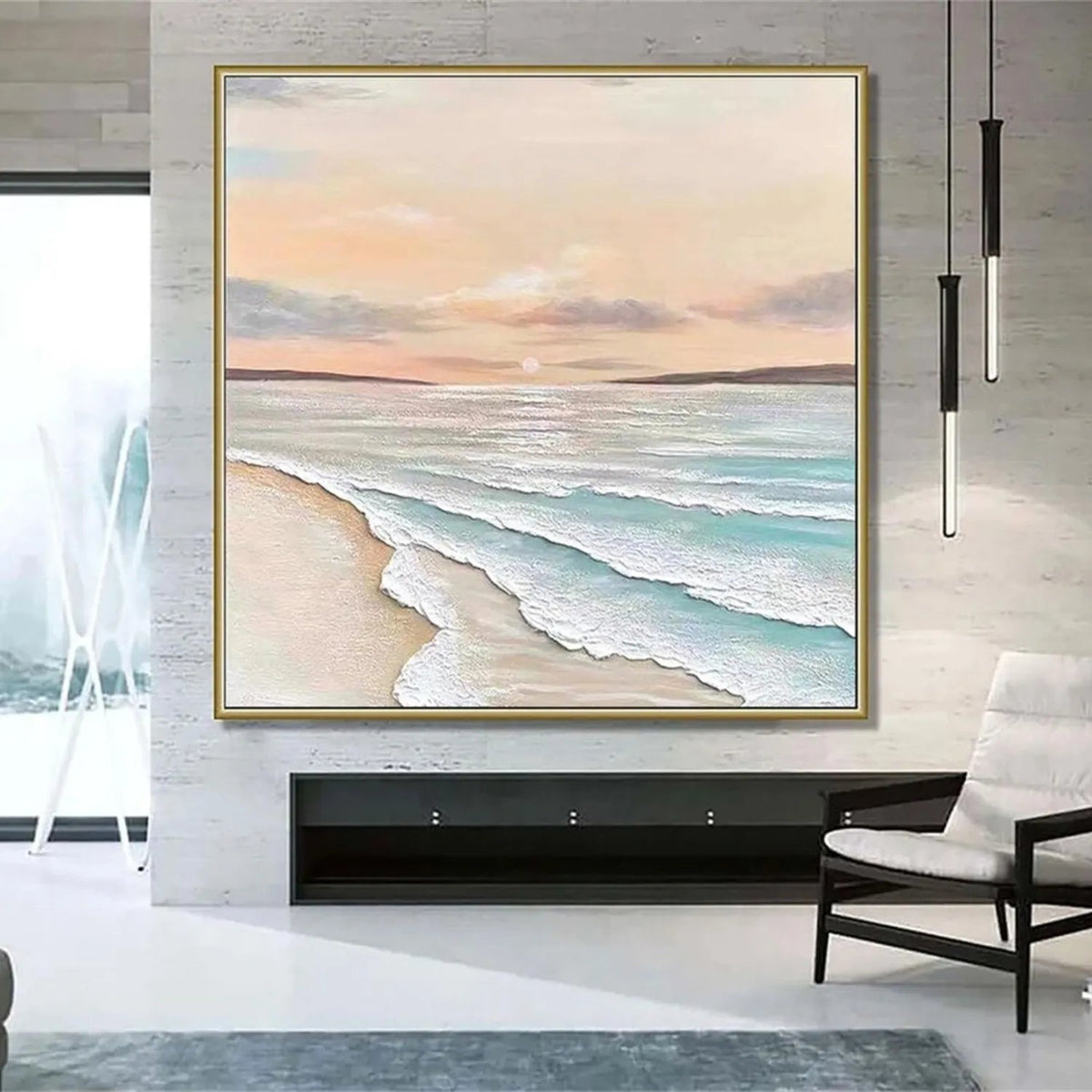
    Ocean Wall Art: Bring Coastal Serenity to Your Home Decor
    Credit: Savy Canvas

    Art is where a lot of coastal rooms go wrong. Skip the literal beach scenes and anchors if you want something that feels more elevated. Instead, look for abstract art in blues and sandy tones, black and white beach photography, or simple line drawings of waves.

    A gallery wall of a few smaller pieces works great above a sideboard. A single large piece works well as a focal point above the table if you don’t have a chandelier drawing the eye.

    Practical tip: frame art in natural wood or white frames instead of dark, heavy frames, this keeps things feeling light.

    Coastal Color Palette Combos

    Palette NameWall ColorAccent ColorsBest For
    Classic NauticalWhiteNavy, red accentsTraditional coastal
    Sandy NeutralWarm beigeCream, driftwood brownModern coastal
    Soft SeafoamPale green-blueWhite, natural woodCottage coastal
    Misty MorningLight gray-blueWhite, soft goldModern coastal

    Modern coastal rooms lean toward abstract art. Traditional coastal spaces sometimes still use a classic ship painting or vintage map. Now let’s talk about the small details that pull it all together.

    12. Style the Table With Natural Centerpieces

    Coastal Dining Room Decor Ideas - Chalking Up Success!
    Credit: Chalking UP

    Skip the fake flowers and go for something with texture, like a bowl of dried starfish, a woven tray with candles, or a low arrangement of eucalyptus. Glass hurricane candle holders also work great, they catch light beautifully and feel a little coastal without trying too hard.

    Keep the centerpiece low so it doesn’t block conversation across the table. Simple is usually better here.

    Practical tip: use a wood or woven tray as a base for your centerpiece items, it keeps everything looking intentional instead of scattered.

    Modern coastal tables often go with just a single sculptural object, like a large piece of driftwood. Traditional coastal tables might layer a few smaller items together. With the table styled, let’s look at flooring options beyond rugs.

    13. Choose Light Wood or Whitewashed Flooring

    Seaside Serenity: Whitewashed Wood Floors in Beach Houses
    Credit: Floor Sanding

    If you’re doing any renovation, flooring matters more than people realize. Light wood floors, whitewashed planks, or even a light-toned tile all support the coastal look better than dark hardwood.

    Dark floors can make a room feel heavier and more formal, which fights against that relaxed coastal feeling. Light floors bounce light around the room and make everything feel more open.

    Practical tip: if replacing floors isn’t in the budget, a large jute or seagrass rug can visually “lighten” darker existing floors.

    Modern coastal homes often use wide-plank whitewashed engineered wood. Traditional coastal spaces might use a distressed pine floor for a more cottage feel. Finally, let’s talk about pulling in metal accents.

    14. Add Warm Metal or Brass Accents

    10 Best Coastal Pendant Lights for a Relaxed UK Home (2026) – The Bonnie  Home
    Credit: The Bonnie Home

    Coastal doesn’t mean everything is white and blue. A few warm metal touches, like brass drawer pulls, gold-rimmed glassware, or a brass light fixture, keep the room from feeling flat or one-note.

    These small metallic details add a little shine and warmth, balancing out all that light, airy color happening everywhere else in the room.

    Practical tip: stick to one metal finish throughout the room (brass, gold, or brushed nickel) so things feel cohesive instead of mismatched.

    Modern coastal rooms often use brushed gold for a subtle glow. Traditional coastal spaces might use aged brass for a more vintage feel. And with that, you’ve got all fourteen pieces of the puzzle.

    Tips for Success

    • Start with your biggest piece (the table) and build color and texture around it, not the other way around.
    • Keep at least one element in every room slightly imperfect or weathered, it makes the space feel more authentic.
    • Don’t be afraid to mix wood tones. Coastal style isn’t about matching everything perfectly.
    • Natural light matters a lot here, so avoid heavy window treatments that block it.
    • Add texture in layers: rug, linens, chairs, and lighting should each bring something different to the table.
    • Shop secondhand for sideboards and chairs, weathered pieces often look more authentic than brand new ones.
    • Keep decorative accessories to a minimum. Coastal style is calm, not cluttered.

    Common Mistakes and How to Avoid Them

    Overdoing the nautical theme
    : Skip the anchors, ropes, and shell-covered everything. Use color and texture instead of literal beach objects.

    Choosing dark, heavy furniture
    : Stick with light woods, whitewashed finishes, or weathered pieces instead of dark mahogany or cherry wood.

    Ignoring lighting
    : A dim, closed-off room kills the coastal vibe fast. Add sheer curtains and warm-toned bulbs to keep the space bright.

    Using stark white everywhere
    : Stark white can feel cold. Warm whites and creams feel much closer to real coastal homes.

    Skipping texture
    : A room with only smooth surfaces feels flat. Add woven baskets, jute rugs, and linen fabrics for depth.

    Matching every piece of furniture
    : A perfectly matched dining set looks stiff. Mix chair styles and materials for a more relaxed, collected-over-time feel.

    Similar Variations

    • Coastal Boho: Adds more pattern, layered rugs, and global textiles to the classic coastal base.
    • Nantucket Coastal: Leans traditional with navy and white stripes, brass accents, and classic New England details.
    • Mediterranean Coastal: Mixes in terracotta tones, wrought iron, and warmer color palettes.
    • Modern Coastal: Strips things down to clean lines, minimal decor, and a more neutral, sandy color scheme.
    • Cottage Coastal: Focuses on shiplap, vintage furniture, and a slightly worn, cozy farmhouse feel.
    • Tropical Coastal: Brings in bold greenery, rattan furniture, and brighter accent colors like coral or turquoise.

    Putting together a coastal dining room really comes down to picking the right mix of light woods, natural textures, and calm colors, then layering in just enough detail to keep it interesting without going overboard. Once you’ve worked through these 14 coastal dining room ideas, you’ll have everything you need to build a space that feels relaxed, bright, and a little like a permanent vacation.
  • 15 Dining Room Decor Ideas That’ll Make You Actually Want to Eat at Home

    15 Dining Room Decor Ideas That’ll Make You Actually Want to Eat at Home

    I’ve spent way too many hours scrolling through home decor pages trying to figure out what makes a dining room feel special, and I think I finally cracked it. This guide pulls together 15 dining room decor ideas that actually work in real homes, not just magazine spreads.

    Dining room decor refers to the furniture, colors, lighting, and accessories used to design a space for eating and gathering. A well-decorated dining room balances function with style, using elements like a table, chairs, lighting, and wall art to create a welcoming atmosphere.

    Stick around, because I’m about to show you exactly how to turn that boring table-and-chairs setup into a room people don’t want to leave.

    What Makes Dining Room Decor Actually Work

    Here’s the thing about dining rooms. They’re kind of the forgotten middle child of home design. Everyone obsesses over the living room and kitchen, but the dining room just sits there with a table and some chairs, looking sad.

    But a good dining room does more than hold furniture. It sets a mood. It makes people want to linger after dinner instead of bolting for the couch. The best dining rooms mix comfort with a little bit of drama, some texture, some color, and lighting that actually flatters people instead of making everyone look tired.

    Let’s get into the ideas.

    1. Hang a Statement Chandelier Above the Table

    15 Dining Room Lighting Fixtures - Stylish Ideas for Dining Room Lights
    Credit: Beautiful House

    Nothing changes a dining room faster than swapping a boring ceiling fixture for a statement chandelier. It becomes the focal point the second someone walks in. I’m talking oversized, sculptural, maybe even a little weird looking.

    Pick something that matches your table’s vibe. A wood table pairs great with a wrought iron or rattan fixture. A glass or marble table looks amazing under something sleek in brass or chrome.

    Practical tip: hang it so the bottom sits about 30 to 34 inches above the table surface. Any higher and it loses impact.

    This idea flexes easily. Modern homes go for geometric metal shapes. Traditional spaces love crystal. Coastal rooms lean into woven rattan pendants.

    Once your lighting is sorted, it’s time to think about what’s happening below it.

    2. Layer a Patterned Rug Under the Table

    A Complete Beginner's Guide To Layering Rugs | Layla Grayce
    Credit: Layla

    A rug grounds the whole room. Literally and visually. It adds warmth, softens hard floors, and gives you a chance to bring in color or pattern without repainting a wall.

    Choose a rug that extends at least 24 inches beyond the table edge on all sides. That way chairs stay on the rug even when pulled out.

    Wool rugs handle spills better than you’d think, and jute rugs add texture if you want something more relaxed. Avoid high pile rugs here. Chair legs get stuck and it drives you nuts.

    Farmhouse dining rooms look great with a vintage-style faded rug. Modern spaces do well with abstract geometric patterns.

    Next up, let’s talk about the table itself, because size and shape matter more than people realize.

    3. Choose a Table Shape That Fits the Room’s Flow

    How to choose the right dining table shape for small spaces » Gal at Home®  Design Studio
    Credit: Gal At Home

    Rectangular tables are the default for a reason, but they’re not always right. Round tables work better in smaller or square rooms because they let people flow around them easier. Oval tables split the difference nicely.

    Here’s a quick sizing guide I use when helping friends pick a table.

    Dining Table Size Guide

    Room SizeBest Table ShapeRecommended SeatingTable Length/Diameter
    Small (under 120 sq ft)Round or Square4 people36-44 inches
    Medium (120-200 sq ft)Rectangular or Oval6 people60-72 inches
    Large (200+ sq ft)Rectangular8-10 people84-108 inches
    Open concept/great roomOval or rectangular with rounded ends6-8 people72-96 inches

    Practical tip: leave at least 36 inches of clearance between the table edge and the nearest wall or furniture so chairs can slide out without bumping anything.

    Modern homes favor sleek rectangular tables with thin legs. Traditional rooms love a solid wood oval with turned legs. Once the table’s picked, chairs bring in the next layer of personality.

    4. Mix Chair Styles Instead of Matching Everything

    How To Style Dining Table With Mismatched Chairs
    Credit: Domino

    I know matching chair sets feel safe. But mixing styles makes a dining room feel collected and intentional instead of showroom stiff. Try pairing upholstered chairs at the head of the table with simpler wood chairs on the sides.

    This works because it adds visual interest without chaos. Keep one thing consistent, like wood tone or fabric color family, so it doesn’t look random.

    Practical tip: if you’re nervous about mixing, start small. Just swap the two end chairs for a different style and leave the sides matching.

    Coastal dining rooms mix woven and painted wood chairs beautifully. Industrial spaces pair metal chairs with a single leather bench.

    Speaking of benches, let’s talk about that option next.

    5. Add a Bench on One Side for Flexibility

    35+ Charming Banquette Seating Ideas - Kitchen Banquette Design
    Credit: Elle Decor

    A bench on one side of the table is a small change that makes a big difference. It’s casual, it saves space, and it lets more people squeeze in when needed. Kids especially love benches, honestly.

    Pick a bench with a similar wood tone to your table, or go bold with a contrasting color for a fun pop. Upholstered benches add comfort and soften the room’s overall look.

    Practical tip: leave about 24 inches of space per person when figuring out how many can sit on a bench comfortably.

    Farmhouse and Scandinavian styles use benches constantly. Modern spaces use sleek upholstered versions instead of the classic wood farmhouse bench.

    Now let’s move to the walls, because empty walls waste so much potential.

    6. Create a Gallery Wall Instead of One Big Piece

    How to Create a Gallery Wall That Feels Collected, Not Cluttered - The  Stripe
    Credit: The Stripe

    One large piece of art is fine, but a gallery wall tells a story. Mix frame sizes, colors, and even mediums like photos, prints, and small mirrors. It gives the eye more to explore during long dinners.

    Keep spacing consistent, about 2 to 3 inches between frames, so it looks organized instead of cluttered.

    Practical tip: lay the frames out on the floor first before hanging anything. Trust me, this saves so many nail holes.

    Traditional homes lean into ornate gold frames. Modern spaces prefer black frames and abstract art. Minimalist rooms might do just three large-scale prints instead of a dozen small ones.

    If a gallery wall feels like too much commitment, wallpaper might be your answer instead.

    7. Use Bold Wallpaper on One Accent Wall

    Peccole House | If you're ready to elevate your dining space, consider a bold  accent wall. Floral wallpaper adds a fresh touch and creates a vibrant... |  Instagram
    Credit: peccolehouse

    Wallpaper had a rough reputation for a while, but it’s back and better than ever. A bold pattern on just one wall gives the room personality without overwhelming the whole space.

    Botanical prints, geometric shapes, and textured grasscloth are all popular right now. Pick a pattern that complements your table and chairs instead of fighting with them.

    Practical tip: apply wallpaper on the wall behind a china cabinet or sideboard so furniture doesn’t hide the pattern.

    Coastal homes love grasscloth texture. Modern spaces go for geometric black and white patterns. Traditional rooms often choose floral or damask designs.

    Once your walls have some personality, it’s worth thinking about what sits against them.

    8. Bring In a Sideboard or Buffet for Storage and Style

    How To Decorate A Buffet, Sideboard, Console, or Other Flat Surface -  StoneGable
    Credit: StoneGable

    A sideboard does double duty. It stores linens, dishware, and serving pieces while giving you a surface to style with decor. Think a stack of books, a vase, maybe a small lamp.

    Choose a piece with some contrast to your table. If your table is light wood, a dark wood or black sideboard adds nice depth.

    Practical tip: leave the top third of the sideboard open for styling and use the rest for actual storage.

    Modern homes favor sleek sideboards with hidden hardware. Traditional rooms use ornate wood pieces with carved details.

    Dining Room Color Palette Ideas

    Palette NameWall ColorAccent ColorBest For
    Warm NeutralGreige or warm whiteTerracotta or rustFarmhouse, traditional
    Moody ModernDeep charcoal or navyBrass or goldModern, industrial
    Coastal FreshSoft white or pale blueSandy beige, sea greenCoastal, cottage
    Earthy NaturalSage green or oliveWarm wood tonesBoho, organic modern

    With your color palette locked in, let’s talk about how texture plays into the mood of the room.

    9. Layer in Texture With Textiles and Table Linens

    From Ordinary to Extraordinary: How (and Why) to Set a Stunning, Elegant Dining  Table – ODAYA Home I Premium Artisan Crafted Linens
    Credit: Odyaya

    A tablecloth or runner instantly makes a table feel finished. Linen is a great choice because it wrinkles in a way that looks intentional rather than sloppy.

    Cloth napkins beat paper ones every time for everyday elegance. Keep a small stack in a drawer so they’re easy to grab.

    Practical tip: layer a runner over a solid tablecloth for texture without overdoing the pattern.

    Boho spaces love mixed textures like jute placemats with linen napkins. Traditional dining rooms often use classic white linens with embroidered edges.

    Now, let’s not forget one of the easiest wins in any room: greenery.

    10. Add Greenery With a Centerpiece or Potted Plant

    11 Houseplant-Happy Dining Rooms
    Credit: Houzz

    Nothing freshens up a dining room like a plant. A tall potted plant in the corner adds life to the room even when the table is bare. A low centerpiece of greenery or flowers works for everyday use since it doesn’t block sightlines across the table.

    Practical tip: keep centerpieces under 14 inches tall so people can actually see each other while eating.

    Modern homes prefer sculptural plants like a fiddle leaf fig. Farmhouse rooms love simple eucalyptus or wildflowers in a mason jar.

    Once your table has some life to it, mirrors are the next trick worth trying.

    11. Hang a Mirror to Bounce Light Around the Room

    How High Should A Dining Room Mirror Be Hung?
    Credit: Edwards

    Dining rooms often don’t get much natural light, especially if they’re tucked away from windows. A large mirror on one wall bounces light around and makes the whole space feel bigger.

    Position it across from a window if possible, or reflect the chandelier for extra sparkle at night.

    Practical tip: choose a mirror that’s about two-thirds the width of the furniture piece below it, like a sideboard or console table.

    Traditional homes love ornate framed mirrors. Modern rooms go for simple round or arched mirrors with thin metal frames.

    Speaking of sparkle, let’s chat about how candles change the whole vibe of a meal.

    12. Set the Mood With Candles and Dimmable Lighting

    The Best Dining Room Lighting Ideas, According to Designers
    Credit: Veranda

    Candles are cheap and instantly cozy. Group a few different heights down the center of the table for a relaxed dinner party look. Dimmable overhead lighting also matters a ton. Bright light is great for homework, but nobody wants that during dinner.

    Practical tip: install a dimmer switch on your chandelier or overhead light. It’s a small update that changes the whole feel of the room.

    Coastal spaces love simple white pillar candles. Moody modern rooms use black taper candles in brass holders for drama.

    Let’s move to something a little unexpected next: ceiling decor.

    13. Don’t Ignore the Ceiling

    Don't forget to look up 👆 The ceiling has a quiet influence on the way a  room feels. Choosing an alternative to white, with a deeper tonal shade or  a contrasting bold
    Credit: farrowandball

    Most people forget the ceiling exists. But a painted ceiling, some wood beams, or even wallpaper up top adds a surprising wow factor. It’s called the “fifth wall” for a reason.

    A deep color on the ceiling makes a small dining room feel cozy and intentional instead of cramped. Practical tip: if painting the whole ceiling feels risky, try it in a small dining nook first to test the effect.

    Traditional homes use exposed wood beams. Modern spaces might paint the ceiling a deep matte black for drama.

    Now, let’s talk about something practical but often overlooked: window treatments.

    14. Frame Windows With Simple, Functional Drapes

    65 Window Treatment Ideas to Accentuate Your Space in 2026
    Credit: Elle Decor

    Curtains soften a dining room and add another layer of color or texture. Go for something simple, like linen drapes in a neutral tone, unless you’re going for a bold statement look.

    Practical tip: hang curtain rods a few inches above the window frame to make ceilings feel taller.

    Coastal rooms love light, breezy linen. Traditional spaces often use heavier fabrics with tiebacks for a formal look.

    Last but not least, let’s finish with something that ties the whole room together.

    15. Display a Curated Collection on Open Shelving

    How to Decorate a Kitchen Shelf: Tips for Open Shelving - Robyn's French  Nest
    Credit: Robyn

    Open shelving near the dining area gives you a spot to show off dishware, glassware, or a small book collection. It feels more personal than a closed cabinet and keeps the room from feeling too formal.

    Practical tip: group items in odd numbers, like three or five, for a more natural, balanced look.

    Modern homes use floating shelves with minimal styling. Farmhouse rooms stack mismatched vintage plates for a collected-over-time feel.

    Tips for Success

    • Start with lighting first, since it affects how every other color and material looks in the room.
    • Measure your space before buying furniture. A table that looks small online can overwhelm a room in person.
    • Stick to two or three main colors so the room doesn’t feel busy.
    • Add at least one soft texture, like a rug or curtains, to balance out hard surfaces like wood and glass.
    • Rotate your centerpiece with the seasons to keep the room feeling fresh without a full redesign.
    • Test paint colors on the wall at different times of day before committing.
    • Don’t forget the smell. A simple candle or diffuser makes the whole room feel more inviting.

    Common Mistakes and How to Avoid Them

    Hanging the chandelier too high
    : Keep it 30 to 34 inches above the table so it still feels connected to the space below.

    Buying a rug that’s too small
    : Make sure the rug extends past the chair legs even when they’re pulled out, usually 24 inches beyond the table edge.

    Matching every piece of furniture exactly
    : Mix wood tones and chair styles slightly for a more collected, lived-in look.

    Overcrowding the table with a tall centerpiece
    : Keep centerpieces low, under 14 inches, so people can see each other while eating.

    Ignoring natural light sources
    : Position mirrors and light fixtures to work with existing windows instead of against them.

    Forgetting a dimmer switch
    : Add one during any lighting update. It instantly makes evening meals feel more relaxed.

    Similar Variations

    • Farmhouse Dining Decor – Focuses on reclaimed wood, neutral colors, and cozy textiles for a relaxed, homey feel.
    • Modern Minimalist Dining Decor – Clean lines, monochrome colors, and very little clutter on surfaces.
    • Coastal Dining Decor – Light woods, blues and whites, and natural textures like rattan and linen.
    • Industrial Dining Decor – Metal fixtures, exposed brick or concrete, and darker color palettes.
    • Boho Dining Decor – Mixed patterns, warm earthy colors, and lots of plants and woven textures.
    • Traditional Dining Decor – Rich wood furniture, classic patterns, and formal lighting like crystal chandeliers.

    Putting even a handful of these ideas together can completely change how your dining room feels, from a room people rush through to one they actually want to sit in. Start small if you need to, maybe just a rug or a lighting swap, and build from there as your budget and confidence grow. That’s really the heart of good 15 Dining Room Decor: mixing function, comfort, and a little bit of personality until the space feels like yours.

  • 11 Minimalist Living Room Ideas That Actually Work in Real Homes

    11 Minimalist Living Room Ideas That Actually Work in Real Homes

    If you’re hunting for 11 Minimalist Living Room ideas that go beyond “just add a beige couch,” you’re in the right spot. I’ve spent way too many hours studying what actually makes a minimalist space feel calm instead of cold, and I’m going to walk you through everything I’ve learned.

    A minimalist living room is a space designed around function, clean lines, and a limited color palette, using fewer furniture pieces and decorative items to reduce visual clutter and promote a sense of calm.

    But here’s the thing nobody tells you: minimalist doesn’t mean boring, and I’m about to prove it.

    What Minimalist Living Room Design Really Means

    Ever walked into a room and just felt your shoulders drop? That’s what good minimalist design does. It’s not about owning nothing. It’s about owning things on purpose. Every chair, every lamp, every throw pillow earns its spot.

    I think people get scared off because they picture sterile white boxes with one weird chair in the corner. That’s not it. Real minimalist living rooms still feel warm. They still have personality. They just don’t shout. The furniture is simple. The colors are quiet. The clutter is gone. That’s really the whole formula, and once you get it, you can’t unsee cluttered rooms the same way again.

    1. Stick to a Neutral Color Foundation

    Design Mistakes: How Not to Design a Boring Neutral Room - Emily Henderson
    Credit: emily henderson

    Neutral colors are the backbone of any minimalist room. Think warm whites, soft greige, oatmeal, and soft charcoal. These shades don’t compete with each other, so your eye can actually rest.

    Pick one dominant neutral for your walls and let your furniture sit a shade or two lighter or darker. This creates depth without adding visual noise. Skip bold accent walls here. They fight against the calm you’re trying to build.

    Practical tip: paint a large sample swatch and check it in morning and evening light before committing. Neutrals shift a lot depending on lighting.

    This approach works in modern lofts, but it also softens beautifully in traditional homes with wood trim.

    Once your base color is locked in, the next step is figuring out what furniture actually deserves a place on top of it.

    2. Choose Furniture With Clean, Simple Lines

    25 Modern Living Rooms with Cool, Clean Lines
    Credit: Interior Design Ideas

    Minimalist furniture avoids fussy details. No carved wood edges, no tufted buttons, no ornate legs. Think straight silhouettes, low profiles, and simple upholstery.

    A sofa with clean lines instantly makes a room feel more open, even if the sofa itself is large. Pair it with a simple coffee table, maybe wood or a slab of stone, and skip anything with heavy ornamentation.
    Actionable tip: measure your walking paths first. Minimalist rooms need at least 30 inches of clear space to walk through comfortably.

    In coastal homes, this looks like light wood and linen. In modern homes, it’s often leather or bouclé in neutral tones.

    Once your big furniture pieces are settled, you’ll want to think about what goes on the floor beneath them.

    3. Layer in One Textured Rug, Not Three

    Layering Rugs: Tips & Ideas
    Credit: TSAR Carpets

    A lot of people think minimalist means bare floors. Not true. One well chosen rug adds warmth and softens the room. The trick is picking just one, not layering multiple patterns.

    Go for texture instead of pattern. A chunky wool rug or a subtle jute weave adds interest without adding visual clutter. Stick to a color close to your wall tone for the most cohesive look.

    Quick tip: your rug should be big enough that at least the front legs of your sofa sit on it. Anything smaller looks like an afterthought.

    Traditional homes can use a wool rug with subtle texture, while coastal spaces do well with natural jute or sisal.

    Now that your floor has some warmth, let’s talk about what’s happening at eye level: your walls.

    4. Keep Wall Decor to One or Two Pieces

    Create Symmetry in Your Space with 2-Piece Wall Art
    Credit: Elephant Stock

    Minimalist walls aren’t empty walls. They’re intentional walls. Pick one large art piece or a small curated grouping, and give it room to breathe.

    Skip gallery walls packed with 15 frames. Instead, choose one statement piece, maybe a large abstract print or a simple framed photograph, and let negative space do the rest of the work.

    Practical tip: hang art so the center sits at eye level, roughly 57 to 60 inches from the floor.

    Modern homes might go for abstract art, while traditional spaces often use a single framed landscape or mirror.

    Speaking of mirrors, let’s talk about how lighting and reflection play into this whole minimalist equation.
    5. Use Layered Lighting Instead of One Overhead Fixture

    Layer Your Lighting Design for Drama and Functionality - The New York Times
    Credit: The New York times

    A single ceiling light creates flat, harsh shadows. Minimalist rooms actually rely on layered lighting: a floor lamp, a table lamp, and maybe hidden LED strips behind a shelf.

    This layering creates depth and mood without needing extra decor. Choose fixtures with simple shapes, like a slim arc lamp or a paper shade pendant.

    Actionable tip: aim for three light sources per room minimum, placed at different heights.

    Coastal homes love woven pendant shades, while modern rooms often use matte black or brushed brass fixtures.

    Lighting sets the mood, but storage keeps that mood from getting ruined by clutter piling up again.

    6. Choose Furniture That Doubles as Hidden Storage

    19 Hidden Living Room Storage Ideas | Extra Space Storage
    Credit: Extra Space storage

    Clutter is the enemy of minimalism, so smart storage matters more here than in any other style. A coffee table with a drawer, an ottoman that opens up, or a media console with closed cabinets all keep stuff out of sight.

    This isn’t about hiding everything. It’s about giving your daily clutter, remotes, chargers, mail, a designated home so it’s not sitting out on every surface.

    Practical tip: do a “surface sweep” once a week. If it’s been sitting out longer than a day, it needs a home.

    Traditional homes often use a wood chest as a coffee table, while modern spaces lean toward sleek lacquered storage cubes.

    Furniture Storage Comparison

    Furniture PieceStorage CapacityBest ForAverage Price Range
    Storage ottomanSmall (blankets, remotes)Living room seating + hiding clutter$80 to $250
    Media console with doorsMedium (electronics, games)Hiding cables and devices$200 to $600
    Lift-top coffee tableSmall to medium (books, chargers)Multi-use surface + storage$150 to $400
    Built-in shelving with cabinetsLarge (everything)Whole-room organization$500 to $2,000+

    Now that clutter has a home, let’s zoom out and talk about how much furniture you actually need in the room.

    7. Edit Your Furniture Down to the Essentials

    Create your dream home now @Planner5d
    Credit: Planner 5d

    Minimalist rooms don’t need six seating options. They need enough seating for your household, plus a little extra for guests, and nothing more.

    A sofa, one or two accent chairs, and a coffee table is usually plenty for most living rooms. Resist the urge to add a second side table “just in case” or an extra ottoman that isn’t doing anything.

    Practical tip: live with your current furniture arrangement for two weeks before adding anything new. You’ll quickly notice what you actually use.

    In modern homes, this often means a low sectional and one chair. In traditional homes, it might mean a sofa and two matching wingbacks.

    Once your furniture count is right, the next move is thinking about how everything is arranged in the actual space.

    8. Arrange Furniture Around Natural Movement Paths

    48 Living Room Layout Ideas That Make the Most of Your Space
    Credit: Homes And Gardens

    Minimalist layouts prioritize flow. That means furniture should be arranged so people can walk through the room without squeezing past a table or bumping a lamp.

    Float your sofa away from the wall if the room allows it, and angle chairs to create a conversation area rather than lining everything up against the perimeter.

    Actionable tip: sketch your room on paper first, using a scale like one square equals one foot, before moving heavy furniture around.

    Coastal homes often float furniture toward a view, while modern lofts create defined “zones” within open floor plans.

    With your layout dialed in, let’s talk about something people forget entirely: window treatments.

    9. Choose Simple, Unfussy Window Treatments

    8 Scandi-Inspired Window Treatments to Make Your Home Bright | Livingetc
    Credit; Living etc

    Heavy drapes with tassels and multiple layers don’t belong in a minimalist room. Stick to simple linen curtains or clean roller shades in a color that matches your walls.

    The goal is treatments that filter light softly without becoming a focal point themselves. If you want pattern, keep it extremely subtle, like a slight texture rather than a bold print.

    Practical tip: hang curtain rods a few inches above the window frame to make ceilings feel taller.

    Traditional homes might use simple wood blinds, while modern spaces often skip curtains entirely for clean sightlines.

    Now let’s bring some life into the room with something a lot of minimalist spaces get wrong: plants.

    10. Add One or Two Statement Plants, Not a Jungle

    Indoor Floor Plants: 10 Easy Care Large Houseplants
    Credit: Joy Us Garden

    Plants add life and soften hard lines, but minimalist rooms use them sparingly. One large plant, like a fiddle leaf fig or an olive tree, does more for the room than five small scattered pots.

    Choose a simple planter in a neutral material like terracotta, concrete, or matte ceramic. Skip patterned pots that pull focus.

    Actionable tip: place your statement plant in a corner that otherwise feels empty. It fills space without adding clutter.

    Coastal homes often go for palms, while modern spaces lean toward sculptural plants like snake plants or rubber trees.

    Plants bring texture, but so does another often overlooked element: your throw pillows and blankets.

    11. Limit Soft Textiles to a Consistent Color Story

    Colorful room ideas: 15 vibrant spaces with bold decor | Homes and Gardens
    Credit: Home And Gardens

    Throw pillows and blankets can make or break a minimalist room. The mistake most people make is grabbing pillows in five different patterns because they liked each one individually.

    Instead, pick two or three textiles max, all within your neutral palette, varying only in texture. A linen pillow next to a chunky knit blanket adds coziness without adding visual chaos.

    Practical tip: stick to solid colors or extremely subtle texture, and avoid mixing more than two textures per seating area.

    Traditional rooms might use a wool throw, while coastal rooms often go for a lightweight cotton waffle blanket.

    With textiles sorted, there’s one more idea that ties the whole room together: negative space itself.

    12. Treat Empty Space as a Design Element

    Minimalist Home Design: Why Less Truly Is More
    Credit: About wall art

    This is the idea most people skip, and it’s honestly the most important one. Minimalist rooms need empty space on purpose. Not every wall needs art. Not every corner needs a plant or a chair.

    Empty space gives your eye somewhere to rest. It’s what separates a calm room from a cluttered one, even if both rooms technically have the “same” amount of stuff.

    Practical tip: after decorating, remove one item from the room. See if it still works. Repeat until it feels balanced, not empty.

    This principle works across every style, modern, traditional, coastal, because breathing room is universal.

    With these twelve ideas in place, you’ve got a real framework for building a minimalist living room that actually feels good to live in, not just look at.

    Tips for Success

    • Start with decluttering before you buy anything new. You might already own what you need.
    • Test paint colors on the actual wall, not just a small chip, before committing.
    • Buy fewer, better pieces instead of filling space with cheap filler furniture.
    • Keep a “one in, one out” rule for decor to prevent slow clutter creep.
    • Photograph your room monthly. Photos reveal clutter your eyes get used to.
    • Choose furniture with legs rather than pieces that sit flush on the floor. It creates visual lightness.
    • Don’t rush the process. Minimalist rooms often come together over months, not a single weekend.

    Common Mistakes and How to Avoid Them

    Overbuying matching decor sets
    : Skip the pre-packaged decor bundles. Choose individual pieces that actually fit your space and needs.

    Confusing “empty” with “minimalist”
    : A minimalist room still needs warmth through texture, lighting, and a plant or two. Bare isn’t the goal.

    Ignoring storage needs
    : Hidden storage prevents clutter from creeping back. Always plan for it before you finish decorating.

    Choosing trendy colors over timeless neutrals
    : Trendy paint colors date fast. Stick to neutrals for walls and add trend colors through small, swappable items.

    Mixing too many textures or patterns
    : Limit yourself to two or three textures per seating area to keep things visually calm.

    Forgetting about lighting layers
    : One overhead light isn’t enough. Add lamps at different heights for a softer, more intentional feel.

    Similar Variations

    • Japandi Living Room – blends Japanese minimalism with Scandinavian warmth using natural wood and soft neutrals.
    • Scandinavian Minimalist – focuses on light woods, cozy textiles, and bright, airy color palettes.
    • Modern Farmhouse Minimalist – mixes clean lines with rustic wood accents and simple black or white details.
    • Coastal Minimalist – uses light, breezy fabrics and natural textures like rattan and linen in a beachy palette.
    • Industrial Minimalist – incorporates raw materials like exposed brick and metal with a stripped-down furniture approach.
    • Warm Minimalist – adds richer wood tones and warmer neutrals to avoid the “cold” minimalist stereotype.

    Building a calm, functional space doesn’t happen overnight, and that’s okay. Start small, edit often, and trust that less really can feel like more once you see it come together in your own home. Whatever style you lean toward, these 11 Minimalist Living Room ideas give you a solid, practical starting point for a space that finally feels like it fits you.

  • 12 Tropical Bathroom Ideas That Turn Your Daily Routine Into a Mini Vacation

    12 Tropical Bathroom Ideas That Turn Your Daily Routine Into a Mini Vacation

    If you’ve ever stepped out of a boring gray bathroom and wished you were somewhere with palm trees and ocean breeze instead, this list of 12 tropical bathroom ideas is exactly what you need. I’ve dug through design trends, tested what actually works in small spaces, and put together the most complete guide you’ll find on this topic.

    A tropical bathroom is a bathroom designed with lush plants, warm natural materials, and bright colors inspired by island and rainforest settings. It typically includes elements like bamboo, rattan, botanical prints, and greenery to create a relaxing, vacation-like atmosphere at home.

    Stick around, because I’m about to walk you through everything from color palettes to budget-friendly swaps that make your bathroom feel like a resort spa.

    What Makes a Bathroom Feel “Tropical” Anyway?

    Here’s the thing about tropical style. It’s not just slapping a palm leaf print on your shower curtain and calling it done. Real tropical bathrooms mix texture, greenery, and warm colors in a way that feels alive.

    Think about the last time you stayed at a beach resort. The bathroom probably had wood accents, big leafy plants, and maybe a woven basket or two. That’s the vibe we’re going for. It’s earthy but bright. Natural but not messy. I like to think of it as bringing the outside in, minus the bugs and humidity problems (we’ll fix that too, don’t worry).

    1. Add a Statement Wall of Botanical Wallpaper

    KBBFocus - Design focus: The enduring popularity of bold botanical bathroom walls
    Credit: kbb Focus

    Wallpaper is the fastest way to transform a plain bathroom into a jungle escape. Look for large-scale leaf prints like monstera, banana leaf, or palm fronds in deep green tones. This works best on one accent wall, usually behind the vanity or tub, so it doesn’t overwhelm a small room.

    Pick a peel-and-stick option if you’re renting or just want an easy weekend project. Vinyl-coated wallpaper also holds up better against bathroom humidity than regular paper.

    This idea flexes well across styles too. Pair it with brass fixtures for a glam tropical look, or matte black hardware for something more modern and moody.

    Once your walls set the scene, it’s time to think about what sits in front of them.

    2. Bring in Real Live Plants That Love Humidity

    The 10 Plants That Will Be Happiest in Your Bathroom
    Credit: MyDomaine

    Nothing fakes a tropical mood better than actual plants, and lucky for you, bathrooms are basically greenhouse conditions already. The steam from your shower creates the humidity that jungle plants crave.

    Good options include:

    • Pothos (nearly impossible to kill)
    • Ferns like Boston fern or bird’s nest fern
    • Snake plants for low-light corners
    • Orchids for a splash of color near the sink

    Tip: Place plants near a window if you have one, since most still need some indirect light even if they love moisture.

    Traditional homes can use plants in ceramic pots, while modern spaces might prefer sleek concrete planters. Either way, plants breathe life into the room in a way no print or paint color can match.

    Now let’s talk about what goes underfoot.

    3. Choose Natural Stone or Pebble Tile Flooring

    Pebble Tile Shower Floor 101: How To Use Them?
    Credit: The Stone Pile

    Stone tile instantly grounds a tropical bathroom in something earthy and real. Pebble tiles, in particular, mimic a riverbed or beach floor and feel amazing under bare feet, especially in the shower.

    Slate and travertine also work well because they come in warm, sandy tones that match a tropical palette. Just make sure whatever stone you pick is sealed properly, since natural stone can stain or absorb moisture if left untreated.

    Quick tip: Use pebble tile as a shower floor accent even if you keep the rest of the bathroom in standard tile. It’s cheaper than doing the whole room and still gives you that spa-like texture.

    Coastal bathrooms lean toward lighter sand-colored stone, while jungle-inspired spaces often go darker and richer. Either direction keeps that natural, grounded feeling going as we move into color choices next.

    Tropical Bathroom Color Palette Combinations

    Palette NameWall ColorAccent ColorMetal FinishBest For
    Rainforest GreenDeep emeraldWarm terracottaBrushed goldBold, jungle-style bathrooms
    Beach BungalowSoft whiteSandy beigeBrushed nickelCoastal, airy spaces
    Sunset TropicsCoral pinkMustard yellowMatte blackSmall powder rooms
    Island NeutralWarm creamOlive greenAntique brassTraditional or transitional homes

    4. Install a Bamboo or Rattan Vanity

    15 Tropical Bathroom Ideas to Bring Island Vibes Indoors
    Credit: Lord Decor

    Swap out a plain white vanity for one made from bamboo, rattan, or woven wicker material. It brings warmth and texture that a smooth laminate cabinet just can’t match. These materials also naturally resist warping better than you’d expect, especially if they’re treated for bathroom use.

    If a full vanity replacement feels like too much, start smaller. Add rattan drawer pulls or swap your mirror frame for a woven rattan one.

    Practical tip: Look for “outdoor-rated” wicker or rattan furniture pieces, since they’re built to handle moisture better than indoor-only versions.

    This idea shines in coastal and boho homes, but even minimalist bathrooms can use one rattan piece as a soft contrast against clean lines and white tile.

    Speaking of contrast, let’s talk about bringing in color through textiles next.

    5. Layer in Bright Textiles Like Towels and Bath Mats

    Tropical Bathroom Style: How to Create a Relaxing Look
    Credit: Room Skecther

    Textiles are the easiest, cheapest way to test tropical style before committing to anything permanent. Bright coral towels, a woven jute bath mat, or a shower curtain with a bold leaf print can shift the whole mood of the room in one afternoon.

    Stick to natural fiber materials when you can, like cotton, linen, or jute. They tend to feel more authentic to the tropical look than synthetic blends.

    Quick tip: Rotate your textiles seasonally. Bright coral and yellow in summer, deeper greens and browns in winter, keeps the space feeling fresh without spending much money.

    This works in literally any home style because textiles are temporary and low-commitment. Even a strict modern minimalist bathroom can handle one bold tropical towel without breaking its vibe.

    Now that we’ve covered soft touches, let’s get into lighting, which changes everything about how a room feels.

    6. Use Warm, Golden Lighting Instead of Cool White

    Warm white bathroom: Your Perfect Glow 2025!
    Credit: Prime Construction

    Lighting makes or breaks the tropical mood. Cool white LED lights make everything feel clinical, like a hospital bathroom. Warm golden light, on the other hand, mimics sunset and makes green plants and wood tones pop.

    Look for bulbs labeled around 2700K to 3000K for that warm glow. Pendant lights with woven rattan shades add texture too, doubling as both function and decor.

    Practical tip: Add a dimmer switch if your budget allows. Bright light for getting ready, dim golden light for a relaxing bath, best of both worlds.

    Traditional tropical bathrooms often use brass sconces, while modern ones might go with a single statement pendant. Either way, warm light ties every other element in the room together.

    With the mood lighting handled, let’s talk about a feature that really sells the vacation feeling.

    7. Create a Spa Corner With a Soaking Tub

    Tropical bathroom design with a spa-like feel
    Credit: Bedroom And Bathrooms

    If you have the space, a deep soaking tub instantly turns your bathroom into a retreat. Freestanding tubs in a neutral tone like white or matte black work as a blank canvas, letting your plants and tile do the talking.

    Surround the tub with a small side table for candles, a plant, or a rolled towel. Even a simple wood stool works if you don’t want to spend on a dedicated tub caddy.

    Tip: If a full soaking tub isn’t in the budget or the space, a wooden bath tray across a regular tub gives a similar spa feel for way less money.

    This idea adapts beautifully. Coastal homes might choose a slipper tub with clawfoot legs, while modern tropical spaces often go with sleek, boxy stone tubs.

    Once your soaking area is set, it’s worth thinking about what’s covering your windows too.

    8. Add Woven Wood Blinds or Bamboo Shades

    Woven Shades, Woven Bamboo Shades, Woven Wood Shades
    Credit: Bliend Online

    Skip heavy curtains and go for woven wood blinds or bamboo roller shades instead. They let in filtered natural light while adding that same earthy texture we’ve been building throughout the room.

    These work especially well paired with botanical wallpaper or a green color palette, since the natural wood tone bridges the two.

    Practical tip: Choose a moisture-resistant faux wood blind if your bathroom doesn’t have great ventilation, since real wood can warp over time in high humidity.

    This detail fits almost every style. Farmhouse bathrooms often already use similar wood blinds, so this is one tropical element that doubles as a crossover piece for other design themes.

    Now let’s talk storage, because a tropical bathroom still needs to be functional.

    9. Use Woven Baskets for Storage Instead of Plastic Bins

    Natural Fiber Baskets vs Plastic Bins for Home Storage
    Credit: Oaken Ark

    Ditch the plastic organizer bins and swap in woven seagrass or rattan baskets for towels, toiletries, and extra toilet paper. They add texture without adding visual clutter, since the natural material blends into the overall theme instead of standing out as “storage.”

    Label baskets with small wood or leather tags if you want to stay organized without losing the aesthetic.

    Quick tip: Stack two or three different-sized baskets in a corner for both function and a decorative sculptural look.

    This works in nearly every home style, but it especially shines in coastal, boho, and traditional bathrooms where natural texture is already part of the design language.

    With storage sorted, let’s look at a smaller detail that makes a bigger impact than you’d think.

    10. Choose Fixtures in Brushed Gold or Aged Brass

    9 Ways To Rock Brass Tub And Shower Fixtures In Your Bathroom
    Credit: Hunker

    Metal finishes matter more than people realize. Brushed gold and aged brass fixtures add warmth that matches the golden lighting and wood tones we’ve already talked about. Chrome and stainless steel, by comparison, can feel too cold and sterile for this style.

    Start small if you’re on a budget. Swap just your cabinet hardware and faucet before committing to a full fixture overhaul.

    Practical tip: Aged brass actually looks better over time as it develops a natural patina, so you don’t need to stress about keeping it perfectly polished.

    Modern tropical bathrooms often lean toward matte black instead, which still pairs nicely with greenery but gives a bolder, more dramatic contrast.

    Let’s move from fixtures to something you can see every single day, your mirror.

    11. Frame Your Mirror With Natural Materials

    15 Tropical Bathroom Ideas to Bring Island Vibes Indoors
    Credit: Lord Decor

    A plain builder-grade mirror does nothing for a tropical bathroom. Swap it for one framed in rattan, bamboo, or even a rope-wrapped frame. Round or oval shapes tend to feel more organic and island-inspired than sharp rectangles.

    If replacing the whole mirror isn’t in the cards, look for a rattan frame kit that fits directly over your existing mirror.

    Quick tip: Hang a small woven mirror above your soap dispenser area too, if you have double sinks, for a matching pair effect.

    Coastal homes often go with a driftwood-style frame, while more modern spaces might choose a simple bamboo circle frame for a cleaner look.

    Budget Guide for a Tropical Bathroom Refresh

    Budget TierWhat You Can DoEstimated Cost
    Low ($50-150)New towels, plants, woven baskets, mirror frame swap$50-150
    Mid ($150-500)Peel-and-stick wallpaper, light fixture swap, hardware update$150-500
    High ($500-2000)Rattan vanity, new tile flooring section, pendant lighting$500-2000
    Full Remodel ($2000+)Soaking tub, full tile job, custom cabinetry$2000-8000+

    12. Finish With a Scented Element Like a Diffuser or Candle

    How to Incorporate Scented Candles and Diffusers Into Your Home Decor –  Purpink Gifts Ltd
    Credit: Purpink Gifts Lmd

    The last piece of the puzzle is smell. A tropical bathroom that looks perfect but smells like nothing feels incomplete. Add a reed diffuser or candle in scents like coconut, eucalyptus, or fresh citrus to round out the sensory experience.

    Set it on a small wood tray near your tub or sink so it doesn’t get knocked into the water.

    Practical tip: Avoid heavy floral scents, since they can clash with the fresh, green feeling you’ve built with plants and natural materials. Stick to fresh or slightly fruity scents instead.

    This final touch works in any bathroom style, since scent is invisible but still shapes how a room feels the moment you walk in.

    Tips for Success

    • Start with one wall or one feature instead of redoing everything at once, so you don’t get overwhelmed or overspend
    • Test paint and wallpaper samples under both natural light and your bathroom’s actual lighting before committing
    • Mix at least two different plant textures, like a tall fern and a trailing pothos, for visual variety
    • Keep grout lines and metal finishes consistent throughout the room so it doesn’t feel disjointed
    • Save your splurge budget for one statement piece, like a soaking tub or bold wallpaper, rather than spreading money thin
    • Check plant care labels before buying, since not every “jungle” plant actually tolerates low bathroom light
    • Clean woven and wood materials with a slightly damp cloth only, since soaking them can cause warping

    Common Mistakes and How to Avoid Them

    Using fake plastic plants everywhere
    : Real plants breathe life into the space in a way fake ones can’t fully replicate. If you must use faux plants, mix in at least one or two real ones for authenticity.

    Choosing cool-toned lighting
    : Swap to warm bulbs around 2700K to 3000K so the room feels sunny and relaxed instead of clinical.

    Skipping ventilation upgrades
    : Tropical materials like rattan and wood need airflow to avoid mold and warping. Add or upgrade your exhaust fan before adding natural materials.

    Overdoing the pattern mix
    : Too many bold prints at once can feel chaotic instead of relaxing. Pick one statement pattern, like wallpaper or a shower curtain, and keep everything else more neutral.

    Forgetting about humidity-proofing furniture
    : Regular indoor furniture can warp or mold in bathroom conditions. Always check for moisture-resistant or outdoor-rated materials first.

    Ignoring scale in small bathrooms
    : Giant leaf prints or oversized plants can overwhelm a tiny space. Choose smaller-scale patterns and compact plants like pothos or snake plants for tighter rooms.

    Similar Variations

    • Coastal Boho Bathroom – Lighter, sandier tones mixed with driftwood and rope accents for a beachy, relaxed feel
    • Modern Jungle Bathroom – Bold green walls and sleek black fixtures for a dramatic, plant-forward look
    • Balinese Spa Bathroom – Stone textures, teak wood, and minimal decor focused on a calm, meditative atmosphere
    • Hawaiian Retro Bathroom – Bright florals and vintage-inspired tile patterns with a fun, nostalgic vibe
    • Desert Oasis Bathroom – Swaps tropical greenery for cacti and warm terracotta tones, still nature-inspired but drier in feel

    Building a tropical bathroom really comes down to layering texture, warmth, and a little bit of greenery until the room feels alive instead of flat. You don’t need to redo everything at once. Start with a plant, swap your lighting, add a woven basket, and watch the space slowly transform. Whether you go all in on a jungle wallpaper wall or just add a few rattan touches here and there, these 12 tropical bathroom ideas give you a real starting point for turning your daily routine into a little island escape.

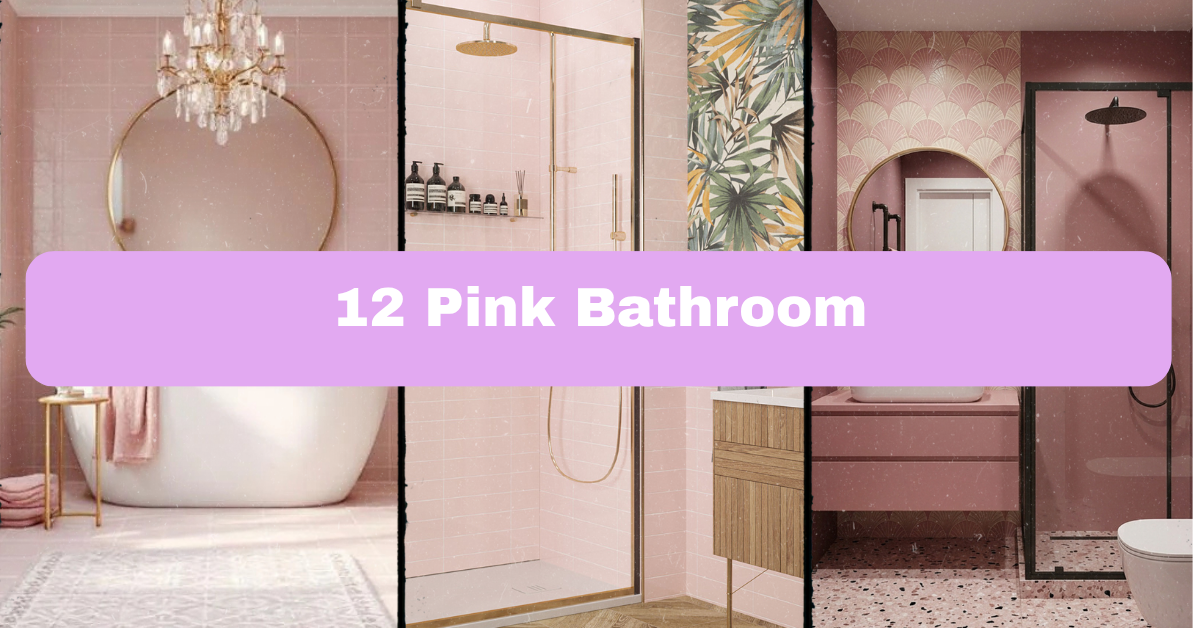
  • 12 Pink Bathroom Ideas That Actually Look Good (Not Dated or Tacky)

    12 Pink Bathroom Ideas That Actually Look Good (Not Dated or Tacky)

    If you’ve been searching for 10 Pink Bathroom ideas that don’t look like a cotton candy explosion, I’ve got you covered. I’ve spent way too many hours scrolling design boards and talking to friends who’ve done this renovation, so I know exactly which pink bathroom looks work and which ones flop hard.

    Pink bathrooms combine varying shades of pink (from soft blush to bold magenta) with complementary fixtures, tile, and decor to create a warm, stylish space. The right pink bathroom balances color intensity with neutral elements so the room feels current, not costume-like.

    Stick around and I’ll walk you through twelve specific ways to pull this off, plus the mistakes that make pink bathrooms look cheap instead of chic.

    Why Pink Bathrooms Are Having a Moment

    Pink got a bad reputation for a while. People thought of it as a little girl’s room color or something stuck in the 1950s. That’s changing fast.

    Designers are now using pink as a sophisticated neutral. Think dusty rose, terracotta pink, and muted mauve instead of bubblegum. These shades feel warm and calming, kind of like a hug for your bathroom walls.

    The best part? Pink pairs with almost everything. Gold, black, green, cream, you name it. That flexibility is why pink bathrooms keep showing up in high-end renovations, not just kids’ spaces anymore.

    1. Go Bold with a Deep Rose Accent Wall

    51 Pink Bathrooms With Tips, Photos And Accessories To Help You Decorate Yours
    Credit: interiordesignideas

    A single wall painted in deep rose or berry pink gives you drama without overwhelming the whole room. Keep the other three walls white or off-white so your eyes have a place to rest. This works especially well on the wall behind your vanity mirror or tub.

    Practical tip: use a matte or eggshell finish in bathrooms since high gloss tends to show every water spot and steam mark.

    This idea shifts easily between styles. In a modern bathroom, pair the rose wall with black matte fixtures. In a traditional space, add white wainscoting below the paint line.

    Once your accent wall is set, you’ll want flooring that doesn’t compete with it, and that’s where the next idea comes in.

    2. Pair Pink Walls with Warm Wood Flooring

    14 pink bathrooms that radiate positivity and calm | Real Homes
    Credit: Real Homes

    Cold tile can make pink walls feel harsh. Warm wood tones, whether real hardwood (sealed properly) or wood-look tile, soften the whole room. The wood grain adds texture that pink alone can’t give you.

    Go with honey oak or walnut tones rather than gray-washed wood. Gray undertones fight with pink and can make the space feel muddy instead of cozy.

    Actionable tip: if you’re not ready to commit to wood-look flooring, a jute or wood-toned bath mat gets you 80% of the effect for a fraction of the cost.

    Coastal homes can lighten this up with whitewashed wood. Farmhouse bathrooms lean into darker, rustic planks.

    Now that your base is warm and grounded, let’s talk about where a lot of pink bathrooms live: the tile.

    3. Use Blush Pink Subway Tile for a Soft Foundation

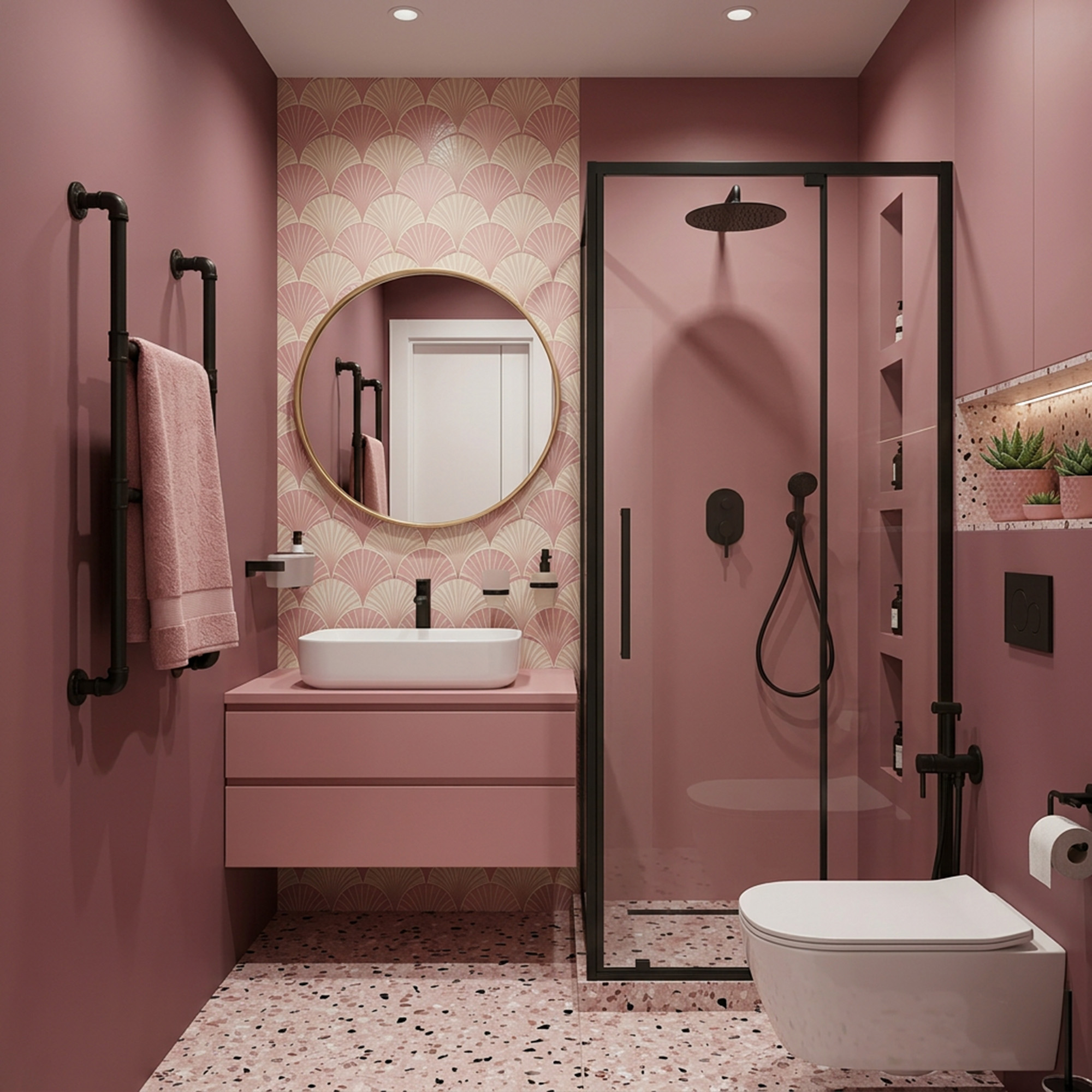
    Modern Bathroom Design with Pink Terrazzo Floors and Fan Wallpaper |  Livspace
    Credit: Livspace

    Subway tile in a pale blush shade gives you that classic bathroom look with a twist. It’s not screaming pink, it’s whispering it. This works great on shower walls or as a backsplash behind the vanity.

    Stick to a simple running bond or herringbone layout. Fancy patterns compete with the color and make the space feel busy.

    Practical tip: pair blush tile with white grout instead of pink grout. It keeps the tile looking crisp instead of blending into a pink blur.

    Modern farmhouse bathrooms love this combo. So do transitional spaces that want a soft touch without going full vintage.

    Speaking of vintage, let’s get into how you can channel that retro pink bathroom charm the right way.

    4. Bring Back Retro Pink Tile the Smart Way

    13 pink bathroom ideas that are fun yet super stylish | Homebuilding
    Credit: Home Building

    Old houses sometimes already have that classic 1950s pink tile in the shower or on the floor. Don’t rip it out right away. Instead, build around it.

    Add black and white accents, like a checkerboard mat or matte black fixtures, to modernize the space. This makes the retro tile look intentional instead of outdated.

    Tip: if your tile is chipped or damaged beyond repair, salvage a few pieces to use as coasters or wall art elsewhere in your home. It’s a nice callback.

    Mid-century modern homes are the obvious fit here, but even eclectic or maximalist bathrooms can pull this off with the right styling.

    If you don’t have vintage tile to work with, wallpaper is your next best friend for that same nostalgic vibe.

    5. Use Pink Floral or Geometric Wallpaper

    10 pale pink bathrooms that are sweet, not saccharine
    Credit: Elle Decor

    Wallpaper gives you pattern and color in one move. A small floral print in dusty pink and cream feels romantic without going overboard. A geometric print in blush and terracotta feels more modern.

    Peel-and-stick options exist now, so you don’t need to hire a pro or commit forever. Great for renters or people who like to switch things up every few years.

    Practical tip: use wallpaper on just one wall if you’re nervous about commitment. The powder room or half bath is the perfect testing ground for bold wallpaper choices.

    Traditional and grandmillennial styles thrive with floral patterns. Art deco and modern spaces do better with geometric shapes.

    Once your walls are settled, your fixtures need to hold their own too.

    6. Choose Brass or Gold Fixtures to Warm Things Up

    27 Gorgeous Pink Bathrooms: Bold and Beautiful Ideas You'll Adore - Styling Her Life
    Credit: Styling Homes

    Pink and gold are basically best friends. Brass or gold faucets, showerheads, and cabinet hardware add warmth and a little bit of glam to a pink bathroom.

    Skip chrome if you can. Chrome reads cold and can clash with pink’s warmth. Brushed gold or unlacquered brass ages beautifully and gets better with a little patina over time.

    Tip: if a full fixture swap isn’t in the budget, start with cabinet knobs and towel bars. Small changes still make a visible difference.

    This combo works in almost every style, from glam to traditional to soft modern. It’s one of the easiest upgrades on this list.

    Now let’s talk about what goes on the floor besides tile, because rugs and mats matter more than people think.

    Pink Paint Shade Comparison Table

    Shade NameUndertoneBest Paired WithRoom Type
    Blush PinkCoolWhite, silver, sage greenSmall bathrooms, powder rooms
    Dusty RoseWarmBrass, walnut wood, creamMaster bathrooms
    Terracotta PinkWarm/orangeBlack, rattan, olive greenBoho, farmhouse styles
    MauveCool/purpleCharcoal, gold, white marbleModern, transitional
    Coral PinkWarm/orangeNavy, white, natural woodCoastal, preppy styles

    7. Layer in a Textured Bath Mat or Rug

    How to Wash, Dry, & Care for Bath Mats & Rugs – Parachute Home
    Credit: Perachute Homes

    A plain pink bathroom can feel flat without texture. A chunky knit or woven bath mat in cream or ivory breaks up the color and adds coziness underfoot.

    Avoid mats that match the wall color exactly. You want contrast, not camouflage. A cream or oatmeal tone lets the pink pop instead of disappearing into it.

    Practical tip: wash bath mats weekly. Light colors show dirt fast, so keep a backup mat on hand so you’re never stuck without one.

    Boho bathrooms love a shaggy jute rug here. Minimalist spaces do better with a thin, flat-weave cotton mat.

    Texture on the floor is great, but don’t forget the walls can hold texture too, especially through tile shapes.

    8. Try Scalloped or Fish-Scale Pink Tile

    Mermaid Tile Trend | Fishscale Tiles Sydney | Royal Tiles
    Credit: Royal Tiles

    Scalloped tile adds a playful, almost whimsical edge to a pink bathroom. It catches light differently than flat tile, which gives the wall movement and depth.

    Use it as a shower backsplash or a half-wall treatment rather than covering the entire room. It’s a strong visual statement, so a little goes a long way.

    Tip: order 10% extra tile beyond your measurements. Scalloped shapes create more cuts and waste than standard square tile.

    This style leans feminine and works beautifully in glam or French-country inspired bathrooms. It can feel out of place in strict minimalist or industrial spaces.

    Once your tile choices are locked in, it’s time to think about the fixtures that anchor the whole room, starting with the sink.

    9. Install a Pink or Pink-Adjacent Vanity

    20 Ways to Decorate With Pink in the Bathroom
    Credit: MyDomaine

    A colored vanity cabinet is one of the boldest moves you can make. Dusty rose, terracotta, or even a deep mauve cabinet gives the whole bathroom a focal point without needing much else.

    Keep the countertop neutral, like white quartz or marble, so the cabinet color doesn’t fight with anything else in the room.

    Practical tip: if buying new isn’t in the budget, painting an existing vanity is a weekend project. Use a bonding primer made for cabinets so the paint actually sticks and survives moisture.

    This idea flexes well across styles. Shaker-style cabinets in pink lean traditional. Flat-panel pink cabinets lean modern.

    A statement vanity needs the right countertop and hardware pairing, so let’s break down some combos that actually work.

    Vanity and Countertop Pairing Guide

    Vanity ColorCountertop ChoiceHardware FinishOverall Style
    Dusty RoseWhite quartzBrushed goldWarm modern
    TerracottaButcher block woodMatte blackBoho farmhouse
    MauveCarrara marblePolished brassGlam traditional
    BlushConcreteChromeMinimalist

    10. Add Greenery to Balance the Warmth

    30 Pink Bathroom Ideas Rarely Shared Because They Instantly Expose Who Has  Taste and Who Doesn't
    Credit: Trendir

    Pink needs a cool contrast, and plants do that job perfectly. A trailing pothos or a small fern brings green into the room and instantly makes pink feel fresher and less one-note.

    Bathrooms with decent light can handle real plants. Low-light bathrooms should stick to faux options that still add color contrast without the maintenance stress.

    Tip: group plants in odd numbers, like three small pots, instead of one large plant. It creates a more natural, layered look.

    Coastal and boho bathrooms lean into lots of greenery. Modern minimalist spaces do better with just one or two simple plants.

    Plants add life, but lighting fixtures add mood, and that’s where we’re headed next.

    11. Swap in Warm-Toned Lighting Fixtures

    4 Expensive-Looking Pink Bathroom Ideas | Ella Wren Living
    Credit: Elle Decor

    Cool white LED lighting can wash out pink and make it look pale and lifeless. Warm-toned bulbs, around 2700K to 3000K, make pink walls and tile glow instead.

    Sconces on either side of the mirror give more flattering light than one overhead fixture. This matters more than people realize, especially in a room where you’re checking your reflection every day.

    Practical tip: swap bulbs before you swap fixtures. Sometimes the lighting problem isn’t the fixture at all, it’s just the wrong bulb temperature.

    Brass or glass sconces suit traditional and glam bathrooms. Simple black or white fixtures suit modern spaces.

    Lighting sets the mood, but nothing finishes a pink bathroom quite like the right mix of metal and stone accents.

    12. Mix in Marble or Stone Accents for Balance

    18 Best Pink Marble Design Ideas
    Credit: MyDomaine

    Too much pink without a break can feel overwhelming. Marble countertops, a stone soap dish, or a marble-topped stool bring in cool, neutral texture that lets the pink breathe.

    White or gray-veined marble works best. Avoid marble with warm gold veining if your pink already leans warm, since it can start to look busy.

    Tip: a small marble tray on the vanity is an affordable way to test this idea before committing to a full marble countertop.

    Traditional bathrooms often use full marble slabs. Modern bathrooms do well with just marble accents, like a single shelf or tray.

    With all twelve ideas on the table, here’s how to actually make sure your pink bathroom turns out looking pulled together instead of chaotic.

    Tips for Success

    • Test paint colors in your actual bathroom lighting before committing. Pink shifts a lot under different light bulbs.
    • Limit yourself to two or three pink elements max (wall, tile, or vanity) so the room doesn’t feel like too much at once.
    • Balance warm pink tones with at least one cool material, like marble, chrome, or green plants.
    • Start small with towels, art, or a shower curtain if you’re not ready to paint or retile.
    • Keep grout, caulk, and countertops in neutral tones so they age well even if you change your pink accents later.
    • Photograph your space in natural daylight and evening light before finalizing any big purchase.
    • Don’t forget ventilation. Pink walls show water stains and mildew more visibly than darker colors.
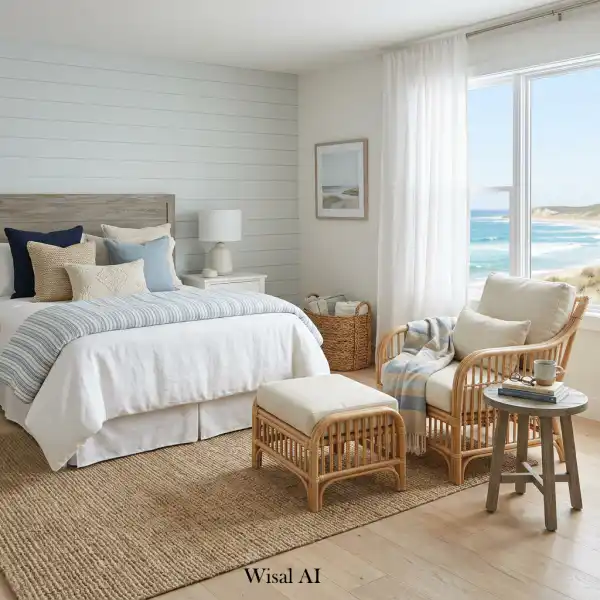
    Common Mistakes and How to Avoid Them

    Using too many shades of pink at once
    : Pick one dominant shade and one or two supporting shades max. Mixing five different pinks reads as messy, not intentional.

    Choosing cool-toned pink with warm wood or brass
    : Match undertones. Cool pinks pair better with chrome and white oak, while warm pinks pair with brass and walnut.

    Skipping a neutral break in the room
    : Add white, cream, or stone somewhere, even if it’s just the countertop or towels, so your eyes get a rest from the color.

    Forgetting about lighting temperature
    : Always check how a pink shade looks under your actual bulbs, not just in the store or on a paint chip in daylight.

    Going too glossy with pink tile or paint
    : High shine finishes highlight water spots and steam marks. Matte or satin finishes hide flaws and look more polished long term.

    Ignoring the size of the room
    : Bold, dark pinks can shrink a small bathroom visually. Save deep shades for larger spaces or use them only as accents in smaller ones.

    Similar Variations

    • Terracotta Bathroom: Leans warmer and earthier than pink, great for boho or Southwestern-style homes.
    • Dusty Blue Bathroom: A cooler cousin to pink that gives a similar soft, calming effect with a different mood.
    • Sage Green Bathroom: Pairs the same warm wood and brass accents but swaps pink for a nature-inspired green.
    • Mauve and Charcoal Bathroom: A moodier, more dramatic take on pink that leans modern and edgy.
    • Blush and Black Bathroom: High contrast version of pink decor, great for glam or art deco lovers.
    • Coral Coastal Bathroom: Brighter, beachier version of pink paired with navy and natural textures.

    Getting a pink bathroom right really comes down to balance. Pick your shade carefully, add contrast with neutral materials, and don’t be afraid to start small with towels or a rug before committing to paint or tile. Whether you go soft and blush or bold and rosy, these 10 Pink Bathroom ideas should give you everything you need to create a space that feels warm, current, and totally your own.

  • 14 Room Makeover Bedroom Ideas That Actually Work

    14 Room Makeover Bedroom Ideas That Actually Work

    I’ve tested a ton of bedroom refresh tricks over the years, and this 14 room makeover bedroom guide is the one I wish I had when I started. You’re about to get a real, no-fluff breakdown of what actually transforms a tired bedroom into a space you love. No guessing, no wasted money, just ideas that work.

    A bedroom makeover means updating a room’s furniture, color scheme, lighting, and decor to improve both function and mood. A successful makeover balances style, comfort, and budget without requiring a full renovation.

    Stick around, because I’m breaking down 14 specific ideas, some tables to help you plan smarter, and mistakes to dodge so your redo actually sticks.

    What Is a Bedroom Makeover, Really?

    Okay, so let’s get on the same page here. A bedroom makeover isn’t about ripping out walls or spending your whole paycheck. It’s about taking what you already have, or swapping a few key pieces, and making the room feel new again. Think new paint, better lighting, a rug that ties things together, maybe a headboard that finally makes your bed look intentional. I’ve seen people transform a bedroom in a single weekend with under $300. Other times it’s a slower process spread across a few paychecks. Either way works. The goal is simple: walk into your room and feel calm, not cluttered or bored.

    1. Pick a Calming Color Palette First

    16 Bedroom Colour Ideas - Bedroom Paint Ideas
    Credit: HouseBeautiful

    Before you buy a single throw pillow, decide on your colors. This is the backbone of your whole makeover. Soft blues, warm terracottas, muted sages, these all read as relaxing. Bright whites and grays feel clean but can go cold fast without warm accents.

    My actionable tip: grab three paint swatches and tape them to your wall for a full day. Watch how they look in morning light versus night light before committing.

    This works across styles too. Modern rooms lean into monochrome with one bold accent. Traditional rooms like deeper, richer tones. Coastal spaces stick to sandy neutrals and ocean blues.

    Once your palette is locked in, everything else, furniture, bedding, art, gets way easier to choose. Let’s talk about the bed itself next.

    2. Upgrade Your Headboard for an Instant Focal Point

    creating a focal point in your bedroom | Dufresne Furniture and Appliances
    Credit: Dufresne

    Your bed is the star of the room, so treat it that way. A headboard upgrade is one of the cheapest ways to make a huge visual difference. Upholstered headboards add softness and a hotel-like feel. Wood headboards bring warmth and texture. Even a leaned-against-the-wall vintage door can work as a headboard in a pinch.

    Practical tip: measure your wall space before buying. A headboard that’s too small looks awkward, floating in a sea of blank wall.

    Style-wise, tufted velvet headboards suit traditional or glam rooms. Simple wood slats fit modern or Scandinavian looks. Rattan headboards are a coastal or boho favorite.

    Once your headboard is set, your eye naturally moves to what’s layered on top of the bed.

    3. Layer Bedding Like a Boutique Hotel

    How To Layer A Bed Like A Hotel - A Blissful Nest
    Credit: ablissfulnest

    Here’s a secret: hotels don’t use one blanket. They layer. Start with a fitted sheet, add a duvet, then fold a lightweight throw at the foot of the bed. Toss in two to four pillows in varying sizes.

    My tip: stick to two or three colors max in your bedding so it doesn’t look chaotic. Texture does more work than pattern here.

    Linen bedding feels relaxed and coastal. Crisp cotton feels classic and traditional. Chunky knit throws feel cozy and cabin-style.

    This layering trick alone can make a bland bed look expensive. Next, let’s get some light in there.

    4. Swap Harsh Overhead Lighting for Layered Light Sources

    Bedroom Lights : A Comprehensive Guide on Bedroom Lighting Ideas | Light  And Living
    Credit: lightsandliving

    Most bedrooms rely on one overhead light, and that’s a mistake. It’s either blinding or you’re squinting to read. Add a bedside lamp on each nightstand, a floor lamp in a reading corner, and maybe string lights along a shelf.

    Actionable tip: use warm white bulbs (around 2700K) instead of cool white. Warm light makes a bedroom feel cozy instead of clinical.

    Modern rooms love sculptural lamp bases. Traditional spaces favor fabric shades. Boho rooms go for woven or paper lantern styles.

    Lighting sets the mood, but nothing pulls a room together like a good rug.

    Lighting Options Compared

    Light TypeBest ForAvg CostMood Created
    Bedside lampReading, ambiance$20-$60Cozy, warm
    Floor lampCorners, reading nooks$40-$120Soft, layered
    String lightsAccent, headboard wall$10-$25Playful, relaxed
    Dimmable overheadWhole room control$30-$90Flexible, adaptable
    Smart bulbsColor changing, scheduling$15-$35 per bulbModern, customizable

    5. Add a Rug to Anchor the Room

    How to Place a Rug Under the Bed | Castlery US
    Credit: Castlery

    Bare floors make a bedroom feel unfinished, even if the floor itself is nice. A rug under or in front of the bed adds warmth and softens the whole space visually.

    Practical tip: for a queen bed, aim for a rug at least 8×10 feet so it extends past the sides of the bed.

    Jute and sisal rugs suit coastal or boho rooms. Plush shag rugs fit modern or glam spaces. Persian-style rugs work beautifully in traditional bedrooms.

    A great rug grounds the room, but you still need something on the walls to keep things from feeling flat.

    6. Create a Gallery Wall With Mixed Frame Sizes

    Gallery Wall: How to create a stylish and personal gallery wall
    Credit: Goodhousekeeping

    Empty walls feel cold. A gallery wall fixes that fast. Mix photo frames, small art prints, and maybe a mirror in different sizes and shapes for visual interest.

    My tip: lay your frames out on the floor first in the arrangement you want before hammering a single nail. This saves you from a wall full of unnecessary holes.

    Modern rooms like clean-lined black frames in a grid. Traditional rooms mix gold and wood frames asymmetrically. Boho spaces add woven wall hangings between the frames.

    Once your walls have personality, it’s time to think about storage that doesn’t look like storage.

    7. Choose Furniture That Multitasks

    Small Master Bedroom Style: The Art of Smart, Multi-Use Space
    Credit: Resourcefurniture

    Small bedrooms need furniture that pulls double duty. A storage ottoman at the foot of the bed. A nightstand with drawers instead of open shelves. A bench with a lift-top for extra blankets.

    Actionable tip: measure your room’s walkway space, you want at least 24 inches of clearance around the bed for easy movement.

    Modern rooms favor sleek platform beds with built-in drawers. Traditional rooms use ornate trunks. Coastal rooms often go with woven storage baskets tucked under furniture.

    Smart furniture keeps clutter down, which naturally leads into decluttering the whole room.

    8. Declutter and Edit Your Nightstand Décor

    How to Declutter Your Nightstand for a Serene Sleeping Space
    Credit:Marthastewart

    A cluttered nightstand kills the calm vibe you’re going for. Keep it to three or four items max: a lamp, a small stack of books, maybe a candle or a small plant.

    Practical tip: use a small tray to corral tiny items like rings, chargers, or lip balm. It keeps clutter contained even when things pile up.

    Minimalist and modern rooms like empty, clean nightstand tops. Traditional rooms allow a bit more decorative clutter, like a small dish or framed photo. Boho rooms add a candle and a woven basket underneath.

    With your nightstand sorted, let’s talk about window treatments, because bare windows are a missed opportunity.

    9. Hang Curtains Higher and Wider Than the Window Frame

    How to Hang Curtains: Every Window Type + Pro Rules – Curtarra
    Credit: Curtarra

    This is a designer trick that costs nothing extra. Hang your curtain rod about four to six inches above the window frame and extend it a few inches wider on each side. This makes the window look bigger and the ceiling feel higher.

    My tip: choose curtains that are long enough to just brush the floor, not pool excessively or hover awkwardly above it.

    Sheer linen curtains suit coastal and boho rooms. Blackout velvet curtains fit traditional or glam bedrooms. Simple cotton panels work for modern minimalist spaces.

    Curtains frame your window, but plants can bring life into any corner of the room.

    Budget Tiers for a Bedroom Makeover

    Budget TierTotal SpendWhat You Can Update
    Shoestring$50-$150New pillows, one plant, rearranged decor
    Moderate$150-$500New bedding, rug, lamps, wall art
    Mid-range$500-$1,200Headboard, curtains, furniture piece, paint
    Full refresh$1,200-$3,000New bed frame, full furniture set, flooring accent
    High-end$3,000+Custom furniture, built-ins, professional design help

    10. Bring in Greenery for a Natural Touch

    Greenery in Bedroom: Best Artificial Plants for a Stylish Space – Nearly  Natural
    Credit: Nearlynatural

    Plants make any room feel more alive. Even fake ones work if you’re not great with real plants. A tall snake plant in the corner, a small pothos on the dresser, these small additions add color and texture without much effort.

    Actionable tip: pick low-light plants like snake plants or ZZ plants if your bedroom doesn’t get much sun.

    Modern rooms like sculptural plants in simple pots. Boho rooms love trailing plants in macrame hangers. Coastal rooms often use dried grasses or pampas plumes instead of live plants.

    Plants add life, but scent matters too, and that’s an often-overlooked makeover detail.

    11. Add a Signature Scent With Candles or Diffusers

    Candles vs. Diffusers: Pros and Cons, Choosing the Right Product
    Credit: Marriott

    Smell is tied closely to mood. A bedroom that smells fresh and calming feels more inviting the second you walk in. A reed diffuser on the dresser or a candle on the nightstand does the trick.

    Practical tip: stick to one signature scent for the whole room instead of mixing multiple candle scents, which can smell muddled.

    Warm vanilla and sandalwood suit traditional and cozy rooms. Fresh linen or sea salt scents fit coastal spaces. Earthy scents like cedar work well in modern or minimalist rooms.

    Scent sets a subtle mood, but the biggest transformation often comes from the walls themselves.

    12. Add Texture With a Statement Accent Wall

    Make A Statement With A Bedroom Accent Wall
    Credit:Forbes

    An accent wall doesn’t have to mean bold paint. Wood paneling, wallpaper, or even a textured plaster finish behind the bed adds depth without overwhelming the whole room.

    My tip: if you’re renting, look into peel-and-stick wallpaper. It’s removable and looks nearly identical to the real thing.

    Shiplap suits coastal and farmhouse styles. Bold wallpaper patterns fit traditional or eclectic rooms. Board-and-batten paneling works great in modern farmhouse spaces.

    An accent wall gives your room depth, and mirrors can amplify that effect even more.

    13. Use Mirrors to Bounce Light and Add Depth

    Bedroom Mirror Ideas: How to Use Mirrors to Enhance Bedroom Interiors | AIS
    Credit: Aisglass

    Small or dim bedrooms benefit hugely from mirrors. Placing one across from a window bounces natural light around the room, making it feel bigger and brighter instantly.

    Actionable tip: lean a full-length mirror against the wall instead of mounting it, it’s an easy swap if you move or redecorate later.

    Modern rooms like sleek, frameless mirrors. Traditional rooms favor ornate gold or wood-framed mirrors. Boho spaces love sunburst or irregular-shaped mirrors as wall art.

    Mirrors amplify light, and the last piece of the puzzle is making sure your color scheme ties everything together.

    14. Tie the Whole Room Together With Intentional Color Repetition

    4 Color Rules for Neutral Rooms to Avoid It Feeling "Flat" | Livingetc
    Credit: livingetc

    Here’s the final trick that makes a room look designed instead of thrown together. Pick one or two accent colors and repeat them at least three times across the room, in a pillow, a piece of art, and a small decor object.

    Practical tip: use the “rule of three” for accent colors. If your accent is mustard yellow, use it in three different spots, not just one lonely pillow.

    This trick works in every style. Modern rooms repeat color through geometric shapes. Traditional rooms repeat it through patterned fabrics. Coastal rooms repeat it through shades of blue in varying textures.

    With all fourteen ideas in play, your bedroom should feel cohesive, calm, and totally yours.

    Tips for Success

    • Start with a mood board, even a simple one on your phone, before buying anything.
    • Shop secondhand for big furniture pieces like dressers, then refresh with new hardware or paint.
    • Keep a tape measure handy at all times when shopping for furniture or rugs.
    • Change one thing at a time if you’re on a tight budget, and live with it before adding more.
    • Take a “before” photo so you can actually see your progress once the makeover is done.
    • Don’t ignore closet storage, an organized closet keeps the whole room feeling tidy longer.

    Common Mistakes and How to Avoid Them

    Buying a rug too small
    : Always size up. A too-small rug makes the whole room look shrunken and unfinished.

    Ignoring the ceiling
    : Paint or wallpaper the ceiling in a soft tone to add unexpected depth and personality.

    Overdoing one color
    : Balance bold colors with neutral furniture or bedding so the room doesn’t feel overwhelming.

    Skipping curtain length
    : Measure twice. Curtains that stop short of the floor look accidental, not intentional.

    Forgetting nightstand symmetry
    : Match your nightstands and lamps on both sides of the bed for a balanced, calm look.

    Overcrowding the walls
    : Leave breathing room between frames and furniture so the eye has somewhere to rest.

    Similar Variations

    • Coastal Boho Bedroom – blends sandy neutrals with woven textures and relaxed linen bedding.
    • Modern Farmhouse Bedroom – mixes shiplap walls with black metal accents and cozy layered textiles.
    • Scandinavian Minimalist Bedroom – focuses on light woods, white walls, and very little clutter.
    • Vintage Eclectic Bedroom – combines thrifted furniture, mismatched frames, and bold patterned textiles.
    • Desert Boho Bedroom – uses warm terracotta tones, rattan furniture, and dried botanical accents.
    • Traditional Glam Bedroom – features tufted headboards, metallic accents, and rich jewel-toned fabrics.

    Redoing a bedroom doesn’t have to mean starting from zero or spending a fortune. Small, smart changes, layered lighting, a better rug, a tied-together color scheme, add up to a space that actually feels like yours. That’s really the whole point of any 14 room makeover bedroom project: turning a room you just sleep in into one you actually want to wake up in.

  • 12 Bedroom Refresh Ideas That Actually Make a Difference

    12 Bedroom Refresh Ideas That Actually Make a Difference

    If you’ve been searching for 12 Bedroom Refresh Ideas that actually work without a full renovation budget, you’re in the right place. I’ve tested a lot of these tricks in my own space, and I’m going to walk you through exactly what makes a bedroom feel new again.

    A bedroom refresh means updating a room’s look and feel using small, budget-friendly changes like paint, textiles, lighting, and layout instead of major construction. The goal is a fresher, more restful space without tearing down walls or spending thousands of dollars.

    Stick around, because I’m sharing ideas that go way beyond “buy new pillows.” Some of these might completely change how you think about your bedroom.

    What Does a “Bedroom Refresh” Even Mean?

    Okay, so let’s get on the same page here. A bedroom refresh isn’t a renovation. You’re not knocking down walls or ripping out flooring. Think of it more like a haircut instead of plastic surgery. You’re working with what you already have and making smart swaps.

    I like to think of a refresh as anything you can do in a weekend, or a few weekends, that changes the mood of the room. It could be paint. It could be moving your bed to a new wall. It could be adding warmth with texture. The point is low cost, high impact. That’s the whole game here.

    Now let’s get into the good stuff.

    1. Repaint One Accent Wall Instead of the Whole Room

    How to Choose an Accent Wall
    Credit: Thedecorologist

    Painting an entire bedroom takes forever and costs a chunk of change. Painting just one wall? That’s a weekend project, and it still transforms the space. Pick the wall behind your headboard for the biggest visual punch. Go with a deep color like navy, forest green, or terracotta if your current walls are neutral.

    Practical tip: buy a sample pot first and paint a two-foot square before committing. Light changes color more than you’d think.

    This trick works in almost any style. Modern bedrooms look great with charcoal or deep clay tones. Coastal spaces do well with soft sage or dusty blue. Traditional rooms shine with a rich burgundy or hunter green.

    Once your wall color is set, it’s time to think about what goes on top of it, and that’s where art comes in.

    2. Hang Art at Eye Level, Not Ceiling Level

    Credit: Houseandgarden

    I see this mistake constantly. People hang art too high because they’re trying to fill wall space above furniture. Art should sit at eye level when you’re standing, which usually means the center of the piece is about 57 to 60 inches from the floor.

    Grab two or three pieces that share a color palette, even if the subjects are different. That creates a pulled-together look without matching frames exactly.

    Practical tip: use painter’s tape to outline where the frame will go before you hammer a single nail.

    Boho rooms love mismatched frames with a common thread of color. Minimalist bedrooms do better with one large statement piece instead of a cluster.

    Once your walls have some personality, your bed is the next thing worth looking at.

    3. Layer Your Bedding Like a Hotel Would

    Credit:ablissfulnest

    Hotels don’t use one flat sheet and a comforter. They layer. Start with a fitted sheet, then a flat sheet, then a lightweight blanket, then your comforter or duvet, and finish with a folded throw at the foot of the bed. This layering adds texture and makes the bed look fuller and more expensive.

    Mix textures, not just colors. A linen duvet with a chunky knit throw and smooth cotton sheets gives you contrast that photos just can’t capture.

    Practical tip: buy your throw pillows in odd numbers, usually three or five, for a less staged look.

    Farmhouse bedrooms love waffle-knit blankets. Modern spaces do better with sleek matte fabrics like sateen or brushed cotton.

    Speaking of texture, let’s talk about what’s under your feet.

    Bedding Layer Guide by Season

    LayerFall/Winter FabricSpring/Summer FabricApprox. Cost Range
    SheetsFlannel or brushed cottonPercale or linen$30–$120
    Mid layerWool blanketCotton quilt$40–$150
    Top layerDown or down-alt comforterLightweight duvet$60–$250
    AccentFaux fur throwWoven cotton throw$20–$80

    4. Add a Rug Even If You Have Carpet

    Credit: artiss

    Yes, you can layer a rug over carpet. It sounds odd, but it works, especially if your carpet is a builder-grade beige and you want more personality. A patterned or textured rug placed at the foot of the bed or on both sides adds warmth and defines the space.

    If you have hardwood or laminate, a rug is basically non-negotiable for comfort. Aim for a rug that extends at least 18 inches beyond the sides of the bed.

    Practical tip: use rug grippers underneath so it doesn’t slide around when you get out of bed half asleep.

    Traditional bedrooms look great with Persian-style patterns. Coastal rooms do well with jute or sisal textures.

    Now that your floor has some life to it, let’s fix the lighting, because this one’s a game changer.

    5. Swap Overhead Lighting for Layered Lamps

    Credit: lightsandliving

    Overhead lighting alone makes a bedroom feel like a hospital room. Harsh and flat. Instead, use a mix of light sources: a table lamp on each nightstand, a floor lamp in a reading corner, and maybe a small plug-in sconce near a mirror.

    Warm-toned bulbs, around 2700K, create that cozy glow you want in a bedroom. Cool white bulbs, above 4000K, tend to feel more like an office.

    Practical tip: put your lamps on a smart plug or use bulbs with a remote so you’re not crawling around to turn them off before bed.

    Modern bedrooms often use sculptural lamp bases as decor pieces on their own. Farmhouse rooms tend to favor lamps with fabric shades and wood or ceramic bases.

    With better lighting in place, your nightstands deserve a second look too.

    6. Declutter and Restyle Your Nightstands

    10 Easy Ways To Refresh Your Bedroom - Keystone Home Hub
    Credit; Keystonehomehub

    Nightstands become junk drawers with legs if you’re not careful. Chargers, old receipts, half-empty water glasses. A refresh means clearing that off and styling with intention.

    Keep it to three or four items max: a lamp, a small stack of books, a candle or small plant, and maybe a tray to corral your phone and glasses. Trays are honestly a genius trick because they keep small items from looking messy even when they’re still out.

    Practical tip: match your nightstand lamps in style but not necessarily in exact size, it looks more curated than a matched set.

    Minimalist rooms should stick to one or two items only. Eclectic bedrooms can layer in small collected objects like vintage trinkets or stones.

    Once your nightstands are calm, curtains are the next easy win.

    7. Upgrade to Floor-Length Curtains

    How to Choose the Right Drapery Length | Galaxy Draperies
    Credit: Galaxydraperies

    Short curtains that stop above the windowsill make a room look smaller and kind of unfinished. Floor-length panels, hung close to the ceiling instead of right above the window frame, make the whole room feel taller and more polished.

    A good rule is to hang your curtain rod about four to six inches above the window frame and let the panels just graze the floor or puddle slightly for a softer look.

    Practical tip: buy panels a size longer than you think you need. You can always hem them, but you can’t add length back.

    Coastal bedrooms love sheer linen panels that let light filter through. Traditional spaces do well with heavier drapes in velvet or brocade.

    Now let’s talk about something people almost always forget: the ceiling.

    8. Don’t Ignore the Fifth Wall (Your Ceiling)

    Don't Forget the Fifth Wall: Beautiful Ways to Elevate Your Ceiling - Becki Owens
    Credit: Beckiowens

    Most bedrooms have a plain white ceiling, and that’s fine, but it’s also a missed opportunity. A soft paint color, a wallpapered accent, or even a simple pendant light swap can make the whole room feel more intentional.

    If painting the ceiling feels like too much, start smaller. Swap a boring flush-mount light fixture for something with more character, like a woven pendant or a fluted glass globe.

    Practical tip: if you paint the ceiling, go one or two shades lighter than your wall color so the room doesn’t feel like a box.

    Bohemian rooms love a patterned wallpaper on the ceiling. Modern spaces often go with a matte black or deep charcoal ceiling for drama.

    Speaking of drama, let’s talk about your headboard situation next.

    9. Build Visual Height With a Statement Headboard

    High Headboard Beds: Why Bigger is Better for Bedroom Drama – British Bed Co
    Credit: Britishbedco

    If your bed frame is looking tired, you don’t need to buy a whole new bed. A statement headboard alone can transform the whole feel of the room. Upholstered headboards in bouclé or velvet add softness. Rattan or cane headboards bring in texture without feeling heavy.

    If you’re on a tight budget, even a large piece of fabric stretched over a frame, or a big tapestry hung behind the bed, can mimic the same effect.

    Practical tip: go bigger than you think. A headboard that’s too small for the bed looks awkward, so aim for it to extend a few inches past the mattress width.

    Modern farmhouse loves wood slat headboards. Glam bedrooms lean into tufted velvet in jewel tones.

    Headboard Material Comparison

    MaterialStyle FitPrice RangeMaintenance
    Upholstered fabricTraditional, glam$150–$600Needs occasional cleaning
    Rattan/caneBoho, coastal$100–$400Wipe clean, avoid moisture
    Wood slatFarmhouse, modern$120–$500Very low, dust only
    Metal frameIndustrial, minimalist$80–$350Low, wipe with cloth

    10. Rearrange Furniture Before Buying Anything New

    Too Much Time on Your Hands? Try Rearranging the Furniture - The New York Times
    Credit: Nytimes

    Here’s a free idea. Before you spend a single dollar, try rearranging what you already have. Move your bed to a different wall. Swap your dresser and reading chair. Sometimes just changing the traffic flow of a room makes it feel brand new.

    A good rule of thumb is to avoid blocking natural walking paths and to make sure your bed isn’t directly in line with the door if you can help it, since that placement can feel a little exposed.

    Practical tip: use painter’s tape on the floor to map out new furniture positions before you actually drag anything heavy across the room.

    This works for every style because it costs nothing and it’s fully reversible if you don’t love the new layout.

    Once your layout feels right, small styling details make the biggest final impact.

    11. Bring in Plants for Softness and Air Quality

    The Top 16 Indoor Plants For Clean Air in Your Home – Parachute Home
    Credit: Parachutehome

    A bedroom without any greenery can feel a little sterile. Plants soften hard edges and add natural color that pairs well with almost any palette. Snake plants and pothos are nearly impossible to kill, which makes them great for bedrooms where you might forget to water for a week.

    Group plants in odd numbers and vary the heights using stands or shelves so it doesn’t look like one flat row.

    Practical tip: avoid plants with strong scents in the bedroom, since some people find them disruptive to sleep.

    Boho rooms go heavy on trailing plants like pothos. Modern spaces tend to keep it to one or two structural plants, like a fiddle leaf fig.

    Last but not least, let’s talk about smell, because scent is part of a refresh too.

    12. Layer in Scent With Candles or Diffusers

    Credit: idealhome

    This one gets overlooked constantly, but scent changes how a room feels just as much as visuals do. A warm, low-key scent like sandalwood or vanilla makes a bedroom feel more like a retreat. Bright citrus scents can feel more energizing, which might be better for a home office than a bedroom.

    Practical tip: keep candles away from flammable fabrics like curtains, and consider a flameless diffuser if you have kids or pets in the house.

    Spa-style or minimalist bedrooms often stick to one signature scent throughout the whole space. Eclectic rooms might rotate scents seasonally.

    That wraps up the ideas themselves, but let’s talk about how to actually pull this off without wasting money or time.

    Tips for Success

    • Start with the biggest visual element first, like paint or bedding, before moving to small decor pieces.
    • Set a budget per category (lighting, textiles, decor) so you don’t overspend on one area and skip another.
    • Take a “before” photo so you can actually see your progress, since it’s easy to forget how far you’ve come.
    • Shop secondhand for items like lamps and frames, since these are easy to refresh with paint or new shades.
    • Don’t buy everything at once. Live in the space for a week after big changes before adding more.
    • Keep a small folder of paint swatches and fabric samples so you can check combos before buying.
    • Always measure twice, especially for rugs and curtains, since returns on those can be a hassle.

    Common Mistakes and How to Avoid Them

    Buying matching furniture sets
    : Skip the matched bedroom set and mix pieces from different sources for a more collected, personal look.

    Ignoring scale
    : Measure your room and furniture before buying anything, since an oversized headboard or tiny rug throws off the whole balance.

    Overdoing cool white lighting
    : Stick to warm bulbs around 2700K in the bedroom so the space feels calm instead of clinical.

    Forgetting to edit decor
    : More isn’t always better. Remove one item for every two you add to avoid visual clutter.

    Choosing trendy colors you’ll tire of
    : Test paint samples for at least a few days in different lighting before committing to a wall color.

    Skipping the ceiling and walls above eye level
    : Add a light fixture upgrade or paint accent up top, since that fifth wall gets ignored way too often.

    Similar Variations

    • Coastal Refresh — leans on light woods, sheer curtains, and blue and white palettes for a beachy feel.
    • Modern Minimalist Refresh — focuses on clean lines, a limited color palette, and very few decor items.
    • Boho Refresh — layers texture, patterns, and plants for a relaxed, collected look.
    • Farmhouse Refresh — combines wood tones, neutral fabrics, and vintage-inspired lighting.
    • Glam Refresh — uses velvet, metallics, and richer jewel tones for a more luxe feel.
    • Japandi Refresh — blends Japanese simplicity with Scandinavian warmth using natural materials and muted colors.

    A bedroom refresh doesn’t need a big budget or a demo crew. It just needs a few smart swaps done in the right order, starting with the big stuff like paint and lighting, then working down to the smaller details like scent and plants. Small changes really do add up faster than you’d expect once you see them together in the same room.

    If you take away just one thing from all this, let it be this: you don’t have to do everything at once, and you definitely don’t need a huge budget to make your room feel brand new. Pick two or three ideas from this list of 12 Bedroom Refresh Ideas and just start there.

  • 14 Master Bedrooms Decor Ideas That Actually Feel Like a Retreat

    14 Master Bedrooms Decor Ideas That Actually Feel Like a Retreat

    I’ve spent way too many nights scrolling through decor photos, trying to figure out what makes a master bedroom feel like an actual retreat instead of just a room with a bed in it, and this collection of 14 master bedrooms decor ideas is the answer I wish I’d found sooner. I’ve tested a bunch of these myself, and I’ve watched friends transform their sad, boring bedrooms into spaces they actually want to spend time in. So stick with me here.

    A master bedroom decor plan combines furniture layout, color scheme, lighting, and textiles to create a calm, functional retreat. The goal is comfort and personal style, balanced with practical storage and good flow around the bed and closet areas.

    Ever walked into your bedroom after a long day and felt more stressed than relaxed? That’s about to change. Let’s get into it.

    What Makes Master Bedroom Decor Different

    Your master bedroom isn’t like other rooms in the house. It’s not for guests. It’s not for showing off. It’s the one space that’s just yours (and your partner’s, if you’ve got one). That means the rules are different here.

    I always tell people to think of their master bedroom as a hotel suite they never have to check out of. Good hotel rooms feel calm, uncluttered, and cozy at the same time. That’s the vibe we’re chasing. You don’t need a huge budget or a professional designer. You need smart choices about color, layout, and a few key pieces that pull everything together.

    Now let’s get into the actual ideas.

    1. Anchor the Room With a Statement Headboard

    Statement Headboards Are One Of The Biggest Bedroom Trends In 2026 – Here's How To Style Them
    Credit: Housebeautiful

    Your bed is the star of the show, so treat it that way. A tall, upholstered headboard instantly makes a room feel more expensive and pulled together, even if everything else is basic. I like linen or velvet upholstery because both age well and feel soft to lean against while reading.

    Practical tip: Go at least 4 inches wider than your mattress on each side so the headboard doesn’t look squeezed.

    This idea flexes easily. Traditional homes look great with tufted, button-detail headboards. Modern spaces do better with clean-lined, low-profile options. Coastal bedrooms can use rattan or whitewashed wood frames instead.

    Once your headboard is in place, the next thing to think about is what’s happening on the walls around it.

    2. Paint an Accent Wall Behind the Bed

    32 Bedroom Accent Wall Ideas That Make a Statement | Architectural Digest
    Credit: architecturaldigest

    A single accent wall behind the headboard gives your eye somewhere to land. It’s cheaper than painting the whole room and way less risky if you’re nervous about bold color. Deep greens, warm terracottas, and soft charcoals all work well here.

    Practical tip: Test your paint color at three different times of day. Lighting changes everything, and a color that looks great at noon can look muddy at night.

    Farmhouse bedrooms tend to lean toward soft sage or warm white. Contemporary spaces can handle darker, moodier shades like navy or espresso brown.

    Once the wall color is settled, layering in the right textiles becomes way easier.

    Color Palette Combinations for Master Bedrooms

    StyleWall ColorBeddingAccent Color
    ModernCharcoal GrayWhite + GrayBrass/Gold
    CoastalSoft Blue-WhiteIvory LinenSeafoam Green
    TraditionalDeep NavyCream + NavyBurgundy
    BohoWarm TerracottaCream + RustMustard Yellow
    ScandinavianOff-WhiteLight GrayNatural Wood

    3. Layer Bedding for a Hotel-Level Look

    How To Layer A Bed Like A Hotel - A Blissful Nest
    Credit: ablissfulnest

    This one changed my bedroom more than anything else on this list. A flat white duvet looks fine, but layering matters. Start with a fitted sheet, add a duvet, then throw a textured blanket across the bottom third of the bed, and finish with a few pillows in mixed sizes.

    Practical tip: Use an odd number of pillows. Three or five looks more intentional than an even stack.

    Minimalist bedrooms should stick to two or three layers max. Maximalist or eclectic spaces can pile on patterns and textures without it looking messy.

    Bedding sets the tone, but nothing finishes a room faster than the right window treatments.

    4. Hang Floor-Length Curtains, Even on Small Windows

    What type of curtains are best for small bedroom windows | Ideal Home
    Credit: idealhome

    Short curtains make ceilings look lower and rooms feel smaller. Floor-length panels do the opposite. Hang your curtain rod higher than the window frame, close to the ceiling if you can, so the whole wall looks taller.

    Practical tip: Buy curtains that are at least 84 inches long for standard 8-foot ceilings, and go longer if your ceilings are taller.

    Linen curtains suit relaxed, coastal, or farmhouse rooms. Velvet or blackout-lined panels work better in traditional or moody modern bedrooms where you want more drama and better sleep.

    Once your windows are dressed, lighting becomes the next big opportunity.

    5. Swap Overhead Lighting for Layered Lamps

    32 bedroom lighting ideas to illuminate your space like a dream | Real Homes
    Credit; Realhomes

    Harsh overhead lighting is the enemy of a relaxing bedroom. I switched to table lamps and a floor lamp in the corner, and the room instantly felt warmer and more inviting. Aim for at least three light sources at different heights.

    Practical tip: Use warm white bulbs (2700K to 3000K) instead of daylight bulbs. Cooler light feels clinical, not cozy.

    Modern rooms look great with sculptural metal lamps. Traditional spaces do well with fabric shades and ceramic bases.

    Good lighting sets the mood, but nightstands are where function meets style next.

    6. Choose Nightstands That Actually Fit Your Needs

    How Tall Should a Nightstand Be? 5 Expert Tips
    Credit: Thespruce

    Matching nightstands look nice in photos, but mismatched ones can look even better and give the room personality. What matters more is function. Do you need drawer storage? A shelf for books? Room for a lamp and a glass of water?

    Practical tip: Nightstand height should sit within 2 inches of your mattress top for easy reach at night.

    Traditional homes often go with matching wood pairs. Eclectic or boho bedrooms can mix a vintage side table on one side with a modern piece on the other.

    Once your nightstands are sorted, it’s time to think about what’s underfoot.

    7. Add a Rug That Extends Past the Bed Frame

    How to Place a Rug Under the Bed | Castlery US
    Credit: Castlery

    A small rug that only peeks out from under the bed looks like an afterthought. Go bigger. Your rug should extend at least 18 to 24 inches past each side of the bed so your feet land on something soft when you get up.

    Practical tip: Measure your bed frame first, then add the extra inches on all visible sides before buying.

    Wool and jute rugs suit farmhouse and coastal rooms. Silk-blend or high-pile rugs feel more at home in glam or traditional spaces.

    With the floor handled, let’s talk about the walls again, but this time above eye level.

    8. Add Texture With Wood Beams or Wall Paneling

    Bedroom Design Ideas | Inspiration for Bedroom Walls & Ceilings - Barron Designs
    Credit: Barrondesigns

    Flat walls can feel a little empty in a master bedroom, especially if you’ve got high ceilings. Wood paneling, shiplap, or exposed beams add texture without adding clutter. This works especially well on the wall behind the bed or across the ceiling.

    Practical tip: Stick with a single wood tone throughout the room so paneling doesn’t compete with furniture finishes.

    Farmhouse and traditional bedrooms benefit most here. Modern spaces can use slatted wood panels for a similar effect with cleaner lines.

    Once your walls have some texture, it’s worth thinking about how you’re storing everything.

    Budget Tiers for a Master Bedroom Refresh

    Budget TierWhat You Can DoEstimated Cost
    Low ($100-$300)New bedding, throw pillows, one accent wall$100-$300
    Mid ($500-$1,500)New rug, lamps, curtains, small furniture swap$500-$1,500
    High ($2,000-$5,000)New bed frame, custom closet, full furniture set$2,000-$5,000
    Luxury ($5,000+)Built-ins, wall paneling, designer lighting, custom textiles$5,000+

    9. Create a Dedicated Reading Nook

    How to Create a Cozy Reading Nook in a Bedroom Corner - Caitlin Marie Design
    Credit; Caitlinmariedesign

    If you’ve got extra corner space, a small reading nook adds function without taking over the room. A comfortable chair, a small side table, and a floor lamp are all you really need. This gives you a spot to unwind that isn’t the bed itself, which actually helps with better sleep habits.

    Practical tip: Position the chair near natural light if possible, and add a floor lamp for nighttime reading.

    Scandinavian bedrooms often use a simple accent chair and a sheepskin throw. Traditional rooms might add a wingback chair with a small bookshelf nearby.

    Speaking of extra function, let’s talk about mirrors next.

    10. Use a Large Mirror to Bounce Light Around

    Credit: Edwardmartin

    Mirrors do double duty. They make a room feel bigger, and they bounce natural light around, which matters a lot in bedrooms with small windows. A full-length or oversized leaning mirror works great against an empty wall.

    Practical tip: Place your mirror across from a window, not directly beside it, to reflect the most light into the room.

    Modern rooms tend to use sleek, frameless mirrors. Traditional or vintage-inspired bedrooms look great with ornate, gold-framed options instead.

    Once your light is working for you, decorative accents are the next layer to think about.

    11. Bring in Greenery for a Softer, Lived-In Feel

    15 Plants in Bedroom Ideas That Make Your Room Feel Alive - Foliah
    Credit; Foliah

    A plant or two makes a bedroom feel less staged and more like someone actually lives there. Low-maintenance options like snake plants or pothos do fine in lower light conditions common in bedrooms.

    Practical tip: Keep plants away from direct heating vents, which dry them out fast.

    Boho and coastal spaces can go bigger with multiple plants and hanging varieties. Minimalist rooms usually do better with just one simple, structural plant like a fiddle leaf fig.

    Plants soften a room, but personal touches are what really make it feel like yours.

    12. Display Personal Art That Actually Means Something

    Best Artwork for Bedroom: Ideas for a Serene Space
    Credit: Aboutwallart

    Skip the generic canvas art from big box stores. Personal photos, travel finds, or a piece from a local artist make the room feel like it belongs to you. Group smaller pieces in a gallery wall, or go big with one statement piece above the dresser.

    Practical tip: Hang art so the center sits at eye level, roughly 57 to 60 inches from the floor.

    Eclectic and maximalist bedrooms can layer multiple art styles together. Minimalist spaces do better with one or two carefully chosen pieces and lots of breathing room around them.

    Art brings personality, but scent and sound matter too, which brings me to the next idea.

    13. Add a Scent Layer With Candles or Diffusers

    FOX & WOLF | Luxury Fragrance Boutique
    Credit: Myfoxandwolf

    This one’s easy to skip, but it makes a real difference. A signature scent in your bedroom, whether from candles, a diffuser, or a linen spray, adds another sensory layer that makes the room feel finished. Woody or lavender scents tend to work well for relaxation.

    Practical tip: Stick to one scent family in the bedroom so it doesn’t clash with other rooms in your home.

    This idea works in literally every design style since it’s more about the sensory experience than the visuals.

    Last but not least, let’s close the loop with one final structural idea.

    14. Define Zones With an Area Rug or Furniture Placement

    How to Position Your Furniture on a Rug in a Bedroom | Rye, NY and New Canaan, CT | Carpet Trends
    Credit: Carpetrends

    If your master bedroom is large enough, break it into zones. One area for sleeping, another for dressing or lounging. This keeps a big room from feeling like one giant, undefined space.

    Practical tip: Use a bench or a low dresser as a visual divider between the sleeping zone and a sitting or dressing area.

    Modern lofts and open-concept primary suites benefit most from this trick, though even smaller bedrooms can use a rug to define just the bed area.

    That wraps up the main list, but a few extra tips can help you pull it all together successfully.

    Tips for Success

    • Start with the bed and build outward. Everything else should complement it, not compete with it.
    • Stick to a three-color rule: one main color, one secondary, and one accent, to avoid visual chaos.
    • Buy the biggest rug your budget allows. Undersized rugs are the most common decor mistake I see.
    • Keep clutter off nightstands. Two items max per surface keeps things feeling calm.
    • Test paint samples on the actual wall, not just a swatch card, before committing.
    • Don’t forget the ceiling. A coat of paint or wallpaper up there can transform the whole room.
    • Shop secondhand for one or two furniture pieces to add character without blowing your budget.

    Common Mistakes and How to Avoid Them

    Undersized Area Rug
    : Buy a rug big enough to extend well past the sides of the bed frame, not just a small strip at the foot of the bed.

    Too Much Matching Furniture
    : Mix at least one different finish or era into your furniture set so the room doesn’t look like a showroom display.

    Skipping Layered Lighting
    : Add table lamps and floor lamps in addition to any overhead fixture so the room has warmth at multiple heights.

    Ignoring Scale
    : Measure your room before buying furniture. Oversized pieces in a small room make everything feel cramped.

    Forgetting Storage Needs
    : Choose nightstands and dressers with drawers, not just open shelving, to keep everyday clutter out of sight.

    Overdoing Trendy Colors
    : Use trendy shades as accents through pillows or art instead of painting the whole room, so the space ages better over time.

    Similar Variations

    • Coastal Boho Bedroom: Mixes rattan furniture and woven textures with breezy linen bedding in soft neutral tones.
    • Modern Farmhouse Bedroom: Combines shiplap walls and wood beams with simple, clean-lined furniture and muted color palettes.
    • Japandi Bedroom: Blends Japanese minimalism with Scandinavian warmth using natural wood, low furniture, and neutral tones.
    • Dark Academia Bedroom: Uses deep wood tones, vintage furniture, and moody colors like burgundy and forest green for a cozy, scholarly feel.
    • Glam Bedroom: Leans on metallic accents, velvet textiles, and mirrored furniture for a more dramatic, luxurious look.
    • Desert Modern Bedroom: Pulls in warm terracotta tones, woven textures, and simple furniture inspired by southwestern landscapes.

    Putting together a bedroom you actually love doesn’t happen overnight, and it doesn’t require a massive budget either. Small, smart changes, like the right rug size, better lighting, or a headboard that actually fits the room, add up fast. I hope this list of 14 master bedrooms decor ideas gives you a clear starting point for building a space that finally feels like the retreat you deserve.

  • 13 Bedroom Decor Ideas

    13 Bedroom Decor Ideas

    Ever stared at your bedroom and just felt… blah? Like something’s off but you can’t put your finger on it? I’ve been there, and honestly, I put together this guide on 13 bedroom decor ideas because I wanted the one resource that actually covers everything without making you scroll through fluff.

    What are the best bedroom decor ideas? The best bedroom decor ideas combine a calming color palette, layered textiles, smart lighting, and functional furniture placement to create a space that feels restful, personal, and visually balanced. Small changes like new bedding or a gallery wall can transform a room without a full renovation.

    Stick around, because I’m about to walk you through 13 ideas that range from five-minute fixes to weekend projects, plus a few tables to help you plan your budget and color choices.

    Why Bedroom Decor Actually Matters

    Your bedroom isn’t just a place to crash at night. It’s the first room you see in the morning and the last one before you sleep. That sets the tone for your whole day, honestly. A cluttered, mismatched room can make you feel stressed without you even realizing why. On the flip side, a room that feels calm and put-together can genuinely improve your mood and your sleep. I’m not saying you need a magazine-worthy space. I’m saying small, intentional choices add up fast. That’s what this list is all about, practical stuff you can actually do, not just Pinterest dreams that never happen.

    1. Pick a Calming Color Palette First

    16 Bedroom Colour Ideas - Bedroom Paint Ideas
    Credit: Housebeautiful

    Before you buy anything, decide on your colors. This is the foundation everything else builds on. Soft neutrals, muted blues, and warm earth tones tend to work best for bedrooms because they help your brain wind down. Bright, high-energy colors like neon orange or hot pink can feel exciting in a living room but overwhelming when you’re trying to sleep.

    Pick one dominant color, one secondary color, and one accent. Keep it simple. A quick tip: paint a small swatch on your wall and look at it in both daylight and lamp light before committing.

    This idea flexes easily. Coastal bedrooms lean into soft blues and sandy tones, while traditional rooms might go with deep greens or burgundy accents. Once your palette is locked in, everything else, from bedding to art, gets way easier to choose.

    2. Layer Your Bedding for Texture and Warmth

    How to Layer Your Bed for Winter | Bed Bath N' Table
    Credit: bedbathntable

    A flat, single-layer bed looks unfinished. Layering changes everything. Start with a fitted sheet and flat sheet, add a lightweight blanket, then a duvet or comforter, and finish with a few throw pillows in different textures like linen, velvet, or knit.

    Mixing textures adds depth without adding more colors. That’s the secret. You can keep everything in the same color family and still make the bed look rich and inviting just by varying the fabric types.

    Practical tip: fold your throw blanket at the foot of the bed instead of laying it flat. It looks more intentional and takes five seconds.

    This works in every style. Modern bedrooms keep the layers minimal and crisp, while bohemian rooms pile on more patterns and textures. Once your bed looks good, your nightstands are next on the list.

    3. Upgrade Your Nightstands With Mismatched Character

    How to Beautifully Style Mismatched Nightstands in Your Bedroom – CharmyDecor
    Credit: Charmydecor

    You don’t need matching nightstands. Actually, mismatched ones often look more interesting. Try a wooden stand on one side and a small vintage table on the other, as long as they’re similar in height.

    Keep the top of each nightstand simple. A lamp, a small stack of books, and maybe a plant is plenty. Too much clutter here makes the whole room feel busy.

    Quick tip: if your nightstands are different heights, add a small stack of books under the lamp on the shorter one to even things out visually.

    Traditional homes might use antique pieces, while modern spaces go with clean-lined metal or wood stands. Speaking of lamps, lighting deserves its own moment.

    4. Layer Your Lighting Instead of Relying on One Overhead Fixture

    Layered Lighting: Don't Live with One Blinding Overhead Fixture
    Credit: Fischer-Electric

    One ceiling light isn’t enough. You need at least three light sources: overhead, task lighting like a reading lamp, and ambient lighting like string lights or a floor lamp. This layering lets you adjust the mood depending on the time of day.

    Warm white bulbs (around 2700K to 3000K) feel cozier than cool white ones, which can feel more like an office. Dimmer switches are a small investment that make a huge difference too.

    Lighting Comparison by Type

    Light TypeBest UseAverage CostBulb Temp Recommendation
    Overhead FixtureGeneral room lighting$40-$1502700K-3000K
    Bedside LampReading, task lighting$20-$802700K
    String LightsAmbient, mood lighting$10-$302200K-2700K
    Floor LampCorner accent lighting$35-$1202700K-3000K

    Coastal rooms often use woven pendant shades, while modern spaces favor sleek track lighting. With your lighting sorted, let’s talk about what’s happening above the bed.

    5. Create a Statement Headboard Wall

    Modern Headboard Ideas: Where Bedroom Walls Take the Lead
    Credit: Fancyhouse-Design

    Your headboard wall is basically the star of the room. If you don’t have a real headboard, you can fake one with paint, a large tapestry, or even wood paneling. This instantly makes the bed feel more grounded and intentional.

    A DIY option: paint a large geometric shape behind the bed in a contrasting color. It costs almost nothing and takes an afternoon.

    Practical tip: keep the headboard wall centered on the bed, not the room, since beds usually aren’t dead center in a bedroom’s layout.

    Traditional bedrooms might use a tufted fabric headboard, while minimalist spaces might just use a clean paint block. Once your wall behind the bed looks intentional, it’s time to think about the walls around it.

    6. Add a Gallery Wall That Tells Your Story

    Interior Designers Share How to Create the Perfect Gallery Wall
    Credit: Elledecor

    Skip the store-bought art sets. A gallery wall with photos, small paintings, and personal mementos feels way more like you. Mix frame sizes and finishes for a collected-over-time look instead of a matched set.

    Lay your frames out on the floor first before hammering anything into the wall. This saves you from a dozen unnecessary nail holes.

    Practical tip: keep the whole arrangement within about a 3-foot by 4-foot area so it doesn’t feel scattered.

    Modern homes might stick to black frames and abstract prints, while eclectic rooms mix gold, wood, and colorful frames together. Now let’s ground the whole room with something underfoot.

    7. Layer a Rug for Softness and Definition

    10 bedroom rug ideas to elevate your space from the floor up | Livingetc
    Credit: livingetc

    A rug under your bed adds warmth and defines the sleeping area, especially in rooms with hardwood or laminate floors. The general rule is the rug should extend at least 18 inches beyond each side of the bed.

    Wool and jute rugs are durable and add texture, while flatweave cotton rugs are budget-friendly and easy to clean. A quick tip: if your budget is tight, a smaller runner rug on each side of the bed works just as well as one giant rug.

    Rug Size Guide by Bed Size

    Bed SizeMinimum Rug SizeIdeal Rug Size
    Twin5×7 ft6×9 ft
    Queen8×10 ft9×12 ft
    King9×12 ft10×14 ft

    Boho bedrooms love layered vintage-style rugs, while modern rooms tend toward simple geometric patterns. With the floor handled, let’s talk storage that doesn’t look like storage.

    8. Choose Furniture That Hides Storage in Plain Sight

    Bedroom Storage Ideas: Your Guide to an Organized Home
    Credit: Resourcefurniture

    Bedrooms fill up with stuff fast. Ottomans with hidden storage, beds with built-in drawers, and baskets under the bed all keep clutter out of sight without sacrificing style. This matters more in smaller bedrooms where every inch counts.

    Practical tip: measure the space under your bed before buying storage bins, since heights vary a lot between bed frames.

    A woven basket at the foot of the bed can hold extra blankets and doubles as a decor piece. Traditional homes might use a cedar chest, while modern rooms often go with a low platform bed that has built-in drawers. Once storage is sorted, your window treatments deserve attention next.

    9. Choose Curtains That Actually Fit the Window and the Room

    Best Bedroom Curtains - Ideas for Bedroom Window Treatments
    Credit: Elledecor

    A lot of people buy curtains that are too short or too narrow, and it makes the whole window look off. Curtains should ideally hang from close to the ceiling down to the floor, even if your window itself is smaller. This trick makes ceilings look taller.

    Blackout curtains are worth the investment if you’re sensitive to light, especially with streetlights or early sunrises. Linen or cotton curtains offer a softer, more relaxed feel if darkness isn’t your priority.

    Practical tip: hang your curtain rod about 4 to 6 inches above the window frame for the best proportions.

    Coastal rooms often use sheer, breezy fabrics, while traditional spaces lean toward heavier drapes with tiebacks. Now let’s bring some life into the room, literally.

    10. Bring in Plants for a Natural, Calming Touch

    10 Botanical Bedroom Ideas And Plants To Spruce Up Your Favorite Space | Jay Scotts Collection
    Credit: Jayscotts

    Plants soften a room in a way that furniture just can’t. Even one or two plants make a bedroom feel more alive. Low-light options like snake plants, pothos, or ZZ plants are great if your room doesn’t get much sun.

    Practical tip: keep plants on the dresser or a shelf rather than the floor if you have pets or limited space, so they’re less likely to get knocked over.

    Faux plants are a totally fine substitute if you tend to forget to water things. Nobody’s judging.

    Modern rooms often use a single large statement plant in a simple pot, while boho spaces go with a mix of hanging and potted plants. Speaking of small details, let’s talk about mirrors next.

    11. Use a Mirror to Add Light and Space

    Bedroom Makeover LED Mirror | Creative Design Ideas
    Credit: Ledmirror

    Mirrors bounce light around a room and make small bedrooms feel bigger. Position one across from a window if possible, so it reflects natural light back into the space.

    A full-length leaning mirror doubles as decor and function. Round mirrors soften a room full of straight lines, while a large rectangular mirror can act almost like a piece of art.

    Practical tip: hang mirrors at a height where you can see your reflection from the chest up while standing, roughly 5 feet from the floor to the center.

    Traditional homes might frame mirrors in ornate gold, while modern spaces prefer thin black or brass frames. With more light bouncing around, let’s talk about scent and sound.

    12. Add Scent and Sound for a Full Sensory Experience

    Adapting Your Home for Sensory Sensitivities - The Sensory Home
    credit Thesensoryhome

    Decor isn’t just visual. A candle, diffuser, or reed diffuser adds a signature scent to your room that makes it feel more like a retreat. Lavender and sandalwood are popular for bedrooms because they’re associated with relaxation.

    Practical tip: keep scented items away from bedding and curtains to avoid staining or overpowering fabric smells.

    A small speaker for soft background music or white noise can also change how a room feels at night. This one’s easy to skip but honestly makes a bigger difference than people expect.

    Coastal rooms often pair with ocean or citrus scents, while cozy traditional spaces might lean toward vanilla or cedar. Last but not least, let’s finish with the small personal touches that tie everything together.

    13. Personalize With Meaningful Objects and Textiles

    30 Modern Cozy Bedroom Ideas for a Stylish and Relaxing Retreat | Wisal
    Credit:Wisalai

    This is the idea that makes your room actually feel like yours instead of a showroom. A blanket from your grandmother, a piece of art you made, travel souvenirs on a shelf, these things matter more than another store-bought decor item.

    Practical tip: rotate a few personal items seasonally so the room doesn’t feel static year-round.

    Don’t overthink this one. Pick five to seven meaningful items and let them do the talking instead of covering every surface. This works in literally every style because personal touches are, by nature, unique to you.

    Tips for Success

    • Start with the color palette before buying anything else, since it guides every other decision.
    • Measure your room and furniture before shopping to avoid pieces that don’t fit.
    • Buy one statement piece first, like a rug or headboard, and build around it.
    • Keep a consistent metal finish for hardware and light fixtures to avoid a mismatched look.
    • Test paint colors and bulb temperatures in your actual room before committing.
    • Leave at least 24 inches of walking space around the bed for comfort and flow.
    • Don’t rush. Good rooms come together over a few weeks or months, not one shopping trip.

    Common Mistakes and How to Avoid Them

    Buying a rug too small for the bed
    : Measure your bed dimensions first and choose a rug that extends at least 18 inches beyond each side.

    Relying on one overhead light for the whole room
    : Add at least two more light sources, like a lamp and ambient lighting, for better mood control.

    Hanging curtains too short or too close to the window frame
    : Mount the rod higher and choose curtains that reach the floor for a taller, more balanced look.

    Over-cluttering nightstands and shelves
    : Stick to three or fewer items per surface so the room feels calm instead of chaotic.

    Choosing trendy colors instead of ones you actually love
    : Pick colors based on how they make you feel, not what’s popular this year, since trends fade fast.

    Skipping personal touches entirely
    : Add a handful of meaningful objects so the space feels lived-in, not like a hotel room.

    Similar Variations

    • Coastal Boho – blends breezy linens and jute textures with beachy blues and sandy neutrals.
    • Modern Farmhouse – mixes clean lines with rustic wood accents and cozy neutral textiles.
    • Japandi – combines Japanese minimalism with Scandinavian warmth for a calm, clutter-free look.
    • Dark Academia – leans into deep wood tones, vintage books, and moody, rich color palettes.
    • Desert Boho – uses warm terracotta, rattan, and sun-bleached tones for an earthy feel.
    • Grandmillennial – updates traditional florals and antiques with a fresher, younger color scheme.

    At the end of the day, a great bedroom doesn’t happen overnight, and it doesn’t need a huge budget either. Small, thoughtful changes, layered lighting, a cozy rug, a gallery wall that actually means something to you, add up to a space that feels calm and genuinely yours. I hope these 13 bedroom decor ideas give you a clear place to start, one step at a time.

  • 14 Fall Bedroom Decor Ideas That Turn Your Space Into a Cozy Retreat

    14 Fall Bedroom Decor Ideas That Turn Your Space Into a Cozy Retreat

    I’ve spent way too many hours pinning fall bedroom photos and testing out ideas in my own space, so I know exactly what actually works when you’re trying to nail 14 fall bedroom decor ideas that feel warm without looking like a pumpkin patch exploded in your room. This guide skips the fluff and gives you real, tested ideas you can copy this weekend.

    What does fall bedroom decor mean? Fall bedroom decor refers to design choices that bring autumn’s warmth into a sleeping space. This includes color changes, texture swaps, and seasonal accents like warm lighting, layered fabrics, and earthy tones that replace lighter summer decor.

    Stick around because I’m about to show you 14 specific ideas, plus a few extra tricks I wish someone had told me years ago.

    What Makes Fall Bedroom Decor Different From Other Seasons

    Fall decor is really about mood. Summer bedrooms feel bright and airy. Winter feels stark and minimal. Fall sits right in the middle. It’s warm, cozy, and a little moody in the best way.

    Think deep colors instead of pastels. Think heavier fabrics instead of light cotton sheets. It’s the season where you actually want your room to feel like a hug. I always tell people fall decor works because it plays to our natural instinct to nest when the weather cools down. You’re not just decorating, you’re creating a space that matches how your body wants to feel this time of year.

    Now let’s get into the good stuff.

    1. Swap in a Deep Rust or Burnt Orange Comforter

    Burnt Orange Bedroom Ideas: 3 Cozy & Stylish Designs to Inspire You
    Credit: Lemon8

    Your bedding sets the tone for the whole room. A rust colored comforter or burnt orange duvet instantly says “fall” without you doing anything else. These colors mimic changing leaves and autumn sunsets.

    Look for cotton or flannel blends since they add warmth without feeling stiff. Pair it with cream or ivory pillowcases so the orange doesn’t overwhelm the space.

    Quick tip: Buy a reversible comforter with a neutral side. You get two looks for one price.

    This idea works in modern rooms with clean lines just as easily as in traditional spaces with wood furniture. Once your bedding is set, it’s time to think about what goes on top of it.

    2. Layer a Chunky Knit Throw Blanket

    How to Style a Blanket on a Bed for a Cozy Look - Aosom
    Credit: Aosom

    Nothing says fall like a thick, cable knit throw draped across the foot of your bed. It adds texture instantly and gives you something to actually use on chilly nights.

    Choose wool or a wool blend for real warmth. Stick to neutral tones like oatmeal, taupe, or forest green so it complements your main bedding instead of competing with it.

    Quick tip: Fold it in thirds and drape it, don’t just toss it. It looks more intentional.

    Coastal bedrooms can use a cream colored knit for a beachy-meets-autumn vibe, while farmhouse styles do well with a plaid pattern. Once you’ve got your throw in place, let’s talk about pillows.

    3. Add Textured Throw Pillows in Warm Neutrals

    10 Comfy Bedroom Ideas to Instantly Feel More Relaxed – Fabdivine
    Credit: Fabdivine

    Pillows are the easiest way to change up a room without spending much money. For fall, go for textures like corduroy, velvet, or bouclé in colors like caramel, mustard, or deep olive.

    Mix two or three textures together instead of matching everything perfectly. This gives your bed a collected-over-time look instead of a showroom feel.

    Quick tip: Odd numbers work better than even. Try three or five pillows instead of two or four.

    This idea flexes easily. Modern rooms can stick to solid colors, while boho spaces can mix in patterned or fringed pillows. Speaking of texture, let’s move to the windows next.

    4. Hang Heavier Curtains in Rich Fall Tones

    30 Autumn Bedroom Ideas with Rich Textures and Earthy Elegance | Wisal
    Credit: Wisalai

    Swapping out light linen curtains for something heavier changes the whole feel of a room. Think deep burgundy, chocolate brown, or forest green velvet panels.

    Heavier curtains also help trap warmth as the weather gets colder, which is a nice bonus. Hang them close to the ceiling to make your room feel taller too.

    Quick tip: Use curtain rings instead of rod pockets. They slide easier and look more polished.

    Traditional homes look great with tailored panels, while eclectic spaces can go bold with a jewel-toned pattern. Now that your windows are cozy, let’s warm up the lighting.

    5. Switch to Warm-Toned Lighting

    How to add warm lighting to a bedroom - create the perfect cosy glow | Ideal Home
    Credit: idealhome

    Cool white bulbs make everything feel sterile. Swap them for warm white or soft amber bulbs to instantly make your bedroom feel more like fall.

    Add a small lamp with a fabric shade on your nightstand. The soft glow feels way more inviting than a harsh overhead light.

    Quick tip: Look for bulbs labeled 2700K. That’s the warm, cozy range you want.

    This works no matter your style. Even ultra-modern rooms feel warmer with the right bulb temperature. Once your lighting is dialed in, it’s time to think about scent.

    6. Bring in Fall Scented Candles or Diffusers

    How to Incorporate Scented Candles and Diffusers Into Your Home Decor – Purpink Gifts Ltd
    Credit: Purpink

    Smell is tied directly to memory and mood, so this one matters more than people think. Cinnamon, clove, sandalwood, and spiced apple scents instantly make a room feel like autumn.

    Place candles on your dresser or nightstand in simple glass or ceramic holders. Avoid anything too fussy since you want the scent to be the star, not the container.

    Quick tip: Light candles 20 minutes before bed, not right when you walk in. The scent builds better that way.

    If you’re worried about safety, a reed diffuser or wax warmer does the same job without an open flame. This works in literally any decor style. Next, let’s talk about what’s on your walls.

    Fall Color Palette Options by Bedroom Style

    Bedroom StylePrimary ColorAccent ColorMetal Finish
    ModernCharcoal grayBurnt orangeMatte black
    FarmhouseCreamRust redBrushed brass
    CoastalSandy beigeDeep tealWeathered silver
    TraditionalChocolate brownMustard goldAntique bronze
    BohoTerracottaOlive greenWarm copper

    7. Add Framed Botanical or Landscape Art

    Wall Art for the Bedroom: Ideas, Sizing & Styles Guide – Buy Wall Art
    Credit: Buywallart

    Swap out any bright summer prints for something moodier. Think framed leaf illustrations, misty forest photos, or abstract art in warm tones.

    Group two or three smaller frames together instead of hanging one giant piece. It creates more visual interest above your bed or on an empty wall.

    Quick tip: Keep frame colors consistent. Mixing gold and black frames in the same grouping can look messy.

    Minimalist rooms do well with one large black and white forest photo, while traditional spaces can layer in ornate gold frames. Once your walls are updated, let’s bring in some natural elements.

    8. Style a Nightstand With Natural Fall Elements

    30 Autumn Bedroom Ideas with Rich Textures and Earthy Elegance | Wisal
    Credit: Wisalai

    A small bowl of pinecones, a few dried wheat stems, or a mini pumpkin on your nightstand adds seasonal charm without cluttering the space.

    Keep it simple. Three items max on a nightstand keeps it functional, not junky. You still need room for your lamp, water glass, and phone charger.

    Quick tip: Use real dried elements instead of plastic. They age better and don’t look cheap under lamp light.

    Farmhouse and rustic bedrooms lean into this naturally, but even modern rooms can pull it off with a single sculptural gourd in a neutral tone. Let’s move from the nightstand to the floor.

    9. Layer an Area Rug for Warmth Underfoot

    Layering Rugs: Tips & Ideas
    Credit: Tsarcarpets

    Cold floors in the morning are the worst. A thick area rug in a warm tone instantly makes your bedroom feel more like fall and keeps your feet happy.

    Choose wool or a wool blend for the most warmth. Jute rugs work too if you want texture without a heavy price tag.

    Quick tip: Size your rug so it extends at least 18 inches beyond each side of your bed. This keeps the room from feeling choppy.

    Coastal bedrooms look great with a jute rug, while traditional spaces do well with a patterned wool option in deep reds or browns. With your floor covered, let’s talk furniture finishes.

    10. Swap Hardware for Warm Metal Finishes

    Designer Guide to Mixing Metals by Room
    Credit: Roomfortuesday

    This one’s small but makes a real difference. Swap out cool silver or chrome drawer pulls for warm brass, bronze, or copper finishes.

    It’s a cheap update that ties your whole room together. Most hardware swaps cost under $30 for an entire dresser.

    Quick tip: Take a photo of your current hardware to the store so you match screw spacing correctly.

    Modern farmhouse rooms love brushed brass, while industrial bedrooms often go with aged bronze. Now let’s talk about a feature that changes the whole vibe of a room.

    11. Create a Reading Nook With a Cozy Chair

    40 Cozy Reading Nook Ideas
    Credit: Housebeautiful

    If you have any extra corner space, add a small accent chair with a blanket and a side table. This gives your room a second cozy zone beyond just the bed.

    Choose a chair in a warm fabric like corduroy or boucle. A small lamp next to it means you can read without needing the overhead light on.

    Quick tip: A round side table takes up less visual space than a square one in a tight corner.

    Traditional homes can use a wingback chair, while modern spaces do well with a simple accent chair in a bold fall color. Once your nook is set, let’s talk about bed frames.

    12. Choose a Wood or Upholstered Headboard

    How to Choose Your Perfect Upholstered Bed | Durian
    Credit; Durian

    If your headboard is metal or a light color, fall is a good time to consider a switch. A wood headboard in a warm walnut tone or an upholstered headboard in a deep color adds instant coziness.

    This is a bigger investment than some other ideas on this list, so it’s worth planning around your other decor first.

    Quick tip: Upholstered headboards in a deep green or burgundy velvet photograph beautifully and hide small stains better than lighter fabrics.

    Farmhouse rooms love a wood slat headboard, while glam bedrooms lean into velvet upholstery. Speaking of bigger changes, let’s talk about window treatments from another angle.

    H3: Budget Tiers for a Fall Bedroom Refresh

    Budget LevelWhat You Can UpdateEstimated Cost
    Low ($50-100)Pillows, candles, hardware swap$50-100
    Mid ($150-350)Comforter set, throw blanket, rug$150-350
    High ($400-800)Curtains, area rug, accent chair$400-800
    Premium ($900+)New headboard, full furniture refresh$900 and up

    13. Add a Wool Blanket Ladder or Storage Basket

    How to Make a Blanket Ladder | DIY Blanket Ladder | HGTV
    Credit: Hgtv

    A blanket ladder leaning against the wall gives you a spot to display extra throws while keeping them accessible. Storage baskets do the same job on the floor if you’re short on wall space.

    This solves a real problem too. Extra blankets pile up fast once the weather turns cold, and this keeps them from looking like clutter.

    Quick tip: Choose a wood ladder with a warm finish rather than painted white for a more autumn feel.

    Farmhouse and rustic rooms use this often, but even modern bedrooms can pull it off with a simple woven basket in a neutral tone. Last but not least, let’s talk about the small details that pull everything together.

    14. Finish With Seasonal Textiles on a Bench or Bed Runner

    30 Autumn Bedroom Ideas with Rich Textures and Earthy Elegance | Wisal
    Credit: Wisalai

    A small upholstered bench at the foot of your bed, topped with a folded fall-toned throw, adds both function and style. If you don’t have room for a bench, a bed runner across the foot of the mattress does something similar.

    This is the kind of detail people notice without knowing exactly why your room feels so put together.

    Quick tip: Choose a runner in a contrasting texture to your comforter, like a woven jute pattern over a smooth cotton bedspread.

    Traditional and transitional bedrooms benefit most from this one, though minimalist spaces can use a single neutral runner for a subtle touch. With all 14 ideas covered, let’s move into some tips that’ll help everything come together smoothly.

    Tips for Success

    • Start with bedding first since it’s the biggest visual anchor in the room.
    • Stick to a three-color max palette so the room doesn’t feel busy.
    • Shop your own house before buying anything new. You might already own pieces that work.
    • Add texture before adding more color if the room still feels flat.
    • Test candle scents in the actual room before committing to multiples.
    • Keep at least one neutral surface, like a nightstand or dresser top, completely clear for balance.
    • Rotate decor seasonally instead of buying all new items every year to save money long term.

    Common Mistakes and How to Avoid Them

    Overdoing the orange
    : Too much orange can feel more Halloween than fall. Balance it with browns, creams, and greens instead of using it everywhere.

    Ignoring lighting temperature
    : Cool white bulbs cancel out a warm color scheme fast. Always check the bulb temperature before buying new lamps.

    Buying fake dried florals that look plastic
    : Cheap faux stems ruin the natural feel you’re going for. Spend a little more on realistic dried or silk versions, or use real dried elements instead.

    Skipping texture
    : A room can have the perfect color palette and still feel flat without texture. Mix knits, wovens, and smooth fabrics together.

    Cluttering nightstands
    : Piling too many seasonal items on small surfaces makes a room feel messy instead of cozy. Limit yourself to a few key pieces per surface.

    Matching everything too perfectly
    : A room where every item matches exactly can feel like a showroom instead of a home. Let a few pieces vary in tone or texture.

    Similar Variations

    • Cozy Cabin Bedroom – Leans heavier into wood tones, plaid patterns, and a rustic, cabin-in-the-woods feel.
    • Autumn Coastal Bedroom – Mixes warm fall tones with beachy textures like jute and driftwood accents.
    • Moody Fall Bedroom – Uses darker colors like black, deep green, and burgundy for a dramatic, romantic feel.
    • Scandinavian Fall Bedroom – Keeps things minimal with neutral tones, warm wood, and simple wool textures.
    • Boho Harvest Bedroom – Adds in patterned textiles, macrame, and warm terracotta tones for a relaxed, layered look.
    • Modern Farmhouse Fall Bedroom – Combines clean lines with warm rustic touches like wood beams and brass hardware.

    Getting your room ready for the season doesn’t need to be complicated or expensive. Small swaps like bedding, lighting, and texture can completely change how a space feels once the temperature drops. Pick a few ideas from this list, start with what fits your budget, and build from there until your room truly reflects 14 fall bedroom decor at its coziest.