
If you’ve been searching for 14 coastal dining room ideas that actually work in a real house (not just a magazine spread), you’re in the right spot. I’ve spent a lot of time digging through what makes this style tick, and I’m going to walk you through every piece of it.
A coastal dining room uses light woods, breezy textiles, and ocean-inspired colors like blue, white, and sandy tan to create a relaxed, beach-like eating space. It works in beach houses and inland homes alike.
Stick around, because I’m also going to show you the mistakes people make when they try this look and end up with something that feels more “tacky souvenir shop” than “beachside bungalow.”
What Even Is Coastal Style, Anyway?
Coastal style is basically what happens when a beach vacation moves into your house and never leaves. Think light, airy, and a little worn in a good way. It’s not about seashell everything or nautical rope on every surface (please, no). It’s about color, texture, and light doing the heavy lifting. Whites and blues show up a lot, but so do warm sandy tones and driftwood browns. The goal is a room that feels calm, sunny, and a little bit like you just walked in from the boardwalk. Once you get the formula, you can use it anywhere, even if your closest beach is three states away.
1. Start With a Whitewashed Wood Table
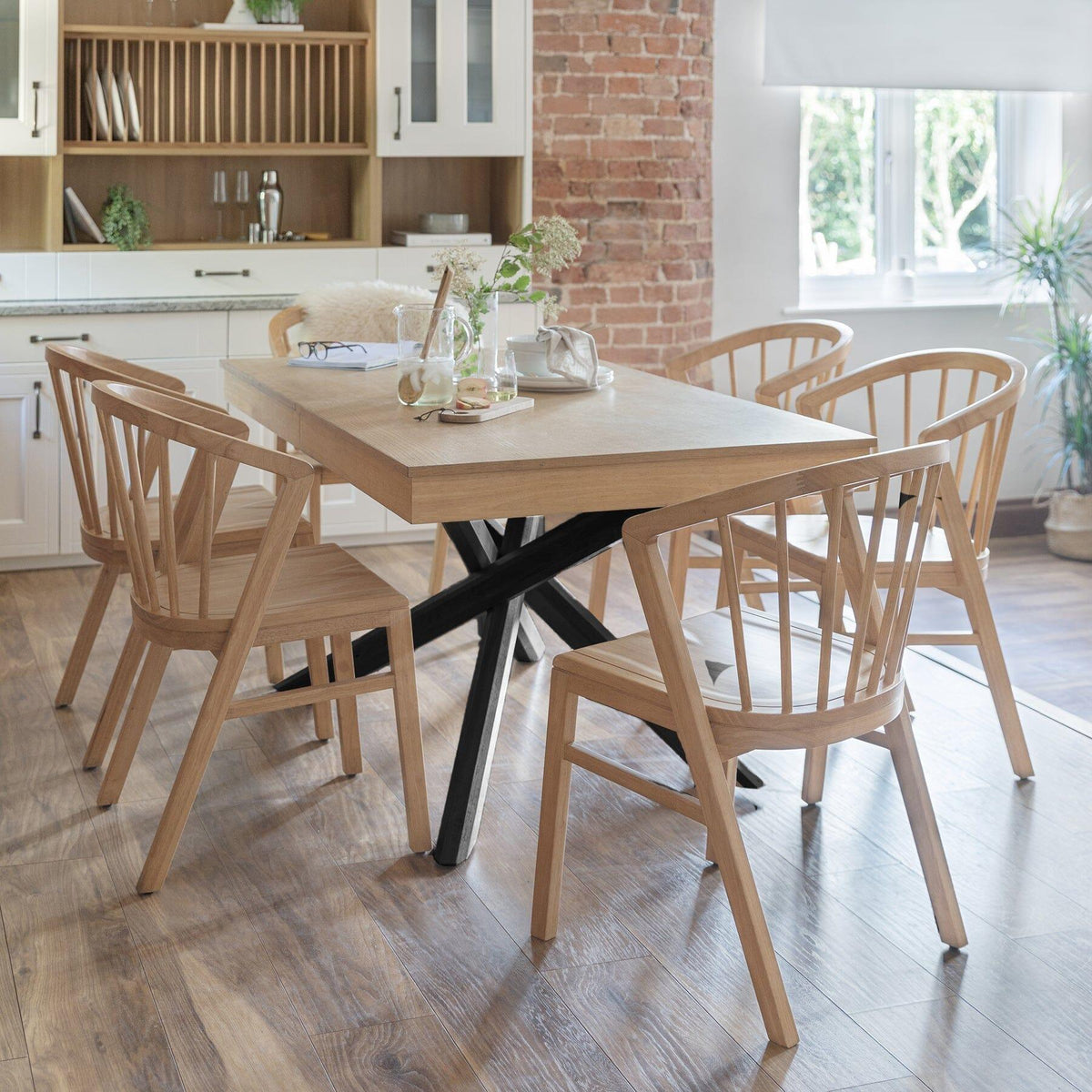
The dining table is the anchor of the whole room, so pick one that already feels coastal on its own. Whitewashed or weathered wood tables do a lot of the visual work without you needing to add much else. The grain shows through a little, giving it that sun-bleached, salt-air look.
A round or oval table softens the room and keeps traffic flowing better than sharp corners. If you’re working with a smaller space, a drop-leaf table in a whitewashed finish gives you flexibility without sacrificing style.
Practical tip: look for reclaimed wood or “farmhouse coastal” tables at furniture stores, they’re built for this exact look.
This idea flexes well too. Add darker wood tones and it leans more traditional. Keep it pale and simple, and it stays firmly coastal. Once your table is set, the chairs around it need to match that same relaxed energy.
2. Mix Woven and Wood Dining Chairs

Matching chair sets can feel stiff in a coastal room. Instead, mix woven rattan or wicker chairs with a couple of wood ones. This creates texture and keeps things from looking too matchy.
Woven chairs bring in that natural, beachy texture instantly. They’re lightweight, they photograph beautifully, and they pair with almost any table style. Wood chairs on the ends or interspersed add a bit of grounding weight so the room doesn’t feel too flimsy.
Actionable tip: if buying new chairs feels pricey, swap out just two or four chairs from your current set with rattan ones for an instant refresh.
In a more modern coastal home, go with clean-lined woven chairs. In a traditional coastal space, choose ones with curved backs and turned legs. Now that your seating has texture, let’s talk about what goes above the table.
3. Hang a Rope or Woven Pendant Light
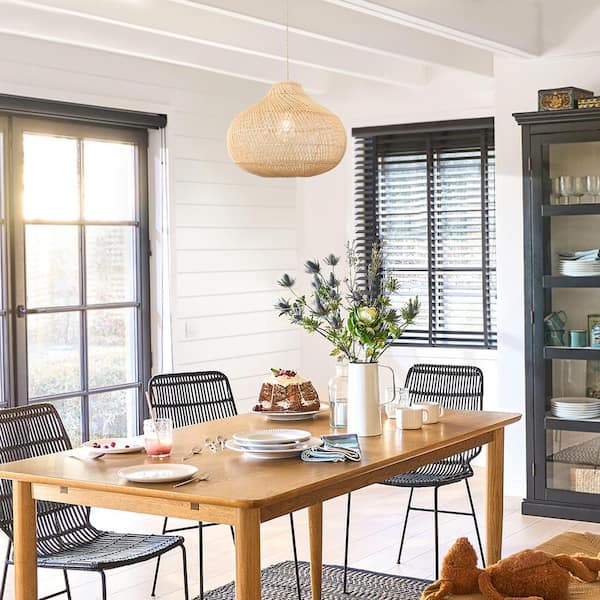
Lighting sets the mood, and a woven or rope-wrapped pendant does double duty. It gives off warm, soft light and adds a sculptural, natural element hanging right where everyone will notice it.
These lights often come in rattan, jute, or seagrass, and they cast a really pretty dappled light across the table and walls. That little detail makes dinners feel cozier without you doing much.
Practical tip: hang the pendant about 30 to 36 inches above the table so it lights the space without blocking sightlines across the table.
For a more modern coastal look, pick a fixture with a simple geometric shape. For traditional coastal spaces, a lantern-style woven fixture feels right at home. Once the lighting’s sorted, it’s time to think about what’s under everyone’s feet.
4. Layer a Jute or Seagrass Rug
A natural fiber rug adds texture underfoot and ties the whole room together. Jute and seagrass rugs are coastal staples because they mimic the look of sand and dried grasses, without being scratchy or hard to maintain.
These rugs are also super durable, which matters a lot in a dining room where spills happen. Go with a rug big enough that the front legs of your chairs stay on it even when pulled out.
Practical tip: measure your table and add at least 24 inches on all sides before buying your rug size, this keeps chairs from sliding off the edge.
Rug Size Guide by Table Size
| Table Size | Recommended Rug Size | Shape |
|---|---|---|
| 4-seat round (42″) | 6′ x 6′ round or square | Round or square |
| 6-seat rectangle (60-72″) | 8′ x 10′ | Rectangle |
| 8-seat rectangle (84-96″) | 9′ x 12′ | Rectangle |
| Oval table (70-84″) | 8′ x 11′ oval | Oval |
Jute works better in casual, beachy spaces, while a flatweave seagrass rug fits slightly more polished coastal rooms. With the flooring handled, let’s move up to the walls.
5. Paint Walls in Soft Ocean Blues or Warm Whites
Color is where coastal style really shows up. Soft blues, seafoam greens, and warm off-whites make a room feel airy and calm. Skip stark bright white, it can feel cold and clinical instead of beachy.
I always tell people to test paint samples on the wall for a few days before committing. Light changes throughout the day, and a color that looks perfect at noon might feel totally different at dinner time.
Practical tip: try a warm white with a hint of beige or gray undertone, like “Swiss Coffee” or “Alabaster,” for walls that feel soft, not sterile.
Modern coastal rooms often go for a single soft blue accent wall. Traditional coastal spaces tend to paint the whole room in a pale tone with white trim. Once your wall color is set, it’s time to bring in some pattern.
6. Add Striped or Textured Table Linens
Table linens are an easy, low-cost way to bring in pattern. Blue and white stripes are the classic coastal choice, but subtle textures like linen or waffle weave work just as well if you want something quieter.
Cloth napkins in a natural fiber like linen or cotton feel more relaxed than stiff, formal fabric. They also wash easily, which matters if you’re using your dining room often.
Practical tip: rotate a few tablecloth options (striped, solid, textured) so you can change the room’s feel without buying new furniture.
In a more formal coastal dining room, use crisp white linen with subtle blue trim. In a laid-back beach cottage style, go with a slightly wrinkled linen tablecloth, that relaxed texture is part of the charm. Speaking of texture, let’s look at window treatments next.
7. Choose Light, Breezy Curtains
Heavy drapes feel wrong in a coastal room. You want something light that lets sunlight filter through and moves a little with the breeze. Linen or cotton curtains in white, cream, or soft blue work best.
Sheer curtains alone can work if privacy isn’t a big concern. If you need more coverage, layer a sheer with a slightly heavier linen panel that you can pull closed at night.
Practical tip: hang curtain rods a few inches above the window frame and extend them wide, this makes windows look bigger and lets in more light.
Modern coastal spaces often skip curtains entirely and use simple woven blinds instead. Traditional coastal rooms lean toward soft curtain panels with a bit of movement. Now let’s bring some life into the room, literally.
8. Bring in Coastal Greenery, Not Just Shells
A lot of people go straight for shells and starfish, but greenery actually does more for the coastal vibe. Palms, ferns, and even simple olive branches in a woven basket planter bring life and color without looking like a souvenir shop.
Fresh or faux, greenery softens hard edges in the room and adds a natural pop of color against all those whites and blues.
Practical tip: place a mid-size potted plant in a corner and a small one as a centerpiece, this creates layers without overwhelming the table.
For modern coastal rooms, go with simple, sculptural plants like a single fiddle leaf fig. For traditional coastal spaces, a mix of smaller potted plants across a sideboard works nicely. Let’s talk storage and display furniture next.
9. Use a Weathered Wood or Whitewashed Sideboard

A sideboard gives you storage and display space in one piece. Look for weathered wood, whitewashed finishes, or even a piece with a bit of chippy paint for that lived-in coastal feel.
This is a great spot to display coastal-inspired items like glass vases, driftwood pieces, or a stack of woven baskets. It also keeps your table clear since extra dishes and linens can live inside.
Practical tip: choose a sideboard with a few open shelves or glass-front doors so you can style it, not just hide clutter inside.
Modern coastal homes might choose a sideboard with clean lines and brass hardware. Traditional coastal rooms often go for a more ornate piece with turned legs and a distressed finish. Once your storage is sorted, let’s think about the ceiling.
10. Add Shiplap or Beadboard Detailing
Shiplap and beadboard walls or ceilings are a coastal signature. They add texture and a slightly cottage-like feel without requiring much color. White shiplap on a single wall, or even on the ceiling, instantly makes a room feel more beachy.
You don’t need to redo the whole room. Even a chair-rail-height beadboard treatment on the lower half of the walls makes a difference.
Practical tip: if a full renovation feels like too much, peel-and-stick shiplap panels give you the look for a fraction of the cost and effort.
In a modern coastal space, keep shiplap minimal, maybe just behind a sideboard. In a traditional coastal room, full-wall shiplap feels right at home. Let’s talk about what goes on those walls next.
11. Hang Ocean-Inspired Artwork (Without Being Cheesy)
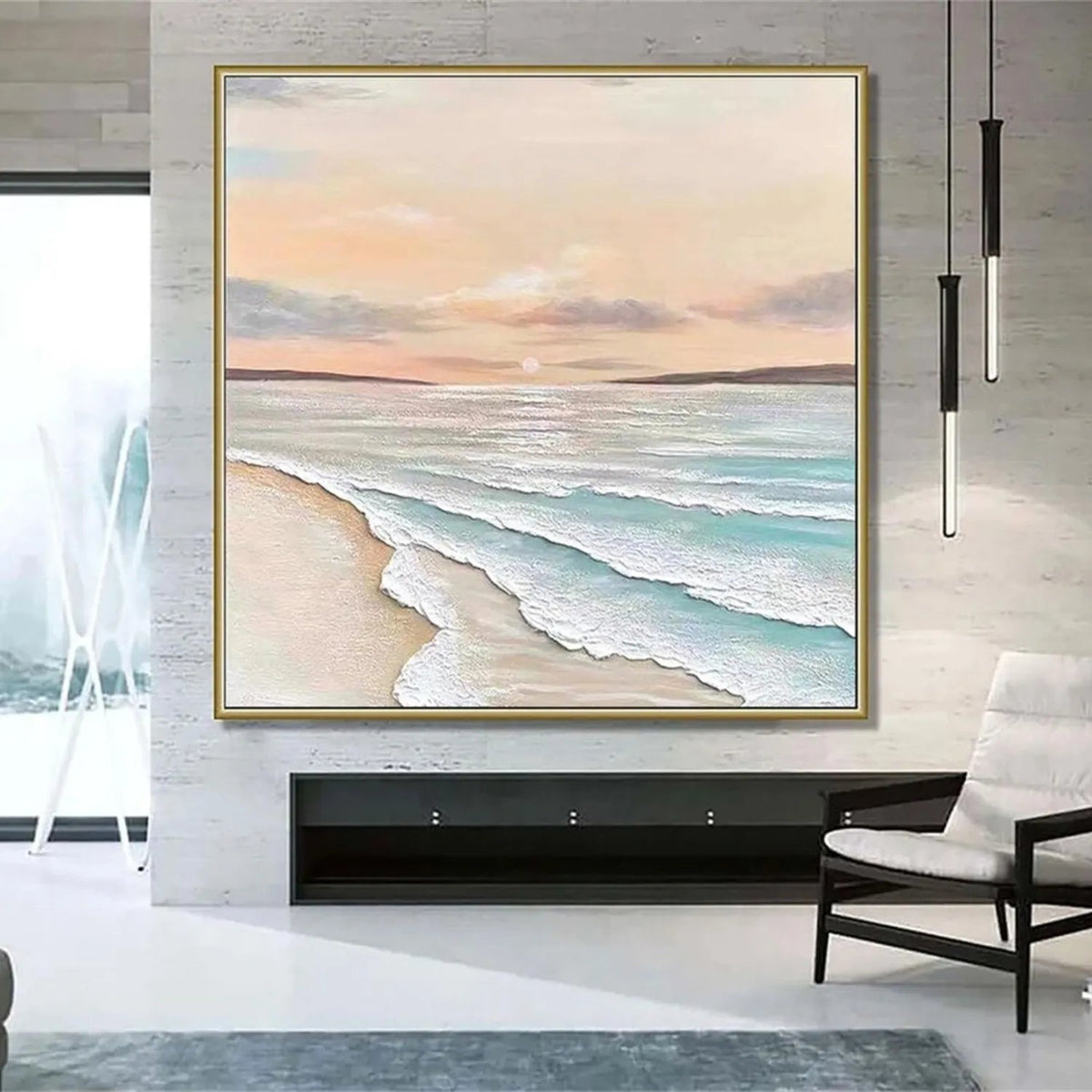
Art is where a lot of coastal rooms go wrong. Skip the literal beach scenes and anchors if you want something that feels more elevated. Instead, look for abstract art in blues and sandy tones, black and white beach photography, or simple line drawings of waves.
A gallery wall of a few smaller pieces works great above a sideboard. A single large piece works well as a focal point above the table if you don’t have a chandelier drawing the eye.
Practical tip: frame art in natural wood or white frames instead of dark, heavy frames, this keeps things feeling light.
Coastal Color Palette Combos
| Palette Name | Wall Color | Accent Colors | Best For |
|---|---|---|---|
| Classic Nautical | White | Navy, red accents | Traditional coastal |
| Sandy Neutral | Warm beige | Cream, driftwood brown | Modern coastal |
| Soft Seafoam | Pale green-blue | White, natural wood | Cottage coastal |
| Misty Morning | Light gray-blue | White, soft gold | Modern coastal |
Modern coastal rooms lean toward abstract art. Traditional coastal spaces sometimes still use a classic ship painting or vintage map. Now let’s talk about the small details that pull it all together.
12. Style the Table With Natural Centerpieces
Skip the fake flowers and go for something with texture, like a bowl of dried starfish, a woven tray with candles, or a low arrangement of eucalyptus. Glass hurricane candle holders also work great, they catch light beautifully and feel a little coastal without trying too hard.
Keep the centerpiece low so it doesn’t block conversation across the table. Simple is usually better here.
Practical tip: use a wood or woven tray as a base for your centerpiece items, it keeps everything looking intentional instead of scattered.
Modern coastal tables often go with just a single sculptural object, like a large piece of driftwood. Traditional coastal tables might layer a few smaller items together. With the table styled, let’s look at flooring options beyond rugs.
13. Choose Light Wood or Whitewashed Flooring
If you’re doing any renovation, flooring matters more than people realize. Light wood floors, whitewashed planks, or even a light-toned tile all support the coastal look better than dark hardwood.
Dark floors can make a room feel heavier and more formal, which fights against that relaxed coastal feeling. Light floors bounce light around the room and make everything feel more open.
Practical tip: if replacing floors isn’t in the budget, a large jute or seagrass rug can visually “lighten” darker existing floors.
Modern coastal homes often use wide-plank whitewashed engineered wood. Traditional coastal spaces might use a distressed pine floor for a more cottage feel. Finally, let’s talk about pulling in metal accents.
14. Add Warm Metal or Brass Accents
Coastal doesn’t mean everything is white and blue. A few warm metal touches, like brass drawer pulls, gold-rimmed glassware, or a brass light fixture, keep the room from feeling flat or one-note.
These small metallic details add a little shine and warmth, balancing out all that light, airy color happening everywhere else in the room.
Practical tip: stick to one metal finish throughout the room (brass, gold, or brushed nickel) so things feel cohesive instead of mismatched.
Modern coastal rooms often use brushed gold for a subtle glow. Traditional coastal spaces might use aged brass for a more vintage feel. And with that, you’ve got all fourteen pieces of the puzzle.
Tips for Success
- Start with your biggest piece (the table) and build color and texture around it, not the other way around.
- Keep at least one element in every room slightly imperfect or weathered, it makes the space feel more authentic.
- Don’t be afraid to mix wood tones. Coastal style isn’t about matching everything perfectly.
- Natural light matters a lot here, so avoid heavy window treatments that block it.
- Add texture in layers: rug, linens, chairs, and lighting should each bring something different to the table.
- Shop secondhand for sideboards and chairs, weathered pieces often look more authentic than brand new ones.
- Keep decorative accessories to a minimum. Coastal style is calm, not cluttered.
Common Mistakes and How to Avoid Them
Overdoing the nautical theme
: Skip the anchors, ropes, and shell-covered everything. Use color and texture instead of literal beach objects.
Choosing dark, heavy furniture
: Stick with light woods, whitewashed finishes, or weathered pieces instead of dark mahogany or cherry wood.
Ignoring lighting
: A dim, closed-off room kills the coastal vibe fast. Add sheer curtains and warm-toned bulbs to keep the space bright.
Using stark white everywhere
: Stark white can feel cold. Warm whites and creams feel much closer to real coastal homes.
Skipping texture
: A room with only smooth surfaces feels flat. Add woven baskets, jute rugs, and linen fabrics for depth.
Matching every piece of furniture
: A perfectly matched dining set looks stiff. Mix chair styles and materials for a more relaxed, collected-over-time feel.
Similar Variations
- Coastal Boho: Adds more pattern, layered rugs, and global textiles to the classic coastal base.
- Nantucket Coastal: Leans traditional with navy and white stripes, brass accents, and classic New England details.
- Mediterranean Coastal: Mixes in terracotta tones, wrought iron, and warmer color palettes.
- Modern Coastal: Strips things down to clean lines, minimal decor, and a more neutral, sandy color scheme.
- Cottage Coastal: Focuses on shiplap, vintage furniture, and a slightly worn, cozy farmhouse feel.
- Tropical Coastal: Brings in bold greenery, rattan furniture, and brighter accent colors like coral or turquoise.
Putting together a coastal dining room really comes down to picking the right mix of light woods, natural textures, and calm colors, then layering in just enough detail to keep it interesting without going overboard. Once you’ve worked through these 14 coastal dining room ideas, you’ll have everything you need to build a space that feels relaxed, bright, and a little like a permanent vacation.
Leave a Reply