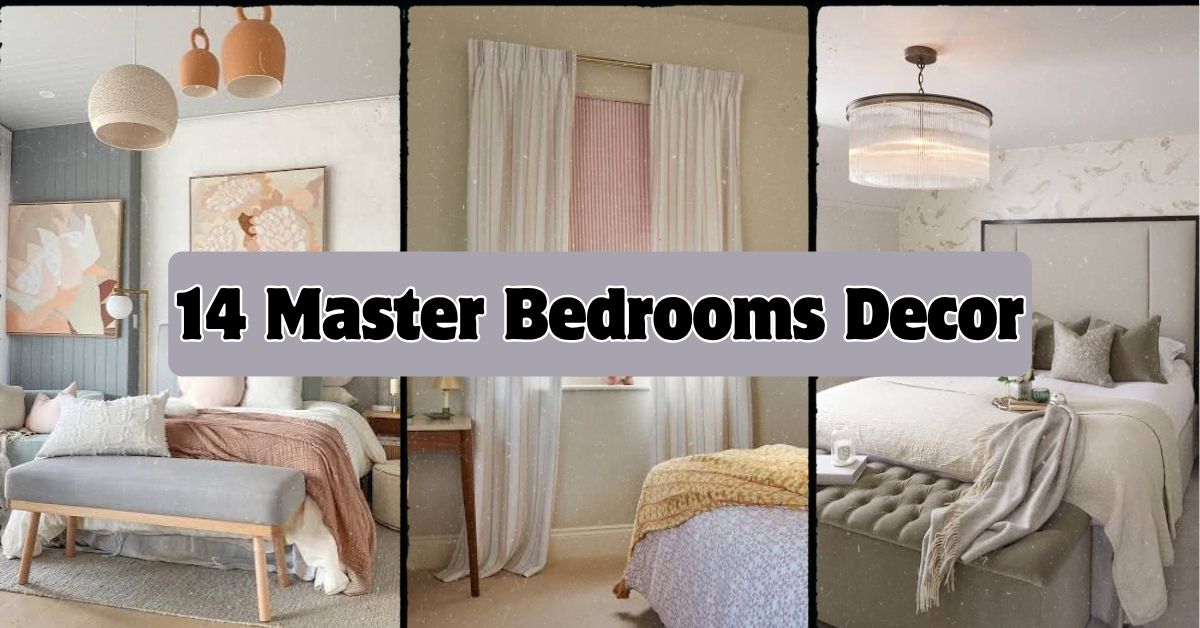
I’ve spent way too many nights scrolling through decor photos, trying to figure out what makes a master bedroom feel like an actual retreat instead of just a room with a bed in it, and this collection of 14 master bedrooms decor ideas is the answer I wish I’d found sooner. I’ve tested a bunch of these myself, and I’ve watched friends transform their sad, boring bedrooms into spaces they actually want to spend time in. So stick with me here.
A master bedroom decor plan combines furniture layout, color scheme, lighting, and textiles to create a calm, functional retreat. The goal is comfort and personal style, balanced with practical storage and good flow around the bed and closet areas.
Ever walked into your bedroom after a long day and felt more stressed than relaxed? That’s about to change. Let’s get into it.
What Makes Master Bedroom Decor Different
Your master bedroom isn’t like other rooms in the house. It’s not for guests. It’s not for showing off. It’s the one space that’s just yours (and your partner’s, if you’ve got one). That means the rules are different here.
I always tell people to think of their master bedroom as a hotel suite they never have to check out of. Good hotel rooms feel calm, uncluttered, and cozy at the same time. That’s the vibe we’re chasing. You don’t need a huge budget or a professional designer. You need smart choices about color, layout, and a few key pieces that pull everything together.
Now let’s get into the actual ideas.
1. Anchor the Room With a Statement Headboard
Your bed is the star of the show, so treat it that way. A tall, upholstered headboard instantly makes a room feel more expensive and pulled together, even if everything else is basic. I like linen or velvet upholstery because both age well and feel soft to lean against while reading.
Practical tip: Go at least 4 inches wider than your mattress on each side so the headboard doesn’t look squeezed.
This idea flexes easily. Traditional homes look great with tufted, button-detail headboards. Modern spaces do better with clean-lined, low-profile options. Coastal bedrooms can use rattan or whitewashed wood frames instead.
Once your headboard is in place, the next thing to think about is what’s happening on the walls around it.
2. Paint an Accent Wall Behind the Bed
A single accent wall behind the headboard gives your eye somewhere to land. It’s cheaper than painting the whole room and way less risky if you’re nervous about bold color. Deep greens, warm terracottas, and soft charcoals all work well here.
Practical tip: Test your paint color at three different times of day. Lighting changes everything, and a color that looks great at noon can look muddy at night.
Farmhouse bedrooms tend to lean toward soft sage or warm white. Contemporary spaces can handle darker, moodier shades like navy or espresso brown.
Once the wall color is settled, layering in the right textiles becomes way easier.
Color Palette Combinations for Master Bedrooms
| Style | Wall Color | Bedding | Accent Color |
|---|---|---|---|
| Modern | Charcoal Gray | White + Gray | Brass/Gold |
| Coastal | Soft Blue-White | Ivory Linen | Seafoam Green |
| Traditional | Deep Navy | Cream + Navy | Burgundy |
| Boho | Warm Terracotta | Cream + Rust | Mustard Yellow |
| Scandinavian | Off-White | Light Gray | Natural Wood |
3. Layer Bedding for a Hotel-Level Look
This one changed my bedroom more than anything else on this list. A flat white duvet looks fine, but layering matters. Start with a fitted sheet, add a duvet, then throw a textured blanket across the bottom third of the bed, and finish with a few pillows in mixed sizes.
Practical tip: Use an odd number of pillows. Three or five looks more intentional than an even stack.
Minimalist bedrooms should stick to two or three layers max. Maximalist or eclectic spaces can pile on patterns and textures without it looking messy.
Bedding sets the tone, but nothing finishes a room faster than the right window treatments.
4. Hang Floor-Length Curtains, Even on Small Windows
Short curtains make ceilings look lower and rooms feel smaller. Floor-length panels do the opposite. Hang your curtain rod higher than the window frame, close to the ceiling if you can, so the whole wall looks taller.
Practical tip: Buy curtains that are at least 84 inches long for standard 8-foot ceilings, and go longer if your ceilings are taller.
Linen curtains suit relaxed, coastal, or farmhouse rooms. Velvet or blackout-lined panels work better in traditional or moody modern bedrooms where you want more drama and better sleep.
Once your windows are dressed, lighting becomes the next big opportunity.
5. Swap Overhead Lighting for Layered Lamps
Harsh overhead lighting is the enemy of a relaxing bedroom. I switched to table lamps and a floor lamp in the corner, and the room instantly felt warmer and more inviting. Aim for at least three light sources at different heights.
Practical tip: Use warm white bulbs (2700K to 3000K) instead of daylight bulbs. Cooler light feels clinical, not cozy.
Modern rooms look great with sculptural metal lamps. Traditional spaces do well with fabric shades and ceramic bases.
Good lighting sets the mood, but nightstands are where function meets style next.
6. Choose Nightstands That Actually Fit Your Needs
Matching nightstands look nice in photos, but mismatched ones can look even better and give the room personality. What matters more is function. Do you need drawer storage? A shelf for books? Room for a lamp and a glass of water?
Practical tip: Nightstand height should sit within 2 inches of your mattress top for easy reach at night.
Traditional homes often go with matching wood pairs. Eclectic or boho bedrooms can mix a vintage side table on one side with a modern piece on the other.
Once your nightstands are sorted, it’s time to think about what’s underfoot.
7. Add a Rug That Extends Past the Bed Frame
A small rug that only peeks out from under the bed looks like an afterthought. Go bigger. Your rug should extend at least 18 to 24 inches past each side of the bed so your feet land on something soft when you get up.
Practical tip: Measure your bed frame first, then add the extra inches on all visible sides before buying.
Wool and jute rugs suit farmhouse and coastal rooms. Silk-blend or high-pile rugs feel more at home in glam or traditional spaces.
With the floor handled, let’s talk about the walls again, but this time above eye level.
8. Add Texture With Wood Beams or Wall Paneling
Flat walls can feel a little empty in a master bedroom, especially if you’ve got high ceilings. Wood paneling, shiplap, or exposed beams add texture without adding clutter. This works especially well on the wall behind the bed or across the ceiling.
Practical tip: Stick with a single wood tone throughout the room so paneling doesn’t compete with furniture finishes.
Farmhouse and traditional bedrooms benefit most here. Modern spaces can use slatted wood panels for a similar effect with cleaner lines.
Once your walls have some texture, it’s worth thinking about how you’re storing everything.
Budget Tiers for a Master Bedroom Refresh
| Budget Tier | What You Can Do | Estimated Cost |
|---|---|---|
| Low ($100-$300) | New bedding, throw pillows, one accent wall | $100-$300 |
| Mid ($500-$1,500) | New rug, lamps, curtains, small furniture swap | $500-$1,500 |
| High ($2,000-$5,000) | New bed frame, custom closet, full furniture set | $2,000-$5,000 |
| Luxury ($5,000+) | Built-ins, wall paneling, designer lighting, custom textiles | $5,000+ |
9. Create a Dedicated Reading Nook
If you’ve got extra corner space, a small reading nook adds function without taking over the room. A comfortable chair, a small side table, and a floor lamp are all you really need. This gives you a spot to unwind that isn’t the bed itself, which actually helps with better sleep habits.
Practical tip: Position the chair near natural light if possible, and add a floor lamp for nighttime reading.
Scandinavian bedrooms often use a simple accent chair and a sheepskin throw. Traditional rooms might add a wingback chair with a small bookshelf nearby.
Speaking of extra function, let’s talk about mirrors next.
10. Use a Large Mirror to Bounce Light Around
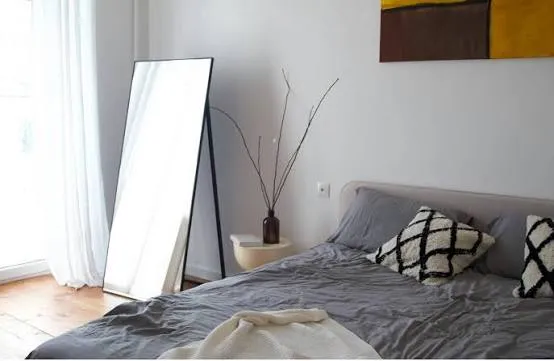
Mirrors do double duty. They make a room feel bigger, and they bounce natural light around, which matters a lot in bedrooms with small windows. A full-length or oversized leaning mirror works great against an empty wall.
Practical tip: Place your mirror across from a window, not directly beside it, to reflect the most light into the room.
Modern rooms tend to use sleek, frameless mirrors. Traditional or vintage-inspired bedrooms look great with ornate, gold-framed options instead.
Once your light is working for you, decorative accents are the next layer to think about.
11. Bring in Greenery for a Softer, Lived-In Feel
A plant or two makes a bedroom feel less staged and more like someone actually lives there. Low-maintenance options like snake plants or pothos do fine in lower light conditions common in bedrooms.
Practical tip: Keep plants away from direct heating vents, which dry them out fast.
Boho and coastal spaces can go bigger with multiple plants and hanging varieties. Minimalist rooms usually do better with just one simple, structural plant like a fiddle leaf fig.
Plants soften a room, but personal touches are what really make it feel like yours.
12. Display Personal Art That Actually Means Something
Skip the generic canvas art from big box stores. Personal photos, travel finds, or a piece from a local artist make the room feel like it belongs to you. Group smaller pieces in a gallery wall, or go big with one statement piece above the dresser.
Practical tip: Hang art so the center sits at eye level, roughly 57 to 60 inches from the floor.
Eclectic and maximalist bedrooms can layer multiple art styles together. Minimalist spaces do better with one or two carefully chosen pieces and lots of breathing room around them.
Art brings personality, but scent and sound matter too, which brings me to the next idea.
13. Add a Scent Layer With Candles or Diffusers
This one’s easy to skip, but it makes a real difference. A signature scent in your bedroom, whether from candles, a diffuser, or a linen spray, adds another sensory layer that makes the room feel finished. Woody or lavender scents tend to work well for relaxation.
Practical tip: Stick to one scent family in the bedroom so it doesn’t clash with other rooms in your home.
This idea works in literally every design style since it’s more about the sensory experience than the visuals.
Last but not least, let’s close the loop with one final structural idea.
14. Define Zones With an Area Rug or Furniture Placement
If your master bedroom is large enough, break it into zones. One area for sleeping, another for dressing or lounging. This keeps a big room from feeling like one giant, undefined space.
Practical tip: Use a bench or a low dresser as a visual divider between the sleeping zone and a sitting or dressing area.
Modern lofts and open-concept primary suites benefit most from this trick, though even smaller bedrooms can use a rug to define just the bed area.
That wraps up the main list, but a few extra tips can help you pull it all together successfully.
Tips for Success
- Start with the bed and build outward. Everything else should complement it, not compete with it.
- Stick to a three-color rule: one main color, one secondary, and one accent, to avoid visual chaos.
- Buy the biggest rug your budget allows. Undersized rugs are the most common decor mistake I see.
- Keep clutter off nightstands. Two items max per surface keeps things feeling calm.
- Test paint samples on the actual wall, not just a swatch card, before committing.
- Don’t forget the ceiling. A coat of paint or wallpaper up there can transform the whole room.
- Shop secondhand for one or two furniture pieces to add character without blowing your budget.
Common Mistakes and How to Avoid Them
Undersized Area Rug
: Buy a rug big enough to extend well past the sides of the bed frame, not just a small strip at the foot of the bed.
Too Much Matching Furniture
: Mix at least one different finish or era into your furniture set so the room doesn’t look like a showroom display.
Skipping Layered Lighting
: Add table lamps and floor lamps in addition to any overhead fixture so the room has warmth at multiple heights.
Ignoring Scale
: Measure your room before buying furniture. Oversized pieces in a small room make everything feel cramped.
Forgetting Storage Needs
: Choose nightstands and dressers with drawers, not just open shelving, to keep everyday clutter out of sight.
Overdoing Trendy Colors
: Use trendy shades as accents through pillows or art instead of painting the whole room, so the space ages better over time.
Similar Variations
- Coastal Boho Bedroom: Mixes rattan furniture and woven textures with breezy linen bedding in soft neutral tones.
- Modern Farmhouse Bedroom: Combines shiplap walls and wood beams with simple, clean-lined furniture and muted color palettes.
- Japandi Bedroom: Blends Japanese minimalism with Scandinavian warmth using natural wood, low furniture, and neutral tones.
- Dark Academia Bedroom: Uses deep wood tones, vintage furniture, and moody colors like burgundy and forest green for a cozy, scholarly feel.
- Glam Bedroom: Leans on metallic accents, velvet textiles, and mirrored furniture for a more dramatic, luxurious look.
- Desert Modern Bedroom: Pulls in warm terracotta tones, woven textures, and simple furniture inspired by southwestern landscapes.
Putting together a bedroom you actually love doesn’t happen overnight, and it doesn’t require a massive budget either. Small, smart changes, like the right rug size, better lighting, or a headboard that actually fits the room, add up fast. I hope this list of 14 master bedrooms decor ideas gives you a clear starting point for building a space that finally feels like the retreat you deserve.
Leave a Reply