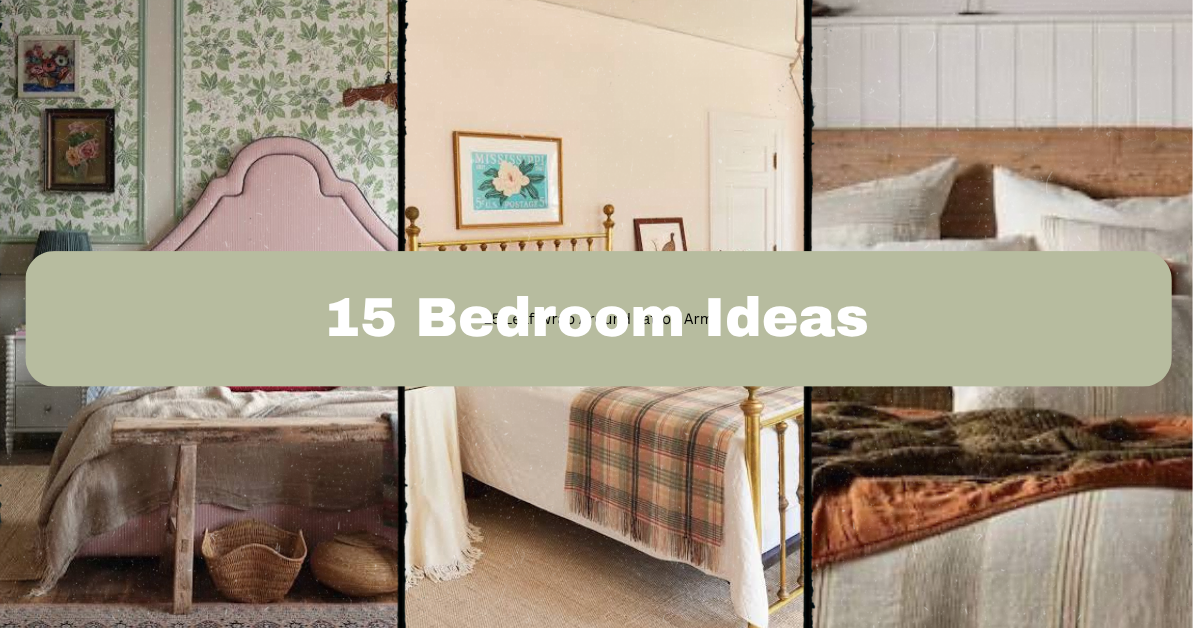
Ever laid in bed staring at your ceiling, wondering why your room feels more like a storage unit than a place you actually want to relax in? I get it, and that’s exactly why I put together these 15 bedroom ideas to help you fix that fast.
A bedroom is the private space in a home used primarily for sleeping and rest, typically containing a bed, storage furniture, and personal items. The best bedroom designs balance comfort, function, and personal style through thoughtful color choices, layout, and decor.
Stick with me here. I’m about to walk you through real, doable changes that turn a boring box of a room into somewhere you actually look forward to ending your day.
Why Your Bedroom Setup Actually Matters
Here’s the thing about bedrooms. We spend a third of our lives in them, but most people treat this room like an afterthought. I’ve made that mistake myself. I used to just shove furniture wherever it fit and call it done.
But your bedroom sets the tone for how you sleep, how you wake up, and honestly how stressed you feel at the end of a long day. It doesn’t need to be Pinterest-perfect. It just needs to work for you. That’s what this list is really about. Small, smart changes that add up to a room that feels calm, organized, and totally yours.
Let’s get into the good stuff.
1. Anchor the Room with a Statement Headboard
Your headboard is basically the face of your bedroom. A bold one instantly makes the whole room feel more intentional instead of thrown together.
Go for upholstered headboards in velvet or linen if you want a soft, cozy vibe. Want something more rustic? Try reclaimed wood. Metal frames with geometric shapes work great in modern spaces.
Practical tip: measure your bed frame width before buying so your headboard doesn’t look awkwardly small or oversized against the wall.
This idea flexes easily. Traditional homes love tufted leather or carved wood. Coastal bedrooms do well with whitewashed wood or rattan. Modern spaces lean toward clean lines and neutral fabric.
Once your headboard is set, you’ll want the wall behind it to actually support that statement piece, which brings us to color.
2. Pick a Calming Color Palette Instead of Trend-Chasing
I know it’s tempting to paint your walls whatever color is trending on social media. But bedrooms need color schemes that calm your nervous system down, not hype it up.
Soft blues, sage greens, warm terracottas, and muted grays all work well because they’re low on visual noise. Save bright reds and neon colors for accent pillows or art instead of whole walls.
Bedroom Color Palettes by Mood
| Mood Goal | Wall Color | Accent Colors | Best For |
|---|---|---|---|
| Deep relaxation | Sage green | Cream, warm brown | Anxious sleepers |
| Cozy warmth | Terracotta | Rust, mustard | Cold climates |
| Airy calm | Soft blue | White, driftwood gray | Small rooms |
| Moody luxury | Charcoal gray | Gold, deep green | Larger primary bedrooms |
| Bright simplicity | Warm white | Black, natural wood | Minimalist styles |
Tip: test paint swatches on your wall for a full day before committing. Colors shift dramatically under morning versus evening light.
Once your palette is locked in, your next move is figuring out how to layer texture on top of it so the room doesn’t feel flat.
3. Layer Textures Through Bedding and Throws
A single-color bedroom with no texture variation looks like a hotel room nobody booked. Texture is what makes a space feel lived-in and warm.
Mix a chunky knit throw with smooth cotton sheets. Add a linen duvet cover with a faux fur accent pillow. The contrast between rough and smooth, matte and shiny, keeps your eyes interested without adding more color.
Actionable tip: aim for at least three different textures on your bed at any time. Bedding, throw, and pillow covers count separately.
Farmhouse bedrooms lean into chunky knits and woven baskets. Modern bedrooms keep textures minimal but still varied, like silk paired with matte linen.
Once your bed is textured and cozy, it’s time to think about what’s actually going on the walls around it.
4. Create a Gallery Wall That Tells Your Story
Blank walls make a bedroom feel unfinished, but one giant piece of art can feel impersonal. A gallery wall solves both problems by mixing framed photos, small art prints, and maybe a mirror or two.
Don’t overthink symmetry. Odd-numbered groupings, like five or seven pieces, tend to look more natural than even ones. Mix frame colors and sizes for visual interest.
Practical tip: lay your pieces out on the floor first and take a photo before hammering a single nail. This saves you from a wall full of unnecessary holes.
Traditional homes might frame family photos in gold or wood frames. Modern spaces often stick to black frames and abstract prints for a cleaner look.
Now that your walls have personality, let’s talk about the furniture piece most people completely forget about.
5. Add a Bench or Ottoman at the Foot of the Bed
This one small piece changes how a bedroom functions. A bench at the foot of your bed gives you a spot to sit while putting on shoes, a place to toss clothes temporarily, and it visually anchors the whole bed setup.
Pick an upholstered bench for softness or a wooden one for durability. Storage ottomans are great if you’re tight on closet space since you can hide extra blankets inside.
Tip: measure the space at the foot of your bed. You’ll want at least 24 inches of clearance so it doesn’t block walking space.
Coastal bedrooms often use woven rattan benches. Modern bedrooms go for a simple upholstered rectangle in a neutral tone.
With your bed area fully set up, let’s move toward lighting, which honestly changes everything about how a room feels at night.
6. Layer Your Lighting Instead of Relying on One Overhead Fixture
A single ceiling light makes a bedroom feel like an office. Real coziness comes from layered lighting, meaning you’ve got multiple light sources at different heights doing different jobs.
Add bedside lamps for reading. Try a floor lamp in a reading nook. Consider LED strip lights behind your headboard for subtle ambiance at night.
Practical tip: use warm white bulbs, around 2700K, instead of cool white. Warm light feels relaxing while cool light feels clinical.
Modern bedrooms often use sleek sconces mounted on the wall. Traditional bedrooms lean into table lamps with fabric shades.
Lighting Layers and Their Purpose
| Light Type | Placement | Best Use | Bulb Temp |
|---|---|---|---|
| Overhead fixture | Ceiling center | General light | 3000K |
| Bedside lamp | Nightstands | Reading | 2700K |
| Floor lamp | Reading corner | Task lighting | 2700K |
| LED strip | Behind headboard | Ambiance | 2200K |
| Wall sconce | Above nightstand | Space-saving | 2700K |
Once your lighting is sorted, you’ll want storage that keeps all this new decor from turning into clutter.
7. Maximize Storage with Furniture That Pulls Double Duty
Small bedrooms especially benefit from furniture that does more than one job. A storage bed with drawers underneath. A nightstand with multiple compartments. A bench that opens up to store blankets.
This isn’t just about function though. Multi-purpose furniture keeps your room looking clean because everything has a home instead of piling up on chairs or the floor.
Actionable tip: go vertical with storage when floor space is tight. Wall-mounted shelves above a dresser add storage without eating up square footage.
Modern bedrooms favor built-in closet systems with clean lines. Traditional bedrooms often use armoires or chests with decorative hardware.
Speaking of keeping things tidy, let’s talk about rugs, because bare floors make even the most decorated room feel cold and unfinished.
8. Layer a Woven Rug for Warmth Underfoot
A bedroom without a rug feels incomplete, especially if you’ve got hardwood or tile floors. Rugs soften the room visually and physically, giving your feet something warm to land on first thing in the morning.
Go big. A rug that’s too small under your bed makes the whole room feel disproportionate. Aim for a rug that extends at least 18 inches past each side of the bed.
Practical tip: layer a smaller patterned rug over a larger neutral one for texture without overwhelming the room visually.
Bohemian bedrooms love vintage-style Persian rugs. Coastal spaces often go with jute or sisal for a natural, textured look.
Now let’s talk about something people underestimate constantly: window treatments.
9. Choose Curtains That Actually Block Light When You Need It
Sheer curtains look pretty in photos, but they do nothing for actual sleep quality. If you’re someone who struggles with early morning light waking you up, blackout curtains are non-negotiable.
Layer sheer curtains behind blackout ones for the best of both worlds. During the day, open the blackout layer and let the sheers filter soft light. At night, close everything up.
Tip: hang curtain rods higher than your window frame, close to the ceiling. This makes windows look taller and the whole room feel more spacious.
Farmhouse bedrooms often use simple linen panels. Modern bedrooms prefer solid, structured blackout panels in neutral tones.
Once your windows are handled, it’s time to think about scent and sound, two senses people totally forget when decorating.
10. Bring in Scent and Sound for a Fuller Sensory Experience
Decor isn’t just visual. A bedroom that smells like a calming candle or diffuser and has soft background sound, like a white noise machine, feels more complete than one that only looks good.
Lavender, sandalwood, and eucalyptus scents are popular for bedrooms because they’re associated with relaxation. Keep scents subtle though. Overpowering smells can actually disrupt sleep instead of helping it.
Practical tip: place your diffuser away from your direct sleeping area so the scent doesn’t feel too strong right at your face.
This idea works across every style since scent and sound aren’t visual, they just make whatever aesthetic you already have feel more immersive.
Speaking of small details that add up, let’s talk about plants next.
11. Add Live Plants for Better Air and a Softer Feel
A bedroom with a plant or two instantly feels less sterile. Plants add natural texture, a pop of color, and honestly just make a space feel more alive.
Snake plants and pothos are great for bedrooms since they’re low maintenance and tolerate lower light levels. Avoid overly fragrant flowering plants since strong scents can interfere with sleep.
Tip: keep at least one plant on your nightstand or dresser at eye level. It draws the eye up and makes the room feel taller.
Bohemian and coastal bedrooms often go heavy on plants. Modern minimalist spaces usually stick to just one or two statement plants instead of a full jungle.
Now let’s cover a detail that ties a whole room together: your mirror placement.
12. Position a Mirror to Reflect Light and Open Up the Space
Mirrors aren’t just functional, they’re one of the easiest ways to make a small bedroom feel bigger. Placing a mirror across from a window bounces natural light deeper into the room.
A full-length mirror leaning against a wall adds a relaxed, layered look. A round mirror above a dresser adds softness against a room full of straight lines and edges.
Practical tip: avoid placing a mirror directly across from your bed if you’re sensitive to feng shui principles, since some believe it disrupts restful sleep.
Traditional bedrooms often use ornate framed mirrors. Modern spaces go for simple, frameless round or rectangular designs.
Bedroom Furniture Budget Guide
| Item | Budget Tier | Mid-Range Tier | High-End Tier |
|---|---|---|---|
| Bed frame | $150-$300 | $400-$800 | $1,000+ |
| Nightstands (pair) | $80-$150 | $200-$400 | $500+ |
| Area rug (8×10) | $100-$200 | $300-$600 | $800+ |
| Curtains (pair) | $30-$60 | $80-$150 | $200+ |
| Headboard | $100-$250 | $300-$600 | $700+ |
With your furniture and layout sorted, the last few ideas are about the finishing touches that make a room feel finished instead of half done.
13. Style Your Nightstand Like It’s a Tiny Design Vignette
Most nightstands become dumping grounds for chargers and random junk. Instead, treat it like a tiny styled corner. A lamp, a small stack of books, a plant, and maybe a small tray for jewelry or glasses.
Keep it to three or four items max so it doesn’t look cluttered. Everything else should have a home in a drawer.
Practical tip: use a small tray to corral little items like rings or hand cream. It keeps things organized while still looking intentional.
Modern bedrooms keep nightstand styling minimal, maybe just a lamp and one book. Traditional spaces allow a bit more, like a small clock or framed photo.
14. Use a Canopy or Draped Fabric for Softness Overhead
If your bedroom feels a little flat, adding fabric above your bed, either a canopy frame or draped curtains from the ceiling, adds instant coziness and drama without a full renovation.
This works especially well in rooms with high ceilings that otherwise feel a bit empty and cold. Choose lightweight fabric like linen or muslin so it doesn’t feel heavy or overwhelming.
Tip: install a simple curtain rod above your bed frame and drape fabric loosely rather than trying to create a perfectly symmetrical canopy. Imperfect looks more natural anyway.
Bohemian and romantic bedroom styles love this look. Modern minimalist spaces usually skip it in favor of cleaner lines.
15. Personalize with One Meaningful Object, Not a Dozen
Last one, and honestly it might be the most important. Every great bedroom has at least one object that means something. A piece of art from a trip. A quilt made by a grandparent. A framed ticket stub from a concert that mattered.
Don’t cram every sentimental item into the room at once. Pick one or two standout pieces and let them shine instead of getting lost in clutter.
Practical tip: give your meaningful object its own dedicated spot, like a shelf or a specific wall, instead of tucking it in with everything else.
This idea works in literally every style because personal meaning doesn’t follow design rules. It just needs a little breathing room to stand out.
Tips for Success
- Start with function before decor. Figure out what you actually need in the room before buying anything pretty.
- Stick to a three-color rule for the whole room, one main color, one secondary, and one accent, to avoid visual chaos.
- Buy the biggest rug your budget allows. Undersized rugs are one of the most common design mistakes.
- Test your lighting at night before finalizing your setup. What looks good in daylight can feel harsh or dim after dark.
- Don’t rush furniture placement. Live with a layout for a week before deciding it’s final.
- Keep at least one wall mostly empty if your room is small. Full walls on every side can feel cramped.
- Shop secondhand for statement pieces like dressers or benches. Vintage furniture often has better build quality than new budget options.
Common Mistakes and How to Avoid Them
Buying a rug too small for the bed
: Measure first. Your rug should extend well past the sides of the bed frame, not just peek out from underneath.
Overloading the room with too many accent colors
: Stick to a simple palette of three colors max, then use patterns and textures to add interest instead of more colors.
Relying only on overhead lighting
: Add at least two additional light sources, like a lamp and wall sconce, to create depth and warmth at night.
Ignoring curtain length and placement
: Hang curtains close to the ceiling and let them graze the floor for a taller, more polished look.
Skipping a headboard entirely
: Even a simple upholstered or wood headboard gives the bed a visual anchor and prevents the wall behind it from feeling bare.
Cluttering nightstands with random items
: Limit nightstand decor to three or four purposeful pieces and give everything else a drawer or bin.
Similar Variations
- Coastal Bedroom – light woods, whites, and blues inspired by beach house living
- Bohemian Bedroom – layered textiles, plants, and warm earthy tones with a relaxed, collected feel
- Scandinavian Bedroom – minimal furniture, light woods, and neutral palettes focused on function
- Farmhouse Bedroom – rustic wood, cozy textiles, and a mix of vintage and practical decor
- Industrial Bedroom – exposed materials like metal and brick paired with moody, dark color schemes
- Japandi Bedroom – a blend of Japanese minimalism and Scandinavian warmth using natural materials and low furniture
Putting all this together doesn’t mean overhauling your whole room overnight. Small changes, like better lighting or a properly sized rug, add up fast and make a real difference in how your space feels. That’s really the whole point behind these 15 bedroom ideas: simple, doable updates that turn your room into somewhere you actually want to spend time.
Leave a Reply