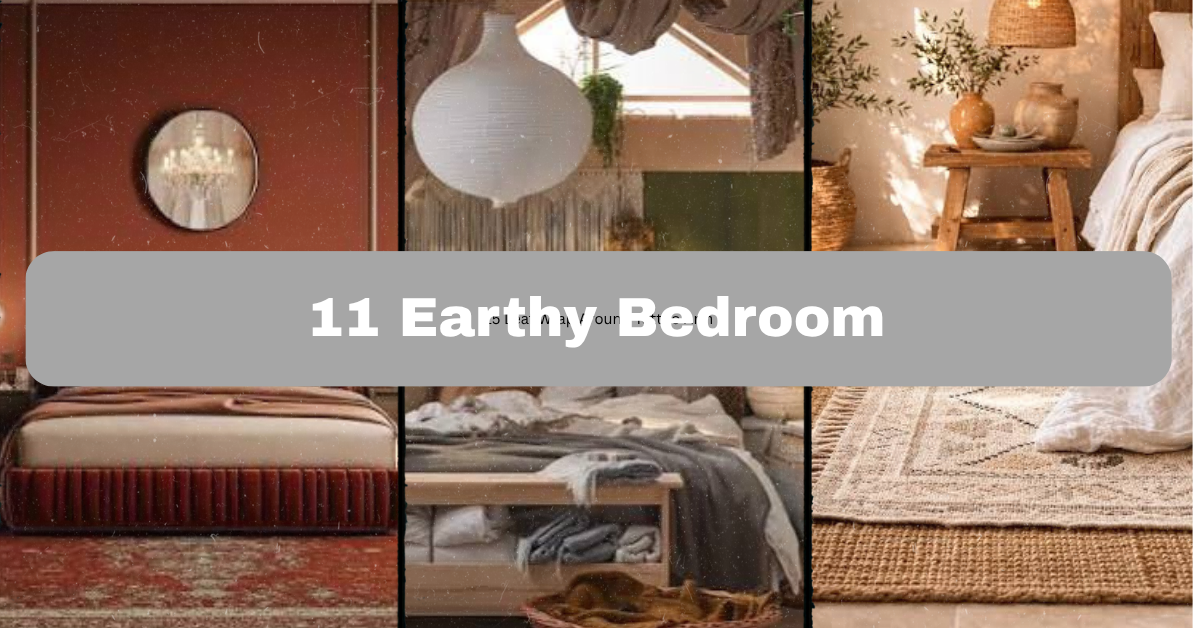
I’ve tested a lot of bedroom styles over the years, and I can tell you this 11 Earthy Bedroom guide is about as complete as it gets. I pulled together the ideas that actually work in real homes, not just in staged photos, so you’re getting stuff you can actually use.
An earthy bedroom uses natural colors, raw materials, and organic textures to create a calm, grounded space. Think clay tones, wood furniture, linen bedding, and plants. The goal is a room that feels like nature without looking like a cabin.
Stick with me and I’ll walk you through twelve specific ways to pull this look off, plus a few mistakes that trip people up along the way.
What Makes a Bedroom Feel “Earthy” Anyway?
So here’s the thing about earthy bedrooms. They’re not about slapping brown paint on a wall and calling it done. It’s a whole vibe built on things that come from the ground, literally. We’re talking wood, stone, clay, cotton, wool, and plants. The colors stay muted. No neon, no super bright whites even. Just warm, soft, natural shades that remind you of dirt, sand, moss, and bark.
I think people love this style because it feels like a break from screens and plastic and shiny stuff. Your bedroom becomes this little pocket of calm. And honestly, it’s pretty forgiving too. You don’t need a huge budget to make it work. You just need the right pieces and a little patience.
1. Paint Your Walls in Warm Clay or Terracotta Tones
Skip the stark white walls. A warm clay or terracotta shade instantly makes a room feel cozier and more grounded. These colors soak up light in a soft way instead of bouncing it around harshly like bright white does.
Go with a matte or eggshell finish since gloss tends to look too polished for this style. Pair the walls with white or cream trim to keep things from feeling too heavy.
Practical tip: paint just one accent wall first if you’re nervous about commitment. It’s a low-risk way to test the color before covering the whole room.
This works in modern spaces if you keep furniture minimal, and it works in traditional rooms with wood furniture and brass fixtures. Once your walls set the tone, it’s time to think about what’s covering your bed.
2. Choose Linen or Cotton Bedding in Natural Shades
Bedding is honestly one of the easiest wins here. Swap out synthetic sheets for linen or heavy cotton in oatmeal, sand, or soft olive colors. These fabrics have texture built right into them, which adds visual interest without adding clutter.
Linen wrinkles, and that’s actually part of the charm. It looks lived-in and relaxed instead of stiff and hotel-like.
Quick tip: layer a chunky knit throw blanket over the linen duvet for extra texture and warmth during colder months.
Coastal bedrooms lean toward lighter sand and white tones, while boho spaces might add a patterned throw pillow in rust or mustard. Once your bed feels right, your eye naturally moves to the floor, so let’s talk rugs next.
3. Layer a Jute or Wool Rug for Texture
A bare floor kills the cozy factor fast. Jute rugs bring a woven, natural texture that feels grounded and a little rustic. Wool rugs are softer underfoot and work great if you want something plush for cold mornings.
Stick to neutral or striped patterns. Anything too busy fights with the rest of the room’s calm energy.
Tip: layer a smaller wool rug on top of a larger jute one for extra depth and warmth, especially if your floor is hardwood or tile.
Modern rooms do well with a simple flatweave rug, while farmhouse style might use a rug with visible texture and frayed edges. Rugs anchor the room, but furniture is what really shapes the whole space.
H3 Table: Rug Material Comparison for Earthy Bedrooms
| Material | Feel | Best For | Price Range |
|---|---|---|---|
| Jute | Rough, textured | Layering, boho or coastal rooms | $30-$150 |
| Wool | Soft, plush | Cold climates, cozy layering | $100-$400 |
| Cotton | Light, flat | Small budgets, easy cleaning | $20-$100 |
| Sisal | Sturdy, durable | High-traffic bedrooms | $80-$300 |
4. Pick Solid Wood Furniture With Visible Grain
Furniture is where earthy style really shines. Solid wood pieces, especially ones with visible grain and natural imperfections, add authenticity that painted or laminate furniture just can’t match.
Look for oak, walnut, or reclaimed pine. Each has a different tone, so pick one that matches the warmth level you want in the room.
Tip: mix wood tones slightly instead of matching everything perfectly. A walnut nightstand with an oak bed frame looks intentional, not mismatched, as long as the undertones are similar.
In modern homes, choose furniture with clean lines and minimal hardware. Traditional homes can handle more ornate wood carving and detail. Once your big furniture pieces are in place, lighting becomes the next thing to nail down.
5. Add Warm, Low Lighting Instead of Harsh Overheads
Bright overhead lighting kills the mood in an earthy bedroom fast. Swap it out, or at least supplement it, with warm-toned lamps and string lights. The goal is soft, golden light that mimics candlelight or sunset.
Table lamps with linen or rattan shades work great here. They cast a warm glow without being too bright.
Tip: use bulbs rated around 2700K. That’s the warm white range that makes skin tones and wood furniture look their best.
Coastal rooms might add a woven pendant light, while minimalist spaces stick to one simple lamp per nightstand. Good lighting sets the mood, but plants bring the room to life in a totally different way.
6. Bring in Low-Maintenance Plants for Life and Color
Plants are non-negotiable in an earthy bedroom. They add real, living color and texture that no decor item can fake. Snake plants, pothos, and ZZ plants are all great choices because they survive low light and irregular watering.
Skip the plastic pots. Go for terracotta, woven baskets, or ceramic planters instead to keep the natural theme going.
Tip: group three plants of different heights together on a dresser or windowsill for an instant jungle-lite effect without overwhelming the room.
Bohemian bedrooms might go heavier on plants, filling every corner, while modern spaces do better with just one or two statement plants. Now that your room has some green, let’s talk about what goes on the walls.
7. Hang Woven Wall Art or Natural Fiber Tapestries
Skip generic framed prints. Woven wall hangings made from jute, cotton, or wool add texture and warmth that flat art just doesn’t give you. Macrame pieces work great too if you want something with more movement and shape.
Keep the color palette tied to the rest of the room so it doesn’t feel like a random addition.
Tip: hang one large piece instead of several small ones. A single big statement piece has more impact and looks less cluttered.
Traditional homes might frame botanical prints instead, while boho spaces lean hard into macrame and fringe details. Walls covered, now let’s think about window treatments.
8. Choose Natural Fiber Curtains or Woven Wood Blinds
Heavy blackout curtains in dark colors can feel out of place here. Instead, go for linen curtains in soft neutral tones, or woven wood blinds made from bamboo or rattan. Both let in soft, filtered light that keeps the room feeling airy.
If you need better light blocking for sleep, layer a blackout liner behind a linen curtain. You get the look and the function.
Tip: hang curtains close to the ceiling instead of right above the window frame. It makes the whole room feel taller.
Coastal rooms love sheer linen panels, while farmhouse style often pairs woven blinds with simple cotton curtains. Windows sorted, now let’s add some texture with stone and clay accents.
9. Add Stone or Clay Decorative Objects
Small decorative pieces made from stone, clay, or ceramic bring in texture that fabric and wood can’t provide alone. Think a simple clay vase, a stone bookend, or a ceramic tray on your dresser.
These objects also tend to be heavier and more substantial, which grounds a room that might otherwise feel too soft or floaty.
Tip: shop secondhand stores for stone or ceramic pieces. They’re often cheaper than new home decor and have more character.
Modern rooms keep these accents minimal and sculptural, while bohemian spaces can layer multiple textured objects together on open shelving. Once your surfaces have some personality, it’s worth thinking about scent too.
H3 Table: Budget Breakdown for an Earthy Bedroom Makeover
| Budget Tier | What You Can Get | Estimated Total Cost |
|---|---|---|
| Low | New bedding, a plant, a few decor swaps | $100-$300 |
| Mid | Rug, lamp, bedding, wall art, plants | $400-$900 |
| High | New furniture, rug, lighting, full decor refresh | $1,000-$3,000+ |
10. Use Candles or Diffusers With Woodsy Scents
Scent matters more than people realize when it comes to setting a mood. Woodsy, earthy scents like sandalwood, cedar, or vetiver reinforce the whole aesthetic without you having to see anything.
Skip anything too sweet or floral. Stick to scents that smell like a forest floor or a campfire instead.
Tip: use unscented candles in ceramic or stone holders during the day, and light a scented one only at night to avoid overwhelming the room.
Minimalist homes might use a single reed diffuser, while cozy cabin-style rooms can burn candles more often for that warm, smoky feel. With scent handled, let’s talk about a detail people often skip: the ceiling.
11. Don’t Forget the Ceiling as a Design Element
Most people paint their ceiling white and move on. But in an earthy bedroom, a soft, warm-toned ceiling, or even exposed wood beams if you have them, adds another layer of coziness that pulls the whole room together.
If painting the ceiling feels like too much, try adding a simple wood or rattan pendant light fixture instead. It draws the eye up without committing to a full paint job.
Tip: if your ceiling is low, stick to lighter warm tones so the room doesn’t feel like it’s closing in on you.
Farmhouse and rustic homes often already have exposed beams to work with, while modern homes might add a single statement fixture instead. Last but not least, let’s talk about how all these pieces come together through layering.
12. Layer Textures Instead of Relying on Color Alone
Here’s something I learned the hard way. You can have the perfect color palette and still end up with a boring room if everything is smooth and flat. Earthy bedrooms need texture variety: rough jute next to soft linen, smooth ceramic next to raw wood grain.
Mix at least three different textures in every part of the room, like the bed, the seating area, and the surfaces.
Tip: close your eyes and touch different items in your room. If everything feels the same, you need more texture variety, not more color.
This idea works across every style because texture is universal. Modern rooms just use fewer textures at once, while maximalist and boho rooms pile on more. With all twelve ideas in play, your room should already start feeling like a completely different space.
Tips for Success
- Start with one big change, like paint or bedding, before buying smaller decor pieces.
- Keep your color palette to three or four shades max so the room doesn’t feel chaotic.
- Buy secondhand wood furniture when possible. It’s cheaper and often has more character than new pieces.
- Test paint colors at different times of day since natural light changes how a color looks.
- Don’t rush plant purchases. Research light and care needs first so they actually survive.
- Save receipts and swatches so you can return anything that doesn’t match once it’s in the room.
Common Mistakes and How to Avoid Them
Using too many bright colors
: Stick to muted, natural tones. Save bright colors for a single small accent, like a pillow.
Buying all matching wood furniture
: Mix wood tones slightly for a more natural, collected-over-time look instead of a matching furniture set.
Skipping texture entirely
: Add at least three different textures, like woven, smooth, and rough materials, in every corner of the room.
Overdoing plastic or synthetic materials
: Choose natural fibers like cotton, linen, wool, and jute whenever possible instead of polyester blends.
Ignoring lighting temperature
: Use warm bulbs around 2700K instead of cool white bulbs that clash with earthy color palettes.
Cluttering surfaces with too many small objects
: Choose a few larger, meaningful pieces instead of many tiny knickknacks.
Similar Variations
- Desert Boho: Leans into sandy tones, cactus plants, and woven leather accents for a warmer, sun-baked feel.
- Coastal Earthy: Combines earthy neutrals with lighter blues and whites for a beachy, breezy version of the style.
- Japandi Earthy: Mixes minimalist Japanese design with earthy tones and natural wood for a calm, uncluttered look.
- Rustic Farmhouse: Adds distressed wood, vintage textiles, and antique decor to the earthy base palette.
- Scandinavian Earthy: Uses lighter woods and a brighter, airier neutral palette while keeping the natural material focus.
- Modern Organic: Pairs sleek modern furniture shapes with the same natural materials and muted colors.
Building an earthy bedroom really comes down to picking natural materials, sticking to a muted color palette, and layering texture wherever you can. It’s not about perfection, it’s about creating a space that feels calm and grounded every time you walk in. If you take away one thing from this guide, let it be this: a great 11 Earthy Bedroom setup starts small, builds slowly, and always feels a little more like nature than a showroom.
Leave a Reply