If you’re hunting for 15 guest bedroom ideas that actually work in real homes (not just fancy showrooms), you’re in the right spot. I’ve dug through what makes a spare room feel special versus just… spare. This isn’t fluff. It’s the stuff that actually matters when someone’s sleeping in your house for the first time.
A guest bedroom is a sleeping space set aside for visitors, furnished with a bed, storage, and basic comforts. The best ones balance function with warmth, using neutral colors, soft textiles, and thoughtful extras so guests feel welcome, not like an afterthought.
Stick around, because I’m about to walk you through everything from color palettes to the one furniture mistake almost everyone makes.
What Makes a Guest Bedroom Actually Good
Here’s the thing about guest bedrooms. They’re weird rooms. You’re not decorating for yourself, but for someone else’s comfort. That’s a different kind of challenge.
I think of a guest bedroom like a mini hotel room, but with heart. It needs the practical stuff (good lighting, a comfy mattress, somewhere to put a suitcase) plus little touches that say “I thought about you before you got here.” That’s really the whole secret. You’re not just filling empty space. You’re creating a moment of hospitality. Once you get that mindset, the design choices get way easier to make.
1. Choose a Neutral Base with One Bold Accent Color

Start with walls in a soft neutral like warm white, greige, or light sage. Neutrals feel calm and work with almost any style. Then pick one bold color, maybe a deep terracotta or navy, and use it in pillows, a throw, or artwork.
This combo keeps the room from feeling boring while still being flexible for different guests’ tastes. Nobody wants to sleep in a room that screams one specific personality.
Practical tip: test paint swatches at night under lamp light, since that’s when guests usually see the room most.
This works whether your home leans modern minimalist or cozy farmhouse. It just changes the accent shade.
Once your color story is set, the next step is figuring out what furniture actually earns its spot in the room.
2. Pick a Bed Frame That Fits the Room’s Scale
A queen bed feels generous, but in a small room it can eat up all your walking space. Measure first. If your room is under 100 square feet, consider a full-size bed instead.
Choose a frame with some breathing room underneath, like simple metal legs or a low platform, so guests can slide suitcases under it. Avoid anything too tall or bulky in a small space.
Quick tip: leave at least 24 inches of clearance on each side of the bed so people can walk around without bumping shins.
Traditional homes tend to favor wood sleigh beds, while modern spaces do better with clean-lined platform frames.
Now that the bed’s sorted, let’s talk about what goes on top of it.
3. Layer Bedding for Hotel-Level Comfort
Nothing says “welcome” like a bed that looks and feels inviting. Layer a fitted sheet, a light blanket, and a duvet or quilt on top. Add two to three pillows minimum, mixing firm and soft so guests have options.
Stick to breathable materials like cotton or linen. They feel better against skin and don’t trap heat.
Practical tip: keep an extra blanket folded at the foot of the bed. Some guests run cold at night and won’t ask for one.
Coastal-style rooms might use crisp white linens with blue accents, while traditional spaces go for quilted patterns and warmer tones.
Bedding sets the mood, but lighting decides how the room actually functions day to night.
4. Add Layered Lighting, Not Just One Overhead Bulb
One ceiling light isn’t enough. Guests need options depending on what they’re doing, reading, unpacking, or just relaxing. Add a bedside lamp on each side of the bed if space allows, plus one ambient light source like a floor lamp.
Warm-toned bulbs (around 2700K) make a room feel cozier than cool white light. Cool light works better in bright, modern spaces but can feel a little clinical in a guest room.
Practical tip: use lamps with easy-to-reach switches or touch-activated bases, so no one’s fumbling in the dark.
Farmhouse rooms often go for a fabric-shaded lamp, while modern rooms lean toward matte black or brass fixtures.
Lighting sets the tone, but storage is what keeps the room from feeling cluttered.
Guest Bedroom Furniture Size Guide
| Room Size | Best Bed Size | Nightstand Width | Dresser Depth |
|---|---|---|---|
| Under 100 sq ft | Full or Twin XL | 14-16 inches | 16-18 inches |
| 100-150 sq ft | Queen | 18-20 inches | 18-20 inches |
| 150+ sq ft | Queen or King | 20-24 inches | 20-24 inches |
5. Give Guests Real Storage, Not Just a Corner

A lot of guest rooms have zero storage, and that’s rough for anyone staying more than a night. Add a small dresser, a few empty hangers in the closet, or even a woven basket for extra blankets.
Clear out at least one drawer and a few inches of closet space before guests arrive. It sounds small, but it makes a huge difference in how “at home” someone feels.
Practical tip: leave a luggage rack in the corner so suitcases don’t sit open on the floor.
Modern homes might use built-in closet systems, while more traditional rooms use a classic wood armoire.
Once storage’s handled, it’s time to think about what guests actually see when they walk in.
6. Create a Cohesive Look with a Simple Color Palette

Picking a palette early keeps everything from feeling mismatched. Stick to two to three main colors plus one metal tone (brass, black, or nickel) for hardware and fixtures.
Popular Guest Bedroom Color Palettes
| Style | Wall Color | Accent Color | Metal Accent |
|---|---|---|---|
| Coastal | Soft white | Ocean blue | Brushed nickel |
| Farmhouse | Warm cream | Sage green | Matte black |
| Modern | Light gray | Mustard yellow | Brass |
| Traditional | Beige | Burgundy | Antique bronze |
Practical tip: pick your metal finish first, then build colors around it. It’s easier than the other way around.
This approach flexes across almost any design style since it’s really just about consistency.
Color sets the scene, but a few statement pieces are what make the room memorable.
7. Hang a Statement Mirror to Add Depth and Function
Mirrors do double duty. They make small rooms feel bigger and give guests somewhere to check themselves before heading out. A round mirror softens a room full of straight lines, while a rectangular one feels more traditional.
Hang it across from a window if you can. It’ll bounce natural light around the space.
Practical tip: mount it at a height that works for both tall and short guests, roughly 5 feet from the floor to the mirror’s center.
Boho rooms often go for a rattan-framed mirror, while modern spaces prefer thin metal frames.
Speaking of walls, let’s talk about what else belongs on them.
8. Add Artwork That Feels Neutral But Not Boring
Skip anything too personal, like family photos. Guests don’t need to stare at your vacation pics. Instead, go for landscape prints, abstract shapes, or botanical illustrations.
Group two or three smaller frames together instead of one giant piece if your walls are narrow. It adds interest without overwhelming the space.
Practical tip: hang art at eye level, about 57-60 inches from the floor to the center of the piece.
Traditional homes might lean toward framed botanical prints, while modern spaces do abstract line art.
Walls handled, now let’s get to the floor.
9. Layer a Soft Rug Underfoot for Comfort
Nobody likes stepping onto cold hardwood first thing in the morning. A rug under the bed, extending about 18 inches beyond each side, adds warmth and softens the whole room visually.
Choose a low-pile rug if you’re worried about cleaning, or a plush one if comfort’s your main goal.
Practical tip: use a rug pad underneath to stop slipping and add extra cushion.
Coastal rooms often use jute or woven rugs, while traditional spaces prefer patterned wool.
With the floor covered, let’s move to something guests will actually thank you for.
10. Set Up a Small Charging Station
This one’s simple but so easy to forget. Guests always have phones, tablets, maybe a laptop. Put a power strip or a small charging station on the nightstand so they don’t have to crawl behind furniture to find an outlet.
Practical tip: label the charging cords if you keep extras around, so guests know they’re free to use.
This idea works in literally every style since it’s function over form. Nobody’s judging a charging station’s aesthetic.
Once the tech basics are covered, it’s time to think about the little comforts.
11. Stock a Mini “Welcome Kit” on the Nightstand
A small tray with bottled water, a few snacks, and maybe a handwritten note goes a long way. It shows guests you actually planned for their visit instead of scrambling last minute.
Keep it simple. Overdoing it can feel more like a hotel gift shop than a home.
Practical tip: swap out the snacks based on dietary needs if you know your guest ahead of time.
This idea isn’t style-dependent at all. It works in every guest room, everywhere.
Now let’s circle back to something structural: window treatments.
12. Choose Blackout Curtains for Better Sleep
Guests often struggle to sleep in unfamiliar spaces. Streetlights or early morning sun make it worse. Blackout curtains fix that fast.
Pick a neutral color if you want them to blend in, or a bold pattern if you’re using them as a design statement.
Practical tip: mount curtain rods a few inches wider than the window frame so the curtains can fully block light at the edges.
Modern rooms often go sleek with plain blackout panels, while traditional rooms might choose a heavier, textured fabric.
With sleep sorted, let’s think about seating.
13. Add a Small Reading Chair or Bench
If space allows, a small chair by the window gives guests somewhere to sit besides the bed. It doesn’t need to be huge. A simple accent chair or a bench at the foot of the bed works fine.
Choose a fabric that’s easy to clean, since guest rooms don’t get used daily and might collect dust between visits.
Practical tip: pick a chair with a slim profile if your room’s on the smaller side, under 20 inches wide is usually safe.
Farmhouse rooms often use a wood bench with a cushion, while modern rooms prefer a bouclé accent chair.
Seating covered, let’s talk about a detail people often skip: scent.
14. Add a Subtle, Neutral Scent to the Room
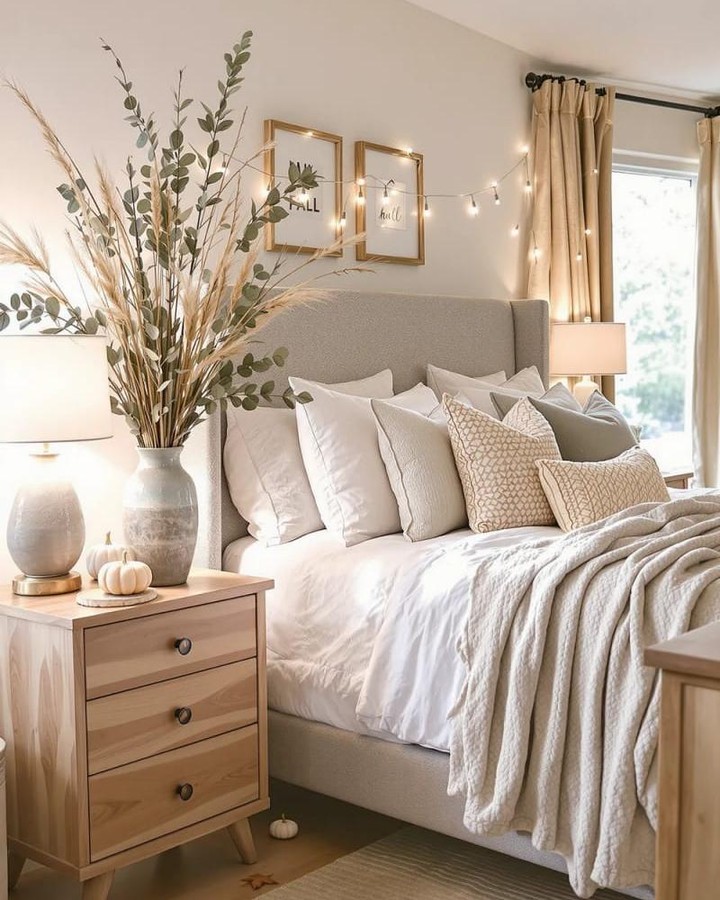
Smell affects comfort more than people realize. A stale or musty guest room feels unwelcoming fast. Add a simple reed diffuser or a light candle (unlit, for safety, unless someone’s present) with a neutral scent like cotton, sage, or light citrus.
Avoid anything too strong. Guests might have allergies or just find heavy scents overwhelming in a small space.
Practical tip: refresh the diffuser or swap the candle every few months, since scents fade and go stale over time too.
This works across every style. Scent isn’t tied to decor, just comfort.
Last but not least, let’s wrap up with instructions.
15. Leave a Simple Instruction Card for House Basics
This sounds small, but it solves a real problem. Guests don’t know your Wi-Fi password, thermostat settings, or where extra towels live. A small card with this info saves everyone awkward questions.
Keep it short: Wi-Fi name and password, thermostat instructions, where to find extra linens, and your phone number in case they need anything.
Practical tip: laminate the card so it holds up over multiple guest stays.
This idea fits every home style since it’s purely functional, no design impact at all.
Tips for Success
- Always test the mattress yourself before a guest’s first stay. Comfort issues are easy to miss until you actually lie down.
- Keep decor gender-neutral unless you know exactly who’s staying. Bold florals or sports themes can alienate half your guests.
- Do a “walk test” with a suitcase to make sure there’s enough clearance around furniture.
- Rotate seasonal bedding (lighter linens in summer, heavier quilts in winter) so the room stays comfortable year-round.
- Keep a small trash can in the room. It’s an easy detail that gets missed constantly.
- Check smoke detector batteries in guest rooms specifically, since these rooms often get overlooked during regular home checks.
- Ask returning guests what they liked or wished was different. Real feedback beats guessing every time.
Common Mistakes and How to Avoid Them
Overcrowding the room with furniture
: Stick to the essentials (bed, nightstand, small storage piece) and skip anything that blocks walking paths.
Choosing overly personal decor
: Keep artwork and colors neutral so any guest feels comfortable, not like they’re intruding on your personal taste.
Forgetting about lighting control
: Add lamps with accessible switches near the bed instead of relying on one hard-to-reach overhead light.
Skipping storage entirely
: Clear at least one drawer and a section of closet space before guests arrive, even if it’s just temporary.
Ignoring noise and light from outside
: Add blackout curtains and consider a small white noise machine for rooms near busy streets.
Not testing the space from a guest’s perspective
: Sleep in the room yourself for one night if you can. It’s the fastest way to catch problems you’d otherwise miss.
Similar Variations
- Coastal Guest Retreat – Light blues, whites, and natural textures like rattan and jute for a beachy, breezy feel.
- Modern Minimalist Guest Room – Clean lines, neutral tones, and very few decorative objects for a sleek, uncluttered look.
- Farmhouse Guest Room – Warm woods, soft textiles, and vintage-inspired accents for a cozy, homey vibe.
- Boho Guest Nook – Layered textures, warm earth tones, and eclectic patterns for a relaxed, artsy feel.
- Traditional Guest Suite – Rich colors, classic furniture shapes, and symmetry for a timeless, formal look.
- Scandinavian Guest Room – Light wood, simple lines, and soft neutral textiles for a calm, functional space.
Getting a guest room right isn’t about spending a ton of money or hiring a designer. It’s about thinking through the small stuff, comfortable bedding, good lighting, real storage, and little touches that show you actually planned ahead. Once you nail those basics, everything else is just personal style layered on top.
That’s really the heart of it. Whether you go coastal, modern, or classic traditional, the goal stays the same: make guests feel comfortable, not like they’re intruding. I hope these 15 guest bedroom ideas give you a clear, doable plan for turning that spare room into a space people actually enjoy staying in.
Leave a Reply