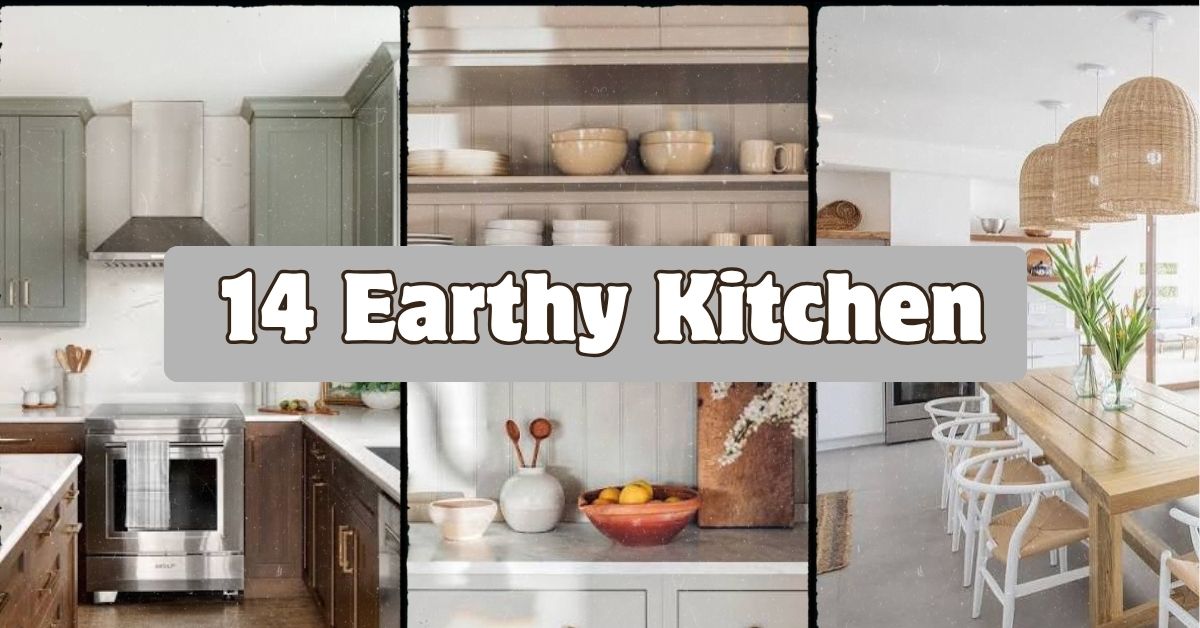
I’ve spent hours digging through design boards, magazines, and real home renovations to put together this 14 Earthy Kitchen guide, and I think it’s the most complete one you’ll find. This isn’t a quick list I threw together in an afternoon. I actually tested some of these ideas in my own place before writing about them.
An earthy kitchen is a cooking space designed around natural materials, muted colors, and organic textures like wood, stone, clay, and rattan. The goal is a warm, grounded feel that mimics the outdoors, using tones like terracotta, moss green, and sandy beige.
Stick around, because I’m about to walk you through 14 specific ways to get this look in your own kitchen, no matter your budget or square footage.
What Makes a Kitchen Feel “Earthy” Anyway?
So what’s the deal with earthy kitchens? Basically, it’s about pulling colors and materials straight from nature and putting them in your cooking space. Think clay pots, wood cutting boards, and walls painted the color of wet sand.
I love this style because it feels calm. Kitchens can get chaotic, right? Pots clanging, timers going off, kids asking for snacks. An earthy kitchen slows things down visually. The colors are soft. The materials feel real, not plastic-y or shiny. It’s the opposite of a cold, all-white modern kitchen. It feels lived in, warm, and a little bit like a cozy cabin met a Mediterranean farmhouse.
Now let’s get into the actual ideas.
1. Paint Your Cabinets a Warm Terracotta
Terracotta is basically the poster child of earthy design. This burnt orange-red color comes straight from clay pottery, and it instantly warms up any kitchen. Painting your lower cabinets terracotta while keeping uppers white or cream creates a nice balance without overwhelming the room.
Here’s a tip: use a matte or eggshell finish instead of glossy. Matte paint soaks up light instead of bouncing it, which makes the color look richer and more natural.
This works great in Mediterranean, boho, and Spanish-style kitchens. If your home leans modern, try terracotta just on an island instead of all the cabinets.
Once your cabinets are set, you’ll want the walls to match that same soft, sunbaked energy, which brings me to the next idea.
2. Choose Clay-Toned or Limewash Walls
Limewash paint gives walls a soft, cloudy texture that looks like sun-bleached plaster. It’s not perfectly flat like regular paint. It has movement and depth, kind of like a cloudy sky.
Colors like warm beige, muted clay, and soft ochre work really well here. These shades reflect light gently instead of harshly, which makes the whole kitchen feel cozier.
Practical tip: test a small patch first. Limewash dries lighter than it looks wet, so don’t commit to the whole wall until you’ve seen it cured for 24 hours.
This technique fits farmhouse, Mediterranean, and rustic modern kitchens especially well. Traditional kitchens can use it too, just paired with more ornate trim.
Once your walls have that organic texture, wood elements will really pop against them.
3. Bring in a Butcher Block or Reclaimed Wood Countertop
Nothing says “earthy” quite like real wood countertops. Butcher block adds warmth and texture that stone or quartz just can’t copy. Reclaimed wood takes it even further, giving your kitchen a story and a bit of history.
Oak, walnut, and acacia are popular choices because they age well and develop a nice patina over time.
Tip: seal your wood countertop with food-safe mineral oil every few months, especially near the sink, to prevent water damage.
Farmhouse and cottage-style kitchens practically demand this look, but even minimalist kitchens can use a small wood counter section on an island for contrast.
Speaking of islands, let’s talk about how to make yours the true centerpiece of your earthy kitchen.
4. Make Your Island the Textural Star
Your kitchen island is basically the main stage. In an earthy design, this is where you can layer different natural materials, like a wood top, a stone base, or woven pendant lights hanging above it.
Try mixing textures instead of matching everything perfectly. A rough stone base with a smooth wood top creates visual interest without looking chaotic.
Tip: add a leather or jute-wrapped stool for extra texture at the counter height.
This idea flexes easily. Coastal kitchens might use whitewashed wood and rope details, while traditional kitchens might go for a heavier, carved wood island.
Now that the island’s handled, let’s zoom out and talk color palettes as a whole.
Earthy Kitchen Color Palette Guide
| Palette Name | Main Colors | Best For | Accent Suggestion |
|---|---|---|---|
| Desert Clay | Terracotta, sand, cream | Mediterranean, boho | Black iron fixtures |
| Forest Floor | Moss green, brown, tan | Cottage, farmhouse | Brass hardware |
| Stone Path | Grey, taupe, white | Modern minimal | Matte black accents |
| Sunbaked | Ochre, rust, warm white | Southwestern, rustic | Woven baskets |
| Coastal Earth | Sage, driftwood beige, off-white | Coastal, cottage | Rope and rattan |
Pick one palette and stick with it across walls, cabinets, and decor so the whole room feels connected instead of random.
5. Add Open Shelving With Ceramic and Stoneware
Open shelves let your dishes double as decoration. Stack handmade-looking ceramic bowls, stoneware mugs, and wood cutting boards where everyone can see them. It’s functional and pretty at the same time.
Skip matching sets. Earthy style loves a little imperfection, so mismatched but color-coordinated pieces actually look better than a uniform set from a big box store.
Tip: leave a little negative space between stacks so shelves don’t look cluttered or busy.
This works in almost every style, from farmhouse to Scandinavian to modern boho, just adjust the shelf material (raw wood versus painted wood) to match your vibe.
Once your shelves are styled, it’s time to think about what’s hanging above them.
6. Hang Woven Pendant Lights
Rattan and woven pendant lights are an easy win. They cast a soft, dappled light and add instant texture to any ceiling. Plus, they’re way more interesting than a plain glass fixture.
Hang two or three in a row over your island for a cohesive look, or use one large statement piece over a dining table.
Tip: choose warm-toned LED bulbs (around 2700K) so the light feels golden and cozy, not stark white.
Bohemian and coastal kitchens use these constantly, but even a modern kitchen can pull off one woven pendant as a soft contrast to sleek cabinetry.
With lighting sorted, let’s talk about bringing actual plants into the mix.
7. Fill Empty Corners With Potted Herbs and Greenery
Nothing screams “earthy” louder than real plants. A little potted basil on the windowsill or a trailing pothos on top of your fridge instantly makes the space feel alive.
Terracotta pots tie in nicely with the earthy color scheme, and herbs give you the bonus of fresh cooking ingredients.
Tip: group plants in odd numbers, like three or five, for a more natural, less staged look.
This idea works in literally every kitchen style because plants are universal. Just adjust the pot material, terracotta for boho, ceramic for modern, galvanized metal for farmhouse.
Now let’s move from plants to another natural material that’s having a huge moment: stone.
8. Choose a Natural Stone Backsplash
Skip the shiny subway tile and go for a textured stone backsplash instead. Options like travertine, slate, or limestone bring in natural variation, no two tiles look exactly alike.
These stones come in warm, earthy tones already, so they do a lot of the design work for you.
Tip: seal natural stone backsplashes yearly to prevent staining from cooking splatters.
Mediterranean and rustic kitchens love this look, but a large-format honed stone slab can work beautifully in a modern minimal kitchen too.
Once your backsplash is set, your hardware choices need to match that same natural energy.
9. Swap in Matte Black or Aged Brass Hardware
Shiny chrome hardware feels cold and clinical, which fights against the earthy vibe. Matte black, aged brass, or oil-rubbed bronze pulls and knobs feel more grounded and organic instead.
These finishes also age gracefully, developing a bit of a patina over years of use, which only adds character.
Tip: stick to one metal finish throughout the kitchen for a cohesive, intentional look, rather than mixing gold, black, and silver randomly.
Aged brass suits traditional and vintage-inspired kitchens, while matte black leans more modern farmhouse.
Hardware handled, let’s talk flooring, because what’s under your feet matters just as much as what’s on your walls.
Flooring Material Comparison for Earthy Kitchens
| Material | Cost (per sq ft) | Warmth Factor | Maintenance Level |
|---|---|---|---|
| Terracotta tile | $8-$15 | High | Medium |
| Wide plank oak | $10-$20 | High | Medium |
| Cork flooring | $6-$12 | Medium | Low |
| Natural stone | $12-$25 | Medium | Medium-High |
| Bamboo | $5-$10 | Medium | Low |
Cork and bamboo are great budget-friendly options if you love the earthy look but don’t want to spend a fortune on real terracotta or stone.
10. Layer in Woven Baskets for Storage
Baskets aren’t just for laundry. Woven baskets stashed under counters or on open shelves add texture while hiding kitchen clutter like extra napkins or produce.
Seagrass, rattan, and jute baskets all bring that natural fiber texture that’s core to earthy design.
Tip: use baskets of varying sizes stacked together instead of one giant basket, it looks more curated.
This trick works across boho, coastal, farmhouse, and cottage kitchens equally well. Just pick a tighter weave for a more modern feel.
Storage sorted, let’s talk about one more surface that often gets overlooked: your ceiling.
11. Expose or Add Wood Beams Overhead
If you’re lucky enough to have exposed beams, don’t cover them up, they’re an earthy design goldmine. If you don’t have real ones, faux wood beams are surprisingly affordable and easy to install.
Beams add architectural interest and draw the eye upward, making kitchens feel bigger and more grounded at the same time.
Tip: stain beams a slightly darker tone than your cabinets to create subtle contrast without clashing.
This idea is a natural fit for farmhouse, rustic, and cottage kitchens, but even contemporary spaces can use a single beam as a design statement.
Now let’s bring things back down to eye level with window treatments.
12. Use Linen or Burlap Window Treatments
Skip heavy, patterned curtains. Simple linen or burlap curtains let in soft, filtered light while adding a subtle textured layer to your windows.
Natural fiber fabrics wrinkle a little, and that’s actually the point, it looks relaxed instead of stiff and formal.
Tip: choose curtains in a color slightly lighter or darker than your walls, not an exact match, so they read as an intentional layer instead of blending away.
Linen works everywhere, from coastal to Scandinavian to farmhouse kitchens. Just adjust the color, crisp white for coastal, warm oatmeal for farmhouse.
Let’s move to something a little more unexpected: mixing in a bit of unglazed pottery.
13. Display Unglazed Pottery and Clay Vessels
Unglazed pottery has a raw, matte finish that looks straight out of the earth. Think simple clay vases, bowls, or even a big urn sitting on the floor near your island.
These pieces don’t need flowers or fillers to look good. Their shape and texture do all the talking.
Tip: place one larger clay piece as a floor accent instead of scattering many small pieces on counters, it creates more visual impact.
This look is a staple in Mediterranean and Southwestern kitchens, but a single clay vessel can soften even a sleek, modern kitchen.
Last but not least, let’s talk about tying everything together with texture on your table.
14. Set the Table With Natural Fiber Placemats and Wood Boards
Finish the earthy look by dressing your table or island with woven placemats, wood serving boards, and stoneware plates. This is the easiest, cheapest way to test the earthy vibe before committing to bigger changes like paint or flooring.
Layer a wood board under a bowl of fruit, or use jute placemats under simple ceramic dishes for everyday meals.
Tip: rotate a few different textured pieces seasonally, cork in summer, thicker wool-blend runners in winter, to keep things feeling fresh.
This is honestly the most flexible idea on this whole list. It works in literally every kitchen style because it’s temporary, affordable, and easy to change.
Tips for Success
- Start with one big element, like paint or countertops, before adding smaller decor pieces, so the room doesn’t feel overwhelming all at once.
- Keep your color palette to three or four main tones max, otherwise the space starts feeling busy instead of calm.
- Mix textures on purpose. Smooth stone against rough wood against soft linen creates depth.
- Don’t be afraid of imperfection. Earthy design celebrates handmade, slightly uneven pieces over factory-perfect ones.
- Use natural light to your advantage. Earthy tones look best in daylight, so avoid heavy curtains that block windows completely.
- Buy a few statement pieces instead of lots of cheap decor. One good ceramic vase beats five plastic ones.
- Test paint colors on your actual walls at different times of day before committing, since earthy tones shift depending on lighting.
Common Mistakes and How to Avoid Them
Using too many bright colors
: Earthy design relies on muted, natural tones. Stick to warm neutrals and one or two accent colors max.
Choosing synthetic materials that mimic natural ones
: Faux wood grain laminate or plastic “woven” baskets can look cheap up close. Spend a little more on real materials where it matters most, like countertops and light fixtures.
Ignoring lighting temperature
: Cool white bulbs clash badly with warm earthy tones. Always choose warm white or soft white bulbs around 2700K to 3000K.
Overcrowding shelves and counters
: Too much clutter kills the calm, grounded feeling this style is going for. Edit down to your favorite pieces and leave breathing room.
Forgetting texture variety
: A kitchen with only wood and no contrast (like stone, ceramic, or woven fiber) can look flat and one-note. Mix at least three different textures.
Matching every metal finish to look too polished
: Earthy style isn’t about perfection. A slightly mismatched, collected-over-time look feels more authentic than a showroom-perfect kitchen.
Similar Variations
- Desert Boho Kitchen – Leans into warm terracotta, cacti, and Southwestern patterns for a sun-drenched feel.
- Japandi Earthy Kitchen – Combines Japanese minimalism with earthy Scandinavian warmth using clean lines and natural wood.
- Coastal Earthy Kitchen – Mixes driftwood tones, rope details, and sage green for a beachy, grounded look.
- Rustic Farmhouse Kitchen – Focuses on reclaimed wood, exposed beams, and vintage-inspired hardware.
- Mediterranean Earthy Kitchen – Uses terracotta tile, arched details, and warm stucco walls for an Old World feel.
- Modern Organic Kitchen – Pairs sleek, minimal cabinetry with natural materials like stone and wood for a clean but grounded look.
At the end of the day, building an earthy kitchen isn’t about following strict rules. It’s about picking natural materials and warm colors that make you feel calm every time you walk in the room. Start small if you need to, a few terracotta pots or a woven pendant light can go a long way before you commit to bigger changes like flooring or cabinets.
Whatever pace you go at, remember that the best 14 Earthy Kitchen ideas are the ones that actually fit how you live and cook every day.
Leave a Reply