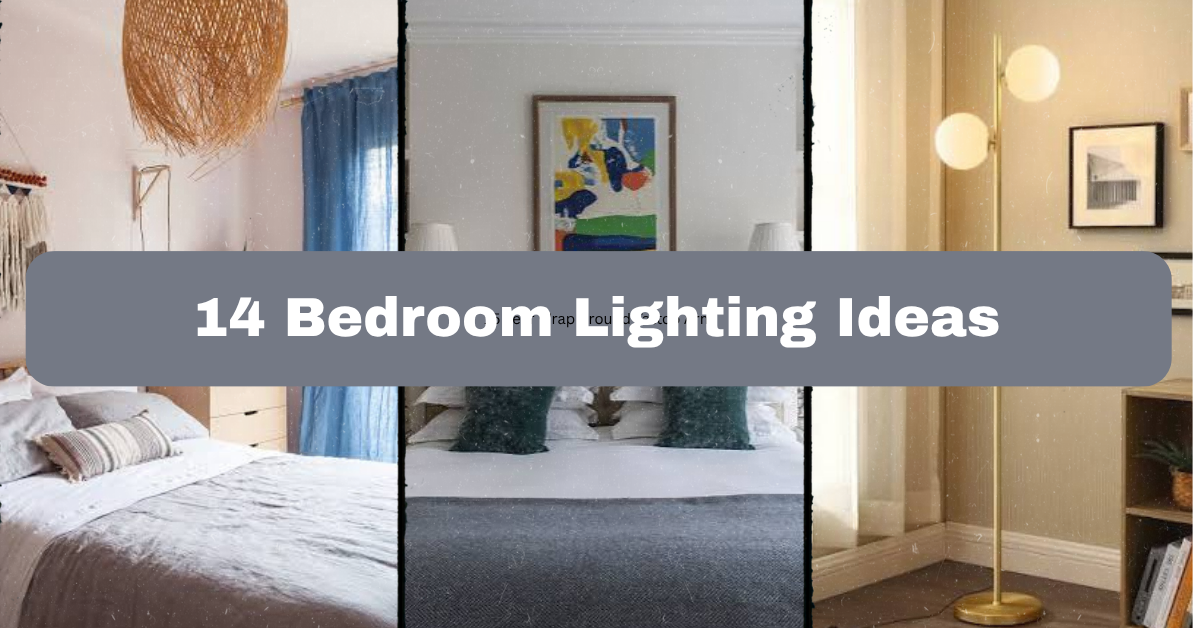
If you’ve been searching for real, usable 14 bedroom lighting ideas that actually work in a normal home (not just a fancy showroom), you’re in the right spot. I’ve tested a lot of these myself, and I’m going to walk you through what actually makes a difference versus what’s just Pinterest fluff.
Bedroom lighting design refers to the placement and layering of light sources such as overhead fixtures, lamps, sconces, and LED strips to create function and mood in a sleeping space. The best setups use three light layers: ambient, task, and accent, adjusted by dimmers to fit different times of day.
Stick around, because I’m about to show you exactly how to layer light like a designer, without hiring one or spending a fortune.
What Makes Bedroom Lighting Actually Work
Here’s the thing about bedroom lighting. Most people just slap a ceiling fixture up there and call it done. Then they wonder why the room feels flat, harsh, or weirdly clinical at 9pm. Good bedroom lighting isn’t about one big light. It’s about layering different sources so you can adjust the mood depending on what you’re doing, reading, sleeping, getting dressed, or just relaxing. I think of it like seasoning food. One flavor is boring. A mix of a few good ones makes the whole thing pop. That’s what we’re going for here, a room that feels calm at night and functional in the morning.
1. Install a Statement Pendant Light Above the Bed
Skip the boring flush-mount ceiling light. A single pendant hanging low over each nightstand, or one bold pendant centered above the headboard, instantly makes the room feel designed on purpose. It also frees up nightstand space since you’re not cramming lamps on tiny surfaces.
Pick a pendant with a warm-toned shade (linen, rattan, or frosted glass) so the light feels soft, not office-like. Hang it about 20 to 24 inches above the nightstand surface.
Practical tip: Use a plug-in pendant kit if you don’t want to deal with hardwiring. They mount just as easily and look identical once installed.
This works in almost every style. Rattan pendants lean coastal or boho, while a sculptural metal pendant feels more modern or industrial. Once your overhead statement piece is set, it’s time to think about what’s happening lower down in the room.
2. Layer in Adjustable Wall Sconces Instead of Table Lamps
Wall sconces mounted beside the bed do double duty. They save nightstand space and they look intentional, like something out of a boutique hotel. Go for swing-arm sconces if you like to read in bed, since you can angle the light exactly where you need it.
Choose sconces with a warm white bulb (around 2700K) so the light feels cozy instead of sterile. Mount them about 60 to 65 inches from the floor, roughly at eye level when seated in bed.
Practical tip: Install a small dimmer switch on each sconce so both sides of the bed can be adjusted independently.
Traditional homes look great with brass or bronze sconces, while modern spaces do well with matte black or minimalist white ones. Once your sconces are handled, don’t forget the corners of the room, because empty corners kill ambiance fast.
3. Add a Floor Lamp in an Empty Corner
Every bedroom has that one dead corner that just sits there doing nothing. A floor lamp fixes that instantly. It softens the room, fills visual gaps, and gives you a secondary light source that doesn’t feel as harsh as overhead lighting.
Arc floor lamps work great next to reading chairs. Torchiere-style lamps (the ones that point light upward) are better for softly lighting a whole corner without glare.
Practical tip: Pick a lamp with a three-way switch so you can control brightness without needing a smart bulb.
Coastal and farmhouse rooms love woven or wood-based lamp bases. Modern rooms lean toward slim metal or matte black finishes. Speaking of filling gaps, let’s talk about one of the most underrated lighting tricks: the humble table lamp duo.
4. Use Matching Table Lamps for Balance and Symmetry
There’s something calming about symmetry. Two matching lamps on either side of the bed create balance and make the whole room feel finished. This is a classic move, but it works because it works.
Pick lamps with a shade that diffuses light evenly, avoiding anything too glossy or metallic on the inside of the shade, since that can create harsh glare.
Practical tip: Match the lamp height to just above shoulder level when you’re sitting up in bed. That way the light hits your book or phone without shining in your eyes.
Traditional and transitional bedrooms shine with ceramic or glass lamp bases. Boho spaces might swap in textured jute or clay lamp bases instead. Now that your nightstands are sorted, let’s move to something a little more playful: string lights.
Lamp Shade Materials Compared
| Material | Light Quality | Best For | Approx. Price Range |
|---|---|---|---|
| Linen | Soft, warm, diffused | Traditional, transitional | $25–$60 |
| Frosted Glass | Bright, even, slightly cool | Modern, minimalist | $30–$90 |
| Rattan/Woven | Dappled, cozy glow | Coastal, boho | $20–$55 |
| Metal (perforated) | Dramatic shadows | Industrial, eclectic | $35–$80 |
| Paper/Rice | Very soft, dim | Japandi, minimalist | $15–$40 |
5. String Fairy Lights Along the Headboard or Wall
I know, string lights feel like a college dorm cliche. But used right, with warm white LEDs and a clean installation, they add a soft glow that regular lamps can’t match. Drape them along a wall, weave them through a canopy frame, or frame the headboard.
Go with battery-operated or plug-in LED string lights on a timer so you’re not tangled in cords every night.
Practical tip: Use clear adhesive clips instead of tape. Tape peels paint off walls over time, and nobody wants that surprise.
In boho or eclectic rooms, let the lights hang loose and a little messy. In modern rooms, keep them tucked into a clean geometric shape. Once you’ve got that soft ambient glow going, it’s time to think about how your closet gets lit too.
6. Add LED Strip Lighting Inside Closets or Under Furniture
This one’s more functional than pretty, but it makes a real difference day to day. LED strips inside a closet, under a bed frame, or behind a headboard add a soft glow that’s perfect for late-night bathroom trips or early mornings when you don’t want to blast the overhead light.
Choose strips with a motion sensor or a simple on/off switch mounted near the closet door.
Practical tip: Stick to warm white (2700K to 3000K) strips for bedrooms. Cool white feels too much like a hospital hallway.
This idea fits any style since the strips are hidden. Nobody sees the light source, just the effect. Now let’s talk about something people overlook constantly: dimmer switches.
7. Install Dimmer Switches on Every Fixture You Can
This is probably the single most useful upgrade on this whole list. A dimmer switch turns one fixture into five different moods. Bright for cleaning, moderate for getting dressed, low for winding down at night.
Swap your standard wall switch for a dimmer-compatible one, and make sure your bulbs are labeled “dimmable,” since not all LED bulbs are.
Practical tip: Smart dimmer switches (the kind you control from your phone or a voice assistant) cost more upfront but save you from ever getting out of bed to turn off the light again.
Every single home style benefits from this. It’s basically invisible design that changes how a room feels. Speaking of changing how a room feels, let’s talk about color temperature next, since it matters just as much as brightness.
Color Temperature Guide for Bedrooms
| Kelvin (K) | Light Appearance | Best Use in Bedroom |
|---|---|---|
| 2200K–2700K | Warm amber glow | Nightstand lamps, sconces |
| 2700K–3000K | Soft warm white | General ambient lighting |
| 3000K–3500K | Neutral white | Closet lighting, vanity area |
| 4000K+ | Cool/bright white | Avoid in bedrooms, feels clinical |
8. Hang a Chandelier for a Touch of Drama
A mini chandelier doesn’t just belong in dining rooms anymore. Hanging one in a bedroom, especially over a reading nook or centered above the bed, instantly upgrades the whole space. It reads as intentional and a little luxurious without costing a fortune.
Look for a chandelier scaled to the room. A general rule: add the room’s length and width in feet, and that number in inches is roughly the ideal chandelier diameter.
Practical tip: Keep the bottom of the chandelier at least 7 feet from the floor to avoid head bumps, especially if it’s centered in a walking path.
Traditional homes go for crystal or candle-style chandeliers. Modern spaces prefer linear or geometric metal designs. Once you’ve added drama up top, let’s bring some light down low with accent lighting.
9. Use Picture Lights or Art Lighting for Accent Glow
If you’ve got artwork or a gallery wall in your bedroom, small picture lights mounted above the frames add a soft accent glow that makes the whole wall feel gallery-worthy. It’s a subtle touch, but it adds a layer of light that most bedrooms are missing.
Battery-operated picture lights are the easiest option since there’s no wiring involved.
Practical tip: Angle the light slightly downward to avoid glare bouncing off glass-framed pieces.
This works beautifully in traditional and eclectic spaces especially, where art tends to be a focal point. In more minimalist rooms, a single accent light over one statement piece works better than lighting up a whole wall. Now, let’s move to a light source most people forget entirely: the closet or reading nook lamp.
10. Add a Dedicated Reading Nook Light
If you’ve got a chair, window seat, or bench in your bedroom, it deserves its own light. A small task lamp or an adjustable wall-mounted light next to that spot turns it into an actual usable space instead of just a place where laundry piles up.
Go with a swing-arm or gooseneck lamp so you can direct the light exactly onto your book or laptop.
Practical tip: Position the light so it shines over your shoulder, not directly in front of your face, to cut down on glare and eye strain.
Coastal and cottage-style rooms love a woven pendant hanging low over the nook. Modern spaces do well with a slim articulating lamp in matte black or brushed nickel. Next, let’s talk about a trick interior designers use constantly: uplighting.
11. Use Uplighting to Highlight Architectural Features
If your bedroom has a vaulted ceiling, exposed beams, or an interesting textured wall, uplighting draws attention to it. Small directional floor lights or recessed wall lights aimed upward create dramatic shadows and highlight the shape of the room itself.
Place uplights about 6 to 12 inches from the wall or feature you’re highlighting for the best shadow effect.
Practical tip: LED puck lights on a small remote-controlled dimmer are an easy no-wiring option for renters.
This idea suits modern and industrial spaces especially well, since those styles lean into architectural detail. Traditional rooms can use it too, just aimed at crown molding or a fireplace mantel instead. Now let’s cover something practical and often skipped: mirror lighting.
12. Add Lighting Around or Near a Vanity Mirror
If your bedroom doubles as your getting-ready space, a well-lit mirror matters more than people think. Overhead lighting alone creates shadows on your face. Lights mounted on either side of the mirror, at eye level, give even, flattering light.
LED-backlit mirrors are a newer option that skip separate fixtures entirely, since the light is built into the mirror’s edge.
Practical tip: Stick to 3000K bulbs near mirrors. Warmer light flatters skin tone better than cool white.
This fits modern, glam, and transitional bedrooms especially well. Traditional spaces might prefer classic sconces flanking a framed mirror instead. Once your mirror’s sorted, let’s zoom out and talk about ceiling options beyond the basic flush mount.
13. Try Recessed Lighting for a Clean, Modern Ceiling
Recessed lights (also called can lights) sit flush in the ceiling and give a clean, minimal look without any visible fixture. They’re great for general ambient lighting, especially in rooms with lower ceilings where a hanging fixture might feel cramped.
Space recessed lights about 4 to 6 feet apart for even coverage across the room.
Practical tip: Put recessed lights on a separate dimmer from your other fixtures so you can turn them down low for a soft glow instead of just off or fully bright.
This is a natural fit for modern and minimalist bedrooms. In more traditional spaces, recessed lighting works best as a supporting layer behind a chandelier or ceiling medallion, not as the main event. Last but definitely not least, let’s talk about lighting that changes with your mood, literally.
14. Add Smart, Color-Changing Bulbs for Flexible Mood Lighting
Smart bulbs that shift between warm white, cool white, and even soft colors give you the most flexible setup on this whole list. Want a soft pink glow before bed? Bright white for cleaning? Warm amber for movie night? One bulb, controlled from your phone, does it all.
Start with just one or two fixtures on smart bulbs rather than replacing everything at once. It’s an easy, affordable way to test the feature before committing.
Practical tip: Set a scheduled “wind down” scene that gradually dims and warms the light starting an hour before your usual bedtime.
This idea fits literally any decor style since the bulb itself usually looks like a normal bulb. The color and brightness do all the work. With all fourteen ideas on the table, let’s talk about how to actually pull this off without making rookie mistakes.
Tips for Success
- Layer at least three light sources in every bedroom: ambient, task, and accent.
- Stick to warm color temperatures (2700K to 3000K) for most bedroom fixtures.
- Put dimmers on as many fixtures as your budget allows, starting with the main overhead light.
- Test lamp placement before mounting anything permanent. Move lamps around for a few days first.
- Avoid lighting a room with only one overhead source. Shadows and flat light will make it feel unfinished.
- Match metal finishes across fixtures (all brass, all black, etc.) for a cohesive look.
- Save receipts and mounting hardware in case you’re renting and need to reverse any changes.
Common Mistakes and How to Avoid Them
Using only one overhead light
: This creates harsh shadows and flat mood. Add at least two more light sources, like a lamp and a sconce.
Choosing cool white bulbs for a cozy room
: Cool white (4000K+) feels clinical in bedrooms. Stick to warm white, 2700K to 3000K, for a relaxing feel.
Skipping dimmers entirely
: Without dimmers, you’re stuck with one brightness level all day. Even a basic plug-in dimmer switch fixes this cheaply.
Placing lamps too high or too low
: Light should hit around shoulder height when seated. Adjust lamp or shade height so it doesn’t shine directly into your eyes.
Ignoring closet and vanity lighting
: These functional zones need their own light source. Add LED strips or dedicated fixtures instead of relying on the main room light.
Overcrowding the ceiling with too many fixtures
: A chandelier plus recessed lights plus a fan light can look cluttered. Pick one main ceiling feature and support it with lamps instead.
Similar Variations
- Hygge Bedroom Lighting: Focuses on candles, warm lamps, and soft textiles for a Danish-inspired cozy feel.
- Glam Bedroom Lighting: Leans on crystal chandeliers, mirrored surfaces, and metallic accents for a luxe vibe.
- Japandi Bedroom Lighting: Combines paper lantern-style shades with minimal, low-profile fixtures for a calm, natural look.
- Industrial Bedroom Lighting: Uses exposed bulbs, black metal fixtures, and pendant lights with an unfinished, warehouse feel.
- Coastal Bedroom Lighting: Relies on rattan shades, whitewashed finishes, and soft natural light for a beachy mood.
- Dark Academia Bedroom Lighting: Uses brass sconces, low amber light, and vintage-style lamps for a moody, scholarly feel.
Good bedroom lighting really comes down to layering, not luck. Once you mix ambient, task, and accent light, and dial in the warm color temperature, the whole room just feels better without you even knowing exactly why. Start small with one or two changes from this list, see how the room feels, then build from there. That’s really the whole secret behind these 14 bedroom lighting ideas.
Leave a Reply