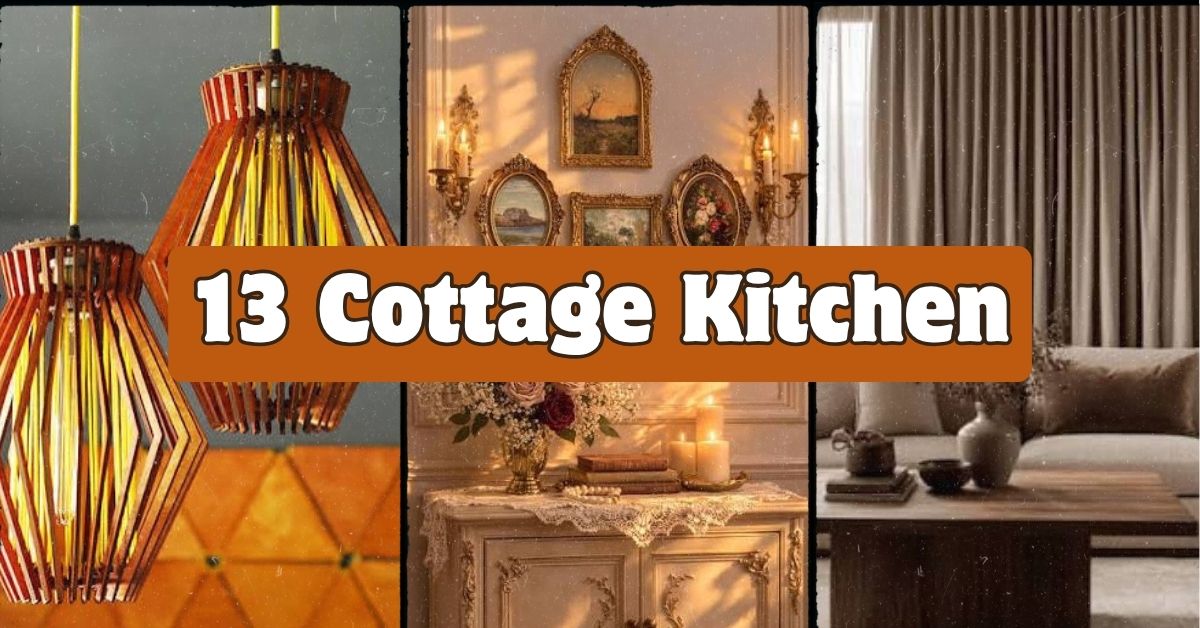
If you’ve been searching for the best 13 Cottage Kitchen ideas out there, I’ve got you covered. I’ve spent hours digging through design blogs, real home renovations, and my own kitchen mistakes to bring you the most complete list possible.
A cottage kitchen is a warm, cozy kitchen style that uses vintage touches, soft colors, and natural materials like wood and stone. It focuses on comfort over trendiness, mixing old-world charm with practical, everyday function.
Stick with me and I’ll walk you through 13 specific ways to bring that cottage feel into your own kitchen, no matter your budget or square footage.
What Makes a Kitchen Feel “Cottage” Anyway?
Okay so here’s the thing about cottage style. It’s not about following strict rules. It’s more of a feeling, you know? Think of your grandma’s kitchen, or a little house you rented once by the coast. There’s usually chipped paint that looks intentional, open shelves showing off mismatched dishes, and maybe a window over the sink with plants on the ledge.
Cottage kitchens lean into imperfection. Nothing feels too matchy or too new. You’ll see soft colors like sage green, buttery yellow, or dusty blue. Wood shows up a lot too, whether it’s beams on the ceiling or a worn butcher block counter. It’s cozy. It’s lived in. And honestly, it’s forgiving if you mess something up.
1. Paint Your Cabinets a Soft, Muted Color
Skip the stark white if you want real cottage vibes. Soft, muted tones do way more work here. Think sage green, buttery cream, dusty blue, or even a warm terracotta.
These colors feel aged and calm instead of sharp and modern. They also hide little scuffs better than bright white ever will, which matters if you actually cook in your kitchen.
Practical tip: use a chalky or matte finish paint instead of glossy. It gives cabinets that slightly worn, vintage texture without you having to distress anything yourself.
This idea flexes easily too. Coastal homes might lean toward pale blues, while farmhouse styles go heavier on cream and sage. Modern farmhouse fans sometimes push toward deeper greens for contrast.
Once your cabinets set the tone, it’s time to think about what goes on your walls, because that’s where a lot of cottage character really comes through.
2. Add Beadboard or Shiplap to Your Walls
Beadboard paneling is basically a cottage kitchen signature. It’s those thin, vertical wood planks with small grooves, usually painted white or a soft pastel. Shiplap works too, though it’s more horizontal and rustic looking.
Either one adds texture to plain walls without costing a fortune. You can install it as a full wall treatment or just as a backsplash behind your stove.
Quick tip: if you’re renting or not ready to commit, peel-and-stick beadboard wallpaper looks surprisingly convincing and comes off clean later.
Traditional cottage homes usually do full beadboard walls. More modern cottage spaces might just use a small accent section to keep things from feeling too busy.
Once your walls have some texture going on, your next move is picking the right countertop material to match that lived-in look.
3. Choose Butcher Block Counters Over Stone
Stone counters look great, sure, but they can feel a little too polished for cottage style. Butcher block wood counters bring warmth instead. They age beautifully too, picking up small marks and stains that just add character over time.
Butcher block also pairs naturally with farmhouse sinks and open shelving, two other things you’ll probably want in a cottage kitchen anyway.
Tip: seal your butcher block with food-safe mineral oil every few months to keep it from drying out or cracking.
If full butcher block feels like too much commitment, try it as an island top only, keeping your main counters in a light quartz or laminate that mimics marble.
Now that your surfaces feel right, let’s talk storage, because open shelving is where cottage kitchens really shine.
4. Swap Some Upper Cabinets for Open Shelving
Open shelves let your dishes become part of the decor. Stack up mismatched plates, old teacups, or a few cookbooks. It feels personal instead of showroom-perfect.
Wood shelves work best here, especially reclaimed or slightly distressed wood. Pair them with simple black iron brackets for contrast.
Actionable tip: don’t overfill your shelves. Leave gaps between stacks so things don’t look cluttered or heavy.
Coastal cottage kitchens might display glass jars and blue-and-white pottery, while a more traditional cottage leans toward floral china and vintage tins.
Speaking of display pieces, let’s get into lighting, because the right fixtures pull this whole look together.
5. Hang Vintage-Style Pendant Lights
Lighting makes a bigger difference than people think. Swap out builder-grade fixtures for something with a little history to it, like a glass globe pendant, a bell-shaped shade, or even old-fashioned schoolhouse lights.
These fixtures usually come in brass, black, or white finishes, all of which fit cottage style easily.
Tip: hang pendants about 30 to 36 inches above your counter or island for the right proportion, not too high, not bumping heads.
Modern farmhouse kitchens often go with black matte fixtures, while classic English cottage style leans toward warm brass or copper tones.
With your lighting sorted, your sink area is probably next on the list, and this next idea makes a bigger impact than you’d expect.
6. Install a Farmhouse Apron Sink
A deep, wide farmhouse sink is basically cottage kitchen shorthand. It’s practical too, giving you way more room for big pots and pans than a standard sink.
White fireclay sinks are the classic choice, but stainless or fluted apron-front sinks work for a slightly more updated look.
Tip: pair your farmhouse sink with a gooseneck faucet in bronze or brass for extra old-world charm.
This one adapts well across styles too. Coastal kitchens often pick a bright white basin, while rustic cottage spaces might choose a soapstone or concrete option instead.
Once your sink area feels right, let’s zoom out and talk flooring, since it sets the tone for the whole room.
Flooring Options for Cottage Kitchens
| Material | Look & Feel | Price Range (per sq ft) | Best For |
|---|---|---|---|
| Reclaimed hardwood | Warm, worn, full of character | $8 to $15 | Traditional or farmhouse cottage |
| Painted wood plank | Soft color, cozy texture | $5 to $10 | Coastal or pastel-toned kitchens |
| Terracotta tile | Earthy, rustic warmth | $6 to $12 | Mediterranean or rustic cottage |
| Checkerboard vinyl | Playful, vintage diner feel | $2 to $5 | Retro or eclectic cottage |
| Natural stone (slate) | Cool, textured, durable | $10 to $20 | Modern cottage or transitional |
7. Bring in a Farmhouse-Style Dining Table
If your kitchen has room for a table, go with something sturdy and a little rustic. Reclaimed wood tables with visible grain and knots fit perfectly here. Round tables work great in smaller kitchens since they don’t have hard corners eating up space.
Pair it with a mismatched set of chairs instead of a matching set. That’s actually a classic cottage move, mixing wood tones or even mixing painted chairs with natural wood ones.
Tip: add a bench on one side to save space and give the table a more casual, cottage feel.
Modern cottage kitchens might keep the table simple and pair it with sleek black chairs for contrast, while traditional styles go heavier on carved wood details.
Now, let’s talk about something small but mighty: hardware.
8. Choose Unlacquered Brass or Black Iron Hardware
Cabinet knobs and pulls seem tiny, but they change the whole feel of your kitchen. Unlacquered brass develops a natural patina over time, which actually looks better the older it gets. Black iron hardware gives a more rustic, farmhouse edge.
Skip anything too shiny or chrome. It reads modern, not cottage.
Tip: mix knobs and pulls instead of using all one style. Bin pulls on drawers with round knobs on doors is a classic cottage combo.
English cottage kitchens often use ornate, detailed hardware, while a simpler modern cottage sticks to clean, minimal shapes in the same warm finishes.
Once your hardware’s picked out, let’s move to something you can change without any renovation at all: textiles.
9. Layer in Soft Textiles Like Curtains and Runners
Cottage kitchens feel soft, not stark. Cafe curtains on a small rod, a linen table runner, or a woven rug near the sink all add that lived-in warmth.
Look for natural fabrics like linen, cotton, or gingham check. Florals work well too if you want a more classic cottage feel.
Tip: wash new curtains before hanging them. It softens the fabric and gives a slightly worn, cozy look right away.
Coastal cottage spaces often use light blue-and-white stripes, while a more rustic cottage might lean toward plaid or burlap textures.
Next, let’s talk about a detail people forget until the very end: your window treatment style itself.
10. Frame Your Window With a Simple Cafe Curtain
Full-length curtains can feel heavy in a kitchen. Cafe curtains, which only cover the bottom half of the window, let light in while still adding softness and privacy.
They’re also easier to sew yourself if you’re into DIY. A simple rod and a few yards of fabric is really all you need.
Tip: choose a fabric with a small pattern, like tiny florals or gingham, since large prints can overwhelm a small kitchen window.
Modern cottage kitchens sometimes skip curtains entirely and use a simple wood blind instead, keeping things clean but still warm.
Speaking of windows, let’s talk about what you put in front of them, because a little greenery goes a long way.
11. Keep Fresh Herbs or Plants on the Windowsill
A row of small pots with basil, thyme, or mint does double duty. It looks charming and it’s actually useful when you’re cooking.
Terra cotta pots fit the cottage look best. Skip anything sleek or glossy here.
Tip: use a small tray under your pots to catch water and protect wood windowsills from damage.
Rustic and farmhouse cottage kitchens often add trailing plants like ivy on open shelves too, not just the windowsill, for extra greenery throughout the room.
Now let’s talk ceilings, since most people forget to look up when planning their kitchen.
12. Expose or Fake Wood Beams on the Ceiling
Exposed wood beams add instant cottage character. If your ceiling doesn’t already have real beams, faux beams made from lightweight foam or thin wood can mimic the look for way less money and effort.
Stain them a warm brown or whitewash them for a lighter, coastal feel.
Tip: keep beam spacing even, usually two to three feet apart, so the ceiling looks intentional instead of random.
Traditional English cottages often keep beams dark and rustic, while modern coastal cottage kitchens whitewash them for a brighter, airier feel.
Last but definitely not least, let’s talk about the small stuff that ties everything together.
13. Display Vintage or Vintage-Style Accessories
Little details finish off the cottage look. Think old tins, glass canisters, a ceramic pitcher for utensils, or a small collection of vintage cookbooks stacked on the counter.
Thrift stores and flea markets are goldmines for this stuff. You don’t need anything expensive, just character.
Tip: rotate your accessories seasonally. Swap in pumpkins and warm colors for fall, then switch to fresh flowers in spring.
Coastal cottage kitchens might display sea glass or shells, while traditional styles stick with floral china and old glass bottles.
That wraps up all 13 ideas, but before you go, let’s cover a few extra tips to help everything come together smoothly.
Tips for Success
- Start with one or two changes instead of redoing everything at once. Paint and hardware alone can transform a kitchen fast.
- Shop secondhand for big pieces like tables and shelving. Cottage style actually looks better when things aren’t brand new.
- Keep your color palette to three main colors max so the space doesn’t feel chaotic.
- Add plants or fresh flowers regularly. They bring life into the room in a way decor alone can’t.
- Mix textures on purpose, like pairing rough wood with smooth ceramic or soft linen.
- Don’t rush the “worn in” look. Let real use create character over time instead of forcing distressed finishes everywhere.
Common Mistakes and How to Avoid Them
Overdoing the matching sets
: Buying a matching dish set, matching chairs, and matching everything else makes a cottage kitchen feel stiff. Mix it up instead.
Choosing cool, sterile whites
: Bright white paint can feel clinical instead of cozy. Go for warmer, creamier whites or add color elsewhere in the room.
Skipping storage for style
: Open shelves look nice but can get messy fast if you don’t have enough closed cabinet space for everyday clutter.
Forgetting lighting layers
: One overhead light isn’t enough. Add under-cabinet lighting or a small lamp on the counter for a warmer glow at night.
Going too rustic, too fast
: Piling on distressed wood, exposed brick, and heavy beams all at once can feel more like a theme park than a real home. Add texture gradually.
Similar Variations
- Coastal Cottage: Lighter colors, beadboard, and blue-and-white accents inspired by beach houses.
- French Country Cottage: Warmer tones, toile fabric patterns, and a more elegant, old-world European feel.
- Modern Cottage: Cleaner lines mixed with cottage textures, keeping colors more neutral and hardware more minimal.
- Farmhouse Cottage: Heavier on rustic wood, black metal accents, and larger apron sinks.
- English Cottage: Floral patterns, ornate details, and darker wood tones throughout.
- Scandinavian Cottage: Light woods, simple shapes, and a cozy but minimal approach to decor.
At the end of the day, a cottage kitchen is really about comfort and character, not perfection. Small changes like paint color, hardware, or a few vintage accessories add up fast, and you don’t need a full renovation to get there. Whether you tackle one idea this weekend or work through the whole list over time, these 13 Cottage Kitchen ideas give you a real starting point for a space that feels warm, welcoming, and totally your own.
Leave a Reply