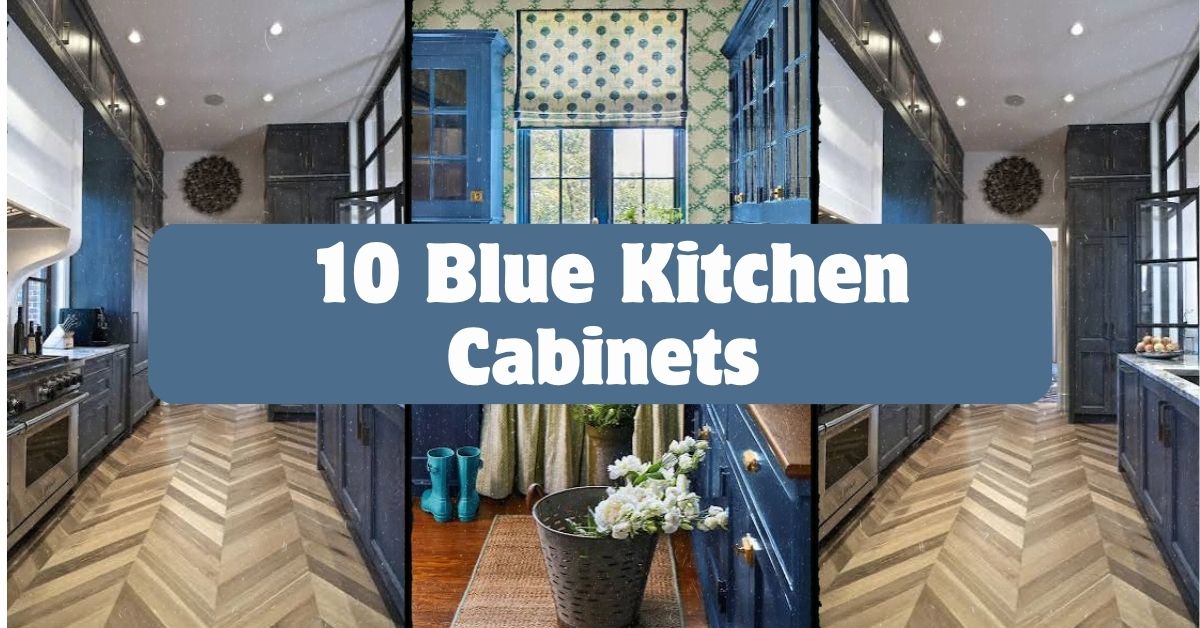
I’ve spent way too many hours scrolling through kitchen photos, and I can honestly say these 10 blue kitchen cabinets ideas are some of the smartest, most livable looks I’ve found. If you’re on the fence about going blue, stick with me. I’m going to break down exactly what works and why.
Blue kitchen cabinets are cabinetry painted or stained in shades ranging from soft powder blue to deep navy, used as the main color for lower cabinets, upper cabinets, or both. They pair well with white, wood, brass, and black accents, and they work in kitchens of almost any size or style.
Ready to see how blue can totally transform your kitchen without making it feel cold or trendy in a bad way? Let’s get into it.
Why Blue Kitchen Cabinets Just Work
Here’s the thing about blue. It’s not white, but it’s not scary either. That’s why it’s become such a go-to color for kitchens. It feels fresh, it hides fingerprints better than white, and it plays nice with almost any metal finish you throw at it.
I think people love blue because it feels calm but still has personality. You’re not stuck with boring beige, but you’re also not committing to something wild like hot pink. Blue sits in this sweet spot. It works in old farmhouses, sleek modern builds, and cozy cottage kitchens alike. That flexibility is honestly the whole reason this color trend has stuck around instead of fading out like some others.
1. Navy Lower Cabinets With White Uppers
This combo is a classic for a reason. You get the drama of navy blue down low, grounding the whole room, while white upper cabinets keep things feeling light and open. It’s a great trick if your kitchen doesn’t get tons of natural light, because the white up top bounces brightness around.
Pair this with brass or gold hardware for a warm contrast, or go with matte black if you want something more modern and moody. A practical tip: keep your countertops light (think white quartz or marble-look) so the navy doesn’t swallow the room.
This look adapts beautifully to traditional kitchens with shaker-style doors, but it also works in modern spaces with flat-panel cabinets. Once you’ve nailed the two-tone base, you might want to think about how the walls play into the mix, which brings us to the next idea.
2. Soft Sky Blue Walls With Deeper Blue Cabinets
Going monochromatic with blue sounds risky, but it actually creates this really soothing, cohesive look. Use a lighter blue on the walls and a richer, deeper blue on the cabinets so there’s still contrast and depth. It keeps the kitchen from feeling flat or one-note.
The tip here is to use the 60-30-10 rule: 60% lighter blue, 30% darker cabinet blue, and 10% accent color like white trim or wood shelving. This keeps the balance right so it doesn’t feel like you’re standing inside a paint swatch.
Coastal and cottage-style kitchens love this look, but you can make it feel more modern by keeping the hardware simple and skipping ornate trim. Once the walls and cabinets are settled, the countertop choice becomes the next big decision.
3. Butcher Block Countertops Over Blue Cabinets
Wood and blue are basically best friends. Butcher block countertops add warmth and texture that stone counters just can’t match. The wood grain softens the boldness of the blue, making the whole kitchen feel more relaxed and lived-in.
If you go this route, seal the butcher block well and reseal it every six months to a year, especially near the sink. That’s the practical part people skip and regret later.
This pairing is perfect for farmhouse and rustic kitchens, but it also shows up in Scandinavian-style spaces where wood and clean lines rule. Speaking of texture, let’s talk about what happens when you bring metal into the mix.
Blue Cabinet Color and Hardware Pairing Guide
| Blue Shade | Best Hardware Finish | Style Vibe |
|---|---|---|
| Navy | Brass or Gold | Traditional, Moody |
| Powder Blue | Brushed Nickel | Coastal, Soft Modern |
| Slate Blue | Matte Black | Modern, Industrial |
| Teal-Blue | Copper | Eclectic, Bohemian |
| Denim Blue | Chrome | Transitional, Clean |
4. Brass Hardware for a Warm Contrast
Brass hardware against blue cabinets is one of those combos that just glows. It adds a little shine and warmth that keeps the blue from feeling too cool or sterile. Even a small detail like cabinet knobs can change the whole personality of a kitchen.
My tip: mix your brass hardware with a brass or gold faucet too, so the metals feel intentional instead of random. Nothing looks more off than mismatched metal finishes scattered around a kitchen.
This works great in traditional and transitional kitchens, but a slightly aged or unlacquered brass finish can push the look into more of a vintage or eclectic direction. Once your hardware is locked in, backsplash tile is the next spot to think about.
5. Classic Subway Tile Backsplash
Subway tile is the reliable friend of kitchen design. It never overwhelms the blue cabinets, and it gives your eyes a little visual break between the counter and upper cabinets. White subway tile is the safest choice, but a pale blue-gray tile can tie things together even more.
A quick tip: lay your subway tile in a herringbone pattern instead of the standard brick pattern if you want a little extra interest without adding more color.
This backsplash style is basically universal. It fits farmhouse, modern, coastal, and transitional kitchens without missing a beat. Now that the walls are covered, let’s talk about what sits on top of your counters.
6. Open Shelving to Break Up Cabinet Boxes
Full walls of blue cabinets can feel heavy if you’re not careful. Swapping in a section of open shelving lightens things up visually and gives you a spot to show off dishes, glassware, or a few plants. It also makes a small kitchen feel less boxed in.
Practical tip: paint the inside back panel of your open shelving a slightly different shade, like white or a warm cream, so your dishes pop against it instead of blending into the blue.
Open shelving fits cottage and farmhouse kitchens especially well, but floating shelves in a darker wood tone can make it feel modern too. Speaking of lightening things up, let’s talk about how a kitchen island can carry a totally different color.
7. A Contrasting Island Color
If your perimeter cabinets are blue, try making your island a different color entirely, like white, black, or even a warm wood tone. This creates a natural focal point in the kitchen and keeps the whole room from feeling too matchy.
A helpful tip here is to use the island color as your “third color” in the kitchen, tying it back to something small elsewhere, like a rug or a few bar stools.
This idea works in almost every style. Modern kitchens might use black islands, farmhouse kitchens lean toward wood, and coastal kitchens often go with crisp white. Once your island stands out, your lighting fixtures need to keep up.
8. Statement Pendant Lights Above the Island
Blue cabinets set a calm tone, so this is your chance to have a little fun with lighting. Bold pendant lights in brass, black, or even glass with colored accents can add personality without messing with your color scheme.
Tip: hang pendants 30 to 36 inches above the island countertop for the best mix of function and style. Too high and they lose impact, too low and they block your view across the kitchen.
Modern kitchens can go sleek and geometric with their pendant choice, while traditional kitchens might lean toward lantern-style fixtures. Lighting sets the mood, but flooring grounds the whole room, so let’s go there next.
Budget Tiers for Painting Kitchen Cabinets Blue
| Budget Tier | Approx. Cost Range | What’s Included |
|---|---|---|
| DIY Basic | $200 to $400 | Paint, primer, brushes, basic hardware swap |
| DIY Pro | $500 to $900 | Higher-quality paint, sprayer rental, new hardware |
| Professional Paint Job | $1,500 to $3,500 | Labor, premium paint, prep work, minor repairs |
| Full Cabinet Replacement | $8,000 to $20,000+ | New blue cabinet boxes, doors, installation |
9. Warm Wood Flooring Underfoot
Blue cabinets can feel a little cool on their own, so warm wood flooring balances things out nicely. Medium or honey-toned wood works especially well because it doesn’t compete with the blue, it just supports it.
Tip: if you’re not ready to commit to real hardwood, luxury vinyl plank in a warm wood tone gives you the same effect for a lot less money and much easier upkeep.
This pairing shows up in farmhouse, traditional, and transitional kitchens most often, though a darker wood floor can push things toward a more modern, moody feel. With the floor sorted, let’s talk about how green touches can round things out.
10. Greenery and Plants for Natural Contrast
Blue and green are neighbors on the color wheel, which is exactly why plants look so good against blue cabinets. A few potted herbs on the counter or a hanging plant near the window adds life and softens all those hard surfaces.
Practical tip: stick with low-maintenance plants like pothos, snake plants, or fresh herbs if you don’t have a great track record keeping plants alive. Kitchens can be tricky with temperature swings.
This works in every kitchen style honestly. Coastal kitchens might use dried greenery, while modern kitchens often prefer a single sculptural plant. Let’s round things out with two more ideas that tie the whole look together.
Tips for Success
- Test paint samples on your actual cabinets, not just a wall, since lighting changes how the color looks
- Stick to one dominant blue shade throughout the kitchen to avoid a mismatched look
- Use satin or semi-gloss finish on cabinets since they’re easier to wipe down than matte
- Balance bold blue with at least one neutral surface, like counters or floors
- Don’t skip the primer step if you’re painting existing cabinets, or the color won’t hold up
- Bring home hardware samples before buying in bulk, since finishes look different under kitchen lighting
- Keep your blue consistent with your home’s overall color palette so the kitchen doesn’t feel disconnected from other rooms
Common Mistakes and How to Avoid Them
Choosing too dark a blue in a small, low-light kitchen
: Stick with lighter or mid-tone blues if your kitchen doesn’t get much natural light, so it doesn’t feel like a cave.
Mixing too many metal finishes
: Pick one or two metal tones max for hardware, faucets, and lighting so things feel intentional.
Skipping the primer before painting
: Always prime cabinets first, especially if they’re laminate or previously glossy, so the paint actually sticks.
Ignoring the finish sheen
: Flat paint scratches and stains easily in kitchens, so go with satin or semi-gloss instead.
Forgetting to sample the color in your actual kitchen lighting
: Paint colors shift dramatically between natural light and warm bulbs, so always test in your space first.
Overdoing matching decor
: Not every towel, rug, and accessory needs to match the cabinets exactly, or the kitchen starts feeling like a themed room instead of a real home.
Similar Variations
- Coastal Blue Kitchen: Lighter, breezier blues paired with white and natural textures like rope or rattan
- Navy Farmhouse Kitchen: Deep navy cabinets mixed with wood beams and vintage-style hardware
- Modern Slate Blue Kitchen: Cool-toned blues paired with matte black fixtures and minimal decor
- Two-Tone Blue and White Kitchen: Blue on lower cabinets only, kept crisp and classic with white uppers
- Bohemian Teal Kitchen: Teal-blue cabinets mixed with warm metals, patterned tile, and lots of plants
- Vintage Powder Blue Kitchen: Soft, muted blue cabinets paired with retro appliances and simple hardware
At the end of the day, blue cabinets give you way more flexibility than people expect. You can go moody and dramatic, soft and coastal, or clean and modern, all using the same base color. The trick is picking the right shade for your light, balancing it with the right materials, and not overthinking the small details. Whether you’re repainting an old kitchen or planning a full renovation, these 10 blue kitchen cabinets ideas give you a solid, practical starting point that actually works in real homes.
Leave a Reply