Category: Bedroom

  • 11 Bedroom Ideas For Small Rooms

    11 Bedroom Ideas For Small Rooms

    I’ve spent way too many hours online hunting for 11 bedroom ideas for small rooms that actually work in real houses, not just fancy showroom photos, and I think I finally cracked the code. This guide pulls together the tricks that actually make a tiny bedroom feel bigger, calmer, and way more “you.”

    A small bedroom is generally any room under 120 square feet where furniture placement, storage, and traffic flow feel tight. The best fixes combine multi-functional furniture, smart color choices, and vertical storage to open up visual space without a renovation.

    Stick with me and I’ll walk you through room layouts, color tricks, storage hacks, and a few mistakes I made myself so you don’t have to repeat them.

    What Makes Small Bedroom Design Different

    Small bedroom design isn’t just “regular decorating but smaller.” It’s a whole different game. Every inch counts. One bulky nightstand can throw off the entire flow of the room. I learned this the hard way when I crammed a full dresser into a 10×10 room and could barely open the closet door.

    The trick is thinking in layers, not square footage. You use height, light, and smart storage instead of floor space. You pick furniture that pulls double duty. And you get ruthless about what actually needs to live in that room. Once you start thinking this way, small rooms stop feeling like a limitation and start feeling like a fun puzzle to solve.

    1. Choose a Bed That Floats Instead of Boxes You In

    Everything You Ever Wanted to Know About Floating Beds
    Credit: Decoholic

    The bed is usually the biggest thing in a small bedroom, so its shape and placement matter a ton. Skip heavy platform beds with thick frames. Go for a bed with slim metal legs or an exposed frame that lets light travel underneath it. This creates a “floating” look that tricks the eye into seeing more floor space than actually exists.

    Practical tip: measure at least 24 inches of clearance on each side of the bed for walking room, even if that means going down a mattress size.

    This idea works in almost any style. Modern rooms love a low platform frame, while traditional spaces can use a slim wood frame with turned legs. Coastal rooms do great with a rattan or woven headboard that still feels airy.

    Once your bed is sorted, the next move is figuring out what goes on the walls around it.

    2. Mount Nightstands and Shelves Instead of Using Floor Furniture
    Credit: @hesterahome

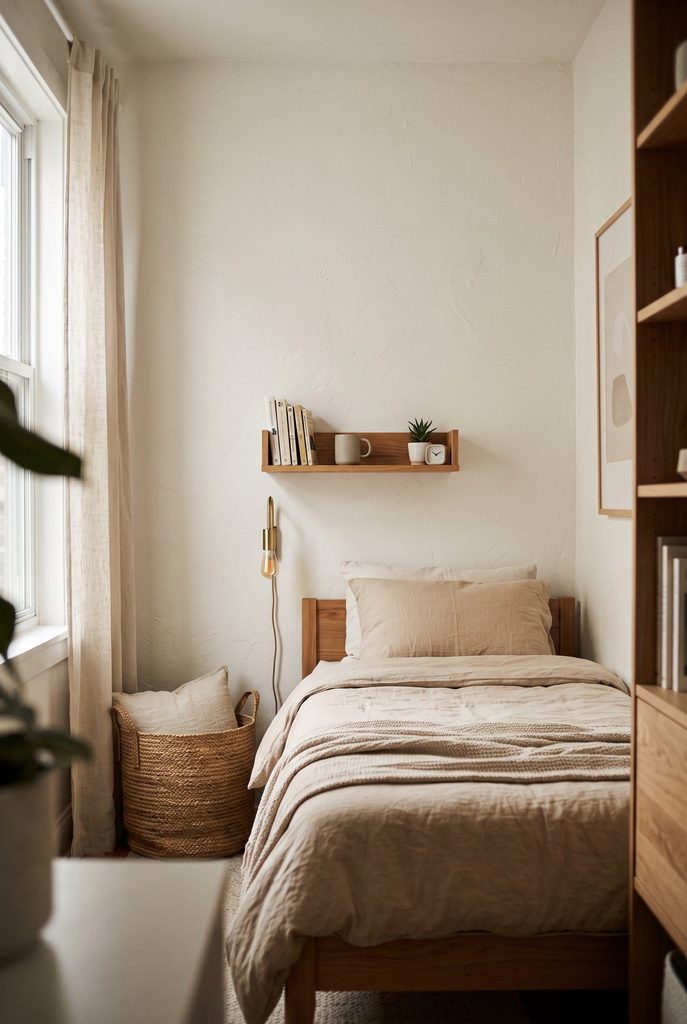
    Floor-standing nightstands eat up precious square footage, and honestly, most of us only use the top surface anyway. Swap them for wall-mounted shelves or floating nightstands instead. You get a spot for your lamp, phone, and book, but the floor underneath stays open, which makes the whole room breathe easier.

    Try a small floating shelf about 18 to 20 inches wide on each side of the bed. Add a plug-in sconce above it so you skip the lamp cord clutter entirely.

    Modern farmhouse rooms look great with a simple wood shelf and black metal brackets. Boho spaces can add a woven basket underneath for extra storage. Traditional rooms can use a mini floating shelf with a decorative edge for a built-in look.

    Speaking of lighting, that’s actually a huge lever for making small rooms feel bigger, so let’s talk about that next.

    3. Use Layered Lighting Instead of One Overhead Fixture

    Bedroom Lights : A Comprehensive Guide on Bedroom Lighting Ideas | Light And Living
    Credit: Lightsandliving

    One flat overhead light makes small rooms feel flat and boxy. Instead, layer your lighting with three sources: ambient light from the ceiling, task light near the bed, and accent light somewhere else in the room, like a floor lamp in the corner or LED strips behind a headboard.

    This layering adds depth. Depth makes a room feel bigger even though the square footage hasn’t changed one bit.

    Practical tip: use warm white bulbs (2700K to 3000K) instead of cool white. Warm light makes small spaces feel cozy instead of clinical.

    Modern rooms can use a sculptural floor lamp for accent light. Traditional rooms do well with a small crystal or fabric-shaded lamp. Coastal rooms love a rattan pendant paired with a simple task lamp.

    Now that lighting is sorted, let’s tackle one of the biggest space-wasters in most small bedrooms: the closet.

    4. Rethink Your Closet With Vertical Storage Systems

    Bedroom Storage Ideas: Your Guide to an Organized Home
    Credit: Resourcefurniture

    Most closets waste half their space because everything just hangs at one height with a shelf on top. Add a second hanging rod below the first for shirts and folded pants. Use stackable bins on the closet floor instead of letting shoes pile up loose.

    If you don’t have a closet at all, a slim wardrobe that’s tall and narrow (rather than wide) works better in tight rooms. Look for one under 36 inches wide.

    Storage OptionBest ForApprox. CostSpace Saved
    Double hang rodShirts, pants, jackets$15-$30Doubles hanging capacity
    Stackable binsShoes, accessories$20-$40Frees floor space
    Slim wardrobe (30-36 in)Rooms with no closet$150-$400Fits tight corners
    Over-door organizerSmall items, jewelry$10-$25Uses dead door space
    Under-bed storage boxesOff-season clothes, linens$20-$50Uses wasted under-bed space

    Once your closet is working smarter, it’s time to look under the bed, because that’s free real estate most people forget about.

    5. Use Under-Bed Storage Instead of a Dresser

    56 Best Under-Bed Storage 2026 | Under Bed Storage Ideas | HGTV
    Credit: Hgtv

    If your room can’t fit both a bed and a full dresser, ditch the dresser. Use rolling storage bins or drawers under the bed instead. Fold shirts, sweaters, and extra bedding into these bins, and you basically get a hidden second closet.

    Practical tip: measure the gap under your bed frame before buying bins. Most beds clear either 7 inches or 11 inches, and bins are usually made for one or the other.

    This trick fits any style since the bins are hidden. Nobody walking into your room will ever know there’s storage under there. It’s a quiet win that works in modern, traditional, coastal, or farmhouse spaces equally well.

    With storage handled, let’s talk about color, because paint choice can make or break a small room’s whole vibe.

    6. Paint the Room in One Continuous Color

    31 bedroom paint ideas to easily transform your space | Ideal Home
    Credit: Ideal Home

    Painting walls, trim, and even the ceiling in the same color removes visual “stopping points” in the room. When your eye doesn’t hit a line where wall meets trim in a different shade, the room reads as one continuous space instead of a chopped-up box.

    Go with soft, light tones like warm white, pale sage, or dusty blue. These colors bounce light around instead of absorbing it.

    Practical tip: use the same paint sheen on walls and trim (eggshell works well) so the surfaces blend instead of contrasting.

    Modern rooms look sharp in soft gray-white. Traditional rooms glow in warm cream. Coastal rooms feel breezy in pale blue-green. Once your walls set the tone, mirrors are the next trick to bounce that color and light even further.

    7. Hang a Large Mirror Across From the Window

    Small bedroom mirror ideas to create the illusion of space | Ideal Home
    Credit: Idealhome

    Mirrors reflect light, and placing one directly across from your window doubles the natural light bouncing around the room. This single trick can make a cramped bedroom feel noticeably brighter and more open within seconds of walking in.

    Go big. A mirror that’s at least 30 by 40 inches makes a bigger visual impact than a small decorative one.

    Practical tip: lean a full-length mirror against a wall instead of hanging it if you’re renting and can’t drill holes.

    Modern spaces love a thin black metal frame. Traditional rooms do well with an ornate wood or gold frame. Coastal rooms often use a whitewashed or rope-wrapped frame for texture.

    Now let’s shrink down the furniture itself, because oversized pieces are one of the sneakiest small-room killers.

    8. Pick Furniture Scaled to the Room, Not the Showroom

    73 small room ideas that will make a big impact | House & Garden
    Credit; Houseandgarden

    Furniture stores show pieces in giant open rooms, so things look smaller than they really are. That oversized chair that looked “cute” in the store can swallow a small bedroom whole. Always measure your room first, then measure the furniture, and leave at least 30 inches of walking path between pieces.

    Practical tip: use painter’s tape on the floor to map out furniture dimensions before you buy anything. It sounds tedious but it saves you from expensive returns.

    Room SizeMax Bed SizeSuggested Furniture
    Under 80 sq ftTwin or Twin XLFloating shelf, slim wardrobe
    80-100 sq ftFullFloating nightstands, narrow dresser
    100-120 sq ftQueenSmall bench, compact desk
    120+ sq ftQueen or FullStandard nightstands, reading chair

    With the right-sized furniture in place, let’s look at how a few smart multi-use pieces can replace two or three separate items entirely.

    9. Choose Multi-Functional Furniture Over Single-Purpose Pieces

    15 Space-Saving Furniture Solutions for Small Spaces
    Credit: Thespruce

    A daybed that doubles as seating and sleeping space. An ottoman that opens up for storage. A desk that folds against the wall when you’re not using it. These multi-purpose pieces let a small room do more without feeling more crowded.

    Practical tip: look for furniture tagged “space-saving” or “convertible” on furniture sites. These are specifically designed with small rooms in mind, so the proportions are usually already right.

    Modern rooms often go for a Murphy bed with a built-in desk. Traditional spaces might use a storage bench at the foot of the bed instead. Coastal rooms love a woven storage ottoman that also works as a footrest.

    Once your furniture is working double duty, it’s time to think about what’s on your walls, because vertical space is your best friend in a small room.

    10. Use Vertical Stripes or Tall Decor to Draw the Eye Up

    The subtle 'vertical decorating' technique designers use to make small rooms look bigger and brighter | Homes and Gardens
    Credit: Homesandgardens

    When floor space is tight, the ceiling becomes your best design tool. Vertical striped wallpaper, tall bookshelves, or floor-to-ceiling curtains all pull the eye upward, which makes the room feel taller and less cramped.

    Practical tip: hang curtain rods a few inches below the ceiling instead of right above the window frame. This small change adds visual height instantly.

    Modern rooms can use a bold vertical accent wall. Traditional rooms might add a tall armoire in the corner. Coastal rooms often go with tall, airy linen curtains that puddle slightly on the floor for softness.

    Speaking of curtains, window treatments deserve their own moment, because they can quietly change how big or small a room feels.

    11. Swap Heavy Curtains for Light, Airy Window Treatments

    19 Bedroom Curtain Ideas for Style and Peace
    Credit: BHG

    Thick, dark curtains can make a small bedroom feel like a cave. Swap them for lighter fabrics like linen or cotton in pale colors. Light fabric lets more natural light filter through even when the curtains are closed, keeping the room from feeling boxed in.

    Practical tip: choose curtains that are slightly longer than your window and hang them wide of the frame. This makes the window itself look bigger than it is.

    Modern rooms do well with simple white linen panels. Traditional spaces might add a subtle pattern. Coastal rooms almost always lean toward sheer, breezy fabrics that move with the air.

    Last but not least, let’s talk about the one thing that ties every small room together: keeping it edited.

    Tips for Success

    • Measure everything twice before buying furniture, including doorway width for getting pieces into the room
    • Stick to a limited color palette of three tones max to avoid visual chaos
    • Use rugs to define zones instead of walls or furniture dividers
    • Keep floor space as clear as possible, since visible floor reads as “more room” to the eye
    • Test paint colors on the actual wall at different times of day before committing
    • Choose one statement piece per room instead of several competing focal points
    • Add plants in hanging planters instead of floor pots to save space

    Common Mistakes and How to Avoid Them

    Overcrowding with furniture
    : Stick to only the essentials: bed, one storage piece, one surface for a lamp. Anything extra should have a clear job.

    Using dark, heavy colors on all four walls
    : Balance dark accent walls with lighter ceiling and trim colors to keep the room from feeling smaller.

    Skipping curtains or rugs to “save space”
    : Soft textures actually help a room feel finished and cozy, not cramped, when chosen in light, breathable fabrics.

    Placing the bed under the window
    : This blocks natural light and airflow. Try placing the bed against the longest solid wall instead.

    Buying furniture before measuring the room
    : Always tape out dimensions on the floor first so you know exactly what will fit before you spend money.

    Ignoring vertical storage
    : Wasted wall space above furniture is one of the most common missed opportunities in small bedrooms.

    Similar Variations

    • Coastal Small Bedroom: Light woods, woven textures, and breezy blue-white tones for a beachy, airy feel
    • Modern Minimalist Small Bedroom: Clean lines, neutral palette, and almost no decorative clutter
    • Cozy Farmhouse Small Bedroom: Warm woods, soft textiles, and vintage-inspired accents in a compact layout
    • Scandinavian Small Bedroom: Light wood tones, simple furniture, and functional storage with minimal ornamentation
    • Boho Small Bedroom: Layered textiles, warm earthy colors, and plants in hanging or wall-mounted planters
    • Traditional Small Bedroom: Classic furniture shapes scaled down, soft color palettes, and subtle pattern use

    Small bedrooms don’t have to feel like a compromise. With the right bed placement, smart storage, and a color palette that keeps things light, even a tiny room can feel calm and put together. The real trick is choosing furniture and decor that pulls double duty instead of just filling space. Try even a few of these 11 bedroom ideas for small rooms, and I promise your tiny space will start feeling a whole lot bigger.

  • 15 Sage Green And Grey Bedroom Ideas

    15 Sage Green And Grey Bedroom Ideas

    I’ve spent way too many hours scrolling through paint chips and Pinterest boards, so let me save you the trouble with these 15 sage green and grey bedroom ideas that actually work in real homes, not just magazine shoots.

    Sage green and grey bedroom design pairs a muted, earthy green with cool or warm greys to create a calm, balanced space. This combo works because both colors sit low on the saturation scale, so nothing fights for attention.

    Stick around, because I’m about to show you exactly how to mix these two colors without ending up with a room that feels flat or boring.

    What Makes Sage Green And Grey Work So Well Together

    I think sage green and grey feel like that friend who’s calm no matter what’s happening around them. Sage is green, but it’s dusty and soft, not bright like lime or emerald. Grey is neutral but never cold when you pair it right. Put them together and you get a room that feels grounded, a little earthy, and honestly pretty sophisticated without trying too hard.

    I love this combo because it’s flexible. You can go moody and dark, or airy and light. It works for a teenager’s room, a guest room, or a master suite. And it plays nice with wood tones, brass, black metal, basically anything you already own. That’s why I keep coming back to it.

    1. Paint One Accent Wall In Deep Sage Green

    12 Sage Green Accent Wall Ideas for Fresh Home Decor
    Credit: lovechicliving

    Painting just one wall in a deep sage green gives you drama without overwhelming the whole room. I’d pick the wall behind your headboard since that’s where your eye naturally lands first. Keep the other three walls in a soft warm grey so the green really pops.

    Add a wood or upholstered headboard against that wall to break up the flat paint. Brass sconces on either side add a little shine without clashing.

    Tip: test your paint sample at different times of day since sage green can look grey in low light and green in bright sun.

    This idea adapts well to modern farmhouse rooms, but it also works beautifully in traditional bedrooms with crown molding.

    Next up, let’s talk about what happens when you flip the ratio and make grey the star instead.

    2. Use Grey As The Dominant Color With Sage Green Accents

    15 Sage Green and Grey Bedroom Ideas You'll Love
    Credit: Lorddecor

    Sometimes less green is more. I like using grey on the walls, bedding, and rug, then letting sage green sneak in through pillows, a throw blanket, or a vase of eucalyptus. This keeps the room feeling airy and open, especially in smaller bedrooms where too much color can feel heavy.

    Choose a light to medium grey for the walls so the room doesn’t feel gloomy. Then bring in three or four sage green touches so your eye keeps finding little pops of color around the space.

    Practical tip: repeat the sage green at least twice in the room, like a pillow and a lamp shade, so it feels intentional instead of random.

    This works great in coastal or Scandinavian style rooms where a light, breezy feel matters most.

    Now let’s look at how texture can make these two colors feel even richer.

    3. Layer Different Textures To Add Depth

    6 New Bedrooms With Layered Style and Texture
    Credit: Houzz

    Flat paint and smooth bedding can make a sage green and grey room feel a little lifeless. I always tell people to layer textures instead. Think a chunky knit throw, a woven jute rug, linen curtains, and maybe a velvet accent chair.

    Mixing rough and smooth surfaces catches the light differently and makes the room feel layered instead of one-note. Bedding is an easy place to start. Try a linen duvet in grey with a sage green knit blanket folded at the foot of the bed.

    Tip: aim for at least three different textures in every room, like wood, fabric, and metal.

    This layering trick works in every design style, from boho to minimalist, because texture is what keeps a neutral palette from feeling boring.

    Speaking of boho, let’s talk about how natural materials fit into this color scheme next.

    4. Bring In Natural Wood Furniture For Warmth

    Adding Warmth to Your Bedroom with Wood Tones
    Credit: Featherandblack

    Sage green and grey can feel a little cool on their own, so I always suggest warming things up with wood furniture. A walnut nightstand, an oak dresser, or even a rattan headboard adds warmth that balances out the cooler tones.

    Wood also gives your eye a break from all that green and grey. I like mixing wood tones a little too, maybe a lighter oak nightstand paired with a darker walnut dresser, just so it doesn’t feel too matchy.

    Practical tip: keep at least one big wood piece in the room, like a bed frame or dresser, so the warmth doesn’t get lost among smaller accessories.

    This works especially well in mid-century modern or Japandi style bedrooms where wood is already a key player.

    Let’s check out a quick table before moving into more ideas, since picking the right shade combo really does matter.

    Popular Sage Green And Grey Paint Combinations

    Sage Green ShadeGrey PairingOverall MoodBest Room Size
    Clary Sage (Sherwin Williams)Repose Gray (Sherwin Williams)Soft and calmSmall to medium
    Sea Salt (Sherwin Williams)Anew Gray (Sherwin Williams)Airy and coastalAny size
    Evergreen Fog (Sherwin Williams)Gray Screen (Sherwin Williams)Moody and cozyMedium to large
    Backdrop (Behr)Silver City (Behr)Warm and groundedSmall to medium
    Retreat (Behr)Mineral (Behr)Fresh and modernAny size

    5. Add A Statement Rug To Anchor The Room

    Bedroom And Bedside Rug Ideas For Cozy Comfort
    Credit: Rug Editorial

    A big rug pulls a room together fast. I like a grey base rug with a subtle sage green pattern, or vice versa, depending on which color you want to lead. Wool rugs feel soft underfoot and hold color well over time.

    Size matters here. Your rug should extend at least a foot beyond each side of the bed so it frames the whole setup instead of looking like a small mat floating in the middle of the room.

    Tip: go with a low pile rug if you have allergies, since it traps less dust than a high pile shag.

    This idea works in nearly every style, though a jute rug leans more boho while a wool rug feels more traditional or transitional.

    Once your rug is down, window treatments are the next thing to think through.

    6. Choose Sheer Or Linen Curtains For Softness

    How to Choose the Perfect Bedroom Curtains
    Credit: Littlehouseonthecorner

    Heavy blackout curtains have their place, but if you want that soft, calm bedroom feel, sheer or linen curtains do the trick. A soft grey linen curtain lets light filter through gently and keeps the room from feeling stuffy.

    If you want more color, sage green curtains against grey walls create a nice contrast without being loud. Just make sure your curtain rod is mounted higher than the window frame, since this makes ceilings look taller and windows look bigger.

    Practical tip: measure so your curtains just skim the floor, not pool or hover above it, for the cleanest look.

    Coastal and farmhouse bedrooms especially benefit from this airy curtain style, though you can add blackout liners behind sheers for function.

    Now let’s talk about a detail people often skip: your ceiling.

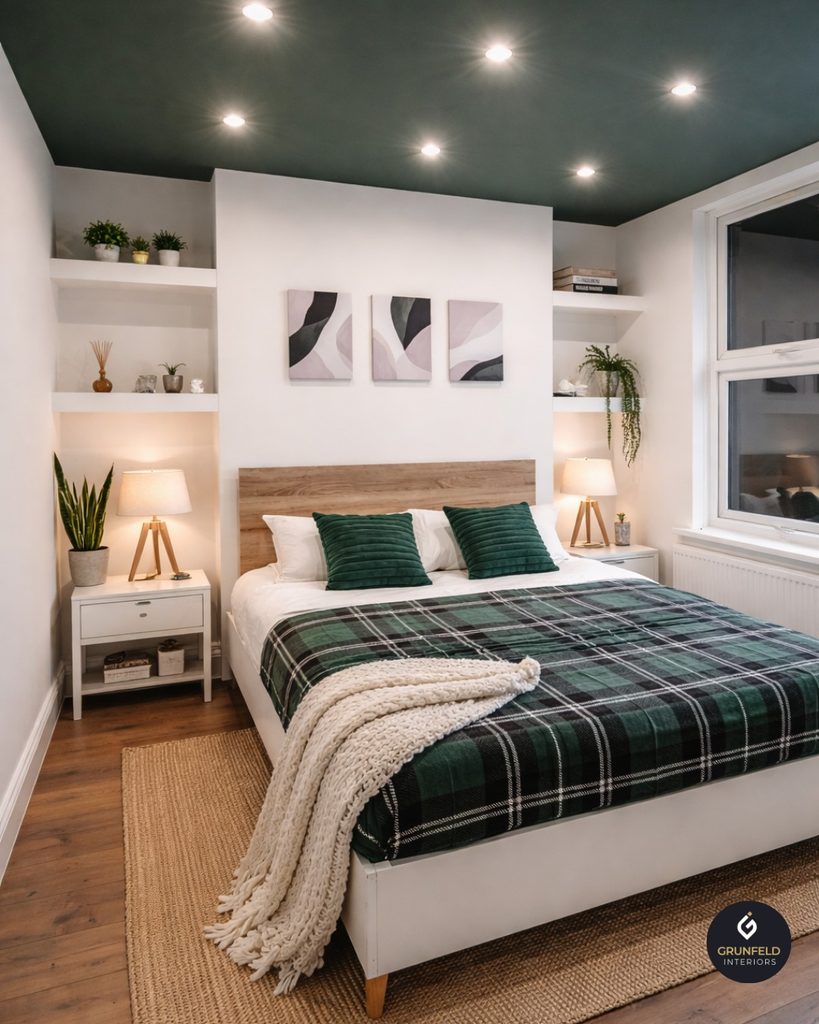
    7. Try A Painted Ceiling For A Cozy Cocoon Effect

    Credit: @grunfeld_interiors

    Painting your ceiling sage green or grey is one of those things that sounds bold but actually feels really calming once it’s done. I’ve seen bedrooms transform completely just by adding color up top instead of leaving it plain white.

    This works best in bedrooms with some architectural detail, like exposed beams or crown molding, since the color highlights those features instead of hiding them.

    Tip: if you’re nervous about commitment, start with a lighter grey on the ceiling and save deep sage green for an accent wall instead.

    This idea fits cottage, traditional, and modern farmhouse bedrooms particularly well, giving the whole room a wrapped, cozy feeling.

    Let’s shift gears now and talk about metal finishes, since hardware choices matter more than people think.

    8. Mix Metal Finishes For Visual Interest

    Mixing metallic finishes is growing trend | Home and Garden | Life
    Credit: Reviewjournal

    I used to think you had to match every metal finish in a room, but that’s just not true anymore. Brass, matte black, and brushed nickel all work beautifully against sage green and grey. Brass adds warmth, black adds contrast, and nickel keeps things sleek.

    Try brass drawer pulls on a grey dresser, black metal legs on a nightstand, and a brushed nickel lamp on top. The mix feels curated instead of matchy.

    Practical tip: pick one dominant metal finish and use the other two sparingly, so the room still feels cohesive.

    This mixed metal approach thrives in modern, transitional, and eclectic bedrooms where a little variety adds personality.

    Speaking of personality, let’s talk about plants next, because they’re an easy way to bring the sage green theme full circle.

    9. Bring In Real Or Faux Plants For A Natural Touch

    Fake Plants in the Bedroom: Yay or Nay? - Designer Plants USA
    Credit: Designerplants

    Since sage green already leans earthy, adding actual greenery just makes sense. A snake plant, pothos, or eucalyptus stem in a simple grey ceramic pot ties the whole room together.

    Plants also soften hard edges in a room, especially if you have a lot of straight furniture lines. I like placing one larger plant in a corner and a smaller one on a nightstand or dresser for balance.

    Tip: if you don’t have a green thumb, high quality faux plants look surprisingly real these days and need zero maintenance.

    This works in literally every design style, though boho and coastal rooms tend to use plants the most heavily.

    Now, let’s get into how bedding choices can make or break this whole color scheme.

    10. Layer Bedding In Varying Shades Of Sage And Grey

    21 Modern Sage Green Bedroom Ideas With Tips To Help You Design Yours
    Credit: Home-Designing

    Your bed is the biggest surface in the room, so bedding choices carry a lot of weight. I like layering a grey fitted sheet, a sage green duvet, and then a few throw pillows that mix both colors in different patterns, like stripes or subtle florals.

    This layered look feels intentional and gives you flexibility to switch things up seasonally without repainting anything.

    Practical tip: stick to two or three patterns max on your bed so it doesn’t feel too busy.

    This bedding-layering trick works everywhere, from minimalist bedrooms to more traditional, pattern-heavy spaces.

    Let’s look at another quick data table before diving into a few more ideas, this time comparing budget options for pulling this look together.

    Budget Tiers For A Sage Green And Grey Bedroom Refresh

    Budget LevelWhat You Can DoApproximate Cost
    Low ($50-150)New bedding, throw pillows, one accent piece$50-150
    Mid ($200-600)Paint one wall, new rug, curtains, lamps$200-600
    High ($700-2000)Full paint job, new furniture pieces, statement rug$700-2000
    Luxury ($2000+)Custom furniture, wallpaper, full room redesign$2000 and up

    11. Add Wallpaper With A Subtle Botanical Pattern

    Botanical Tropical Bedroom Wallpaper Design with Oversized Leaf Murals |  Livspace
    Credit: Livspace

    If solid paint feels too plain for you, wallpaper is a great middle ground. Look for botanical prints that blend sage green leaves against a grey background. This gives you pattern without going overboard on bold color.

    I’d suggest wallpapering just one wall if you’re nervous about commitment, or going all in if you love pattern and want a more immersive feel.

    Tip: peel and stick wallpaper is a great low-commitment option if you rent or just want to test the look first.

    This idea shines in traditional and grandmillennial style bedrooms, though modern homes can pull it off with a more abstract, less floral pattern.

    Let’s move into lighting next, since it changes how these colors actually read in your space.

    12. Choose Warm Lighting To Balance Cool Tones

    Bedroom Lighting Ideas for Peaceful Sleep Spaces - Home Fettle
    Credit: Homefettle

    Grey can turn cold fast under the wrong lighting. I always recommend warm white bulbs, around 2700K to 3000K, in any sage green and grey bedroom. This keeps the space feeling cozy instead of clinical.

    Layer your lighting too. A ceiling fixture alone isn’t enough. Add a bedside lamp, maybe a floor lamp in the corner, and if you can, a dimmer switch so you control the mood.

    Practical tip: avoid bright white or daylight bulbs in this color scheme, since they make grey look flat and sage green look washed out.

    This lighting approach matters across every style, since good lighting is honestly the most underrated design tool in any room.

    Now let’s talk about one more often-overlooked detail: your closet doors and trim.

    13. Paint Trim And Doors In A Complementary Grey

    A Single-Hue Haven: Painting Walls, Doors & Trim the Same Color | Tinted
    Credit; Sherwin-Williams

    Most people paint walls and totally forget about trim, doors, and baseboards. I like painting these in a soft grey that’s a few shades lighter or darker than the wall color. It gives the room a finished, cohesive look instead of stark white trim clashing with your color scheme.

    This is a small detail, but it makes a huge difference in how polished the room feels overall.

    Tip: use a satin or semi-gloss finish on trim so it’s easy to wipe clean and holds up over time.

    This works in every style, though modern homes tend to go monochromatic while traditional homes might keep white trim for contrast.

    Let’s wrap up the main ideas with a couple of finishing touches that pull everything together.

    14. Use Artwork That Echoes Both Colors

    Harmonizing Artwork with Room Colors | Rick Berk Fine Art Photography
    Credit: Rick

    Art ties a room together better than almost anything else. Look for pieces with soft sage green and grey tones, maybe a botanical print, an abstract landscape, or even black and white photography with a green mat.

    I like grouping two or three smaller pieces together over one large piece if your walls allow it, since it creates a gallery feel without costing a fortune.

    Practical tip: hang art so the center sits at eye level, about 57 to 60 inches from the floor.

    This works in every design style since art is one of the easiest ways to inject personality into any color palette.

    Last but not least, let’s talk about how to finish the room with the right accessories.

    15. Finish With Woven Baskets And Natural Storage

    Baskets to Add a Stylish Touch to Your Home Decor – Woodka Interiors
    Credit: Woodkainteriors

    Woven baskets in natural tones tie the earthy sage green vibe together while adding practical storage. Use them under the bed, in a closet, or as a catch-all in the corner for blankets or extra pillows.

    They add texture too, which we talked about earlier, and keep the room from feeling too polished or staged.

    Tip: choose baskets with handles so they’re easy to pull out and actually use, not just for decoration.

    This idea fits boho, coastal, and farmhouse bedrooms especially well, though even modern spaces benefit from a little natural texture.

    Tips for Success

    • Test paint samples on your actual walls, not just on paper, since lighting changes everything.
    • Keep at least 60 percent of the room in one dominant color so it doesn’t feel split down the middle.
    • Add texture through fabric, wood, and natural fibers so the room doesn’t feel flat.
    • Use warm lighting bulbs to keep grey from feeling cold or sterile.
    • Don’t skip trim and ceiling color, since these details finish the room’s overall look.
    • Bring in at least one living or faux plant to reinforce the earthy sage green feel.
    • Shop your own house first before buying new decor, since you might already own pieces that fit.

    Common Mistakes and How to Avoid Them

    Too much cool grey without warmth
    : Balance it out with wood tones, brass accents, or warm lighting so the room doesn’t feel sterile or cold.

    Choosing sage green that’s too bright
    : Stick to muted, dusty shades of sage rather than bright green so it stays calming instead of jarring.

    Ignoring texture completely
    : Mix in linen, wool, wood, and woven materials so the room feels layered instead of flat.

    Ignoring ceiling and trim color
    : Extend your palette to the ceiling and trim so the whole room feels intentional and finished.

    Overdoing one color and ignoring balance
    : Aim for a 60-30-10 split between your dominant color, secondary color, and accent color for better visual balance.

    Similar Variations

    • Sage Green And White Bedroom: A brighter, airier take that feels fresh and clean, especially in small spaces.
    • Sage Green And Cream Bedroom: Swaps grey for cream, creating a warmer, cozier version of this palette.
    • Grey And Blush Pink Bedroom: Keeps the calming grey base but swaps sage green for a softer, romantic pink accent.
    • Olive Green And Charcoal Bedroom: A deeper, moodier cousin of sage and grey, perfect for a dramatic bedroom feel.
    • Sage Green And Terracotta Bedroom: Mixes earthy green with warm clay tones for a more boho, sun-baked look.
    • Eucalyptus And Grey Bedroom: Uses a slightly cooler green tone paired with grey for a spa-like, calming vibe.

    At the end of the day, sage green and grey work so well together because they’re both calm, flexible colors that play nice with almost anything you already own, from wood furniture to brass hardware to woven baskets. Whether you go bold with an accent wall or keep things subtle with a few pillows and a plant, these 15 sage green and grey bedroom ideas give you plenty of ways to build a space that actually feels like you, without spending a fortune or repainting every single wall in your house.

  • 10 Navy Blue Bedroom Ideas That Will Change How You See This Color

    10 Navy Blue Bedroom Ideas That Will Change How You See This Color

    I’ve spent way too many nights scrolling through design boards, and I can tell you that these 10 navy blue bedroom ideas are exactly what you need if you’re tired of boring, beige walls. This guide covers everything from paint picks to furniture choices, so you won’t need to hunt down five other articles after this one.

    What is a navy blue bedroom? A navy blue bedroom uses deep blue tones (ranging from midnight to indigo shades) as the primary color for walls, bedding, or major furniture pieces. It creates a cozy, moody atmosphere while still feeling sophisticated and calm.

    Stick around, because I’m about to show you ways to use navy that you probably haven’t thought of yet, including some tricks for small rooms that feel cramped.

    Why Navy Blue Works So Well in Bedrooms

    I get it. Navy sounds dark. Maybe even a little scary for a bedroom. But here’s the thing, navy blue is one of those colors that feels expensive without costing a fortune. It’s calming, like the ocean at night. It also pairs with almost anything, gold, white, blush pink, you name it. A lot of people avoid dark colors because they think it’ll make the room feel small. Actually, navy can make a room feel cozier and more intentional, like a hotel suite instead of a college dorm. That’s the magic of this color. It’s bold without being loud.

    1. Paint All Four Walls in Deep Navy

    50 Blue Room Decorating Ideas - How to Use Blue Wall Paint & Decor
    Credit: Elledecor

    This is the boldest move on the list, and honestly, it’s my favorite. Painting every wall navy blue turns your bedroom into a cocoon. It feels intimate, like a little retreat from the rest of your house.

    Pick a matte or eggshell finish so the color doesn’t feel too glossy or cold. Add brass or gold hardware on your dresser to warm things up. White trim around doors and windows keeps the room from feeling like a cave.

    Practical tip: Test the paint on one wall for a few days before committing. Lighting changes everything with dark colors.

    This look works great in traditional and modern homes alike. Coastal spaces can pull it off too, just add lighter linens to balance it out.

    Once your walls are set, the next step is figuring out what goes on the bed.

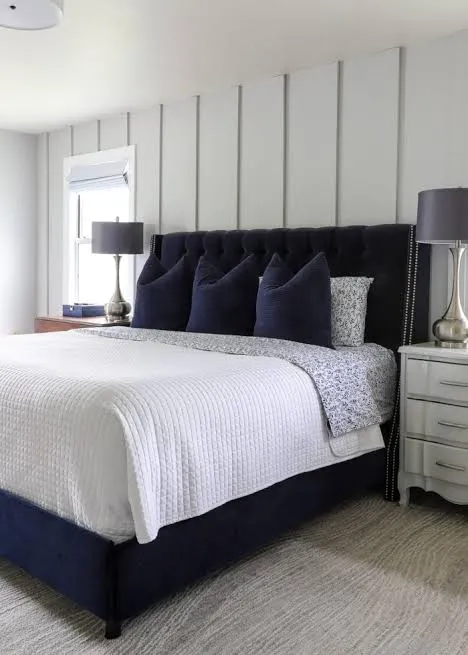
    2. Layer Navy Bedding with Crisp White Sheets

    Credit: Thehomesihavemade

    A navy comforter or duvet paired with white sheets peeking out looks like something straight out of a boutique hotel. This combo feels fresh and put together without much effort.

    Choose a navy duvet cover in cotton or linen for breathability. Add two white pillows underneath your navy shams. Toss in a textured throw blanket, maybe cream or mustard, for extra warmth.

    Practical tip: Wash your white sheets separately to keep them bright and avoid navy dye transfer.

    This idea works in almost any style. Farmhouse bedrooms love this pairing, and so do modern minimalist spaces.

    Now let’s talk about what happens when you add some metal accents into the mix.

    3. Add Brass or Gold Accents for Warmth

    Before & After: Classy Bedrooms with Gold Accessories
    Credit: Decorilla

    Navy on its own can feel a bit cold or heavy. Brass and gold fix that instantly. These metals reflect light and give the room a little sparkle without overdoing it.

    Swap your lamp bases for brass ones. Add gold picture frames or a mirror with a gold edge. Even small drawer pulls in brass make a noticeable difference.

    Practical tip: Don’t mix silver and gold in the same room unless you’re going for an eclectic look on purpose.

    Traditional and glam bedrooms shine with this combo, but even industrial spaces can use brass to soften harsh lines.

    Speaking of softening things up, let’s move on to textures.

    4. Mix Textures Like Velvet, Linen, and Wool

    How To Mix Textures In Home Décor | Fondren Designer Fabrics
    Credit: Fabricresource

    Navy blue looks amazing with texture. A velvet headboard against navy walls is pure luxury. Linen curtains add a relaxed, breezy feel. Wool rugs bring warmth underfoot.

    Try a velvet accent chair in the corner of the room. Add a chunky wool throw at the foot of the bed. Linen curtains in a soft cream or light gray finish off the look.

    Practical tip: Stick to three textures max so the room doesn’t feel too busy.

    Modern farmhouse and bohemian styles both love this texture-mixing trick. Even minimalist rooms can handle one or two textured pieces.

    Texture and Fabric Pairing Guide

    Fabric TypeBest Used ForFeel It CreatesPrice Range (Per Yard/Piece)
    VelvetHeadboards, accent chairsLuxurious, cozy$20-$60
    LinenCurtains, beddingRelaxed, breathable$10-$30
    WoolRugs, throwsWarm, grounding$30-$100
    CottonSheets, duvet coversCrisp, clean$8-$25
    ChenilleBlankets, pillowsSoft, plush$15-$40

    Now that textures are covered, let’s talk about lighting because it changes everything with dark colors.

    5. Use Warm Lighting to Soften the Navy

    20 Romantic Cozy Navy Blue Bedroom Ideas That Feel Like a Luxury Hotel -  Purely Dwelling
    Credit: Purelydwelling

    Dark walls need the right lighting or they’ll feel gloomy instead of cozy. Warm bulbs are your best friend here. Skip the cool white LED bulbs completely.

    Add a table lamp on each nightstand with warm 2700K bulbs. Consider a dimmer switch for your overhead light. String lights behind the headboard add a soft glow too.

    Practical tip: Layer three light sources (ambient, task, and accent) for the best effect.

    This tip matters for every style, from Scandinavian to Hollywood glam. Warm lighting is non-negotiable with navy.

    Once lighting is sorted, let’s think about what’s on your walls.

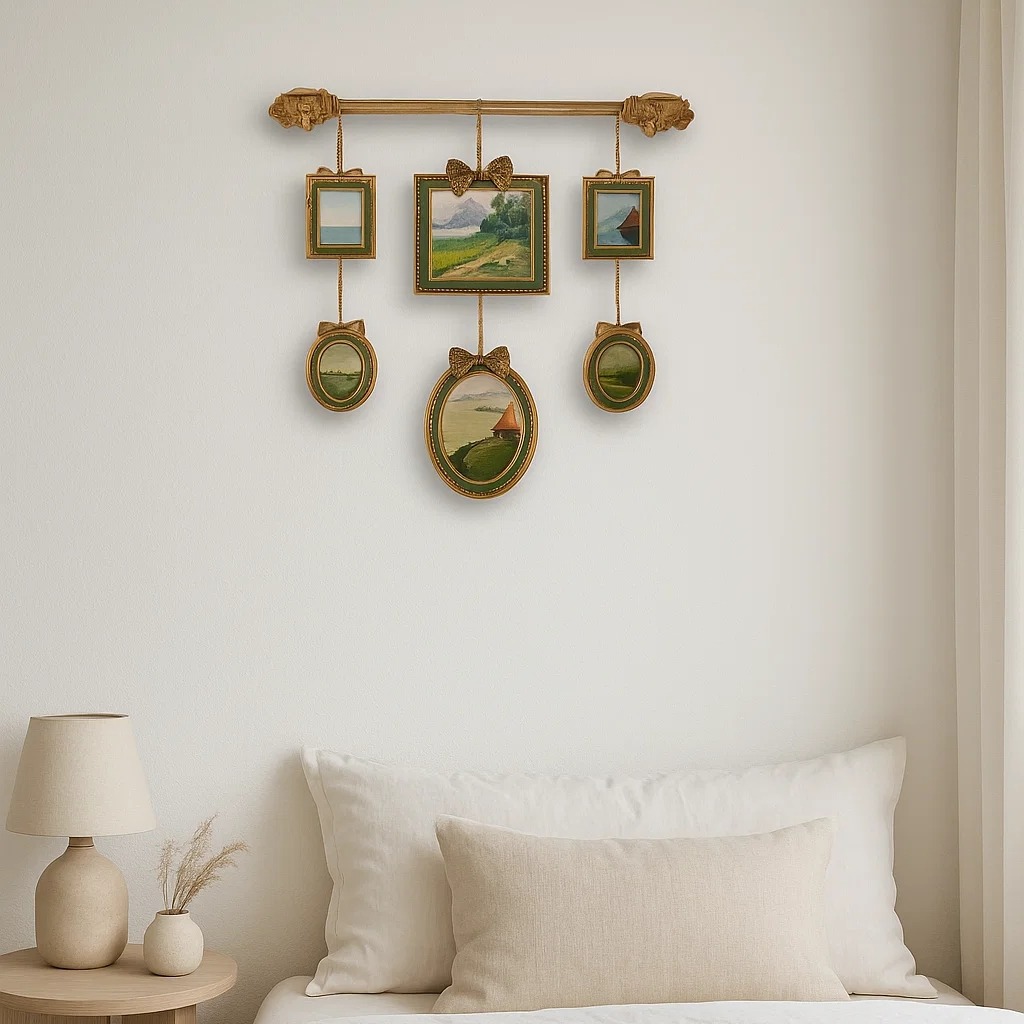
    6. Hang Gallery Walls with Gold Frames

    Credit: homeinfunca

    Navy makes a killer backdrop for artwork. Photos and prints pop against that deep color. A gallery wall adds personality without cluttering the whole room.

    Mix different frame sizes but keep the gold or brass finish consistent. Include a mix of photos, art prints, and maybe a small mirror. Leave equal spacing between each piece, about two to three inches.

    Practical tip: Lay your frames out on the floor first to plan the arrangement before hammering any nails.

    Eclectic and traditional homes love a full gallery wall, while modern spaces might prefer just three or four large pieces.

    Let’s shift gears and talk about furniture finishes next.

    7. Choose Light Wood Furniture to Balance the Dark

    Credit: Wellbydesign

    Navy is heavy, so you want some lightness somewhere. Light wood furniture, think oak or ash, creates a nice contrast against those deep walls.

    Pick a light wood dresser or nightstand. A woven jute rug on the floor adds even more contrast. Keep the wood tones consistent throughout the room for a cohesive look.

    Practical tip: If your current furniture is dark, a coat of white or cream paint can mimic the light wood effect for cheap.

    Scandinavian and coastal styles thrive with this pairing. It softens navy’s intensity and keeps things airy.

    Now let’s look at how pattern can play into this navy scheme.

    8. Introduce Pattern Through Throw Pillows

    You're Styling Your Throw Pillows All Wrong—Here's How to Get It Right,  According to Experts
    Credit: Housebeautiful

    A solid navy room can feel a little flat after a while. Pattern fixes that instantly. Think stripes, florals, or geometric shapes on your throw pillows.

    Choose two or three patterns that share a color, maybe navy and mustard, or navy and blush. Keep your bedding solid so the pillows can be the star. Rotate seasonal patterns to keep things fresh.

    Practical tip: Odd numbers of pillows (three or five) look more natural than even numbers.

    Bohemian and eclectic bedrooms can go bold with pattern, while modern spaces should stick to one or two subtle prints.

    Next, let’s talk about a design choice that’s a little less common but super effective.

    9. Try a Navy Accent Wall Instead of Full Coverage

    15 Navy Blue Accent Wall Bedroom Ideas for Cozy Spaces
    Credit: lorddecor

    Not ready to commit to navy on all four walls? An accent wall behind your headboard gives you the drama without the full commitment.

    Paint just the wall behind your bed. Keep the other three walls white, cream, or light gray. This creates a natural focal point in the room.

    Practical tip: Extend the paint slightly onto the ceiling for a dramatic, cocooned feel.

    This works beautifully in rental homes since it’s easier to paint back to neutral later. It also suits small bedrooms that might feel cramped with full navy coverage.

    Small Room vs Large Room Navy Coverage Guide

    Room SizeRecommended CoverageBest Navy PlacementWhy It Works
    Under 100 sq ftAccent wall onlyBehind headboardPrevents closed-in feeling
    100-150 sq ftTwo wallsHeadboard wall plus one adjacentBalances drama and openness
    150-250 sq ftFull roomAll four wallsRoom is large enough to absorb dark color
    Over 250 sq ftFull room plus ceilingAll walls and ceilingCreates a cocoon effect without feeling small

    With wall coverage figured out, let’s move to something that ties the whole room together, your window treatments.

    10. Add Navy Curtains for a Cohesive Look

    Style A Bedroom With Blue Carpet | Frank's The Flooring Store
    Credit: Frankstheflooringstore

    Even if your walls aren’t navy, curtains in this color can tie the whole room together. They frame your windows and add depth to the space.

    Choose floor-length navy curtains in linen or cotton blend. Hang them close to the ceiling to make the room feel taller. Pair with sheer white curtains underneath for a soft, layered look.

    Practical tip: Curtains should just barely brush the floor or puddle slightly for a more polished look.

    This trick works everywhere, from traditional to contemporary bedrooms. It’s a low-commitment way to bring navy into the room.

    Let’s now look at how to use navy on a headboard specifically.

    Tips for Success

    • Start small if you’re nervous about commitment, try a navy accent wall or bedding before painting the whole room
    • Always test paint swatches at different times of day since navy shifts dramatically under different lighting
    • Balance dark navy with at least one light, neutral element in every part of the room
    • Don’t skip warm lighting, it’s the difference between cozy and cave-like
    • Mix metals sparingly, one dominant metal finish (brass, gold, or black) keeps things cohesive
    • Add greenery, a plant or two softens the boldness of navy and brings life into the room
    • Think about your flooring too, light rugs on dark floors help brighten a navy-heavy space

    Common Mistakes and How to Avoid Them

    Using only cool-toned lighting
    : Swap to warm bulbs (2700K to 3000K) to keep the room feeling inviting instead of cold.

    Painting a small room fully navy without testing first
    : Try an accent wall or peel-and-stick sample before committing to full coverage.

    Forgetting contrast
    : Add white, cream, or light wood pieces so the room doesn’t feel too heavy or dark.

    Overloading the room with too many patterns
    : Stick to two or three coordinating patterns max to avoid visual chaos.

    Ignoring the ceiling and trim
    : A stark white ceiling can feel disconnected, consider a soft cream or extending the navy slightly for cohesion.

    Choosing the wrong navy shade
    : Some navies lean purple or green, always test a sample against your existing furniture before buying gallons of paint.

    Similar Variations

    • Coastal Navy — Pairs navy with white, sandy beige, and rope textures for a beachy feel
    • Moody Maximalist — Combines navy with jewel tones, dark wood, and layered patterns for a rich, dramatic look
    • Scandinavian Navy — Uses navy sparingly against white walls and light wood for a clean, airy vibe
    • Navy and Blush — Softens the deep blue with pastel pink accents for a romantic touch
    • Nautical Navy — Leans into stripes, brass anchors, and rope details for a classic seaside look
    • Dark Academia Navy — Mixes navy with leather, brass, and vintage books for a scholarly, cozy feel

    Navy blue bedrooms don’t have to feel dark or heavy if you balance them right. A little warm lighting, some texture, and the right metal accents go a long way. Whether you paint one wall or all four, the goal is to make the room feel calm, cozy, and a little bit luxurious. I hope these 10 navy blue bedroom ideas gave you the inspiration you needed to finally make that color change you’ve been thinking about.