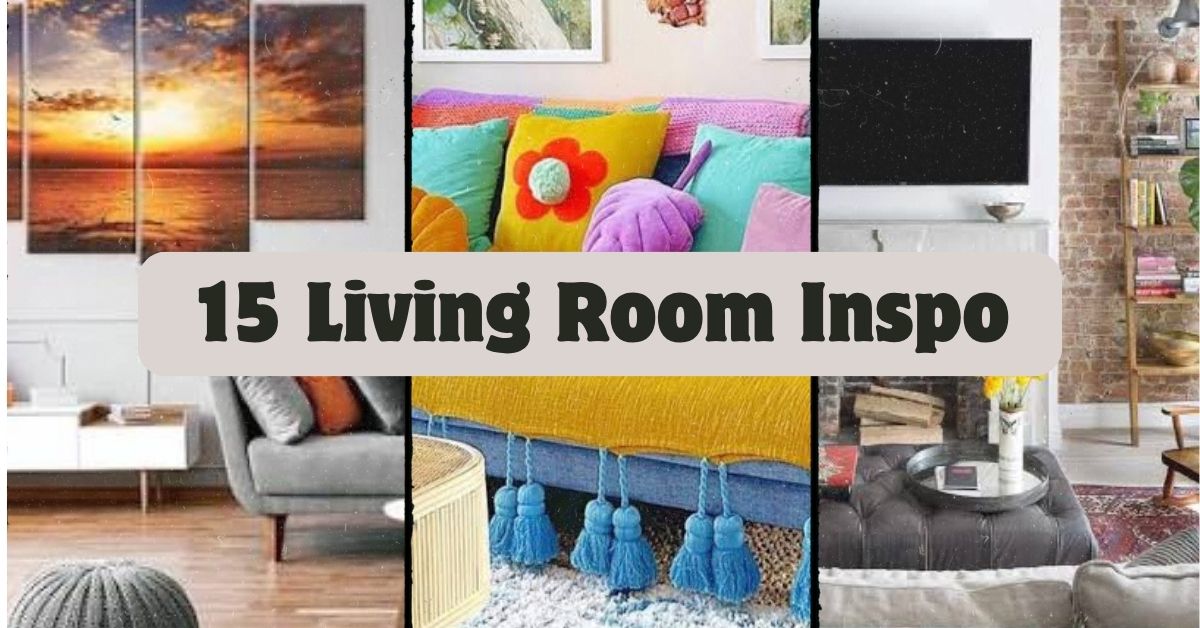
I’ve spent way too many hours scrolling through living room photos, trying to figure out what actually makes a space feel put-together instead of just “fine.” So when I put together this list of 15 living room inspo ideas, I made sure every single one is something you can actually pull off, not just admire from a distance.
A living room refresh means updating furniture arrangement, color palette, textiles, and decor accents to create a cohesive, comfortable space. The most effective updates combine functional layout with intentional style choices like lighting, texture, and a focal point.
Stick with me and I’ll walk you through real ideas, real numbers, and real mistakes to dodge. By the end, you’ll have a clear plan instead of forty open browser tabs.
What Makes Living Room Inspo Actually Useful
Here’s the thing about inspo photos. Half of them are staged in rooms with 12-foot ceilings and zero clutter, which isn’t real life. Good living room inspo isn’t about copying a picture exactly. It’s about pulling pieces from different ideas and mixing them into something that fits your actual space and your actual budget.
I like to think of it as a toolbox, not a blueprint. You grab the color idea from one photo, the furniture layout from another, and the lighting trick from a third. That’s how designers actually work too. So as you go through this list, don’t think “I need to recreate this exact room.” Think “what piece of this can I steal?”
1. Anchor the Room With a Statement Rug
A rug isn’t just something to keep your feet warm. It’s the foundation that ties your whole color scheme together. Pick a rug big enough that at least the front legs of your sofa and chairs sit on it. Too small, and the room feels disconnected, like furniture floating in space.
For color, go with a pattern that pulls in two or three shades already in your room. Solid rugs work great in busy rooms, while patterned ones can calm down a plain space.
Practical tip: measure your seating area first, then buy the rug size that fits, not the other way around. In modern spaces, go geometric. In traditional rooms, try a Persian-style print. Coastal homes love a jute or sisal weave.
Once your rug is down, the next step is figuring out what furniture actually sits on top of it.
2. Choose a Sofa That Fits Your Life, Not Just Your Eye
I know it’s tempting to buy the sofa that looks amazing in the store. But if you’ve got kids, pets, or you just eat popcorn on the couch every night (no judgment), fabric choice matters more than color.
Performance fabrics and darker tones hide stains better. Light linen looks dreamy in photos but shows every spill. Think about depth too. Deep seats are great for lounging, shallow seats work better for good posture and small rooms.
Quick tip: sit on any sofa for at least five minutes in the store before buying. Your back will thank you. Modern homes lean toward clean-lined sofas, farmhouse style loves slipcovered ones, and traditional rooms often go for rolled arms and tufted backs.
Once your sofa is locked in, it’s time to think about what goes around it.
3. Build a Cozy Conversation Circle
One mistake I see all the time is furniture pushed against every wall, leaving a big empty gap in the middle. Instead, pull your seating in toward each other so people can actually talk without shouting across the room.
Aim for no more than 8 feet between seats facing each other. Add a coffee table in the middle at a height close to your sofa cushions, usually around 16 to 18 inches.
Actionable tip: use painter’s tape on the floor to map out your layout before moving heavy furniture. This works in any size room, and it adapts to any style since it’s about function, not looks.
Now that seating is sorted, let’s talk about the wall that everyone’s eyes go to first.
4. Create a Focal Point Wall
Every living room needs somewhere for the eye to land. That could be a fireplace, a big piece of art, a gallery wall, or even a bold paint color on one wall.
If you don’t have a fireplace, don’t worry. A large piece of artwork above the sofa or an accent wall in a rich color does the same job. Keep the rest of the room a bit calmer so this wall gets to shine.
Tip: hang art so the center sits at eye level, roughly 57 inches from the floor. Modern spaces love a single oversized print, while traditional homes might prefer a gallery of framed pieces.
With your focal point set, let’s talk lighting, because even the best wall looks flat under bad light.
Lighting Type Comparison for Living Rooms
| Lighting Type | Best Use | Average Cost | Style Fit |
|---|---|---|---|
| Floor lamp | Reading corners, filling empty space | $50-$200 | Modern, traditional |
| Table lamp | Side tables, soft ambient glow | $30-$150 | Any style |
| Pendant light | Statement piece over seating area | $80-$400 | Modern, industrial |
| Recessed lighting | Even overall brightness | $150-$300 installed | Contemporary |
| String or LED strip lights | Cozy accent lighting | $15-$50 | Coastal, boho |
5. Layer Your Lighting Instead of Relying on One Fixture
A single overhead light makes a room feel flat and kind of clinical, honestly. I always tell people to layer three types of light: ambient (overall room light), task (reading lamps), and accent (highlighting art or shelves).
This layering trick instantly makes a room feel warmer, even if you don’t change a single piece of furniture. Dimmer switches help a ton here too, since you can adjust the mood for movie night versus a bright afternoon.
Tip: add at least one warm-toned bulb (2700K) somewhere in the room for coziness. This works in every style, from farmhouse to mid-century modern.
Once your lighting feels right, it’s time to bring in some texture so the room doesn’t feel flat.
6. Mix Textures to Add Depth
A room full of smooth surfaces feels cold, even with great colors. I like to mix at least three textures in any room: something soft (throw blanket), something woven (basket or rug), and something hard (wood or metal accent).
Think chunky knit throws, a leather ottoman, linen curtains, and a wood coffee table all in the same space. That mix keeps things interesting without needing tons of color.
Tip: if your furniture is mostly smooth fabric, add texture through pillows and blankets instead of buying new furniture. Coastal rooms love rattan and linen, while industrial spaces lean on leather and metal.
Speaking of pillows and blankets, let’s dig into how to actually pick the right ones.
7. Use Throw Pillows to Test Color Ideas Cheaply
Pillows are the cheapest way to try out a color palette before committing to anything permanent. If you’re nervous about a bold color, start with two pillows in that shade before painting a wall.
Mix pattern and size. I like one solid pillow, one pattern, and one textured pillow (like a knit or velvet) per seating spot. Odd numbers usually look more natural than perfectly matched pairs.
Tip: wash pillow covers separately and swap them seasonally, cheaper than buying new furniture every year. This trick works in literally every design style because it’s low commitment and low cost.
Now let’s zoom out and talk about the overall color palette for the whole room.
Popular Living Room Color Palettes
| Palette Name | Main Colors | Best For | Mood Created |
|---|---|---|---|
| Warm Neutral | Beige, cream, tan, walnut brown | Small or dark rooms | Cozy, inviting |
| Coastal Blue | Soft blue, white, sandy tan | Rooms with lots of natural light | Relaxed, airy |
| Moody Green | Sage, forest green, brass | North-facing rooms | Rich, grounded |
| Modern Monochrome | Black, white, grey | Open, bright spaces | Sleek, minimal |
| Earthy Terracotta | Rust, clay, cream, olive | South-facing rooms | Warm, energetic |
8. Pick a Color Palette With a 60-30-10 Rule
Designers use this rule for a reason: 60% of the room in your main color (usually walls and big furniture), 30% in a secondary color (like an accent chair or curtains), and 10% in an accent color (pillows, art, small decor).
This keeps the room from feeling chaotic or, on the flip side, boring. Too many colors fighting for attention makes a small room feel smaller too.
Tip: pick your 10% accent color first since that’s usually the fun, bold one, then build backward. Traditional homes tend toward warmer palettes, while modern spaces often stick to cooler, more neutral tones.
Once color is locked in, let’s talk about something people always forget: the ceiling.
9. Don’t Ignore the Fifth Wall
The ceiling is basically a fifth wall, and it’s often left totally blank. A coat of paint, some wood beams, or even wallpaper up there can make a room feel intentional instead of half-finished.
A lighter ceiling than the walls makes a room feel taller. A darker ceiling, sometimes called “the pulled-up carpet” trick, makes a room feel cozier and more enclosed, which works great in smaller spaces.
Tip: if painting the whole ceiling feels risky, start with just the trim or crown molding in a contrasting color. This works especially well in traditional and coastal cottage-style rooms.
Now, let’s talk about something that instantly makes any room feel more alive: plants.
10. Bring in Greenery for Life and Color
A room without any plants can feel a little sterile, even if everything else is perfect. You don’t need a jungle. Even two or three well-placed plants change the whole feel of a space.
Go big with one floor plant (like a fiddle leaf fig or snake plant) near a corner, then add a smaller trailing plant on a shelf. If you don’t have a great track record with plants, faux options have gotten really convincing lately.
Tip: group plants in odd numbers and different heights for a more natural look. Boho and coastal rooms lean heavily on greenery, while modern spaces often keep it to one architectural-looking plant.
Once you’ve got some life in the room, let’s talk storage, because clutter kills even the best design.
11. Hide Clutter With Smart Storage Furniture
Nothing ruins a beautifully designed living room faster than remote controls, chargers, and mail piling up everywhere. Furniture that doubles as storage solves this without looking like a storage unit.
Ottomans with lift tops, coffee tables with drawers, and console tables with baskets underneath all work great. Built-in shelving with a mix of open and closed cabinets also hides the messy stuff while displaying the pretty stuff.
Tip: assign every small item a “home” inside a storage piece so cleanup takes five minutes, not an hour. This idea works in every style, since clutter looks bad no matter what your aesthetic is.
Speaking of shelving, let’s talk about how to actually style it so it doesn’t look like a chaotic mess either.
12. Style Shelves With the Rule of Three
Bookshelves and open shelving can either look curated or look like a garage sale, depending on how you arrange things. Grouping items in threes (varying height, texture, and color) almost always looks more intentional than lining things up in a row.
Mix books, a small plant, and one decorative object per grouping. Leave some breathing room too. Packed shelves feel cluttered no matter how nice the individual pieces are.
Tip: stack some books horizontally and stand others vertically to break up the visual rhythm. Minimalist homes should keep shelves sparse, while traditional or eclectic homes can pack in more without it looking messy.
With shelves handled, let’s talk about window treatments, since bare windows make a room feel unfinished.
13. Hang Curtains High and Wide
This is one of the easiest tricks that makes the biggest difference. Most people hang curtains right above the window frame, which actually makes ceilings look shorter. Instead, hang the rod as close to the ceiling as you can, and extend it a few inches past the window frame on each side.
This trick makes windows look bigger and ceilings look taller, all without any construction. Choose curtains that just skim the floor or puddle slightly for a softer look.
Tip: measure twice before buying, curtains that are too short instantly look off. This works in literally every style of home, no exceptions.
Now let’s talk about something a lot of people skip entirely: scent and sound.
14. Add Scent and Sound for a Full Sensory Room
Great living rooms aren’t just about looks. A candle with a warm scent, a small speaker for background music, or even a simple diffuser adds a layer most inspo photos can’t show you.
This might sound like a small detail, but it genuinely changes how a room feels to actually be in. A room can look perfect in photos and still feel cold if it’s silent and scentless.
Tip: keep scents subtle and consistent, overwhelming smells can feel more like a candle shop than a home. Coastal homes love ocean or citrus scents, while cozy traditional spaces often go for wood or vanilla notes.
Last but definitely not least, let’s talk about the personal touches that make a room actually feel like yours.
15. Add Personal Touches That Tell Your Story
At the end of the day, the coziest, most “inspo-worthy” living rooms aren’t perfect showrooms. They have a mix of personal photos, travel finds, or family heirlooms mixed into the design. That’s what makes a room feel lived-in instead of staged.
Frame a few photos instead of buying all generic art. Display a souvenir from a trip on a shelf instead of hiding it in a drawer. These little details are what people actually remember when they walk into your home.
Tip: rotate personal items every season so the room feels fresh without buying new stuff. Every style benefits from this, since personality is what separates “pretty” from “memorable.”
Tips for Success
- Start with the biggest pieces first (sofa, rug) before shopping for small decor, since everything else builds around them
- Take a photo of your room and edit it digitally before buying anything, it’s cheaper than guessing
- Buy one statement piece and keep the rest simple, rather than making everything loud
- Live in a space for a week before rearranging again, sometimes it just needs time
- Shop your own house first, you might already own something that works perfectly in a new spot
- Set a budget by category (furniture, decor, lighting) so you don’t overspend on one area
- Natural light changes how colors look, always check paint swatches at different times of day
Common Mistakes and How to Avoid Them
Buying a rug too small for the seating area
: Measure your furniture footprint first and size up, the rug should extend under the front legs of your seating.
Overcrowding shelves and surfaces
: Edit down to your favorite pieces and group them in threes with breathing room between groups.
Relying only on overhead lighting
: Add lamps and accent lighting at different heights to create warmth and depth.
Matching everything too perfectly
: Mix textures, eras, and finishes instead of buying a matched furniture set, it looks more collected and less staged.
Ignoring scale
: Measure your room and doorways before buying furniture, oversized pieces make small rooms feel cramped.
Skipping personal touches
: Add at least a few personal photos or travel finds so the room doesn’t feel like a hotel lobby.
Similar Variations
- Coastal Boho – light woods, rattan textures, and breezy linen fabrics mixed with global patterns
- Modern Farmhouse – shiplap walls, black metal accents, and neutral color palettes with cozy textiles
- Mid-Century Refresh – tapered wood legs, bold accent colors, and clean-lined furniture shapes
- Moody Maximalist – dark wall colors, layered patterns, and rich jewel-toned accents
- Japandi Minimalism – a mix of Japanese simplicity and Scandinavian warmth, low furniture and natural materials
- Traditional Cottage – floral prints, warm wood tones, and vintage-inspired decor pieces
Pulling together a living room that feels both stylish and comfortable really comes down to layering small, smart choices instead of trying to nail everything at once. Start with the big stuff like your rug and sofa, build out lighting and color from there, then finish with the personal touches that make the space feel like yours and nobody else’s. That’s really the whole secret behind good design, and it’s exactly what this list of 15 Living Room Inspo ideas was built to show you.
Leave a Reply