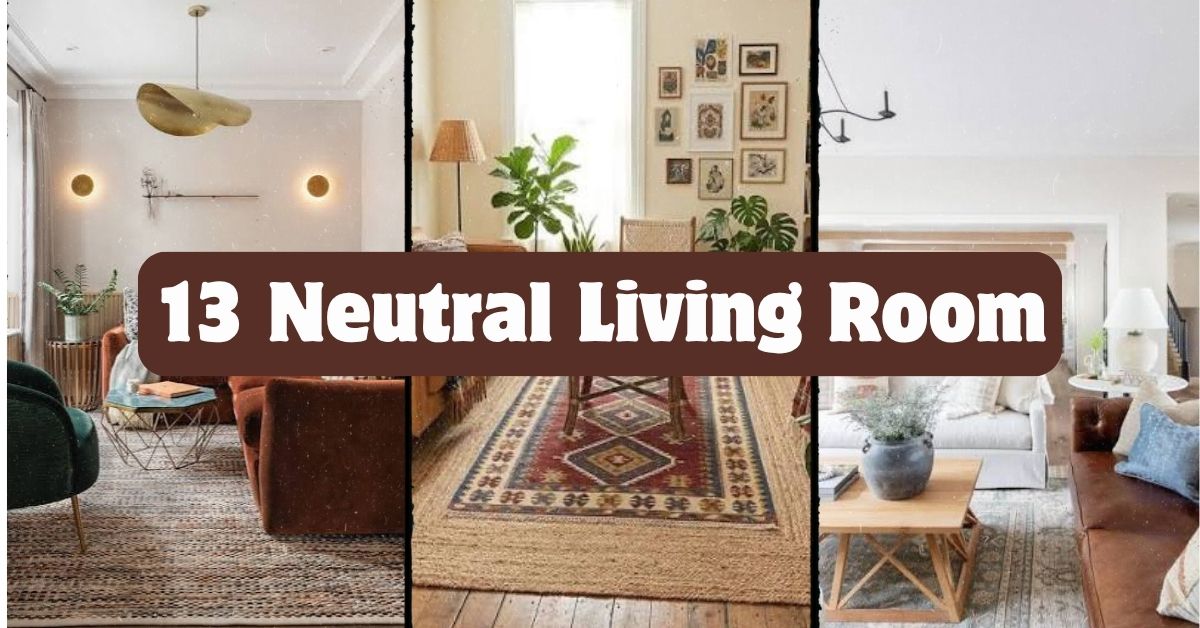
If you’ve been searching for the best 13 neutral living room ideas out there, I’ve got you covered with every angle you need to make this style work in your own space. I’ve spent way too many hours scrolling through design boards and testing color swatches on my own walls, so I know what actually works and what just looks good in a photo.
A neutral living room uses a color palette built around whites, creams, beiges, grays, and warm browns instead of bold or bright colors. The goal is a calm, timeless space that feels open and pulls together easily with different furniture styles and textures.
Stick around, because I’m about to walk you through 13 different ways to pull this off, plus a few things I wish someone had told me before I painted my own living room.
What Even Is a Neutral Living Room?
Okay so here’s the thing about neutral rooms. People hear “neutral” and think boring, beige, no personality. That’s not it at all.
A neutral living room is really just a blank canvas. You’re picking colors that don’t scream for attention, so everything else in the room gets to shine. Think soft grays, creamy whites, warm tans, and muted browns. The magic happens in the textures and layers you add on top. A chunky knit throw. A leather chair. A jute rug. That’s where the personality lives.
I actually think neutral rooms take more skill than colorful ones. You can’t hide behind a bold paint color. You have to get the details right.
1. Start With a Warm White Wall Base
Skip the stark, cold white. It reads clinical and kind of harsh under regular lighting. Instead, go for a warm white with hints of cream or beige mixed in. This gives your walls a soft glow instead of a sterile feel.
Warm whites work as the backdrop for almost any furniture color, which makes decorating way less stressful. You can swap out pillows, art, and rugs without ever repainting.
Practical tip: Test paint samples on your actual wall at different times of day. Morning light and evening light change how a white looks completely.
This trick works in modern farmhouse spaces just as well as it does in a coastal or minimalist room. Once your walls are set, it’s time to think about the biggest piece in the room, your sofa.
2. Choose a Slipcovered Linen Sofa
A linen sofa in oatmeal or light gray is basically the MVP of neutral rooms. Linen has this slightly wrinkled, lived-in texture that keeps the room from feeling too stiff or showroom-perfect.
Slipcovered styles are even better because you can toss them in the wash when life happens (and with kids or pets, it will happen). Look for a relaxed, slightly slouchy silhouette rather than a tight, tailored one. That casual shape softens the whole room.
Tip: Choose a performance fabric blend if you have pets. Regular linen stains fast.
This idea shifts easily. Add turned wood legs for a traditional look, or keep it low and simple for modern spaces. Once your sofa is settled, you’ll want seating that plays well with it.
3. Mix in a Leather Accent Chair
Here’s where texture starts doing the heavy lifting. A leather chair, in cognac, caramel, or even a soft gray, adds warmth and a bit of edge to an otherwise soft room. Leather ages well too, so it gets better looking over time instead of worse.
Pair it with your linen sofa and you’ve already got two different textures working together, which keeps things interesting instead of flat.
Tip: Go for a slightly worn or distressed leather finish. It hides scuffs way better than a shiny, new finish.
This works great in traditional, industrial, and mid-century spaces. Coastal rooms can use it too, just choose a lighter tan instead of dark brown. Next, let’s talk about what goes under all this furniture.
4. Anchor the Room With a Natural Fiber Rug
A jute, sisal, or seagrass rug brings in texture without adding color. These rugs have a woven, nubby feel that grounds the room and keeps things from looking too flat or matchy.
Natural fiber rugs also tend to be more budget friendly than wool options, and they hide dirt pretty well, which is a nice bonus if you’ve got kids or pets running through.
Tip: Size your rug so all four legs of your sofa sit on it, not just the front two. This makes the room feel bigger and more intentional.
Coastal and farmhouse rooms practically require this rug type. Modern rooms can use a flatter weave version for a cleaner look.
Rug Material Comparison for Neutral Living Rooms
| Material | Price Range (8×10) | Durability | Best For |
|---|---|---|---|
| Jute | $150-$300 | Medium | Farmhouse, coastal |
| Sisal | $250-$450 | High | High-traffic areas |
| Wool | $400-$900 | Very High | Traditional, formal rooms |
| Cotton | $100-$250 | Low-Medium | Layering, low-traffic |
| Seagrass | $200-$400 | High | Coastal, casual spaces |
Once your rug is down, you’ve got a solid base to start layering in wood tones.
5. Layer Different Wood Tones on Purpose
A lot of people think all your wood furniture needs to match. It really doesn’t. Mixing a lighter oak coffee table with a darker walnut bookshelf actually looks more collected and less like a furniture showroom.
The trick is picking one dominant wood tone and letting the others play a supporting role. Maybe 60% of your wood pieces are light oak, and the rest are a warmer walnut or mahogany accent.
Tip: Keep any wood undertones consistent, either all warm or all cool. Mixing warm oak with cool gray-washed wood can look accidental instead of intentional.
Traditional rooms lean toward richer, darker woods. Scandinavian and coastal styles stick with lighter, blonder tones. Now let’s bring in something soft to balance all that wood.
6. Add Texture Through Chunky Knit Throws and Pillows
This is honestly the easiest and cheapest way to make a neutral room feel cozy instead of cold. A chunky knit throw draped over your sofa arm, plus a few textured pillows in linen, bouclé, or wool, adds depth without adding color.
I like mixing at least three different textures on one sofa. Smooth linen pillow, bouclé pillow, and a nubby knit throw all together looks way more interesting than three matching pillows in the same fabric.
Tip: Odd numbers work better than even. Try three or five pillows instead of two or four.
This trick works in literally every design style because texture is universal. Now, let’s talk about something people always forget: lighting.
7. Layer Your Lighting With Warm Bulbs
A neutral room can look flat and gray really fast if your lighting is off. Cool white bulbs make beige walls look kind of sad and washed out. Warm bulbs (around 2700K to 3000K) bring out the cream and tan undertones in your paint and furniture.
Don’t rely on one overhead light either. Mix in floor lamps, table lamps, and maybe some hidden LED strips behind a shelf for a softer glow.
Tip: Buy bulbs in the 2700K range specifically. It’s warm without turning orange.
This matters no matter what style you’re going for. Even a stark modern space needs warm lighting to avoid feeling sterile. Speaking of modern touches, let’s talk metals.
8. Pick One Metal Finish and Stick With It
Brass, black, or brushed nickel, pick one and use it across your lamps, picture frames, and hardware. This small detail ties a room together more than people expect.
Brass adds warmth and a slightly glam feel. Black metal adds contrast and a modern edge. Brushed nickel feels more traditional and soft.
Tip: It’s fine to mix metals a little, just keep one as the dominant choice (about 70% of your metal accents) and one as a small accent.
Coastal rooms lean toward brushed nickel or matte black. Traditional spaces love brass. This detail work leads nicely into how you should think about your color accents overall.
Neutral Color Palette Combinations
| Palette Name | Wall Color | Sofa Color | Accent Color | Mood |
|---|---|---|---|---|
| Warm Sand | Cream | Camel | Rust | Cozy, warm |
| Soft Fog | Light gray | Oatmeal | Charcoal | Calm, modern |
| Greige Classic | Greige | Taupe | Black | Balanced, versatile |
| Coastal Neutral | Off-white | Light gray | Sandy tan | Airy, relaxed |
| Mocha Mousse | Warm beige | Chocolate brown | Cream | Rich, grounded |
9. Add One Statement Piece of Art in Muted Tones
Neutral doesn’t mean empty walls. A large piece of art with soft, muted colors, think sandy landscapes, abstract line drawings, or black and white photography, adds visual interest without breaking the calm mood.
Go bigger than you think you need. A small piece of art on a large wall looks lost and awkward.
Tip: Measure your wall space first. Art should take up roughly two-thirds of the width of the furniture below it.
Modern rooms love abstract shapes. Traditional spaces do well with framed landscapes or botanical prints. Once your art is up, greenery is the next easy win.
10. Bring in Real or Realistic Greenery
Plants add life to a room that’s otherwise pretty quiet color-wise. A fiddle leaf fig, snake plant, or even some simple eucalyptus stems in a vase give the space a fresh, organic feel.
If you don’t have a green thumb (no judgment, same here), high quality faux plants have gotten really good. Nobody’s going to know unless they touch the leaves.
Tip: Use ceramic or woven planters in neutral tones instead of plastic pots. It’s a small swap that makes a big difference.
This idea fits every single design style without exception. Now let’s talk about something a lot of people skip: window treatments.
11. Hang Simple Linen Curtains
Heavy, patterned curtains can fight with a neutral room pretty fast. Simple linen curtains in white, cream, or light gray let natural light filter through softly while still giving your windows some framing.
Hang your curtain rod higher than the window frame, close to the ceiling if you can. This makes your ceilings look taller and the whole room feel bigger.
Tip: Buy curtains that are actually long enough to just barely graze the floor. Too-short curtains make a room look cheap.
Coastal and modern farmhouse styles love this light, breezy curtain look. Traditional rooms can use a heavier linen or add trim detail for more formality. Next, let’s chat about coffee tables, because this piece does more work than people realize.
12. Choose a Coffee Table With Some Texture or Shape Interest
A plain rectangle coffee table works, but a round table with a woven base, or a table with an interesting stone top, adds a little personality to the center of your room.
This piece gets looked at constantly, so it’s worth choosing something with a bit of character instead of the most basic option available.
Tip: Leave at least 14 to 18 inches of space between your coffee table and sofa for comfortable legroom.
Round or organic shapes fit modern and boho spaces. Rectangular wood tables with straight legs suit traditional and farmhouse rooms better. Last but not least, let’s talk about the small details that finish the whole room off.
13. Finish With Layered Textiles on Your Seating
This is the final touch that makes a neutral room feel finished instead of half-done. Layer a throw blanket, a couple of pillows, and maybe a floor pouf near your seating area. These small textile layers soften hard furniture lines and add coziness fast.
Don’t overthink the color here since everything’s already neutral. Focus on mixing textures instead, smooth cotton next to rough linen, next to soft faux fur.
Tip: Rotate your throw pillows seasonally. Swap in slightly heavier textures for winter and lighter ones for summer.
This finishing touch works in absolutely any home style because it’s really about comfort, not color. With these 13 ideas combined, your room should already feel more put together than when you started.
Tips for Success
- Start with the biggest items first (walls, sofa, rug) before shopping for small decor pieces.
- Buy fabric and paint samples before committing to a full order. Colors shift depending on your home’s lighting.
- Stick to a 60-30-10 color rule: 60% dominant neutral, 30% secondary tone, 10% accent color or texture.
- Shop secondhand for wood furniture. Vintage pieces often have better wood quality than new budget options.
- Don’t skip window treatments. Bare windows make even a well-decorated room feel unfinished.
- Add at least three different textures to every seating area to avoid a flat, boring look.
- Take a photo of your room before buying anything new. It’s easier to spot gaps in a photo than in person.
Common Mistakes and How to Avoid Them
Using only cool-toned neutrals
: Mix in warm tones like tan, cream, or caramel so the room doesn’t feel cold or clinical.
Matching every wood tone perfectly
: Let different wood pieces have slightly different tones. It looks more natural and collected.
Forgetting texture entirely
: Add at least one woven, knit, or textured piece per seating area so the room doesn’t feel flat.
Choosing rugs that are too small
: Size your rug so your main furniture pieces sit at least partially on top of it.
Skipping lighting layers
: Add lamps and warm bulbs in addition to overhead lighting to avoid a flat, gray look.
Going too matchy with decor
: Mix in slightly different shades within your neutral palette instead of buying one matching set.
Similar Variations
- Coastal Neutral: Light sandy tones mixed with white and soft blue-gray accents for a beachy feel.
- Japandi Neutral: Combines Japanese minimalism with Scandinavian warmth using natural wood and clean lines.
- Modern Farmhouse Neutral: Mixes creamy whites with black metal accents and shiplap details.
- Warm Minimalist: Stripped down furniture with a focus on warm tones instead of stark whites.
- Earthy Neutral (Mocha Mousse style): Leans into deeper browns, terracotta, and rust accents for a grounded, cozy feel.
- Traditional Neutral: Uses richer wood tones, brass accents, and classic furniture shapes for a more formal look.
Getting a neutral living room right really comes down to layering, warm tones, mixed textures, and lighting that doesn’t wash everything out. It’s not about playing it safe with boring beige walls. It’s about building a calm, cozy space that still feels like you live there. Try even just a handful of these 13 neutral living room ideas, and I promise your space will start feeling warmer and way more finished than before.
Leave a Reply