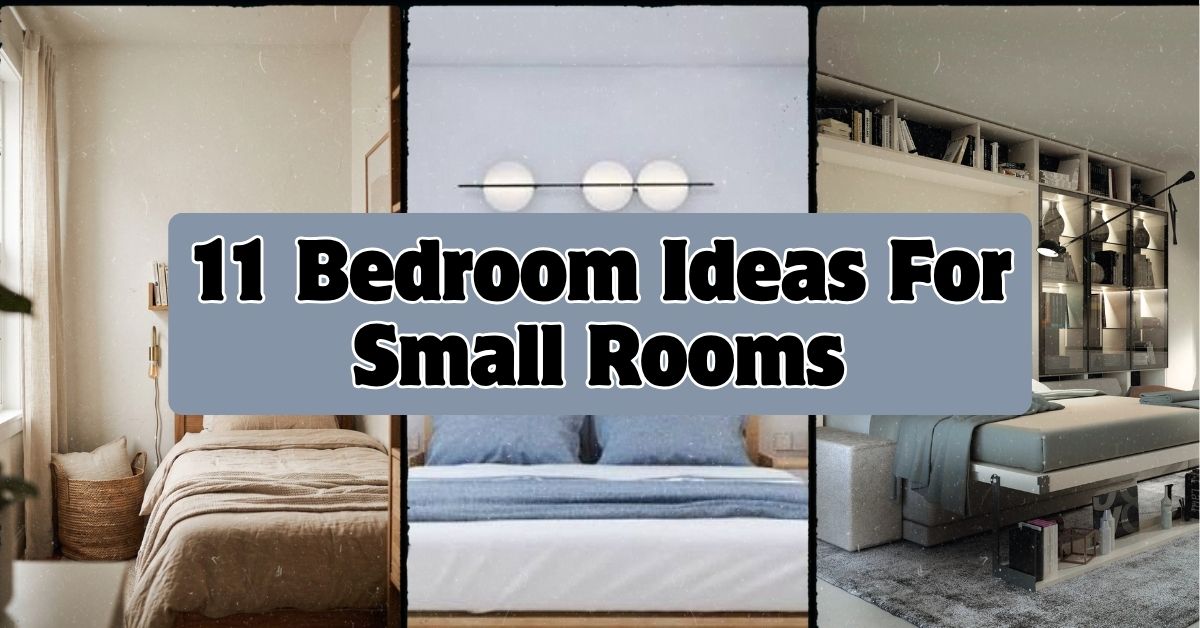
I’ve spent way too many hours online hunting for 11 bedroom ideas for small rooms that actually work in real houses, not just fancy showroom photos, and I think I finally cracked the code. This guide pulls together the tricks that actually make a tiny bedroom feel bigger, calmer, and way more “you.”
A small bedroom is generally any room under 120 square feet where furniture placement, storage, and traffic flow feel tight. The best fixes combine multi-functional furniture, smart color choices, and vertical storage to open up visual space without a renovation.
Stick with me and I’ll walk you through room layouts, color tricks, storage hacks, and a few mistakes I made myself so you don’t have to repeat them.
What Makes Small Bedroom Design Different
Small bedroom design isn’t just “regular decorating but smaller.” It’s a whole different game. Every inch counts. One bulky nightstand can throw off the entire flow of the room. I learned this the hard way when I crammed a full dresser into a 10×10 room and could barely open the closet door.
The trick is thinking in layers, not square footage. You use height, light, and smart storage instead of floor space. You pick furniture that pulls double duty. And you get ruthless about what actually needs to live in that room. Once you start thinking this way, small rooms stop feeling like a limitation and start feeling like a fun puzzle to solve.
1. Choose a Bed That Floats Instead of Boxes You In

The bed is usually the biggest thing in a small bedroom, so its shape and placement matter a ton. Skip heavy platform beds with thick frames. Go for a bed with slim metal legs or an exposed frame that lets light travel underneath it. This creates a “floating” look that tricks the eye into seeing more floor space than actually exists.
Practical tip: measure at least 24 inches of clearance on each side of the bed for walking room, even if that means going down a mattress size.
This idea works in almost any style. Modern rooms love a low platform frame, while traditional spaces can use a slim wood frame with turned legs. Coastal rooms do great with a rattan or woven headboard that still feels airy.
Once your bed is sorted, the next move is figuring out what goes on the walls around it.
2. Mount Nightstands and Shelves Instead of Using Floor Furniture
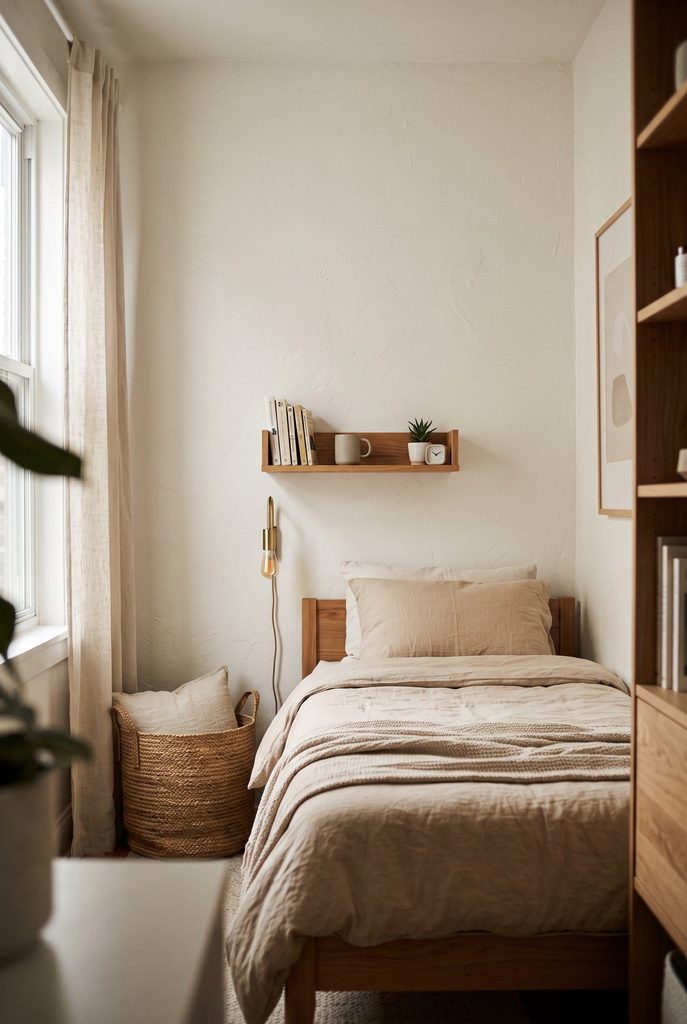
Floor-standing nightstands eat up precious square footage, and honestly, most of us only use the top surface anyway. Swap them for wall-mounted shelves or floating nightstands instead. You get a spot for your lamp, phone, and book, but the floor underneath stays open, which makes the whole room breathe easier.
Try a small floating shelf about 18 to 20 inches wide on each side of the bed. Add a plug-in sconce above it so you skip the lamp cord clutter entirely.
Modern farmhouse rooms look great with a simple wood shelf and black metal brackets. Boho spaces can add a woven basket underneath for extra storage. Traditional rooms can use a mini floating shelf with a decorative edge for a built-in look.
Speaking of lighting, that’s actually a huge lever for making small rooms feel bigger, so let’s talk about that next.
3. Use Layered Lighting Instead of One Overhead Fixture
One flat overhead light makes small rooms feel flat and boxy. Instead, layer your lighting with three sources: ambient light from the ceiling, task light near the bed, and accent light somewhere else in the room, like a floor lamp in the corner or LED strips behind a headboard.
This layering adds depth. Depth makes a room feel bigger even though the square footage hasn’t changed one bit.
Practical tip: use warm white bulbs (2700K to 3000K) instead of cool white. Warm light makes small spaces feel cozy instead of clinical.
Modern rooms can use a sculptural floor lamp for accent light. Traditional rooms do well with a small crystal or fabric-shaded lamp. Coastal rooms love a rattan pendant paired with a simple task lamp.
Now that lighting is sorted, let’s tackle one of the biggest space-wasters in most small bedrooms: the closet.
4. Rethink Your Closet With Vertical Storage Systems

Most closets waste half their space because everything just hangs at one height with a shelf on top. Add a second hanging rod below the first for shirts and folded pants. Use stackable bins on the closet floor instead of letting shoes pile up loose.
If you don’t have a closet at all, a slim wardrobe that’s tall and narrow (rather than wide) works better in tight rooms. Look for one under 36 inches wide.
| Storage Option | Best For | Approx. Cost | Space Saved |
|---|---|---|---|
| Double hang rod | Shirts, pants, jackets | $15-$30 | Doubles hanging capacity |
| Stackable bins | Shoes, accessories | $20-$40 | Frees floor space |
| Slim wardrobe (30-36 in) | Rooms with no closet | $150-$400 | Fits tight corners |
| Over-door organizer | Small items, jewelry | $10-$25 | Uses dead door space |
| Under-bed storage boxes | Off-season clothes, linens | $20-$50 | Uses wasted under-bed space |
Once your closet is working smarter, it’s time to look under the bed, because that’s free real estate most people forget about.
5. Use Under-Bed Storage Instead of a Dresser
If your room can’t fit both a bed and a full dresser, ditch the dresser. Use rolling storage bins or drawers under the bed instead. Fold shirts, sweaters, and extra bedding into these bins, and you basically get a hidden second closet.
Practical tip: measure the gap under your bed frame before buying bins. Most beds clear either 7 inches or 11 inches, and bins are usually made for one or the other.
This trick fits any style since the bins are hidden. Nobody walking into your room will ever know there’s storage under there. It’s a quiet win that works in modern, traditional, coastal, or farmhouse spaces equally well.
With storage handled, let’s talk about color, because paint choice can make or break a small room’s whole vibe.
6. Paint the Room in One Continuous Color
Painting walls, trim, and even the ceiling in the same color removes visual “stopping points” in the room. When your eye doesn’t hit a line where wall meets trim in a different shade, the room reads as one continuous space instead of a chopped-up box.
Go with soft, light tones like warm white, pale sage, or dusty blue. These colors bounce light around instead of absorbing it.
Practical tip: use the same paint sheen on walls and trim (eggshell works well) so the surfaces blend instead of contrasting.
Modern rooms look sharp in soft gray-white. Traditional rooms glow in warm cream. Coastal rooms feel breezy in pale blue-green. Once your walls set the tone, mirrors are the next trick to bounce that color and light even further.
7. Hang a Large Mirror Across From the Window
Mirrors reflect light, and placing one directly across from your window doubles the natural light bouncing around the room. This single trick can make a cramped bedroom feel noticeably brighter and more open within seconds of walking in.
Go big. A mirror that’s at least 30 by 40 inches makes a bigger visual impact than a small decorative one.
Practical tip: lean a full-length mirror against a wall instead of hanging it if you’re renting and can’t drill holes.
Modern spaces love a thin black metal frame. Traditional rooms do well with an ornate wood or gold frame. Coastal rooms often use a whitewashed or rope-wrapped frame for texture.
Now let’s shrink down the furniture itself, because oversized pieces are one of the sneakiest small-room killers.
8. Pick Furniture Scaled to the Room, Not the Showroom
Furniture stores show pieces in giant open rooms, so things look smaller than they really are. That oversized chair that looked “cute” in the store can swallow a small bedroom whole. Always measure your room first, then measure the furniture, and leave at least 30 inches of walking path between pieces.
Practical tip: use painter’s tape on the floor to map out furniture dimensions before you buy anything. It sounds tedious but it saves you from expensive returns.
| Room Size | Max Bed Size | Suggested Furniture |
|---|---|---|
| Under 80 sq ft | Twin or Twin XL | Floating shelf, slim wardrobe |
| 80-100 sq ft | Full | Floating nightstands, narrow dresser |
| 100-120 sq ft | Queen | Small bench, compact desk |
| 120+ sq ft | Queen or Full | Standard nightstands, reading chair |
With the right-sized furniture in place, let’s look at how a few smart multi-use pieces can replace two or three separate items entirely.
9. Choose Multi-Functional Furniture Over Single-Purpose Pieces
A daybed that doubles as seating and sleeping space. An ottoman that opens up for storage. A desk that folds against the wall when you’re not using it. These multi-purpose pieces let a small room do more without feeling more crowded.
Practical tip: look for furniture tagged “space-saving” or “convertible” on furniture sites. These are specifically designed with small rooms in mind, so the proportions are usually already right.
Modern rooms often go for a Murphy bed with a built-in desk. Traditional spaces might use a storage bench at the foot of the bed instead. Coastal rooms love a woven storage ottoman that also works as a footrest.
Once your furniture is working double duty, it’s time to think about what’s on your walls, because vertical space is your best friend in a small room.
10. Use Vertical Stripes or Tall Decor to Draw the Eye Up
When floor space is tight, the ceiling becomes your best design tool. Vertical striped wallpaper, tall bookshelves, or floor-to-ceiling curtains all pull the eye upward, which makes the room feel taller and less cramped.
Practical tip: hang curtain rods a few inches below the ceiling instead of right above the window frame. This small change adds visual height instantly.
Modern rooms can use a bold vertical accent wall. Traditional rooms might add a tall armoire in the corner. Coastal rooms often go with tall, airy linen curtains that puddle slightly on the floor for softness.
Speaking of curtains, window treatments deserve their own moment, because they can quietly change how big or small a room feels.
11. Swap Heavy Curtains for Light, Airy Window Treatments
Thick, dark curtains can make a small bedroom feel like a cave. Swap them for lighter fabrics like linen or cotton in pale colors. Light fabric lets more natural light filter through even when the curtains are closed, keeping the room from feeling boxed in.
Practical tip: choose curtains that are slightly longer than your window and hang them wide of the frame. This makes the window itself look bigger than it is.
Modern rooms do well with simple white linen panels. Traditional spaces might add a subtle pattern. Coastal rooms almost always lean toward sheer, breezy fabrics that move with the air.
Last but not least, let’s talk about the one thing that ties every small room together: keeping it edited.
Tips for Success
- Measure everything twice before buying furniture, including doorway width for getting pieces into the room
- Stick to a limited color palette of three tones max to avoid visual chaos
- Use rugs to define zones instead of walls or furniture dividers
- Keep floor space as clear as possible, since visible floor reads as “more room” to the eye
- Test paint colors on the actual wall at different times of day before committing
- Choose one statement piece per room instead of several competing focal points
- Add plants in hanging planters instead of floor pots to save space
Common Mistakes and How to Avoid Them
Overcrowding with furniture
: Stick to only the essentials: bed, one storage piece, one surface for a lamp. Anything extra should have a clear job.
Using dark, heavy colors on all four walls
: Balance dark accent walls with lighter ceiling and trim colors to keep the room from feeling smaller.
Skipping curtains or rugs to “save space”
: Soft textures actually help a room feel finished and cozy, not cramped, when chosen in light, breathable fabrics.
Placing the bed under the window
: This blocks natural light and airflow. Try placing the bed against the longest solid wall instead.
Buying furniture before measuring the room
: Always tape out dimensions on the floor first so you know exactly what will fit before you spend money.
Ignoring vertical storage
: Wasted wall space above furniture is one of the most common missed opportunities in small bedrooms.
Similar Variations
- Coastal Small Bedroom: Light woods, woven textures, and breezy blue-white tones for a beachy, airy feel
- Modern Minimalist Small Bedroom: Clean lines, neutral palette, and almost no decorative clutter
- Cozy Farmhouse Small Bedroom: Warm woods, soft textiles, and vintage-inspired accents in a compact layout
- Scandinavian Small Bedroom: Light wood tones, simple furniture, and functional storage with minimal ornamentation
- Boho Small Bedroom: Layered textiles, warm earthy colors, and plants in hanging or wall-mounted planters
- Traditional Small Bedroom: Classic furniture shapes scaled down, soft color palettes, and subtle pattern use
Small bedrooms don’t have to feel like a compromise. With the right bed placement, smart storage, and a color palette that keeps things light, even a tiny room can feel calm and put together. The real trick is choosing furniture and decor that pulls double duty instead of just filling space. Try even a few of these 11 bedroom ideas for small rooms, and I promise your tiny space will start feeling a whole lot bigger.
Leave a Reply