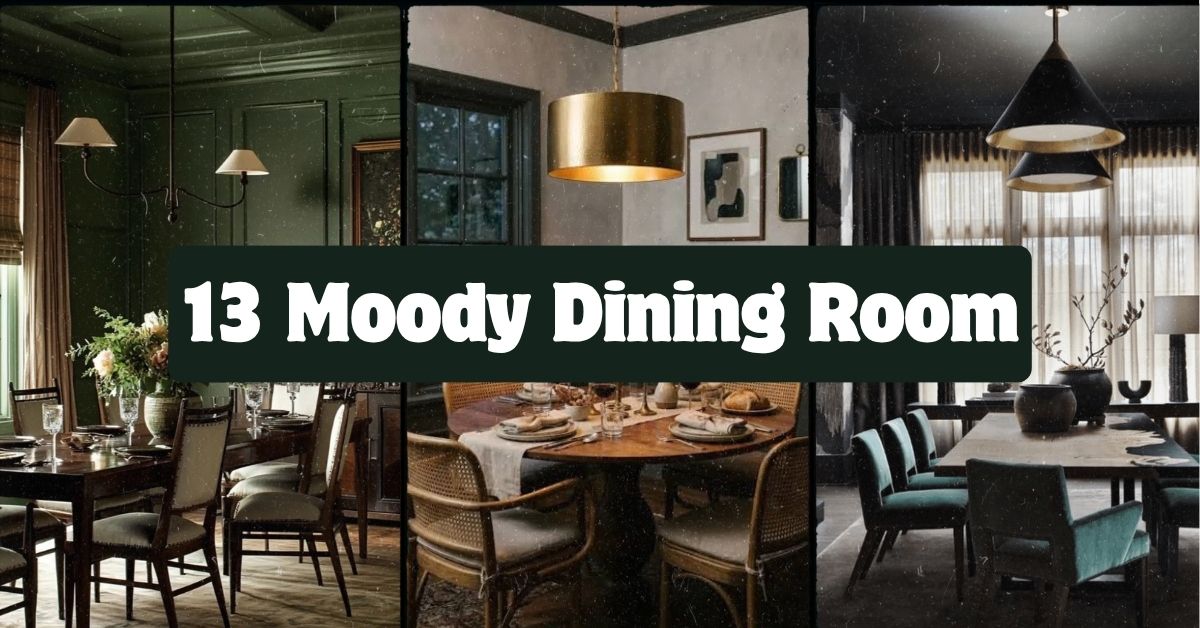
I’ve spent way too many hours scrolling through dining room photos, and I can tell you this: 13 Moody Dining Room ideas are exactly what you need if you’re tired of boring, beige eating spaces. This article pulls together the best moody dining room concepts I’ve found, tested, and researched, so you get real answers instead of vague inspiration boards.
A moody dining room uses deep colors, low ambient lighting, and rich textures to create a dramatic, intimate space for eating and gathering. This design style typically relies on dark wall paint, warm lighting fixtures, and layered materials like wood and velvet to build atmosphere.
Stick around, because I’m about to walk you through 13 specific ways to pull this look off in your own home, no matter your budget or style preference.
What Exactly Is a Moody Dining Room?
Okay, so let’s talk about what “moody” actually means here. It doesn’t mean sad or gloomy. It means rich. It means dramatic. Think dark green walls, candlelight, and a table that makes you want to linger over dinner instead of rushing through it.
A moody dining room usually swaps bright white walls for deep, saturated colors. Think navy, charcoal, forest green, or even black. Then you layer in warm lighting and textured materials to keep it from feeling cold or cave-like. The goal is a space that feels cozy, elegant, and a little bit dramatic, like a restaurant you’d want to book for a special occasion.
1. Paint Your Walls in Deep Forest Green

Forest green is my favorite gateway color for moody dining rooms. It’s dark enough to create drama but still feels natural and calming, not harsh.
Pair it with brass hardware, wood furniture, and cream linens for contrast. The green pulls warmth from wood tones and coolness from metal accents, so it works with almost any furniture you already own.
Tip: Test the paint color at night under your actual dining room lighting before committing. Green can shift dramatically depending on bulb temperature.
This look works beautifully in traditional homes with crown molding, but it also fits modern spaces if you keep the furniture simple and low-profile. Once your walls are set, it’s time to think about what goes on top of them.
2. Hang a Dramatic Statement Chandelier
Lighting makes or breaks a moody dining room. A statement chandelier with black metal, aged brass, or smoked glass instantly sets the tone before anyone even sits down.
Go for fixtures with dimmable bulbs. Warm white light (around 2700K) creates that golden, flattering glow you want at dinner. Bright white light kills the mood instantly.
Practical tip: Hang your chandelier so the bottom sits about 30 to 34 inches above the table surface. Too high and it loses impact. Too low and people can’t see across the table.
Coastal homes can use a woven or rattan pendant instead of metal for a softer, beachy version of the same drama. Once your main light source is nailed down, layer in secondary lighting.
3. Layer in Candlelight and Low Lamps
Overhead light alone feels flat. I always add candles down the center of the table and maybe a small buffet lamp on a side table. This creates depth and multiple light sources at different heights.
Use unscented candles during meals so they don’t compete with food smells. Cluster three to five candles of varying heights for a more natural, collected look rather than one lonely candle in the middle.
This trick works in every style category, from farmhouse to modern minimalist, because candlelight is universally warm and flattering.
Now that your lighting layers are working together, let’s talk about the table itself.
4. Choose a Dark Wood or Black Dining Table

Your table is the anchor of the room, so it needs to match the mood. Dark walnut, ebony-stained oak, or even a matte black table grounds the whole space.
Avoid glossy finishes if you’re going for moody. Matte and satin finishes absorb light instead of bouncing it around, which keeps the room feeling intimate rather than sterile.
Quick tip: If replacing your table isn’t in the budget, use a dark stain or paint to transform what you already own over a weekend.
Modern farmhouses can use a dark trestle table, while contemporary spaces might go with a sleek black lacquer option. Your table sets the stage, but your chairs bring in texture and comfort.
Dark Wood Finish Comparison
| Finish Type | Best For | Maintenance Level | Price Range |
|---|---|---|---|
| Matte black paint | Modern, industrial | Medium (touch-ups needed) | $ (DIY friendly) |
| Espresso wood stain | Traditional, transitional | Low | $$ |
| Ebonized oak | Farmhouse, rustic | Low | $$$ |
| Charcoal lacquer | Contemporary, glam | High (shows fingerprints) | $$$$ |
5. Mix Upholstered Chairs With Wood Accents

Don’t put eight identical chairs around your table. Mix a few upholstered chairs in deep velvet or leather with wood-frame chairs for texture variety. This combo feels curated instead of matchy.
Velvet in colors like burgundy, mustard, or deep teal adds richness without screaming for attention. Leather chairs bring a masculine, grounded feel that pairs well with metal light fixtures.
Tip: If budget is tight, just add two upholstered captain chairs at the ends of the table and keep the sides simple. This still creates that mixed, layered effect.
Traditional homes might lean toward tufted velvet, while modern spaces do better with clean-lined leather. Once your seating feels right, your walls need something more than paint.
6. Add Textured Wallpaper or Paneling
Flat paint works, but textured wallpaper or wood paneling takes moody to the next level. Grasscloth wallpaper in a deep color adds subtle texture that catches candlelight beautifully.
Board and batten paneling painted in a dark color also works great, especially in older homes with awkward wall proportions. It adds architectural interest without needing extra decor.
Practical tip: If wallpaper feels risky, do just one accent wall behind a buffet or china cabinet instead of the whole room.
Coastal and cottage styles can use a botanical print wallpaper in muted tones, while modern spaces might prefer a textured grasscloth in solid charcoal. Speaking of walls, let’s talk about what hangs on them.
7. Hang Oversized Art With Rich Color Palettes
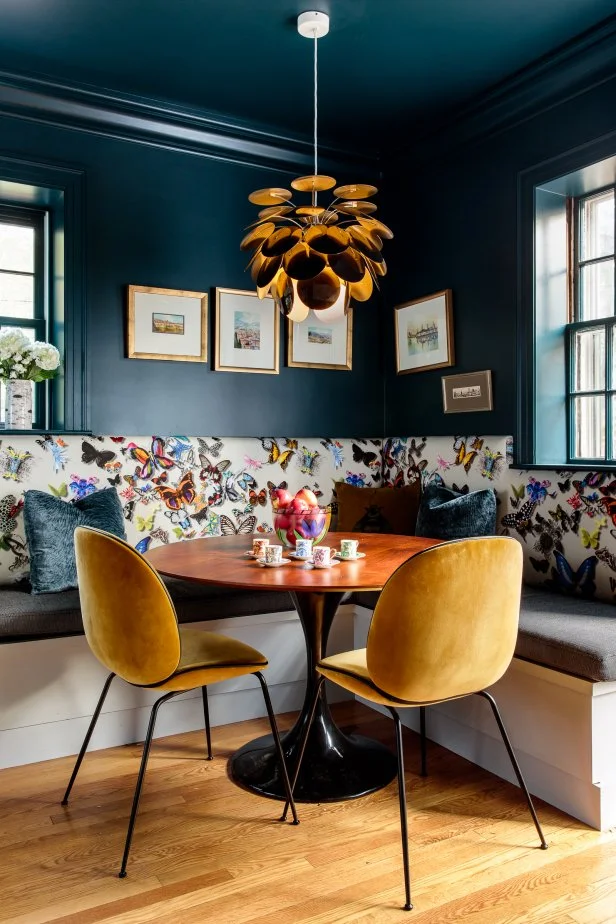
A moody dining room needs a focal point beyond the table. Large-scale art with deep, saturated colors, think dark botanical prints, abstract paintings in jewel tones, or vintage-style oil paintings, adds instant sophistication.
Size matters here. A tiny frame gets lost on a dark wall. Go big, or create a gallery wall with several pieces grouped tightly together.
Tip: Frame your art in black or aged gold to tie back into your lighting and hardware finishes.
Traditional dining rooms often use classic portraiture or landscape oils, while modern spaces lean toward abstract expressionist prints. Art sets the emotional tone, but window treatments control how much daylight competes with your mood.
8. Use Heavy Drapes to Control Natural Light

Natural daylight is the enemy of moody vibes during dinner parties. Heavy drapes in velvet or linen blends let you control exactly how dark and intimate the room feels.
Floor-to-ceiling drapes also make ceilings look taller, which is a nice bonus in smaller dining rooms. Choose colors that either match your wall color for a cocooning effect or contrast slightly for depth.
Quick tip: Mount curtain rods as close to the ceiling as possible, even if your windows are shorter. This trick makes any room feel grander.
Coastal homes can swap heavy velvet for linen in deep navy, keeping some breeziness while still controlling light. With your windows dressed, your floor is the next big design decision.
9. Ground the Space With a Dark Patterned Rug

A rug under your dining table adds warmth and sound absorption, which matters more than people think. Hard floors in a dark room can echo and feel cold without something soft underfoot.
Look for rugs with subtle patterns in deep colors, like a Persian-style rug in burgundy and navy, or a simple geometric print in charcoal and cream. Avoid stark white rugs, they’ll fight against the mood you’re building.
Tip: Your rug should extend at least 24 inches beyond the table edge on all sides so chairs stay on the rug even when pulled out.
Modern farmhouse spaces can use a faded vintage-style rug, while contemporary rooms might prefer a solid charcoal wool rug. Once your floor is set, small decorative details finish the look.
10. Style Your Table With Dark Ceramics and Metal Accents

The dishes and centerpiece pieces you use every day matter more than you’d think. Dark ceramic dinnerware in charcoal, deep green, or matte black instantly upgrades a table setting’s mood factor.
Mix in brass or black metal candle holders, a wooden charcuterie board, or a simple vase with dark, dried florals like eucalyptus or dried roses. These small touches pull the whole tablescape together.
Practical tip: Buy a few extra dark napkins in linen fabric. They photograph and feel more luxurious than white napkins ever will.
Every style, from boho to minimalist, can use this trick because tableware is easy to swap without a big investment. Now let’s zoom out and think about your walls again, specifically the ceiling.
11. Paint or Wallpaper the Ceiling to Match
Most people forget the ceiling completely. But painting it the same color as your walls, or close to it, creates a cocoon effect that feels incredibly intimate and dramatic.
This technique is called “color drenching” and it’s having a huge moment in interior design right now. It works because it removes the visual break between wall and ceiling, making the whole room feel like one continuous, moody box.
Tip: Use a slightly lighter sheen on the ceiling than the walls to bounce a little light around and avoid feeling too heavy.
This works in almost every home style but shines especially in older homes with lower ceilings, since it makes the low height feel intentional rather than cramped. Speaking of intentional choices, let’s talk about your buffet or sideboard next.
12. Choose a Dark Buffet or Sideboard for Storage and Style
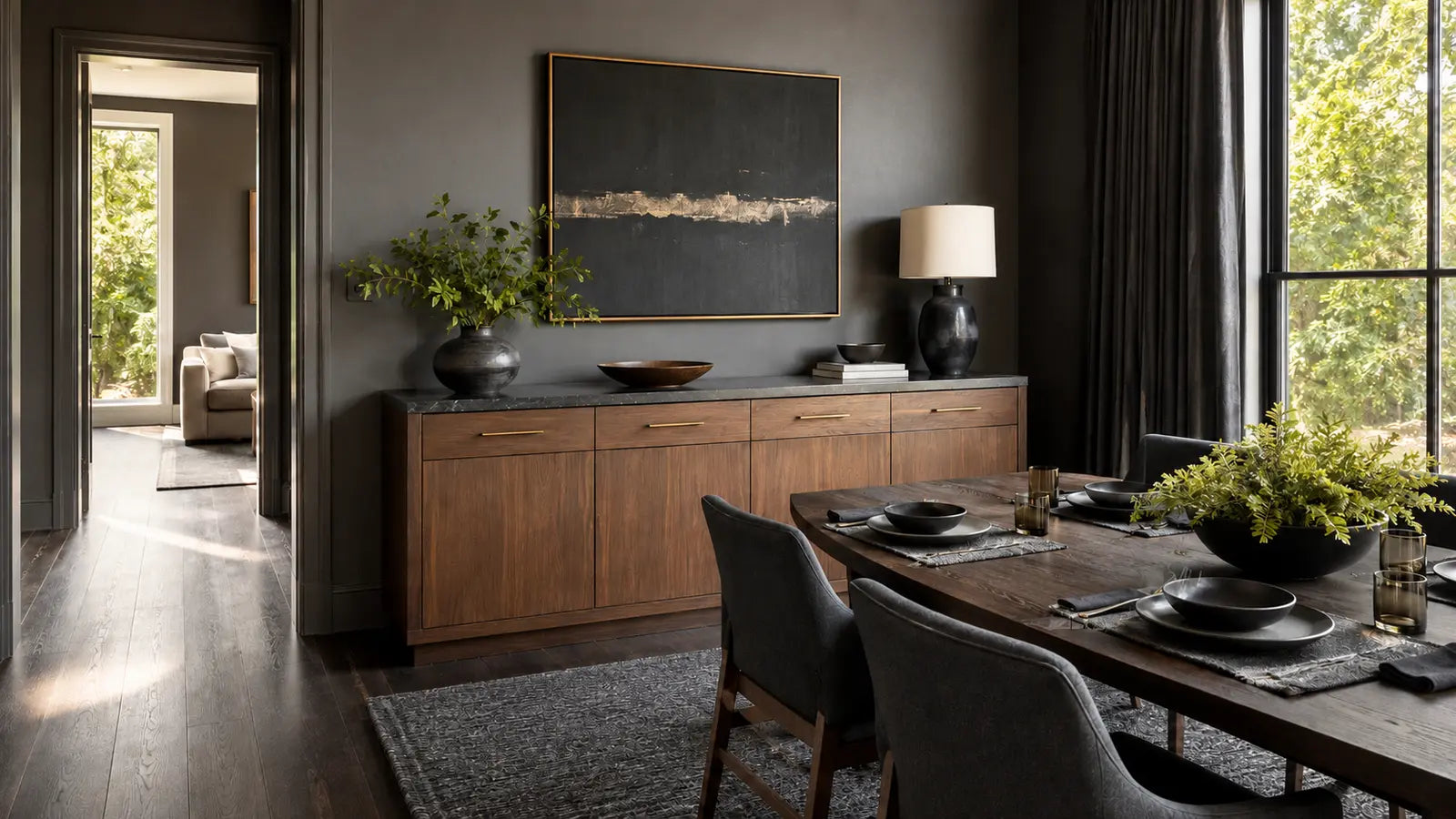
A sideboard does double duty. It stores your table linens and extra dishes, and it gives you another surface for styling. Choose one in dark wood or painted in a color that matches or slightly contrasts your walls.
Style the top with a mix of heights, a lamp, some art leaning against the wall, a stack of books, and a small plant or dried floral arrangement. This creates visual interest at eye level, which balances out your overhead chandelier.
Quick tip: Add a small table lamp here even if your chandelier is dimmable. Extra light sources at different heights always look more intentional than one single source.
Traditional homes often use antique wood sideboards, while modern spaces might choose a sleek black lacquer console instead. Storage covered, let’s talk about scent and sound.
13. Bring In Natural Elements to Soften the Drama
Moody doesn’t mean dead. Adding real, natural elements like a bowl of fruit, fresh greenery, or a wooden bread board keeps the space feeling alive instead of like a stage set.
Dark rooms can start to feel heavy without some organic softness. A few live plants, even low-maintenance ones like pothos or snake plants near the doorway, add life and oxygen to a room that’s otherwise full of deep colors and dense fabrics.
Tip: Rotate seasonal elements, like pumpkins in fall or greenery in winter, to keep the room from feeling static year-round.
This idea works everywhere, since every home benefits from a little organic texture breaking up all that intentional darkness.
Budget Tiers for a Moody Dining Room Makeover
| Budget Level | What You Can Do | Estimated Cost |
|---|---|---|
| Low ($200-$500) | Paint walls, add candles, swap napkins/dishes | $200-$500 |
| Mid ($500-$2,000) | Add rug, new light fixture, wallpaper accent wall | $800-$2,000 |
| High ($2,000-$5,000+) | New table, upholstered chairs, custom drapes, paneling | $3,000-$6,000+ |
Tips for Success
- Test paint colors on actual walls, not just paint chips, since lighting changes everything throughout the day
- Layer at least three different light sources: overhead, candlelight, and a lamp or sconce
- Keep one lighter element in the room, like cream linens, so the space doesn’t feel like a cave
- Shop secondhand for dark wood furniture pieces, they’re often cheaper than new pieces and add character
- Add a mirror across from a window to bounce whatever natural light you do allow into the room
- Don’t rush the wall color decision, live with sample swatches for at least a week before painting the whole room
- Balance dark colors with varied textures like velvet, wood, and metal so nothing feels flat
Common Mistakes and How to Avoid Them
Using only overhead lighting
: Fix this by adding candles, a buffet lamp, or wall sconces so light comes from multiple heights and directions.
Choosing glossy paint finishes
: Fix this by sticking to matte or eggshell finishes, which absorb light instead of creating harsh reflections.
Forgetting about ventilation and airflow with heavy drapes
: Fix this by choosing drapes that can be pulled back fully during the day to let the room breathe and air out.
Making every surface dark with no contrast
: Fix this by adding at least one light element, like cream napkins or a pale rug pattern, to keep the room from feeling suffocating.
Skipping a rug on hard flooring
: Fix this by adding a textured rug to absorb sound and add warmth underfoot, since dark rooms with hard echoes feel colder than they should.
Ignoring bulb temperature
: Fix this by choosing warm white bulbs around 2700K instead of daylight or cool white bulbs, which clash with dark, warm color palettes.
Similar Variations
- Dark Academia Dining Room: Leans into vintage books, leather, and brass for a scholarly, old-world vibe.
- Moody Coastal Dining Room: Uses navy and deep teal with linen textures for a beachy but dramatic look.
- Industrial Moody Dining Room: Combines black metal fixtures, exposed brick, and dark wood for an urban loft feel.
- Botanical Moody Dining Room: Adds heavy greenery and floral wallpaper on top of dark walls for a jungle-like richness.
- Glam Moody Dining Room: Mixes black lacquer, mirrored surfaces, and metallic accents for a high-drama, evening-out feel.
- Rustic Moody Dining Room: Pairs reclaimed wood and wrought iron fixtures with deep colors for a cabin-like warmth.
Building a dramatic dining space isn’t about making one big change. It’s about layering color, light, texture, and small details until the whole room feels intentional and warm. Start with just one or two ideas from this list, live with them a while, then keep adding until your space feels complete. Whichever ideas you pick, these 13 Moody Dining Room concepts give you a real starting point for turning an ordinary eating space into somewhere people actually want to linger.
Leave a Reply