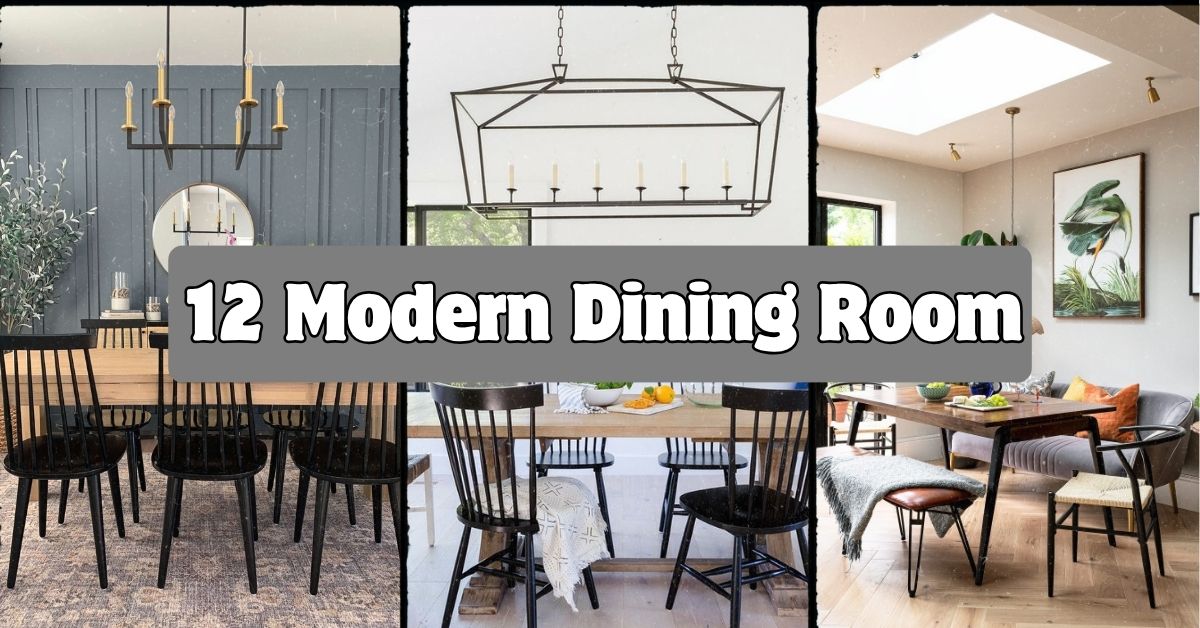
I’ve spent way too many hours scrolling through design blogs trying to figure out what actually makes a 12 Modern Dining Room idea work, so let me save you the trouble and give you the real answer right here.
A modern dining room combines clean lines, minimal clutter, and a mix of natural and industrial materials to create a functional yet stylish eating space. It typically features neutral color palettes, statement lighting, and furniture with simple geometric shapes.
Stick around though, because I’m about to show you 12 ways to pull this off in your own home, no matter your budget or square footage.
What Makes a Dining Room Feel “Modern” Anyway?
Okay so before we jump into the list, let’s talk about what “modern” even means here. It’s not about being cold or sterile. Modern design is more about function meeting form. Think clean lines, less clutter, and furniture that doesn’t scream for attention.
I like to describe it as “quiet confidence.” The room doesn’t need fifty decorations to feel finished. A few good pieces, the right lighting, and a color scheme that doesn’t fight itself, that’s the whole game. Modern doesn’t mean boring either. You can still have personality, you just show it through texture, shape, and smart choices instead of loud patterns everywhere.
1. Choose a Statement Light Fixture Over the Table
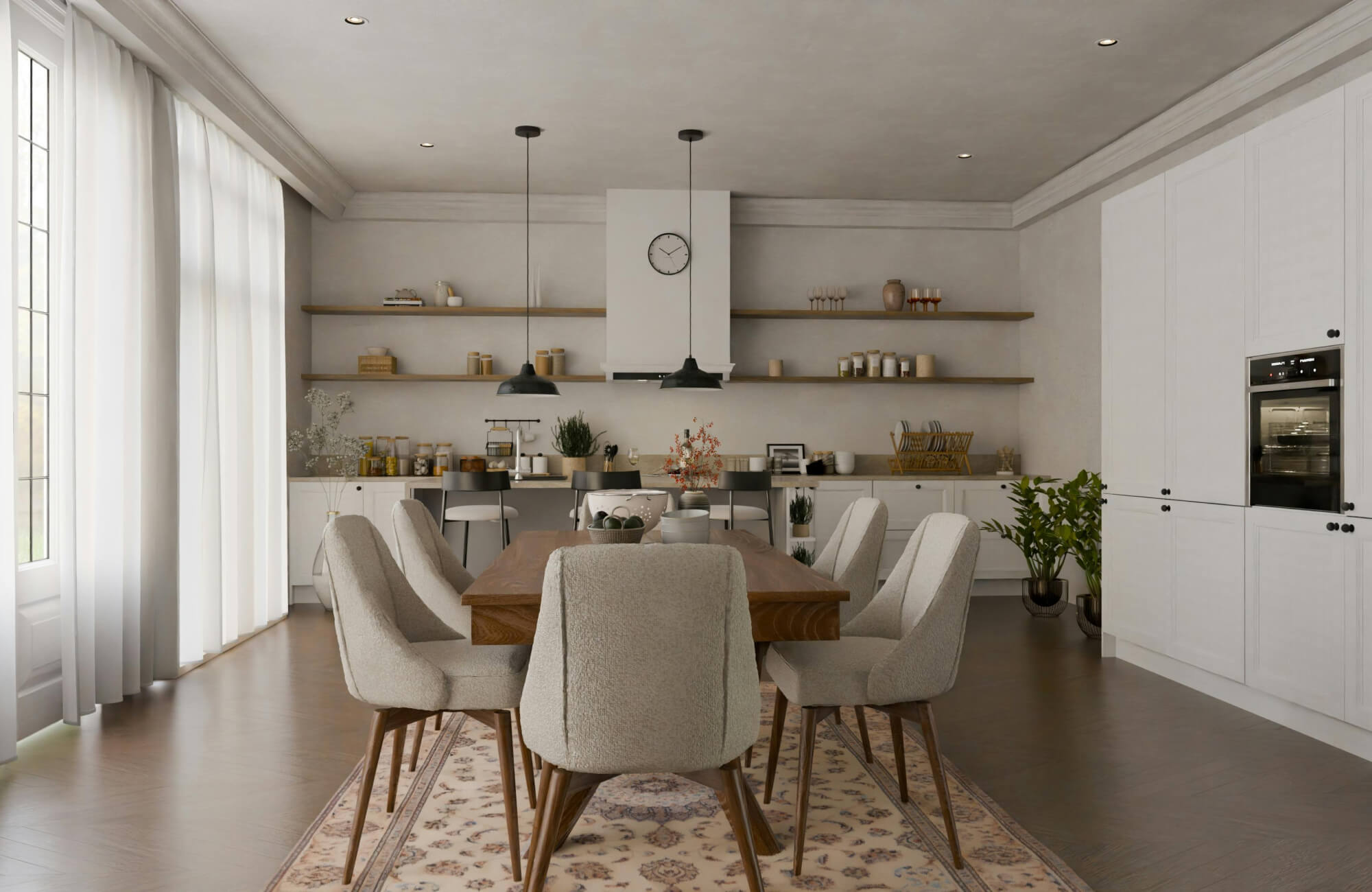
Your light fixture is basically the jewelry of the room. A modern dining room almost always has one bold piece hanging over the table instead of a boring flush-mount light.
Go for something with clean geometry like a linear chandelier, a cluster of globe pendants, or a sculptural metal piece. Black metal and brass finishes are huge right now because they add contrast without adding clutter.
Practical tip: Hang your fixture 30 to 34 inches above the table surface. Any higher and it looks disconnected. Any lower and your tall guests will bonk their heads.
This idea flexes easily too. Coastal homes can swap metal for woven rattan pendants. Traditional spaces can go with a modernized crystal chandelier that still has clean lines. Once your lighting is locked in, the next thing to nail down is what’s actually sitting under it.
2. Pick a Table With Clean, Simple Lines

The dining table sets the tone for everything else. Modern tables usually skip the carved legs and fancy trim you’d see in traditional furniture. Instead, you get straight edges, rounded corners, or thin metal legs holding up a solid top.
Materials matter a lot here. Wood gives warmth. Glass feels airy and works great in smaller rooms because it visually disappears. Stone or concrete-look tops feel heavy and grounded, perfect for bigger spaces.
Quick tip: If your room is under 120 square feet, stick with a table under 60 inches long so you can still walk around it comfortably.
Want a more traditional feel? Choose a wood table with a slight curve. Going coastal? Look for a light oak top with tapered legs. Once the table’s settled, chairs come next, and that’s where a lot of people mess up.
3. Mix Chair Materials for Visual Interest

Here’s a trick a lot of designers use that regular folks don’t know about: you don’t need matching chairs. Mixing two chair styles, like wood chairs on the sides and upholstered chairs at the heads of the table, adds depth without looking messy.
This works because modern design loves contrast. Smooth leather next to raw wood. Matte black metal next to a soft linen seat. It keeps the eye moving instead of getting bored.
Actionable tip: Keep the chair colors within the same family (like all neutrals or all warm woods) even if the shapes are different. That keeps the mixed look intentional instead of random.
This idea works across styles too. Farmhouse rooms can mix a bench with woven chairs. Traditional rooms can pair wingback chairs with simpler side chairs. Speaking of color families, let’s talk palettes for a second.
Modern Dining Room Color Palettes
| Palette Name | Wall Color | Furniture Tone | Accent Color |
|---|---|---|---|
| Warm Minimalist | Soft White | Light Oak | Terracotta |
| Moody Contrast | Charcoal Gray | Walnut | Brass |
| Coastal Modern | Pale Blue-Gray | White Oak | Seafoam Green |
| Industrial Edge | Concrete Gray | Black Metal | Rust Orange |
| Scandinavian Calm | Off-White | Birch | Sage Green |
Pick one of these and build your room around it instead of choosing pieces one at a time. It saves you from that “everything’s nice but nothing matches” problem.
4. Layer in Texture With a Woven Rug

A lot of modern dining rooms make the mistake of feeling flat. Hard floors, smooth table, smooth chairs, nothing to touch. A woven jute or wool rug under the table fixes that instantly.
Texture adds warmth without adding visual noise, which is exactly what modern design wants. It also helps define the dining area, especially in open floor plans where the dining room bleeds into the living room.
Tip: Your rug should extend at least 24 inches past the edge of the table on all sides. That way chairs stay on the rug even when pulled out.
Traditional homes can go bolder with a patterned wool rug. Coastal spaces love a natural fiber rug with a subtle stripe. Once your floor has some texture, your walls shouldn’t feel left out either.
5. Add an Accent Wall Behind the Table
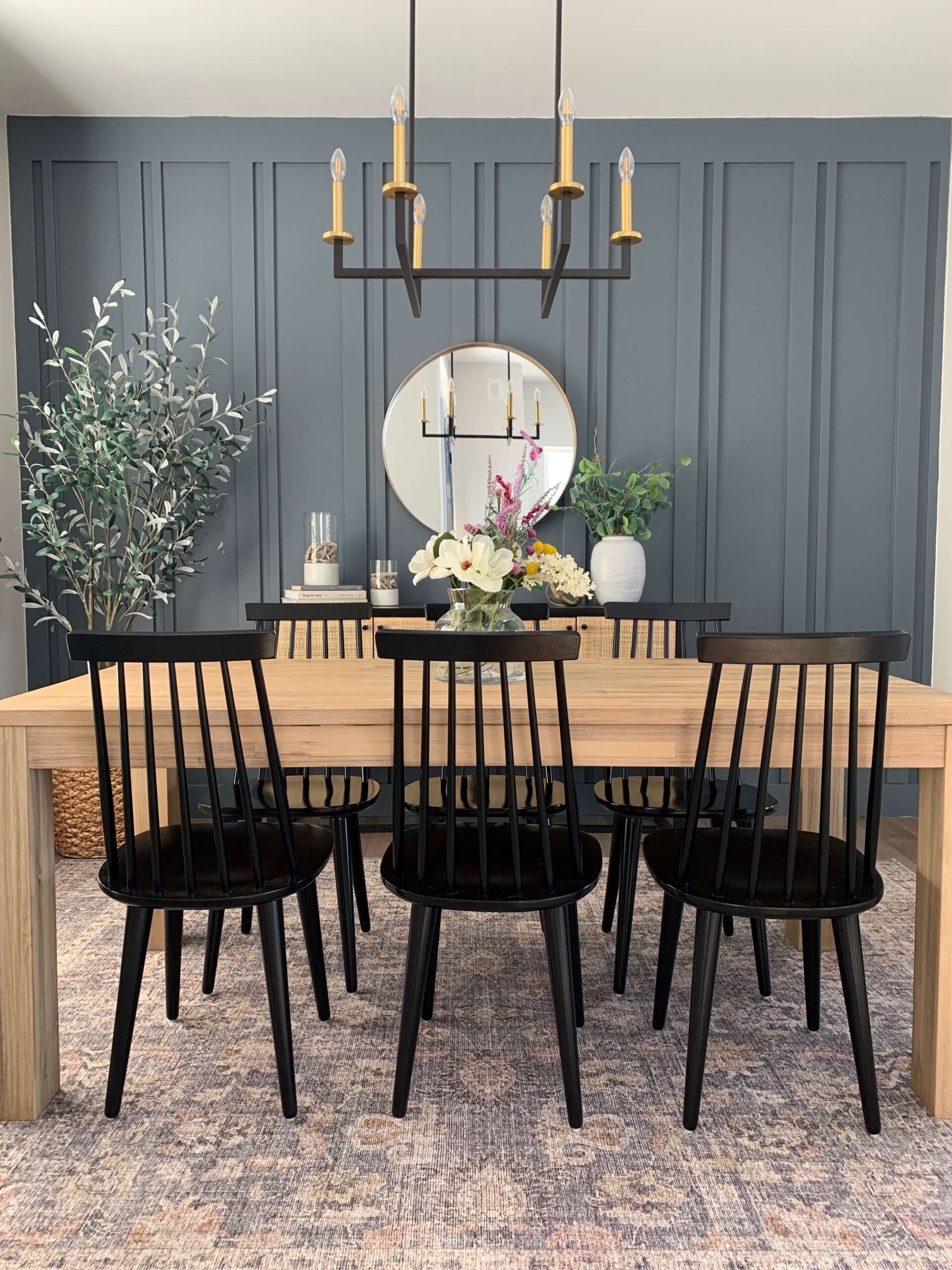
An accent wall gives your eye a place to land. In modern dining rooms, this usually isn’t wallpaper with busy florals. It’s more likely a deep paint color, wood slat paneling, or even textured plaster.
Wood slat walls are especially popular right now. They add warmth and a slight architectural feel without requiring a full remodel. Paint alone works too. Try a moody green or deep navy behind a lighter table for contrast.
Practical tip: Only accent the wall the table faces, not all four walls. Too much and the room feels boxed in.
This adapts beautifully. Traditional rooms can use wainscoting instead of slats. Bohemian spaces might go for a textured lime wash finish. With your walls sorted, let’s talk about what goes on them besides paint.
6. Hang Art That Has Breathing Room

Modern spaces love negative space, and that includes your walls. Instead of a gallery wall crammed with frames, pick one or two large pieces of art with a lot of blank space around them.
Abstract art, black and white photography, or simple line drawings all fit the modern vibe well. Avoid anything too busy or literal. You want the art to feel like it’s resting on the wall, not fighting with the furniture below it.
Tip: Hang art so the center sits about 60 inches from the floor. That’s standard eye level for most adults.
Traditional dining rooms might still want a family portrait or framed mirror instead. Coastal rooms often go with a single large seascape or abstract wave print. Now that the walls are handled, let’s zoom out to the floor plan itself.
7. Create Zones With an Open Floor Plan Layout
A lot of newer homes have dining rooms that flow right into the kitchen or living room. Instead of fighting that, modern design leans into it. You create the dining “zone” using a rug, a pendant light, and furniture placement instead of walls.
This means your table doesn’t need to be centered in a room. It just needs to feel anchored under its own light source and rug, even if the space technically continues into another room.
Actionable tip: Use furniture placement to create a visual boundary. A bench seat with its back to the living room, for example, quietly divides the space without a wall.
Traditional homes with separate dining rooms can skip this one, but open-concept coastal and farmhouse homes use this trick constantly. Once your zones are set, storage becomes the next challenge.
8. Choose a Low-Profile Sideboard for Storage
Every dining room needs somewhere to stash extra dishes, linens, and serving pieces. Modern sideboards skip the bulky look of older furniture. They’re usually long, low, and sit on thin legs that let light pass underneath.
This matters more than people think. A floating or leggy sideboard makes the whole room feel lighter, even if the piece itself is large. Solid wood fronts, matte black hardware, and simple pulls keep the look clean.
Tip: Measure your wall space and leave at least 36 inches of clearance in front of the sideboard so drawers and doors open without blocking the walking path.
Farmhouse homes might choose a similar shape but in a distressed wood finish. Coastal rooms often go with a white or light wood version with cane detailing. With storage sorted, let’s think about the ceiling for a second.
9. Play With Ceiling Treatments

Most people forget the ceiling exists until it’s the only white surface left in an otherwise styled room. Modern dining rooms are starting to use ceiling treatments like exposed beams, painted ceilings, or even simple molding to add interest overhead.
A painted ceiling in a soft, dark tone can make the whole room feel cozier and more intentional. It’s a small move that has a big visual payoff, especially paired with that statement light fixture from idea number one.
Tip: If you’re nervous about a dark ceiling, start with just one shade darker than your wall color. It’s a safer way to test the look.
Traditional homes might add classic crown molding instead. Industrial lofts often leave beams exposed and painted matte black. Now let’s talk about something a lot of people totally skip: the table setting itself.
10. Keep Table Settings Minimal and Intentional

You don’t need a fully set table all the time, but when you do dress it up, modern style keeps it simple. Think a plain runner instead of a full tablecloth, a small centerpiece, and dishware with clean shapes.
Ceramic vases with dried branches, a row of taper candles, or a simple wood bowl of fruit all work great. The goal is a table that looks pulled together in under two minutes, not one that needs a florist.
Tip: Stick to odd numbers when grouping objects like candles or vases. Groups of three just look more balanced to the eye.
Bohemian tables might add more texture with woven placemats. Traditional settings can still use linen napkins and formal dishware, just in simpler shapes. Speaking of small details, let’s talk about something people always forget.
Furniture Size Guide by Room Dimension
| Room Size | Table Length | Rug Size | Chair Count |
|---|---|---|---|
| Under 100 sq ft | 48-60 inches | 6×9 feet | 4 |
| 100-150 sq ft | 60-72 inches | 8×10 feet | 6 |
| 150-200 sq ft | 72-84 inches | 9×12 feet | 6-8 |
| Over 200 sq ft | 84-108 inches | 10×14 feet | 8-10 |
Use this as a starting point, not a strict rule. It just keeps you from buying a table that swallows the whole room or a rug that looks like a postage stamp under your furniture.
11. Bring in Plants for a Softer Feel
Modern rooms can sometimes feel a little sharp with all those clean lines and minimal decor. Plants fix that fast. A tall fiddle leaf fig in the corner or a trailing pothos on the sideboard adds life without adding clutter.
Greenery also softens hard materials like metal chair legs or a stone table top. It’s an easy, cheap way to make the whole room feel more lived-in.
Tip: Choose one large plant instead of five small ones if your space is tight. It reads as intentional instead of scattered.
Coastal rooms love palms and monstera. Traditional spaces often prefer more structured plants like topiaries. With the greenery in place, let’s finish with one more layout idea that ties everything together.
12. Use a Bench on One Side for Flexibility

Benches are having a real moment in modern dining rooms, and I get why. A bench on one side of the table instead of chairs saves space, adds a casual touch, and makes it way easier to squeeze in extra guests for big dinners.
Pair a simple wood or upholstered bench with chairs on the other side for that mixed-material look we talked about earlier. It also just looks less stiff than a full set of matching chairs around every side.
Tip: Leave at least 24 inches of bench length per person so nobody’s elbow-to-elbow at dinner.
Farmhouse dining rooms practically invented this look with long wood benches. Coastal homes often use a woven or slipcovered bench for a breezier feel. And with that, you’ve got a full toolkit to build out your own space.
Tips for Success
- Start with the light fixture and rug first. Everything else is easier to choose once those two anchors are set.
- Don’t buy furniture in one shopping trip. Live with paint colors and fabric swatches for a week before committing.
- Balance hard and soft materials in every room. Wood, metal, and glass need fabric, rugs, or plants to soften them.
- Measure your walking paths, not just your furniture. You need at least 36 inches of clearance around the table.
- Choose one “wow” piece, like a fixture or accent wall, and let everything else stay simple around it.
- Test paint colors at different times of day before painting the whole wall.
Common Mistakes and How to Avoid Them
Buying a table too big for the room
: Measure your space first and leave at least 36 inches of clearance on all sides before choosing table length.
Choosing a light fixture that’s too small
: Add up your room’s length and width in feet, and that number in inches should roughly equal your fixture’s diameter.
Matching every single piece of furniture
: Mix at least one material or finish, like pairing wood chairs with a metal table base, for a more current look.
Forgetting a rug under the table
: Choose a rug that extends past the chairs even when they’re pulled out, usually 24 inches beyond the table edge.
Overdecorating the table when guests are coming
: Stick to one centerpiece and skip the extra clutter like place cards or too many serving dishes.
Ignoring the ceiling completely
: Add a coat of paint, some simple molding, or exposed beams to give the room a finished, intentional feel.
Similar Variations
- Scandinavian Modern – lighter woods, softer color palettes, and a heavy focus on cozy textures like wool and sheepskin.
- Industrial Modern – exposed brick, black metal fixtures, and raw materials like concrete and steel mixed with wood.
- Coastal Modern – white oak furniture, breezy linen fabrics, and a color palette pulled from sand and sea tones.
- Japandi Dining – a mix of Japanese minimalism and Scandinavian warmth, using natural materials and very little clutter.
- Mid-Century Modern – tapered wood legs, warm walnut tones, and bold but simple accent colors like mustard or teal.
- Transitional Modern – a blend of traditional shapes with modern finishes, good for people who aren’t ready to go full minimalist.
At the end of the day, building a great dining space isn’t about following every rule perfectly. It’s about picking a few ideas that actually fit your home and your life, then committing to them instead of trying to do all twelve at once.
Whether you go bold with a dark accent wall or keep things simple with just better lighting and a woven rug, small changes add up fast. That’s really the whole secret behind any successful 12 Modern Dining Room makeover.
Leave a Reply