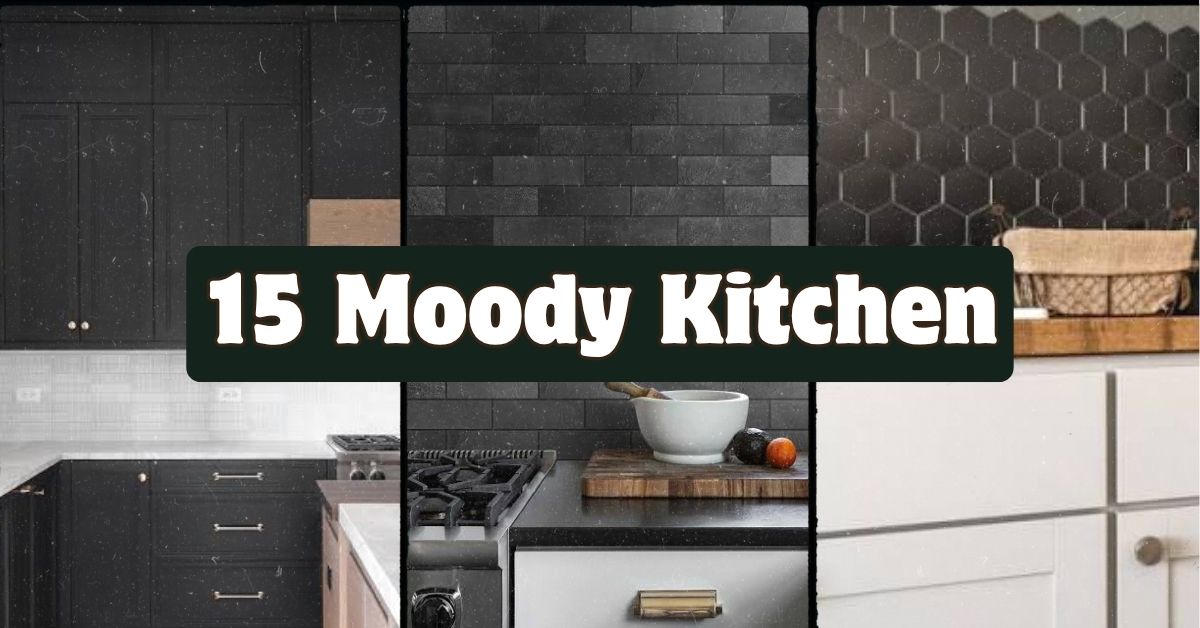
If you’ve been searching for real, workable 15 Moody Kitchen ideas instead of the same five photos recycled across every design blog, you’re in the right spot. I’ve dug through what actually works in real homes, not just staged photo shoots, so you get answers that hold up when you start picking paint chips.
A moody kitchen is a kitchen designed with deep, rich colors like charcoal, forest green, navy, or black, paired with warm lighting and natural textures to create a cozy, dramatic, restaurant-like feel instead of the typical bright white look.
Stick around, because I’m about to walk you through 15 specific ways to pull this off, plus the mistakes that trip people up and a couple tables to help you plan smarter.
What Even Is a Moody Kitchen, Anyway?
Okay so here’s the thing about moody kitchens. They’re not “dark and gloomy” like some people assume. Moody just means the space has depth. Think dim restaurant lighting, a good bottle of wine, that cozy feeling when you’re cooking dinner and the whole room feels like it’s wrapping around you. It’s the opposite of a stark, clinical, all-white kitchen that feels like a hospital.
Moody kitchens lean on dark cabinetry, warm brass or black hardware, and lighting that actually flatters the room instead of flooding it. It’s become huge lately because people are tired of the bright farmhouse look everywhere. This style feels personal, grown-up, and honestly just cooler.
1. Paint Your Cabinets a Deep Charcoal or Black
Dark cabinets are the backbone of any 15 Moody Kitchen design. Charcoal, matte black, or almost-black green instantly change the whole feel of a room. It’s dramatic without being scary, and it hides fingerprints better than white ever will.
Go with a satin or matte finish instead of high gloss. Glossy dark cabinets show every smudge and streak, while matte hides them like a champ.
Practical tip: test your paint color on a cabinet door, not just a wall swatch, since cabinet lighting hits differently than wall lighting.
This works in modern kitchens with flat-panel doors, but it also looks incredible in traditional kitchens with raised panels and brass pulls. Once your cabinets are set, the next move is thinking about what covers them, and that’s where hardware comes in.
2. Swap in Warm Brass or Black Hardware
Hardware is small but it changes everything. Cool silver knobs feel sterile against dark cabinets. Warm brass, aged bronze, or matte black hardware add that lived-in, moody warmth instead.
Mix metals a little. A brass faucet with black cabinet pulls looks intentional, not mismatched, as long as you keep one metal dominant.
Actionable tip: replace hardware before repainting cabinets if you’re on a budget. It’s the cheapest way to test the moody direction without committing to paint.
Coastal kitchens can use aged brass for a vintage sailor feel, while industrial kitchens lean toward matte black for that edgy warehouse look. Once your hardware’s locked in, lighting is your next big lever.
3. Layer Your Lighting Instead of Relying on One Overhead Fixture
A single bright overhead light kills the mood instantly. Real moody kitchens use layers: under-cabinet lighting, a statement pendant, and maybe a small lamp on the counter.
Use warm bulbs, around 2700K to 3000K, not the cool white 5000K bulbs that make everything look like an office.
Practical tip: put your main lights on a dimmer switch. This one change lets you shift from bright cooking mode to cozy dinner mode in seconds.
Farmhouse kitchens might use a black lantern-style pendant, while modern kitchens go for a sculptural brass fixture. Lighting sets the tone, but the walls behind your cabinets matter just as much.
4. Add a Dark, Textured Backsplash
Skip the classic white subway tile. A dark backsplash, like charcoal zellige tile, black slate, or deep green ceramic, adds richness without competing with your cabinets.
Textured tile catches light in a way flat tile can’t, which adds even more depth to the room.
Tip: if a full dark backsplash feels risky, start with a sample board on your counter for a week before committing.
Traditional kitchens do well with handmade-look zellige tile, while modern kitchens might prefer large-format matte porcelain slabs.
Backsplash Material Comparison
| Material | Price Range (per sq ft) | Maintenance | Best Style Match |
|---|---|---|---|
| Zellige tile | $15-$30 | Moderate, needs sealing | Traditional, Mediterranean |
| Matte porcelain | $8-$15 | Low, wipe clean | Modern, minimalist |
| Slate | $10-$20 | Moderate, porous | Rustic, farmhouse |
| Painted brick | $5-$12 | Low | Industrial, eclectic |
Once your backsplash sets the tone, your countertops need to either support it or add contrast.
5. Choose Countertops That Add Contrast, Not Competition
Dark cabinets need a countertop that either contrasts (light marble, cream quartz) or blends in seamlessly (dark soapstone, black granite). Too much contrast everywhere makes a room feel busy. Too little makes it feel like a cave.
I’d personally lean toward a light-veined quartz if this is your first moody kitchen. It keeps the room from feeling too heavy.
Tip: bring home a countertop sample and set it against your cabinet paint chip in both daylight and lamp light before buying.
Coastal kitchens often go with white marble for contrast, while modern industrial kitchens might choose concrete-look counters for a cohesive, moody feel.
6. Bring in Wood Tones for Warmth
Dark kitchens can feel cold if you don’t balance them with wood. Open shelving in walnut, a butcher block island, or wood bar stools all soften the space and keep it from feeling like a cave.
Warmer wood tones like walnut and oak work better here than pale, cool woods like ash.
Practical tip: add wood in at least two spots (like open shelves and stools) so it feels balanced instead of like one random accent.
Scandinavian-inspired moody kitchens lean into pale oak for softness, while traditional kitchens favor rich walnut or cherry for depth.
7. Choose a Statement Range Hood
Your range hood can be a focal point instead of an afterthought. A black or brass hood, especially one with some shape to it like a curved or paneled design, adds serious drama above the stove.
Tip: if a full custom hood isn’t in budget, a hood cover kit in matte black paint can mimic the look for way less money.
Modern kitchens like sleek stainless or matte black hoods, while French country kitchens often use a plaster or brass hood with detailed trim.
8. Add Deep Green as a Secondary Color
Black and charcoal are the moody classics, but deep green (think forest, hunter, or olive) brings warmth and a nature-inspired feel without losing that dramatic edge.
You could paint just your island a deep green while keeping perimeter cabinets charcoal. This creates contrast without overwhelming the whole room.
Tip: pair green cabinets with brass hardware for a rich, jewel-toned look that photographs beautifully.
Traditional and cottage-style kitchens both love this green-and-brass combo, while modern kitchens might pair green with matte black instead.
Moody Color Palette Combinations
| Base Color | Accent Color | Metal Finish | Overall Feel |
|---|---|---|---|
| Charcoal | Cream | Brass | Warm, classic |
| Matte black | Walnut wood | Black | Bold, modern |
| Forest green | White marble | Brass | Rich, traditional |
| Navy | Light oak | Nickel | Coastal, calm |
With your colors locked in, it’s time to think about how the walls beyond your cabinets carry the theme.
9. Use Dark Paint on the Walls, Not Just the Cabinets
A lot of people paint dark cabinets but leave the walls white, which breaks the moody effect. If you want the full experience, carry a dark or muted tone onto the walls too, even if it’s a shade lighter than your cabinets.
Tip: use the same color family but a slightly different tone so the room has depth instead of looking flat and matchy.
Modern farmhouse kitchens might use a warm greige on walls with black cabinets, while eclectic kitchens go bold with a deep terracotta wall against navy cabinets.
10. Add a Dark Ceiling for Full Immersion
This one feels scary but it works. Painting the ceiling the same dark tone as your cabinets makes the whole room feel like it’s wrapping around you instead of stopping abruptly at the top.
It works best in kitchens with good natural light or strong artificial lighting, since a dark ceiling with no light source can feel heavy.
Tip: try this in a smaller kitchen first. Ironically, dark ceilings can make small spaces feel more intimate and cozy rather than cramped.
Modern and transitional kitchens both handle this trend well, especially with recessed lighting built into the dark ceiling.
11. Choose Window Treatments That Filter, Not Block, Light
Moody doesn’t mean dark all day long. Sheer linen curtains or simple wood blinds let soft daylight in while still keeping that intimate, layered feel once evening hits.
Tip: skip heavy blackout curtains in a kitchen. You want filtered light during the day and warm lamp light at night, not total darkness.
Coastal moody kitchens use light linen panels, while traditional kitchens might add a valance in a deep color to match the cabinetry.
12. Incorporate Black-Framed Windows or Doors
If you’re renovating or building, black window frames add an instant architectural moody touch. Even if you can’t replace windows, black painter’s tape style trim (temporary) or peel-and-stick film can mimic the look on a budget.
Tip: black frames pair especially well with white or cream walls, since the contrast makes the dark tone pop instead of disappearing.
Modern farmhouse and industrial kitchens both use this trick heavily, since it echoes old factory window style.
13. Style Open Shelves With Dark and Neutral Objects
Open shelving in a moody kitchen shouldn’t be cluttered with colorful mismatched dishes. Stick to a palette: black plates, cream bowls, wood cutting boards, maybe one green plant for life.
Tip: leave some negative space on each shelf. Packed shelves feel chaotic, while a few well-placed items feel curated.
Minimalist kitchens keep shelves nearly empty, while eclectic kitchens can layer in vintage finds as long as the color palette stays consistent.
14. Add Textiles for Softness
Hard surfaces dominate kitchens, so textiles matter more than people think. A woven runner rug, linen tea towels, or fabric-covered bar stools soften all that stone and cabinetry.
Tip: choose a rug with some texture, like jute or a chunky weave, rather than a flat print. Texture adds warmth the way color alone can’t.
Bohemian moody kitchens go heavy on pattern and texture, while Scandinavian moody kitchens keep textiles simple and solid-colored.
15. Use Candles or Warm Accent Lamps for Everyday Ambiance
This is the easiest, cheapest idea on this whole list. A small lamp on the counter or a few candles on the island instantly makes a kitchen feel moody, even on a random Tuesday night.
Tip: keep a small battery-operated candle or plug-in lamp near the sink area so you can flip it on while doing dishes for instant ambiance.
This trick works in literally every style of kitchen, no exceptions, because warm accent light is universally cozy.
Tips for Success
- Test paint colors in your actual kitchen lighting, both day and night, before committing to a full cabinet repaint.
- Keep at least one light, reflective surface (counters, backsplash, or a mirror) to bounce light around a dark room.
- Balance every three dark elements with one warm wood or brass touch to avoid a flat, heavy look.
- Start small with hardware and lighting changes before jumping into a full cabinet repaint.
- Choose a dimmer switch for your main light source so the room can shift moods throughout the day.
- Don’t ignore ventilation and task lighting near the stove, since mood shouldn’t come at the cost of function.
Common Mistakes and How to Avoid Them
Using only cool-toned bulbs
: Swap to warm white bulbs (2700K-3000K) so dark colors feel cozy instead of cold and flat.
Skipping contrast entirely
: Add at least one light surface, like a pale countertop or cream wall, so the room doesn’t feel like a cave.
Painting cabinets glossy black
: Choose matte or satin finishes instead, since gloss shows every smudge and fingerprint.
Forgetting under-cabinet lighting
: Add LED strip lighting under upper cabinets so counters stay functional even with a darker overall palette.
Overdoing dark on every single surface
: Leave wood tones, woven textures, or a light backsplash to break up the darkness and keep it feeling warm.
Choosing trendy colors without testing them
: Live with a sample board for at least a week before committing to full cabinet paint.
Similar Variations
- Dark Academia Kitchen: Leans into deep wood, brass details, and a scholarly, old-library feel.
- Coastal Moody Kitchen: Combines navy cabinets with light linen textiles and brass fixtures for a beachy but rich vibe.
- Industrial Moody Kitchen: Uses black steel, concrete counters, and exposed brick for an edgier take on the trend.
- Modern Farmhouse Moody Kitchen: Pairs black shaker cabinets with warm wood beams and vintage-style lighting.
- Mediterranean Moody Kitchen: Uses deep green or terracotta tones with handmade tile and warm brass accents.
- Scandinavian Moody Kitchen: Keeps things simple with charcoal cabinets, pale oak floors, and minimal decor.
Getting a moody kitchen right isn’t about painting everything black and calling it done. It’s about layering warm light, real texture, and just enough contrast so the room feels rich instead of heavy. Start small, test your choices in real lighting, and build up from there.
At the end of the day, a 15 Moody Kitchen isn’t a strict formula, it’s a feeling you build one warm, thoughtful choice at a time.
Leave a Reply