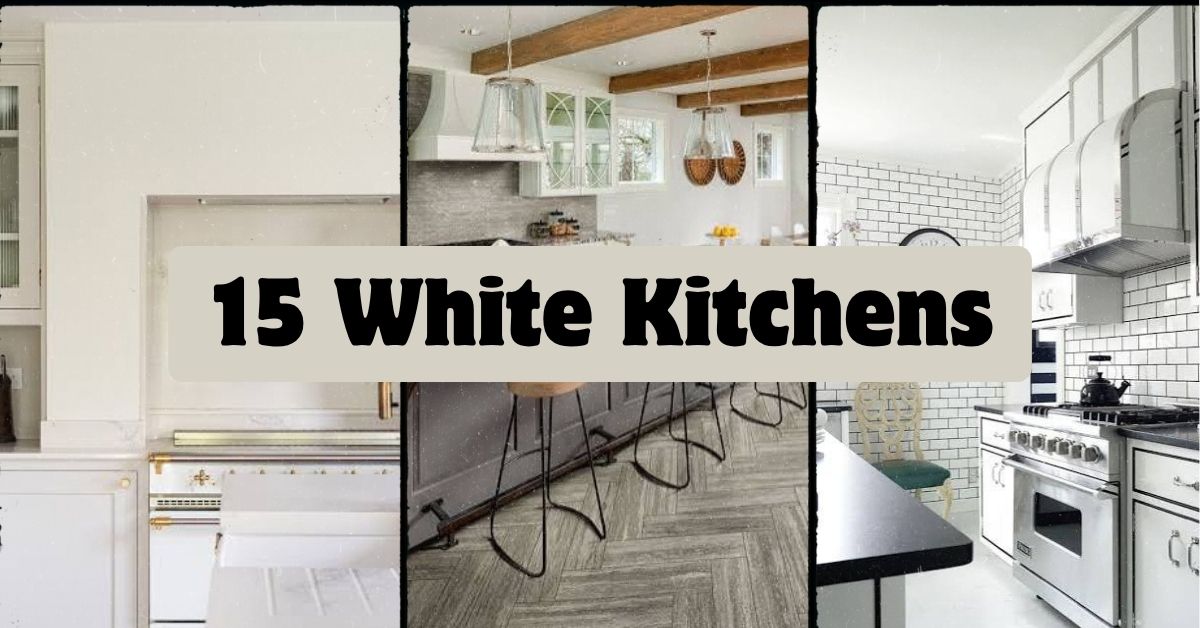
I’ve spent way too many hours scrolling through kitchen photos, and if you’re here looking at 15 white kitchens, I’ve got you covered with the most useful roundup you’ll find on this topic. I dug through design trends, talked to folks who’ve actually renovated their spaces, and pulled together ideas that go way beyond “just paint it white.” This isn’t fluff. It’s real, usable stuff.
A white kitchen is a kitchen where cabinets, walls, or both are painted in white or near-white shades, often paired with light countertops and neutral flooring. This design choice reflects more light, makes small spaces feel bigger, and creates a timeless look that doesn’t date quickly.
Stick around because I’m about to show you 15 different ways to make white kitchens feel personal, warm, and anything but boring.
What Makes a White Kitchen Actually Work
Here’s the thing about white kitchens. People think “white” means one shade, one mood, one boring look. That’s just not true. White kitchens can feel cozy, modern, farmhouse, or even moody depending on what you pair with them. The trick is layering in texture, warmth, and little pops of personality so the space doesn’t feel like a hospital room. I’ve seen white kitchens that feel cold and sterile, and I’ve seen ones that feel like a warm hug. The difference is always in the details, not the paint color itself.
1. Warm White Cabinets With Brass Hardware
Skip the stark, cool white and go for a warmer shade like cream or ivory. This softens the whole room and feels more inviting. Add brass or gold hardware to the cabinet doors and drawers for a little shine that catches the eye.
Practical tip: Test paint samples on your actual cabinets at different times of day. Lighting changes everything.
This combo works great in traditional or transitional homes, but it also plays nice in modern farmhouse kitchens.
Warm whites paired with brass give off a collected-over-time feel, like the kitchen has history even if it’s brand new. That warmth carries into the next idea, where wood makes an even bigger entrance.
2. Butcher Block Countertops for Natural Warmth
White cabinets paired with butcher block counters create instant contrast. The wood grain adds texture and warmth that plain white can lack on its own. It’s also budget friendly compared to marble or quartz.
Practical tip: Seal butcher block counters every six months to protect against water damage near sinks.
This look fits coastal, farmhouse, and Scandinavian style kitchens especially well.
Wood counters bring in an earthy element that balances out all that bright white. Next, let’s talk about what’s happening on your floor, because that matters just as much.
3. Herringbone Tile Flooring in Soft Gray
A herringbone pattern in light gray or greige tile adds movement to the floor without competing with white cabinets. The pattern itself becomes the star, giving your eyes something interesting to land on.
Practical tip: Choose matte finish tile over glossy to hide scuffs and reduce slipping risk.
This flooring choice adapts beautifully to modern, transitional, and even industrial kitchen styles.
Floors set the tone for the whole room, and this pattern keeps things classic. Now let’s move up to the walls and talk backsplash options.
4. Subway Tile Backsplash With Dark Grout
White subway tile is a classic choice, but swapping in dark charcoal or black grout changes everything. It creates a grid pattern that adds structure and a slightly edgier feel to an otherwise soft space.
Practical tip: Use grout that’s stain resistant, especially near the stove where splatters happen often.
This works in modern, industrial, and even some traditional kitchen designs.
That dark grout detail proves small choices make a big visual impact. Speaking of impact, let’s talk about how open shelving can change the whole vibe of your kitchen.
5. Open Shelving With Neutral Dishware
Swap a few upper cabinets for open wood shelves. Style them with white or cream dishware, a stack of cookbooks, and maybe a small plant. This breaks up the wall of cabinets and adds a lived-in feel.
Practical tip: Keep shelves at least 15 inches apart for easy access to stacked plates and bowls.
Open shelving fits coastal, farmhouse, and boho kitchen styles particularly well.
Shelving like this shows off your stuff instead of hiding it. Speaking of showing things off, let’s chat about statement lighting next.
6. Statement Pendant Lights Over the Island
Hang two or three pendant lights over your kitchen island in a bold shape or dark finish. Against white cabinets, they become the focal point of the whole room without needing bright colors.
Practical tip: Hang pendants 30 to 36 inches above the island surface for the best balance of light and visibility.
Bold pendants work in modern, industrial, and contemporary kitchen styles.
Lighting draws the eye up and adds drama fast. Now let’s ground things back down with a look at natural stone counters.
7. Honed Marble Countertops for Soft Elegance
Marble with a honed, matte finish (instead of polished and shiny) feels calm and understated against white cabinets. It’s a classic pairing that never really goes out of style.
Practical tip: Seal honed marble yearly since the matte surface is more porous than polished stone.
This countertop choice fits traditional, transitional, and modern farmhouse kitchens beautifully.
Marble brings a timeless quality that photographs well and ages gracefully. Let’s look at how a colorful island can break up all that white without losing the clean feel.
8. Painted Island in a Contrasting Color
Keep your perimeter cabinets white, but paint the island in navy, forest green, or even black. This creates a focal point and adds depth without overwhelming the space.
Practical tip: Pick an island color that matches at least one other element in the room, like your light fixtures or bar stools.
This two-tone approach works in nearly every style, from coastal to modern farmhouse to transitional.
A contrasting island proves white kitchens don’t have to be all-white to work. Let’s talk about textiles next, because soft touches matter too.
Kitchen Style Comparison Table
| Style | Cabinet Tone | Best Countertop | Common Hardware |
|---|---|---|---|
| Farmhouse | Warm white | Butcher block | Black iron |
| Coastal | Cool white | Honed marble | Brushed nickel |
| Modern | Pure white | Quartz | Matte black |
| Traditional | Cream/ivory | Polished marble | Brass or gold |
| Scandinavian | Off-white | Light wood | Simple pewter |
9. Woven Bar Stools for Texture
Add texture with rattan or woven bar stools at your island. These soft, natural materials keep the space from feeling too sterile or cold. They also add a relaxed, collected feel.
Practical tip: Choose stools with a back for comfort if people will sit there longer than a quick snack.
Woven stools shine in coastal, boho, and farmhouse kitchens especially.
Texture through furniture is such an easy fix for a flat looking room. Now let’s talk about how a colorful rug can do similar work on your floor.
10. A Patterned Runner Rug on the Floor
Lay down a colorful or patterned runner rug in the main walkway. It adds warmth underfoot and brings in pattern without painting a single wall. Pick a rug that has some blue, green, or terracotta tones for contrast against the white.
Practical tip: Choose a low pile rug for kitchens so it’s easy to clean and won’t trap crumbs.
This idea adapts to almost every style, from traditional to bohemian to modern.
A rug is one of the cheapest ways to change a room’s whole feel. Next, let’s look at how greenery brings life into these bright spaces.
11. Fresh Greenery on Open Surfaces
Add a few potted herbs on the windowsill or a small tree in the corner. Living plants bring color and life into a white kitchen in a way nothing else can. They also make the space feel fresher and less staged.
Practical tip: Choose low maintenance plants like pothos or snake plants if you don’t have a green thumb.
Greenery works in literally every kitchen style without exception.
Plants are proof that nature and clean design go hand in hand. Now, let’s talk about how mixing metals can add subtle interest.
12. Mixed Metal Finishes Throughout
Don’t feel like you need to match every faucet, light, and cabinet pull. Mixing brushed gold faucets with matte black hardware, for example, adds depth and keeps things from feeling too matchy.
Practical tip: Pick one dominant metal finish and one accent finish, then stick to just those two throughout the room.
This approach fits modern, transitional, and eclectic kitchen styles well.
Mixed metals give a room that “put together over time” feeling. Let’s shift gears now and talk about window treatments.
13. Simple Café Curtains on Windows
Skip heavy drapes and go with short café curtains instead. A light linen or cotton fabric in white or a soft pattern keeps things airy while adding just a touch of softness to hard surfaces.
Practical tip: Choose washable fabric since kitchen windows deal with steam and grease over time.
Café curtains fit cottage, farmhouse, and coastal kitchen styles especially well.
Curtains are such a small detail, but they finish off a room nicely. Now let’s talk about flooring one more time, but from a budget angle.
Budget Tiers for White Kitchen Flooring
| Budget Level | Material | Cost per Sq Ft | Durability |
|---|---|---|---|
| Low | Vinyl plank | $2 to $5 | 10 to 20 years |
| Mid | Ceramic tile | $5 to $10 | 20+ years |
| High | Natural stone | $10 to $20 | Lifetime with care |
| High | Hardwood | $8 to $15 | 25+ years with refinishing |
14. Glass Front Cabinets for Depth
Swap a few solid cabinet doors for glass front ones. This adds visual depth and gives you a spot to display pretty dishes or glassware. It breaks up a wall of solid white doors nicely.
Practical tip: Add small interior lights inside glass cabinets to make displayed items pop at night.
Glass front cabinets fit traditional, coastal, and cottage style kitchens really well.
Glass doors add a little sparkle without much effort. Finally, let’s wrap up with one of my favorite easy upgrades.
15. A Bold Faucet as the Finishing Touch
A matte black, brass, or even colored faucet can act like jewelry for your kitchen. It’s a small detail that draws the eye and adds personality against all that white.
Practical tip: Match your faucet finish to your cabinet hardware for a cohesive look.
This works across literally every style since faucets come in so many finishes now.
That faucet might be the last thing you add, but it often gets the most compliments.
Tips for Success
- Test paint samples in your actual kitchen lighting before committing to a full repaint
- Balance warm and cool tones so the room doesn’t feel flat or clinical
- Add at least three different textures (wood, metal, woven, stone) to avoid a boring look
- Keep countertop and backsplash choices simple if your cabinets are already a strong feature
- Use lighting layers, meaning overhead, under cabinet, and pendant lights together
- Don’t skip hardware. It’s a small detail that changes the whole feel of the room
- Bring in greenery or fresh flowers regularly to keep the space feeling alive
Common Mistakes and How to Avoid Them
Choosing one flat white everywhere
: Mix warm and cool whites through cabinets, walls, and trim so the room has depth instead of looking like one blank canvas.
Skipping texture entirely
: Add wood, stone, or woven elements so the kitchen doesn’t feel sterile or like a showroom nobody actually lives in.
Matching every metal finish perfectly
: Mix two metal tones, like brass and black, for a collected look instead of a matched furniture set feel.
Ignoring natural light sources
: Test paint colors at different times of day since white shifts dramatically under warm bulbs versus daylight.
Overcrowding counters with appliances
: Store small appliances in cabinets when not in use so the white counters can actually shine and feel spacious.
Forgetting about grout color
: Choose grout that either blends for a seamless look or contrasts on purpose, never something that looks like an accident.
Similar Variations
- Modern Farmhouse White Kitchen – Mixes white shaker cabinets with black hardware and wood beams for a rustic but clean feel
- Coastal White Kitchen – Uses white cabinets with blue accents, natural rope or rattan textures, and light wood floors
- Scandinavian White Kitchen – Focuses on minimal clutter, light wood tones, and simple hardware for a calm, airy feel
- Traditional White Kitchen – Pairs white raised panel cabinets with ornate hardware and polished marble counters
- Industrial White Kitchen – Combines white cabinets with exposed brick, black steel accents, and concrete floors
- Cottage White Kitchen – Uses white beadboard cabinets, glass front doors, and floral or gingham fabric accents
White kitchens work because they’re flexible. You can go warm and cozy, sleek and modern, or somewhere in between, and it all still looks put together. The key is layering in texture, mixing a few metals, and adding personal touches so the space feels like yours instead of a showroom display. I hope these 15 white kitchens gave you plenty of ideas to steal for your own home.
Leave a Reply