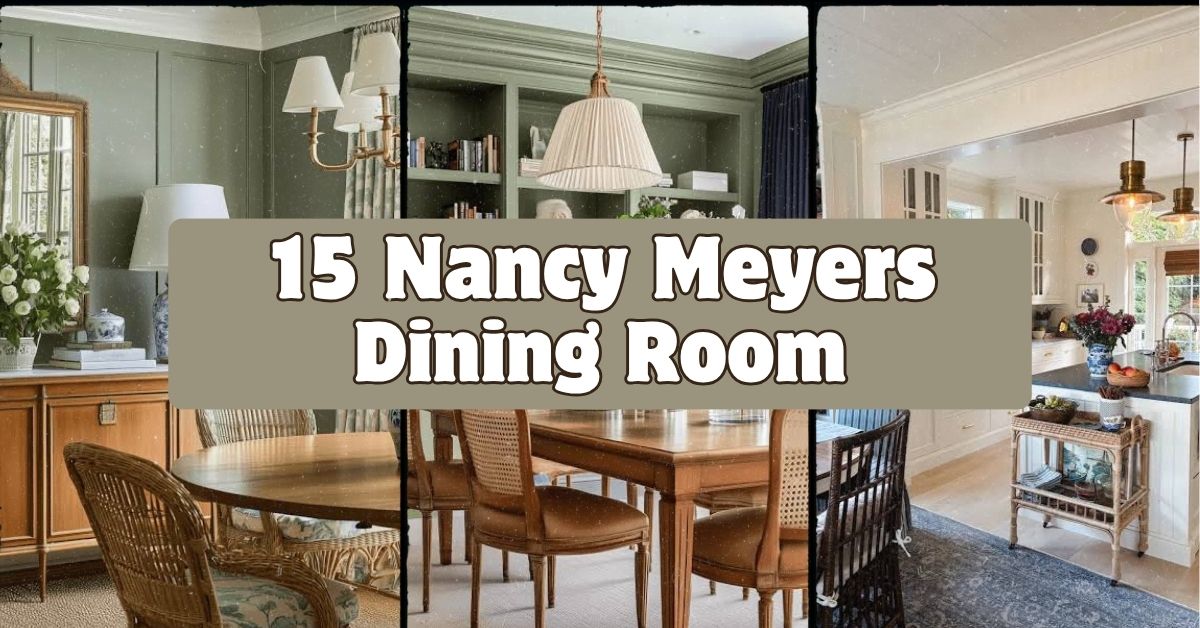
If you’ve ever paused a Nancy Meyers movie just to stare at the dining room in the background, you’re exactly who this 15 Nancy Meyers Dining Room guide is for. I’ve watched these films more times than I’d like to admit, and I’ve picked apart every detail so you don’t have to.
A Nancy Meyers dining room is a warm, lived-in space that mixes creamy neutrals, natural wood, linen textiles, and soft garden light to create a comfortable yet elevated eating area, most famously seen in films like “It’s Complicated” and “Something’s Gotta Give.” It relies on layered textures rather than bold color to feel rich.
Stick around, because I’m about to walk you through 16 specific ways to bring that cozy-but-polished movie magic into your own home.
What Makes a Nancy Meyers Dining Room So Special?
Okay, so here’s the thing about Nancy Meyers movies. The houses are basically the third main character. Her dining rooms feel like a place where a big, loud, loving family would actually eat dinner and spill wine on the tablecloth. Nothing looks too perfect. Nothing looks too new. There’s always a big wooden table, soft lighting, and something growing in a pot nearby. The colors stay quiet: creams, warm whites, soft greens, and wood tones. It’s not minimalist and it’s not maximalist either. It’s just… comfortable luxury. That’s the whole vibe, and it’s why people can’t stop trying to recreate it.
1. Start With a Substantial Wood Dining Table
The table is the heart of this whole look. Think thick, solid wood, not a thin glass top or anything super sleek. Farmhouse tables, trestle tables, and old French oak tables all work great. The wood should show some grain and maybe even a few knots. That imperfection is the point.
Practical tip: go for a table at least 72 inches long if your room allows it, since Nancy Meyers dining rooms almost always feel generous, never cramped.
In a modern home, pick a lighter oak with clean legs. In a traditional space, go darker and heavier. Coastal homes can lean toward bleached or whitewashed wood.
Once your table anchor is set, the chairs around it need just as much thought.
2. Mix Different Chair Styles Around the Table
Here’s a secret: matching chair sets look too new and too staged. Real Meyers-style rooms mix a few chair types, maybe upholstered ones at the ends and simple wood ones along the sides. This mismatch makes the room feel collected over time instead of bought in one trip.
Try pairing linen-covered armchairs at the head and foot of the table with rush-seat or ladder-back chairs on the sides.
Traditional homes can use wingback-style dining chairs. Modern spaces can swap in a mix of wood and simple upholstered seats without pattern.
Now that your seating has some personality, let’s talk about what goes on top of that table.
3. Dress the Table With Layered Linens
You’ll almost never see a bare table in these films. There’s usually a tablecloth, or a runner, sometimes both, layered with cloth napkins that don’t quite match. The fabrics are natural: linen, cotton, maybe a light wool blend in cooler months.
Actionable tip: buy napkins in two similar but not identical shades of cream or white. The slight mismatch reads as “collected,” not “cheap.”
Coastal homes can add a striped runner. French country spaces love a simple white cloth with visible texture.
With the table dressed, it’s time to bring in the lighting that makes the whole scene glow.
4. Hang a Warm, Low-Light Chandelier
Lighting makes or breaks this look. Bright overhead lights kill the mood instantly. Nancy Meyers rooms almost always have a chandelier or pendant with warm bulbs, hung low over the table, casting soft shadows.
Look for iron, brass, or wood chandeliers with candle-style bulbs. Avoid anything with cool white LED light. Dimmers are your best friend here; install one if you can.
Modern homes can use a simple linear brass fixture. Traditional rooms do well with a classic candelabra-style chandelier.
Once the lighting feels right, the walls behind it deserve some attention too.
5. Choose a Warm, Neutral Wall Color
Forget stark white. These rooms lean toward warm whites, soft creams, and light greige tones. The walls should feel like a soft backdrop, not a design statement on their own.
Popular paint tones include Farrow & Ball’s “String” or Benjamin Moore’s “Swiss Coffee.” Test a sample on your wall at different times of day before committing.
Coastal homes can push slightly cooler with a soft sage. Traditional homes go warmer with a buttery cream.
Once your wall color sets the mood, you’ll want furniture finishes that match that same warmth.
Wall Color and Wood Tone Pairings
| Wall Color | Best Wood Tone | Style Vibe |
|---|---|---|
| Warm cream | Honey oak | French country |
| Soft greige | Weathered gray oak | Coastal cottage |
| Buttery white | Dark walnut | Traditional formal |
| Pale sage | Whitewashed pine | Farmhouse coastal |
| Warm taupe | Reclaimed barnwood | Rustic modern |
6. Add a Vintage or Antique Sideboard
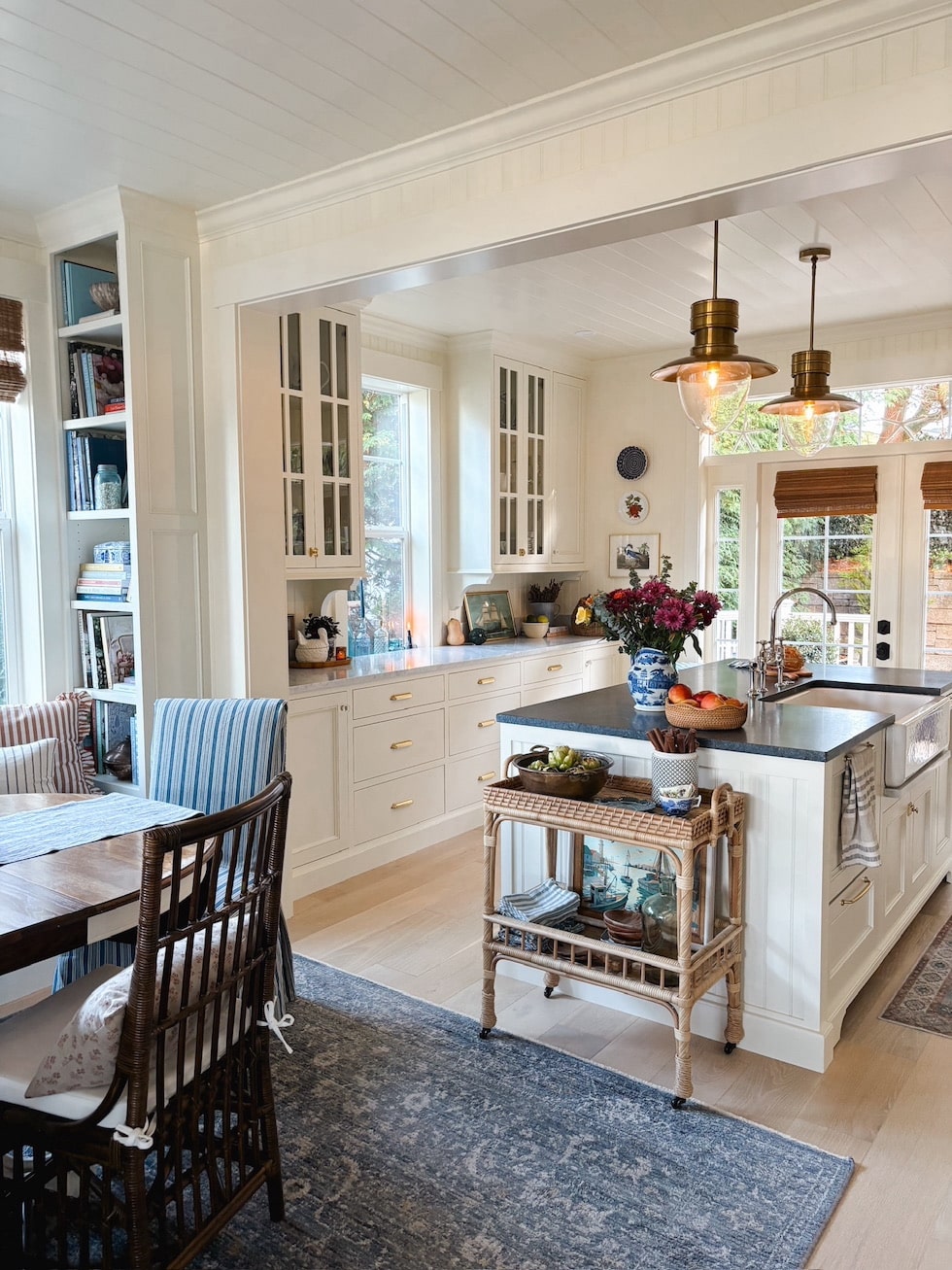
You need somewhere for the good china and extra napkins to live, and a scratched-up antique sideboard does the job better than a sleek modern buffet. Look for pieces with some age to them, maybe a chipped corner or a slightly faded finish.
Shop estate sales or antique stores for the best finds. A simple French provincial buffet in a soft wood tone fits this style perfectly.
Modern homes can choose a cleaner-lined vintage piece. Traditional spaces can go bigger and more ornate.
Once you’ve got storage sorted, it’s time to fill the empty wall space above it.
7. Hang Art With Soft, Muted Colors
Skip the bold graphic prints. Nancy Meyers rooms favor soft botanical prints, muted landscape paintings, or simple black and white photography in warm wood frames.
Group two or three smaller pieces together above the sideboard instead of one giant statement piece. This creates that “collected over years” feeling again.
Coastal homes can add watercolor beach scenes. Traditional rooms do well with classic still life paintings.
With art in place, let’s bring some life into the room with plants.
8. Bring in Fresh Greenery or a Potted Tree
There’s almost always something green in these dining rooms, whether it’s a big potted olive tree in the corner or a simple vase of garden flowers on the table. Real plants matter here, not plastic ones.
Practical tip: a potted lemon or olive tree in a woven basket instantly gives that California cottage feel, even if you live nowhere near California.
Modern homes can use a single sculptural plant. Farmhouse spaces can go for a mix of smaller potted herbs on the table.
Speaking of the table, let’s talk centerpieces next.
9. Style a Low, Organic Centerpiece
Skip tall, fussy floral arrangements. The Meyers look favors low bowls of fruit, simple garden flowers in a mismatched vase, or a scattering of candles at different heights.
Beeswax candles in varying heights, paired with a shallow bowl of lemons or pears, nails this look every time.
Traditional homes can add silver candlesticks. Coastal spaces can swap fruit for shells or driftwood accents.
Now let’s zoom out and think about how this room connects to the outdoors.
10. Frame a View to the Outside
A huge part of the charm in these films comes from dining rooms that open toward a garden, patio, or big window full of natural light. If you have French doors or a large window near your table, don’t cover it heavily.
Use sheer linen curtains instead of heavy drapes so light can still pour through. If you can, place the table so someone always has a view outside.
Modern homes can skip curtains entirely for a clean look. Traditional homes can use a light valance for softness.
With the view sorted, let’s think about the floor beneath the table.
11. Layer a Natural Fiber Rug Under the Table
A jute or sisal rug under the dining table adds warmth and texture without competing with everything else going on. It also helps ground the room and soften footsteps.
Make sure the rug extends at least 24 inches beyond the table edge on all sides so chairs don’t slide off when pulled out.
Coastal homes love a woven seagrass rug. Traditional spaces can layer a faded vintage rug for extra character.
Once the floor is set, small architectural details can really seal the deal.
12. Add Beams or Millwork to the Ceiling
Exposed wood beams or simple ceiling molding give the room that “old house with good bones” feeling these films love so much. It doesn’t need to be elaborate, just present.
If real beams aren’t possible, faux wood beam kits are affordable and install in a weekend.
Modern farmhouse homes can use whitewashed beams. Traditional homes can add classic crown molding instead.
Now let’s talk about the small stuff on the table that ties it all together.
13. Use Mismatched, Vintage-Style Dinnerware

Perfectly matched china sets feel too formal for this look. Instead, mix creamware, simple white plates, and maybe one patterned vintage plate per setting.
Thrift stores and estate sales are goldmines for this. Buy pieces slowly over time instead of one matching set all at once.
Coastal homes can mix in blue and white transferware. Traditional homes can lean into floral-edged antique china.
With the table set, let’s think about texture in the seating cushions too.
14. Add Textured Seat Cushions or Slipcovers
Bare wood chairs can feel a little stiff after a while. Soft linen seat cushions or loose slipcovers add comfort and that lived-in texture the style is known for.
Choose cushions in a slightly different neutral shade than your walls for subtle contrast, not a perfect match.
Modern homes can keep cushions simple and boxy. Traditional homes can add a small skirt or piping detail.
Next, let’s look at how scent and atmosphere play a role too.
15. Layer in Candlelight Even During the Day
Nancy Meyers dining scenes almost always have candles lit, even during daytime meals. It sounds small, but it changes the whole feeling of a room instantly.
Keep a mix of taper candles and pillar candles ready on the table and sideboard so you can light them for any meal, not just special occasions.
Coastal homes can use simple glass hurricane candle holders. Traditional homes can go with brass or silver holders.
Finally, let’s tie the whole room together with one last detail.
Budget Tiers for a Nancy Meyers Dining Room Refresh
| Budget Level | What You Focus On | Approximate Cost |
|---|---|---|
| Starter ($200-$500) | Linens, candles, vintage dinnerware, plants | $200-$500 |
| Mid-range ($500-$2,000) | Rug, light fixture swap, new chairs | $800-$2,000 |
| Full refresh ($2,000-$6,000) | New table, sideboard, chandelier, paint | $2,500-$6,000 |
| High-end ($6,000+) | Custom millwork, antique furniture, full lighting overhaul | $6,000-$15,000+ |
Tips for Success
- Buy furniture and decor slowly over months instead of all at once. The collected-over-time look can’t be rushed.
- Keep your color palette within three or four warm neutral shades so nothing fights for attention.
- Always test paint samples in natural daylight before painting the whole wall.
- Prioritize lighting quality over quantity. One warm dimmable fixture beats three bright ones.
- Shop secondhand first for sideboards, mirrors, and dinnerware before buying new.
- Keep at least one plant or fresh flower in the room at all times, even a small one.
- Don’t skip the rug. It softens the whole room and adds that lived-in warmth.
Common Mistakes and How to Avoid Them
Buying a perfectly matched furniture set
: Skip matching sets entirely. Mix wood tones and chair styles so the room feels collected, not showroom-bought.
Using cool white or overly bright lighting
: Swap in warm bulbs (2700K or lower) and add a dimmer switch to soften the whole room.
Leaving the table bare between meals
: Keep a simple runner, candles, or a low fruit bowl on the table at all times so it never looks unfinished.
Choosing a rug too small for the table
: Measure first and choose a rug that extends at least two feet beyond the table edge on every side.
Overdecorating with too many small accessories
: Choose one or two standout vintage pieces instead of cluttering surfaces with many small items.
Ignoring the view or window treatment
: Use sheer linen panels instead of heavy drapes so natural light can still fill the room.
Similar Variations
- French Country Dining – Similar warmth but with more ornate details like carved wood and toile fabrics.
- Coastal Cottage Dining – Lighter wood tones, blue and white accents, and breezier linen fabrics.
- Modern Farmhouse Dining – Cleaner lines mixed with rustic wood and simple black hardware accents.
- California Casual Dining – Airy, plant-filled, and heavy on natural light with minimal fuss.
- English Country Dining – Darker wood, richer textiles, and more traditional patterned wallpaper.
- Provencal Dining – Sun-bleached wood, lavender and olive accents, and rustic pottery pieces.
Getting this look right isn’t about buying an expensive matching furniture set. It’s about layering warm textures, soft lighting, and a few well-chosen vintage pieces until the room feels like it’s always been that way. Start with your table and chairs, then build outward with linens, lighting, and a little greenery, and you’ll be surprised how close you can get to that movie-set feeling in your own home. That’s really the whole heart of a 15 Nancy Meyers Dining Room makeover.
Leave a Reply