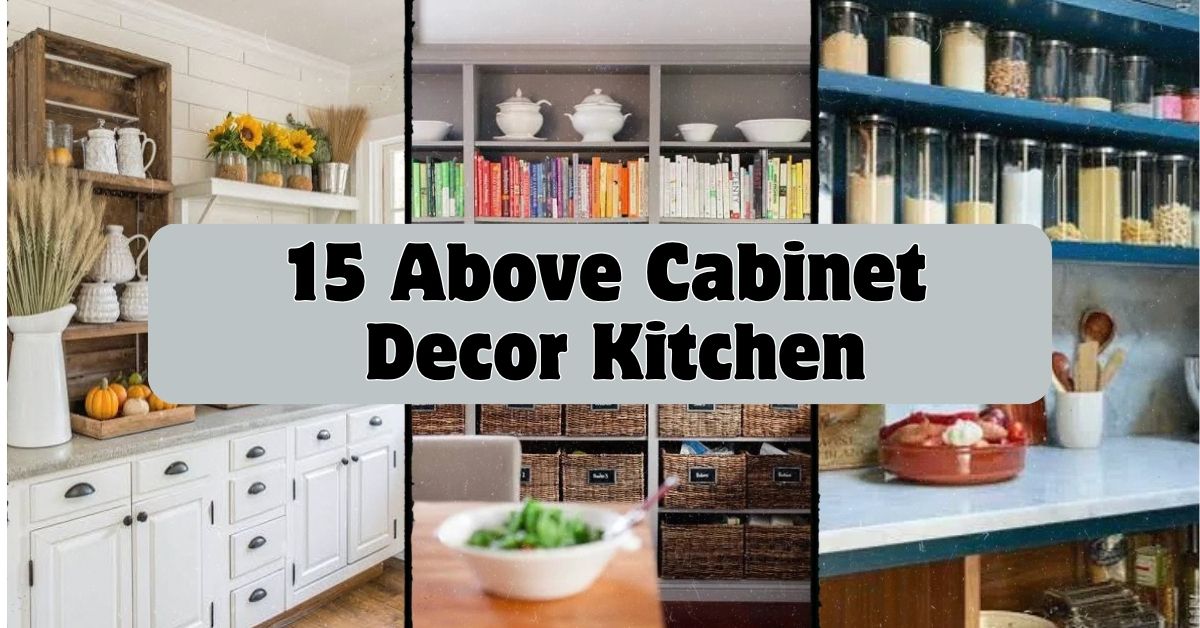
If you’ve been searching for 15 above cabinet decor kitchen ideas that don’t look cluttered or dated, I’ve got you covered here with the most practical, tested options out there. I’ve spent way too many hours staring at that awkward gap above my own cabinets, so trust me, I get the struggle.
Above cabinet decor refers to the decorative styling of the empty space between the top of kitchen cabinets and the ceiling, typically filled with baskets, plants, pottery, or crown molding to avoid a bare, unfinished look. The goal is visual balance without overcrowding.
Stick around, because I’m about to walk you through more ideas than you’ll find in most guides, plus real tips on colors, spacing, and budget so you don’t waste money on stuff that doesn’t fit your space.
What Is Above Cabinet Decor, Anyway?
So here’s the deal. A lot of kitchens have this weird gap above the upper cabinets. Builders leave it there on purpose, usually for airflow or just because standard cabinets don’t reach the ceiling. That gap can look sad and empty, or it can become one of the coolest design features in your whole kitchen.
Above cabinet decor is basically anything you put up there to fill that space in a way that looks intentional. Think baskets, plants, old crates, ceramic jugs, or even books. It’s a small area, but it makes a big difference. Done right, it pulls your whole kitchen together. Done wrong, it looks like a dusty attic shelf. Let’s fix that.
1. Layer Woven Baskets for Texture and Warmth
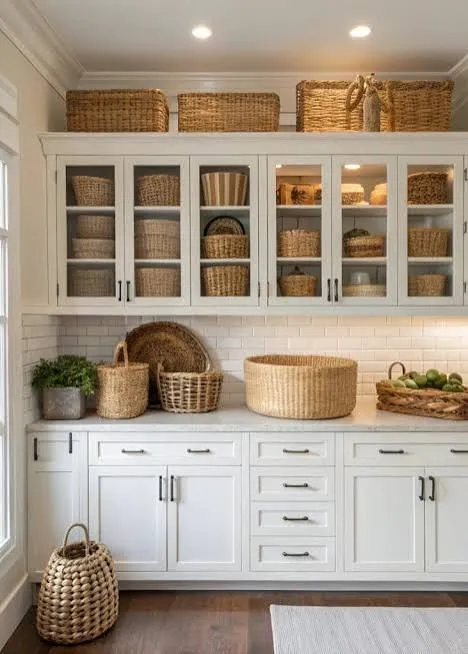
Baskets are the easiest starting point for anyone new to above cabinet decor. They add texture without screaming for attention. I like mixing two or three sizes so the eye has somewhere to travel instead of hitting one flat row of matching shapes.
Go for natural materials like seagrass, rattan, or wicker. These work because they soften all those hard cabinet lines. Tip: stagger the baskets, don’t line them up like soldiers. Lay one on its side, stand another upright, and lean a smaller one against the bigger one.
This look adapts beautifully to farmhouse and coastal kitchens, but it also works in modern spaces if you pick baskets with cleaner lines and neutral tones. Once you’ve got your baskets arranged, it’s time to think about greenery, because plants pair so naturally with woven textures.
2. Add Faux Greenery That Never Needs Watering
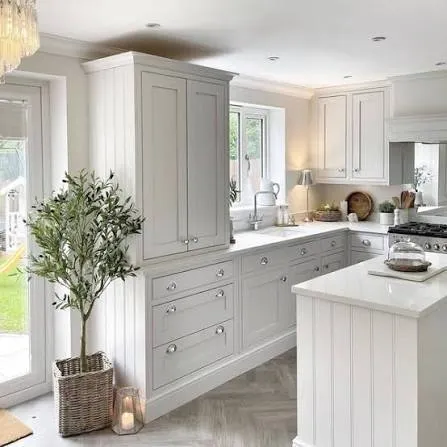
Real plants sound nice until you realize nobody’s climbing up there with a watering can every week. Faux greenery solves that problem completely. I always suggest trailing vines like faux pothos or eucalyptus garlands because they drape over the cabinet edge and soften that harsh horizontal line.
Pick greenery with a slightly matte finish, not shiny plastic leaves that scream fake from across the room. Tip: buy stems separately and arrange them yourself in a pot rather than getting one pre-made bouquet, it looks way more natural.
This works in almost every style. Boho kitchens love overflowing greenery, while minimalist kitchens might use just one small trailing plant for a touch of life. Speaking of pots, let’s talk about how ceramic and pottery pieces can anchor this whole look.
3. Use Oversized Ceramic Jugs and Pottery for Visual Anchors
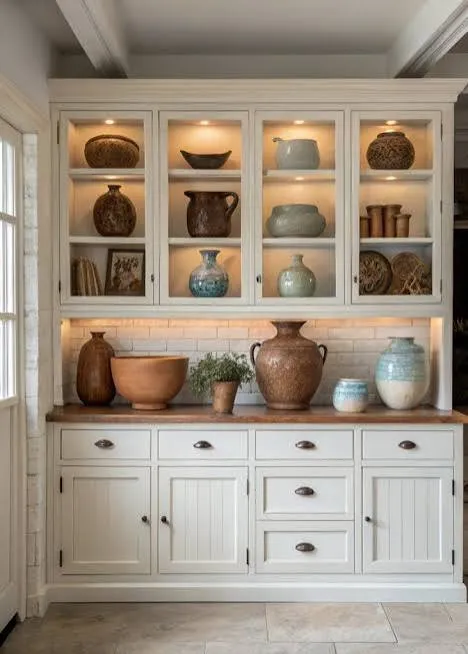
Big ceramic pieces act like punctuation marks up there. Instead of a bunch of small items scattered everywhere, one or two large pottery pieces give the eye a place to rest. I’m talking about stoneware jugs, big vases, or even old-school crocks.
Color matters a lot here. Stick to earthy tones like terracotta, cream, or sage if your cabinets are already busy with color or pattern. If your cabinets are plain white or gray, you can get a little bolder with a deep blue or rust-colored piece.
Tip: buy pottery in odd numbers, like one large piece flanked by two smaller ones, because odd groupings look more natural than even ones.
Traditional and farmhouse kitchens practically demand this look, but modern kitchens can pull it off too with sleeker, matte-finish pottery. Now let’s get into something a little different: decorative crates and boxes.
Above Cabinet Decor Style Matches
| Style | Best Materials | Color Palette | Avoid |
|---|---|---|---|
| Farmhouse | Wood crates, galvanized tin, baskets | Cream, sage, warm wood tones | Glossy or metallic finishes |
| Modern | Ceramic vases, glass jars, sculptural pieces | Black, white, neutral gray | Busy patterns or clutter |
| Coastal | Rope baskets, driftwood, faux coral | Sandy beige, ocean blue, white | Dark heavy woods |
| Traditional | Pottery, books, framed art | Deep green, burgundy, gold accents | Overly minimal or empty space |
| Boho | Woven baskets, plants, textiles | Terracotta, mustard, cream | Sharp metallic finishes |
4. Stack Vintage Crates for a Rustic, Layered Look
Old wooden crates bring instant character. I love how they add height variation without needing anything fancy inside them. You can leave them empty, stack a couple sideways, or tuck a small plant or jar inside one for extra interest.
Look for crates with visible wood grain and a little wear. New crates can be sanded down or lightly stained to fake that aged look if you can’t find real vintage ones. Tip: alternate the direction of the crates, some facing forward, some sideways, to break up the repetition.
This idea shines in farmhouse and rustic kitchens, but a coastal kitchen can use lighter, whitewashed crates for a beachier feel. Once your crates are settled, consider adding some decorative jars to fill in the gaps between them.
5. Fill Glass Jars With Colorful Pantry Staples
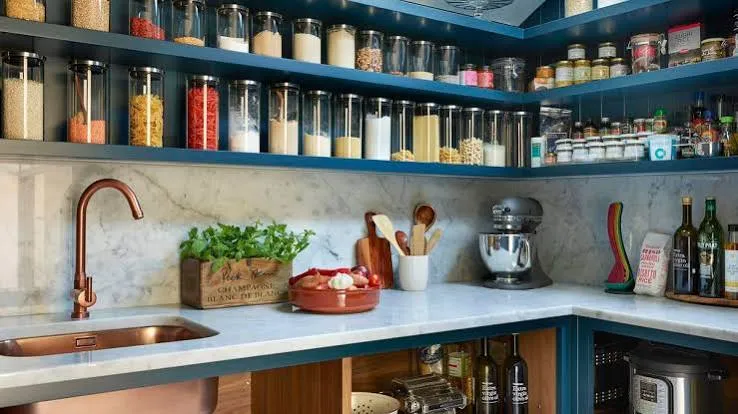
This one’s a personal favorite because it’s functional and pretty at the same time. Glass jars filled with dried pasta, beans, or even colorful candy add a pop of color while staying totally practical. Nobody has to know they’re decoration, they can actually double as storage.
Pick jars with clean lines, like apothecary style or simple mason jars, so the food inside becomes the star. Tip: rotate what’s in the jars every few months to keep things looking fresh and avoid stale-looking pantry items sitting up there for a year.
Modern and farmhouse kitchens both love this trick, since it’s practical and low-maintenance. Coastal kitchens might swap the jars for glass canisters filled with sand or shells instead. Now, let’s move into something with a bit more personality: books and cookbooks.
6. Display Cookbooks and Vintage Books for a Lived-In Feel
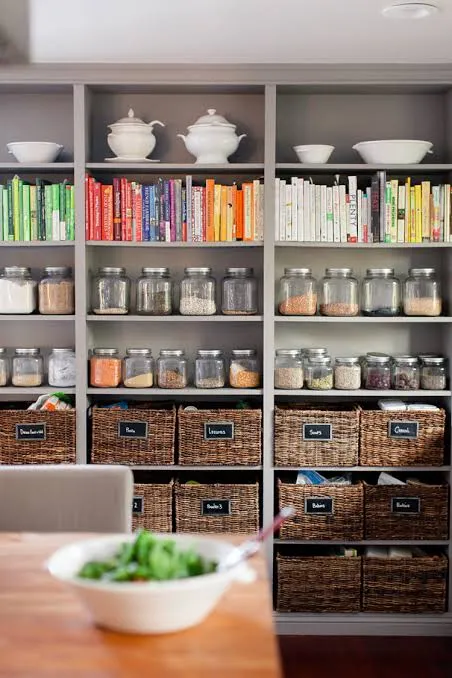
Books bring warmth and a sense of story to any space. Stacking a few cookbooks horizontally, then leaning one or two upright against them, creates that cozy, collected-over-time vibe people love. It also just makes sense in a kitchen, right?
Pick books with interesting spines or covers, since those little details show even from a distance. Tip: pair books with a small object on top, like a mini plant or candle, so the stack doesn’t feel like a random pile.
Traditional kitchens eat this idea up, but even modern kitchens can use a few sleek, neutral-covered books for texture. Next, let’s talk about something a little more sculptural: decorative trays.
7. Lean Decorative Trays Against the Wall for Depth
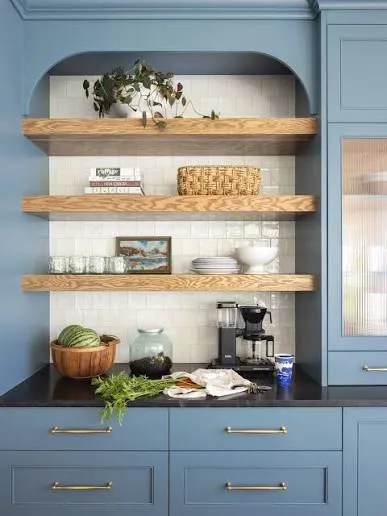
Trays aren’t just for serving food. Leaning a couple of decorative trays against the wall above your cabinets adds depth and a sense of dimension. I like mixing metal and wood trays together so there’s some contrast happening.
Pick trays that have a bit of shine or texture, like hammered metal or woven rattan. Tip: overlap two trays of different sizes for a layered effect instead of using just one flat piece.
This idea works especially well in eclectic or farmhouse kitchens, though a modern kitchen could use one single sleek metal tray for a minimalist statement. Now, let’s bring in some seasonal color with dried florals.
8. Incorporate Dried Florals or Wheat Stems for Subtle Color
Dried flowers and wheat stems bring a soft, earthy touch without needing constant care. Think dried lavender, pampas grass, or bundled wheat stalks tucked into a simple vase. They add movement and a little bit of nature indoors.
Stick to muted, natural tones like tan, dusty pink, or soft green. Tip: trim the stems unevenly before placing them in a vase, since perfectly even stems look stiff and less natural.
Boho and farmhouse kitchens love this look most, but even a coastal kitchen can use dried florals in a lighter, breezier arrangement. Speaking of nature-inspired touches, let’s check out how decorative plates can work here too.
9. Prop Up Decorative Plates for a Pop of Pattern
Plates aren’t just for eating. Propping a few decorative plates against the wall above your cabinets adds pattern and color fast. This works especially well if your cabinets are a solid, neutral color that could use a little visual interest.
Choose plates with a common color thread even if the patterns differ, so everything feels connected instead of random. Tip: use plate stands or small easels to keep them upright and secure, especially in kitchens near a lot of foot traffic.
Traditional and eclectic kitchens are the best fit here, though a modern kitchen might use just one bold plate as a single statement piece. Now let’s talk lighting, because a little glow up there changes everything.
10. Add Small Accent Lighting for a Warm Glow
Lighting above the cabinets isn’t just for looks, it makes the whole space feel warmer at night. Puck lights or a thin LED strip tucked along the top edge of the cabinets can cast a soft glow upward, highlighting whatever decor you’ve placed there.
Stick to warm white lighting, not cool blue tones, since warm light feels cozier in a kitchen setting. Tip: use battery-operated or plug-in lights if you don’t want to deal with hardwiring, they’re way easier to install and still look great.
This idea works in literally every kitchen style because lighting is universal. Modern kitchens might go for a sleek hidden strip, while traditional kitchens might prefer small lantern-style fixtures. Now, let’s look at something bigger: oversized art or mirrors.
11. Lean a Framed Piece of Art or a Small Mirror
If your cabinets are close to the ceiling but you’ve still got a sliver of space, a small framed piece of art or mirror can fill it nicely. Mirrors especially help bounce light around a kitchen that doesn’t get much natural sunlight.
Pick frames that match your cabinet hardware finish, like brass frames with brass handles, for a pulled-together look. Tip: use adhesive strips or small brackets to secure the frame so it doesn’t wobble when you open and close cabinet doors below.
This works great in modern and traditional kitchens alike. A coastal kitchen might use a mirror framed in weathered wood instead. Now let’s talk about a decor choice that’s a little more unexpected: mini sculptures or figurines.
12. Use Small Sculptural Pieces for an Artistic Touch
Sculptural decor, like small ceramic or wood figures, gives your kitchen a gallery feel without needing an actual gallery wall. These pieces work best in small groupings of two or three, spaced apart so each one gets its own moment.
Stick to a consistent material or color family so the pieces feel curated, not random. Tip: place taller pieces toward the back and shorter ones toward the front so nothing gets hidden.
This idea fits modern and eclectic kitchens especially well. Traditional kitchens might swap sculptures for small carved wooden pieces instead. Next, let’s look at how seasonal rotations keep this whole area feeling fresh.
13. Rotate Seasonal Decor Throughout the Year
One thing I always tell people is that above cabinet decor doesn’t have to stay the same all year. Swapping out a few pieces for the seasons keeps things feeling fresh and gives you a reason to actually dust up there (we all need that reminder).
Think pumpkins and warm-toned foliage in fall, or light branches and pastel accents in spring. Tip: keep a small bin in your pantry with seasonal pieces so swapping decor takes five minutes, not an hour.
This works in every kitchen style since it’s more about timing than aesthetics. Now, let’s wrap up the ideas with a look at budget planning, since costs can add up fast.
Budget Breakdown for Above Cabinet Decor
| Budget Tier | What You Can Get | Estimated Cost |
|---|---|---|
| Low ($20-$50) | Faux greenery, small jars, thrifted baskets | $20-$50 total |
| Mid ($50-$150) | Ceramic pottery, wood crates, accent lighting | $50-$150 total |
| High ($150-$400+) | Custom trays, large statement pottery, framed art, LED lighting | $150-$400+ total |
14. Mix Metals and Woods for Balanced Contrast
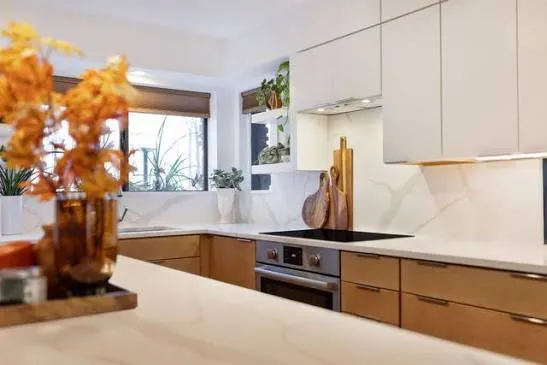
A common mistake people make is sticking to one material the whole way across the cabinets. Mixing metal accents, like a brass jug or iron lantern, with wood pieces like crates or trays creates contrast that keeps the eye interested instead of bored.
Keep the metal tones consistent, so don’t mix gold and silver in the same grouping unless you’re going for an eclectic look on purpose. Tip: use metal as the smaller accent and wood as the larger base pieces for better balance.
Modern kitchens love this contrast, and even farmhouse kitchens benefit from a little metal shine mixed into all that wood. Finally, let’s talk about the simplest option of all: leaving some negative space.
15. Leave Some Negative Space on Purpose
This might be the most underrated tip on this whole list. Not every inch above your cabinets needs something on it. Leaving a little breathing room between groupings actually makes the decor you do have look more intentional and less cluttered.
Aim for filling about 60 to 70 percent of the space, leaving the rest open. Tip: step back and look at the arrangement from across the room, not just up close, to judge if it feels balanced.
Minimalist and modern kitchens benefit most from this restraint, though honestly, every style looks better with a little breathing room.
Tips for Success
- Measure the gap above your cabinets before buying anything, since sizes vary a lot between homes.
- Group decor in odd numbers for a more natural, less staged look.
- Stick to a limited color palette, no more than three main colors across the whole display.
- Use lightweight decor near the front edge so nothing feels unstable or risky above head height.
- Dust and rotate items every few months, since that space collects grease and dust faster than you’d think.
- Step back and view your arrangement from the kitchen entrance, not just standing directly underneath it.
Common Mistakes and How to Avoid Them
Overcrowding the space
: Fill only 60 to 70 percent of the area and leave some open space for balance.
Using items that are too small
: Choose pieces that are at least 8 to 10 inches tall so they read clearly from a distance.
Ignoring the kitchen’s existing color scheme
: Pull two or three colors already in your kitchen and repeat them in your decor choices.
Placing heavy items too close to the edge
: Keep breakable or heavy pieces toward the back, closer to the wall, for safety.
Forgetting about maintenance
: Pick low-dust materials like ceramic or metal if you don’t want to clean up there often.
Similar Variations
- Farmhouse Above Cabinet Decor – focuses on crates, galvanized metal, and warm wood tones.
- Coastal Above Cabinet Decor – uses driftwood, rope, and beachy blues and whites.
- Modern Minimalist Above Cabinet Decor – sticks to one or two sculptural pieces with lots of negative space.
- Boho Above Cabinet Decor – layers plants, textiles, and warm earthy colors like rust and mustard.
- Traditional Above Cabinet Decor – leans on pottery, books, and classic framed art for a formal feel.
Getting this space right really just comes down to balance. Pick a few materials, stick to a simple color story, and don’t overload every inch. That’s really the whole secret behind good 15 above cabinet decor kitchen styling, and once you try it, you’ll wonder why that gap ever looked empty in the first place.
Leave a Reply