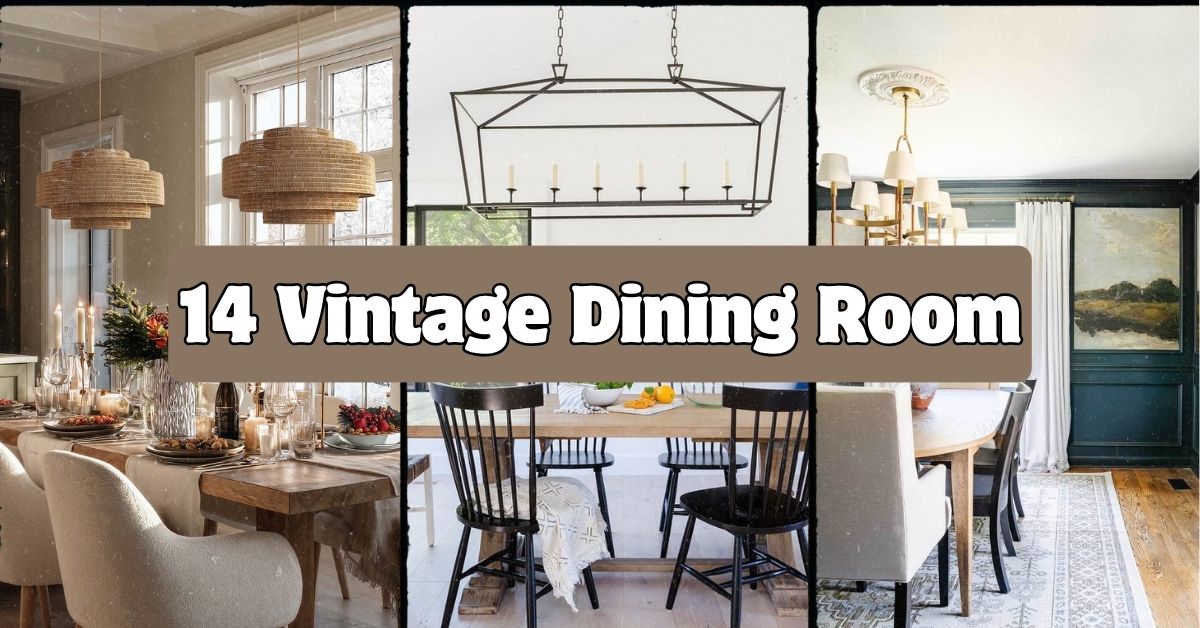
If you’ve been searching for 14 Vintage Dining Room ideas that actually work in real homes (not just magazine spreads), you’re in the right spot. I’ve spent way too many hours studying old dining rooms, flipping through estate sale finds, and testing what makes a space feel warm instead of dated. This guide covers everything you need, no fluff, just the good stuff.
A vintage dining room combines furniture, colors, and decor from past decades (usually 1920s to 1970s) to create a nostalgic, lived-in feel. It mixes antique or antique-style pieces with warm textures and muted tones for a timeless dining space.
Stick around because I’m about to show you 14 specific ways to pull this look together, plus the mistakes that make vintage rooms look more “grandma’s attic” than “curated charm.”
What Makes a Dining Room Feel Truly Vintage
So what actually makes a room “vintage” instead of just old? It’s not about grabbing random antiques and calling it a day. Real vintage style has a story. It usually pulls from one or two specific eras, like mid-century modern or Victorian, and sticks with it.
I think of vintage dining rooms as a mix of history and comfort. You get worn wood tables that have seen a thousand dinners. You get mismatched chairs that somehow work together. You get colors that feel soft, not sharp. The goal isn’t perfection. It’s warmth. Once you get that idea in your head, everything else falls into place.
1. Start With a Solid Wood Farmhouse Table
A big wooden table is the heart of any vintage dining room. Look for oak, pine, or walnut with visible grain and a few dings. Those imperfections tell a story. Avoid anything glossy or perfectly polished. You want texture and warmth, not shine.
Pair it with a simple runner instead of a tablecloth to show off the wood. If you can find a table with turned legs or a trestle base, even better. That’s a classic vintage detail.
My tip: check estate sales or Facebook Marketplace before buying new. Old tables are often cheaper and better made than new “farmhouse style” copies.
This idea works in farmhouse, cottage, and even industrial dining rooms since a wood table anchors almost any style.
Once your table is set, the chairs around it matter just as much.
2. Mix Mismatched Chairs for Character

Here’s a secret: you don’t need matching chairs. In fact, mismatched chairs are one of the easiest ways to nail that vintage look. Grab a few from different eras, maybe some bentwood chairs, a couple of cane-back seats, and one bold accent chair at the head of the table.
The trick is keeping a common thread. Stick to similar wood tones or paint them all the same color for unity. Thrift stores are goldmines for this.
Quick tip: buy odd numbers when mixing styles. Three or five different chairs feel intentional. Four feels random.
This works beautifully in eclectic, bohemian, and traditional spaces where variety already feels at home.
Now let’s talk about what hangs above that table, because lighting changes everything.
3. Hang a Vintage Brass or Glass Chandelier

Lighting sets the whole mood. A brass chandelier with warm bulbs gives instant old-world charm. If brass feels too fancy, look for a simple glass pendant with a slight patina.
Avoid anything too modern or industrial here unless you’re blending styles on purpose. The goal is soft, golden light that makes the room feel cozy at dinner time.
Practical tip: dimmer switches are your best friend. Vintage lighting looks best when it’s warm and low, not bright and clinical.
This idea adapts well across French country, traditional, and glam vintage looks, just swap the finish to match your palette.
Speaking of palettes, let’s break down what colors actually work in a vintage dining room.
Vintage Dining Room Color Palettes
| Style Theme | Wall Color | Accent Color | Trim/Wood Tone |
|---|---|---|---|
| Farmhouse Vintage | Warm white | Sage green | Honey oak |
| Victorian Vintage | Deep burgundy | Gold | Dark walnut |
| Mid-Century Vintage | Mustard yellow | Teal | Walnut |
| Cottage Vintage | Soft blush | Cream | Whitewashed pine |
| French Vintage | Pale blue-gray | Ivory | Antique white |
These combos give you a starting point. Pick one and build your decor around it instead of guessing color by color.
4. Layer in a Faded Persian or Oriental Rug
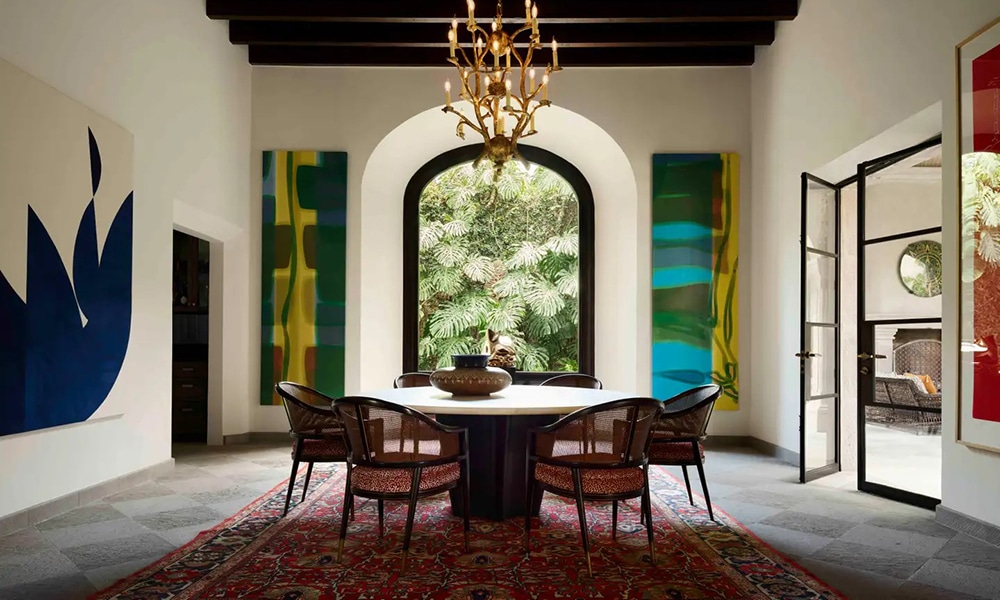
A worn rug under the table adds instant depth. Look for muted reds, blues, or golds with a slightly faded pattern. The more character, the better. New rugs that are trying to look “distressed” often look fake compared to the real thing.
Size matters here. Your rug should extend at least 24 inches beyond the table edge so chairs don’t slide off when pulled out.
Practical tip: layer a smaller vintage rug over a larger jute rug for texture without breaking the bank.
This trick works especially well in bohemian, traditional, and eclectic dining rooms where pattern mixing is already part of the design language.
Now that the floor is covered, let’s think about the walls.
5. Add Wainscoting or Beadboard Paneling
Wainscoting instantly makes a room feel older and more refined. It’s a classic detail from Victorian and colonial homes. Paint it a soft white or cream and pair it with a bold wallpaper above for contrast.
If full wainscoting feels like too much work, beadboard panels are a cheaper, faster option that still gives that layered look.
Tip: keep wainscoting under 36 inches high in smaller rooms so it doesn’t feel like it’s closing in on you.
This idea fits coastal, farmhouse, and traditional homes especially well since paneling has roots in all three styles.
Once your walls have structure, it’s time to bring in pattern.
6. Use Vintage-Inspired Wallpaper

Wallpaper is having a huge comeback, and vintage florals or damask patterns are leading the charge. Choose muted tones instead of bright, saturated colors for that aged look.
If wallpapering the whole room feels risky, try just one accent wall behind a china cabinet or buffet.
Practical tip: peel-and-stick wallpaper has come a long way. You can get the vintage look without the commitment if you’re renting.
This works great in cottage, French country, and grandmillennial styles where pattern is a huge part of the charm.
Speaking of cabinets, let’s talk storage next.
7. Bring in an Antique China Cabinet
Every good vintage dining room needs a place to show off dishes. An antique china cabinet with glass doors does double duty: storage and decor. Look for wood with some age to it, like cherry or mahogany.
Fill it with mismatched china, vintage glassware, or even old cookbooks for texture.
Tip: don’t overstuff it. Leave some breathing room so each piece gets noticed instead of blending into clutter.
This idea works in traditional, French country, and even grandmillennial spaces where display pieces are half the fun.
Now let’s move to something smaller but just as impactful: table settings.
8. Set the Table With Mismatched Vintage China

Skip the matching dish sets. Vintage dining rooms shine when you mix patterns and eras on the table. Pair floral plates with plain glassware, or mix gold-rimmed cups with simple stoneware bowls.
This is one of the cheapest ways to nail the look since thrift stores are full of orphaned vintage plates for a few dollars each.
Practical tip: stick to a color family (like blues or creams) even if patterns vary, so the table doesn’t feel chaotic.
This idea works across almost every style, from cottagecore to eclectic maximalism.
Once your table is set, let’s think bigger with wall art.
9. Hang Gallery-Style Vintage Art or Portraits
Old oil paintings, vintage botanical prints, or gilded mirrors on the wall add instant history to a room. Go for gold or dark wood frames in different sizes for a gallery wall that feels collected over time, not bought in one trip.
Tip: hang the center of your art grouping at eye level, about 57 inches from the floor, for the most balanced look.
This works beautifully in traditional, French, and eclectic dining rooms where layered walls are part of the charm.
Next, let’s talk about a detail people often skip: the buffet table.
10. Style a Vintage Buffet or Sideboard

A buffet or sideboard gives you extra storage and a spot for decor like a vintage lamp, stack of books, or a small mirror. Look for pieces with brass hardware and warm wood tones.
Use the top surface for a rotating display, maybe flowers one week, candles the next.
Practical tip: measure your wall space first. Buffets look best with a few inches of breathing room on each side, not wall to wall.
This adapts easily to mid-century, traditional, and transitional dining rooms depending on the buffet’s shape and hardware style.
Now, let’s slow down and talk textiles.
11. Add Vintage Linen Napkins and Table Runners

Cloth napkins with a little wear and a faded pattern add so much charm to a table setting. Look for linen or cotton in soft florals, stripes, or simple monograms.
These are easy to find secondhand and easy to wash, so they’re practical too.
Tip: mix two or three napkin patterns per table setting for a curated, not-too-matchy look.
This idea works in cottage, French country, and farmhouse dining rooms where soft textures are already part of the vibe.
Budget Breakdown for a Vintage Dining Room Refresh
| Budget Tier | What You Can Afford | Estimated Cost |
|---|---|---|
| Low ($50-150) | Thrifted china, linen napkins, small art pieces | $50-150 |
| Mid ($300-700) | Rug, wallpaper accent wall, mismatched chairs | $300-700 |
| High ($1000+) | Antique table, chandelier, china cabinet | $1000-3000+ |
Knowing your budget tier helps you prioritize which pieces matter most for your space.
12. Choose Curtains With Soft, Aged Fabric
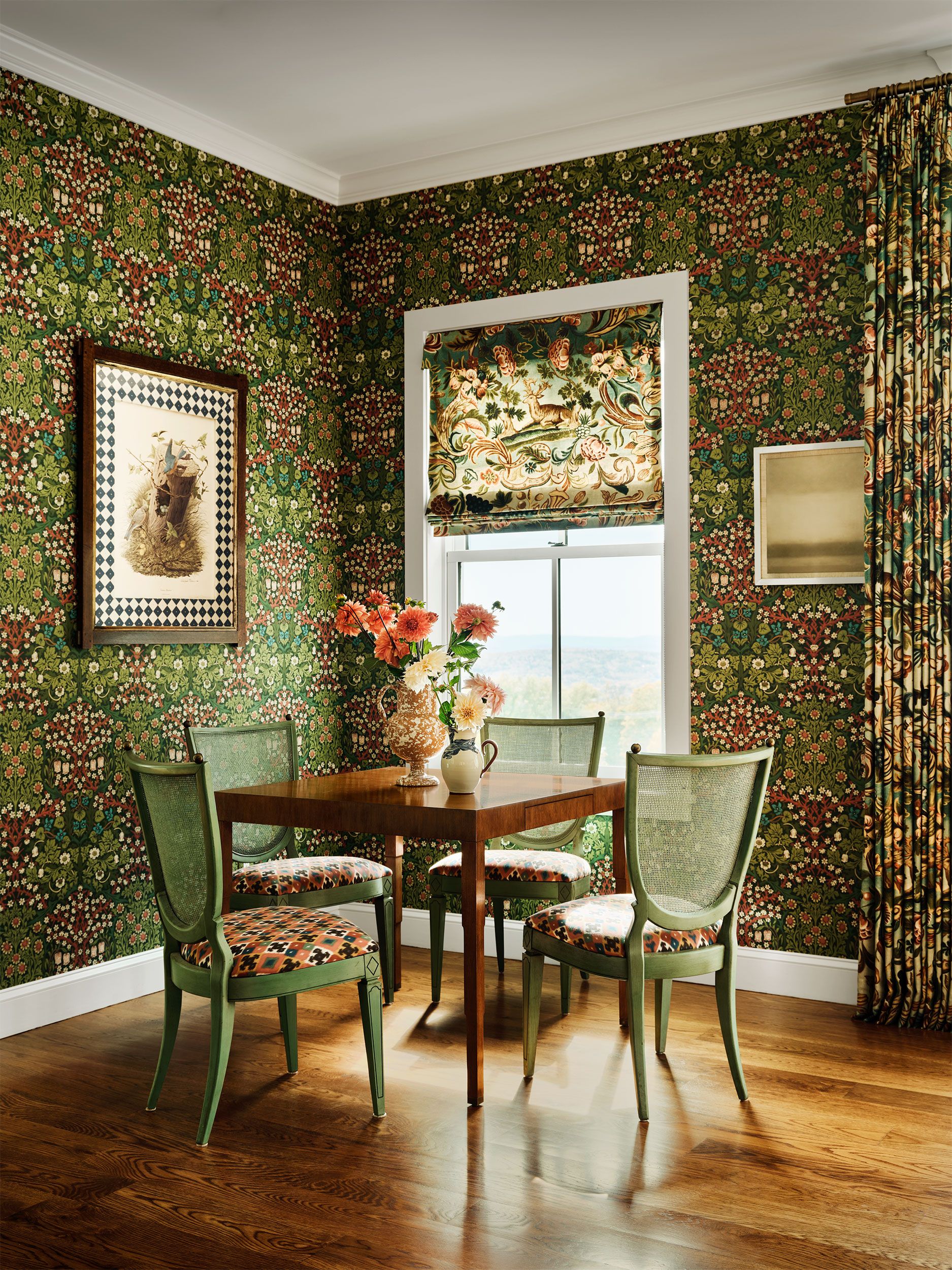
Heavy drapes in linen or cotton with a slightly faded look finish off a vintage dining room. Avoid anything shiny or synthetic. Stick to soft neutrals or muted florals that match your wall color.
Practical tip: hang curtain rods a few inches above the window frame to make ceilings feel taller, an old trick that still works today.
This idea fits cottage, traditional, and French country homes especially well since fabric texture matters a lot in those styles.
13. Use Candlelight Instead of Overhead Light Alone

Candles on the table or in wall sconces bring instant old-world charm. Beeswax or taper candles in vintage brass holders look especially good.
Tip: mix candle heights for visual interest, tall tapers with shorter votives creates depth without extra decor.
This works in almost every vintage sub-style, from romantic French country to rustic farmhouse.
14. Display Fresh or Dried Flowers in Vintage Vases

A simple bouquet in an antique glass or ceramic vase finishes the table beautifully. Dried flowers like eucalyptus or wheat stems also work if you want something low-maintenance.
Practical tip: use small bud vases with single stems down the center of the table instead of one big arrangement for an easy, elegant look.
This idea works everywhere, honestly. Flowers are the easiest, cheapest way to soften any dining room instantly.
Tips for Success
- Start with one anchor piece, like the table or chandelier, and build the rest of the room around it instead of buying everything at once.
- Shop secondhand first. Estate sales, thrift stores, and online marketplaces almost always beat new “vintage-style” furniture on price and quality.
- Stick to a limited color palette (three colors max) so mismatched pieces still feel cohesive.
- Test paint colors on the wall before committing. Vintage colors often look different under artificial light versus daylight.
- Don’t rush the room. The best vintage spaces are collected over months or years, not bought in one weekend.
- Balance old with a few newer pieces so the room doesn’t feel like a museum.
- Keep functionality in mind. Old chairs might need new cushions or a quick repair before daily use.
Common Mistakes and How to Avoid Them
Matching everything perfectly
: Vintage rooms should feel collected, not coordinated like a showroom set. Mix eras and finishes on purpose.
Ignoring scale
: A huge chandelier in a small room overwhelms the space. Measure your ceiling height and table size before buying lighting.
Skipping lighting warmth
: Cool white bulbs kill the vintage mood instantly. Stick to warm bulbs, around 2700K, for that golden glow.
Overcrowding the table
: Too many centerpieces or decor items make the table feel cluttered. Leave room for actual plates and glasses.
Forgetting comfort
: Old chairs can be beautiful but uncomfortable. Add cushions or reupholster seats so guests actually want to sit through dinner.
Choosing trendy over timeless
: Chasing whatever’s popular on social media instead of picking pieces you genuinely love leads to a room that feels dated in a few years, ironically.
Similar Variations
- Grandmillennial Dining Room: A modern twist on vintage that mixes traditional patterns with playful, younger colors.
- French Country Dining Room: Focuses on rustic wood, toile patterns, and soft blues and creams.
- Mid-Century Vintage Dining Room: Leans into 1950s and 60s shapes, teak wood, and bold geometric accents.
- Cottagecore Dining Room: A softer, romantic take with florals, lace, and pastel tones.
- Industrial Vintage Dining Room: Combines old factory-style lighting and metal accents with worn wood furniture.
- Victorian Revival Dining Room: Rich, dark colors paired with ornate furniture and gilded details for a more formal vintage feel.
Pulling together a vintage dining room isn’t about buying a matching set from a catalog. It’s about collecting pieces that feel warm, worn, and full of personality, then arranging them so they tell one cohesive story. Whether you start with a solid wood table or a single antique chandelier, every piece you add brings you closer to that lived-in charm people love. If you keep coming back to these 14 Vintage Dining Room ideas as your guide, you’ll end up with a space that feels timeless instead of trendy.
Leave a Reply