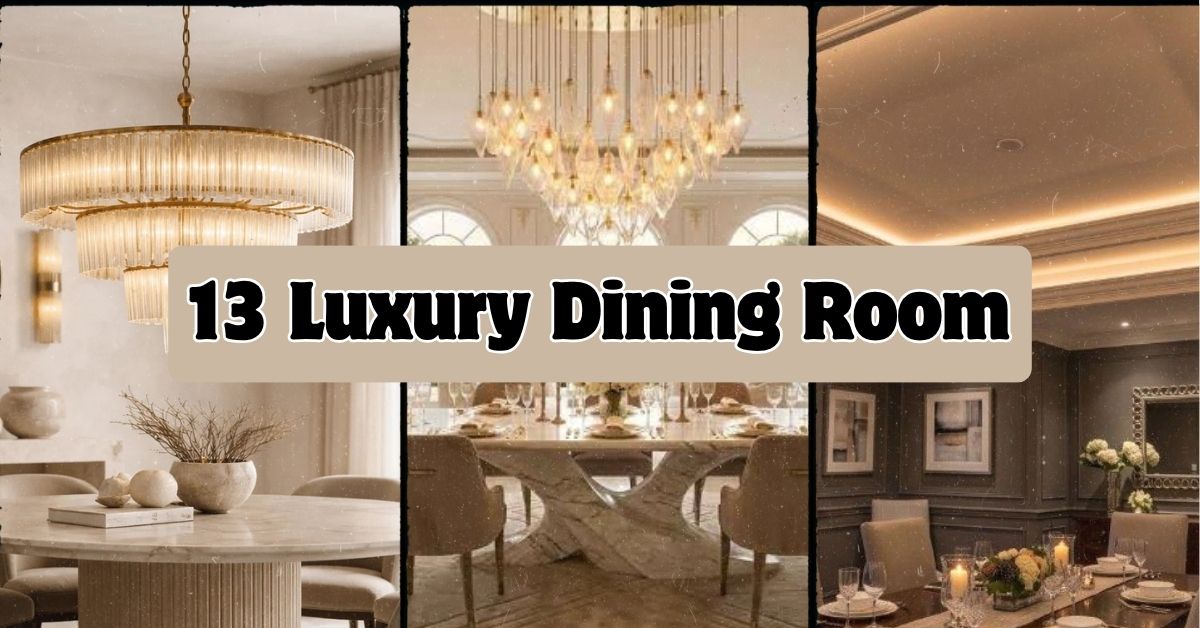
I’ve spent years digging through design magazines and touring model homes, and I can tell you this guide on 13 luxury dining room ideas is the most complete roundup you’ll find on the topic today. I’m not just throwing pretty pictures at you. I’m giving you the actual “why” behind each choice so you can copy it in your own home without guessing.
A luxury dining room is a formal or semi-formal eating space designed with high-end materials, intentional lighting, and curated furniture to create an upscale, hotel-like dining experience at home. It typically combines rich textures, statement lighting, and a cohesive color palette.
Stick around, because I’m about to walk you through the exact elements that separate a “nice” dining room from one that makes guests stop mid-sentence when they walk in.
What Actually Makes a Dining Room Feel “Luxury”
Okay, so let’s get real for a second. Luxury doesn’t mean expensive for the sake of expensive. It means intentional. Every piece in the room earns its spot. I think of it like a good outfit. You don’t need ten accessories. You need the right three.
A luxury dining room usually has a strong focal point, like a chandelier or a bold piece of art. It leans on natural materials like wood, stone, and metal instead of plastic or laminate. And it always has layered lighting, not just one bulb doing all the work.
Once you get that mindset, the ideas below will make a lot more sense.
1. Anchor the Room with an Oversized Statement Chandelier
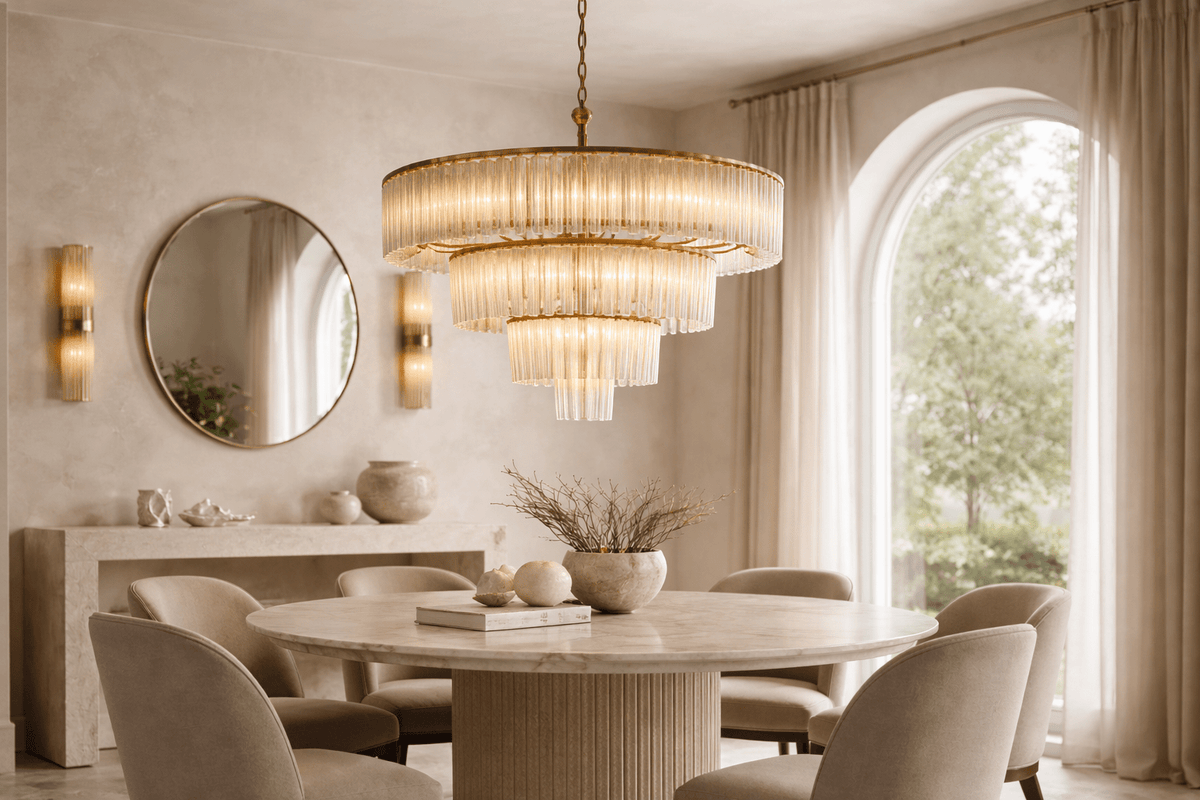
Nothing says “luxury dining room” faster than a chandelier that actually fills the space above your table. A lot of people go too small here. The rule of thumb is your chandelier width should be about half to two-thirds the width of your table.
Go for brass, aged bronze, or smoked glass finishes if you want that upscale hotel vibe. Crystal still works, but modern crystal fixtures look less “grandma” and more “boutique hotel lobby.”
Practical tip: Hang the chandelier so its bottom sits about 30 to 34 inches above the table surface.
This works in modern homes with a sleek linear fixture, or in traditional homes with a classic tiered crystal piece. Once your lighting anchor is set, the next step is making sure the table underneath deserves the attention.
2. Choose a Show-Stopping Dining Table Material
Your table is the heart of the room, so don’t skimp here. Solid wood with a rich stain, marble tops, or even a live-edge slab instantly reads as high-end. Avoid anything that looks like it came flat-packed in a box.
Marble tables scream luxury but need more care. Wood is more forgiving and warms up a room. Either way, pick a table that’s slightly larger than you think you need. A cramped table kills the luxury feel instantly.
Practical tip: Leave at least 36 inches of clearance around the table for walking room.
Coastal homes look great with light oak or whitewashed wood, while modern spaces love matte black metal legs with stone tops. Now that your table is sorted, let’s talk about what surrounds it.
3. Invest in Upholstered, High-Back Dining Chairs

Hard wooden chairs might look nice, but they don’t feel luxurious after ten minutes of dinner conversation. Upholstered chairs in velvet, boucle, or leather instantly bump up the comfort and the look.
High-back chairs at the head of the table create a subtle hierarchy, kind of like a mini throne moment. It’s a small trick that designers use to add visual interest without extra clutter.
Practical tip: Mix dining chairs with two accent chairs at the ends for contrast.
Traditional dining rooms love tufted leather, while modern spaces lean toward boucle in neutral tones. Coastal homes often go with woven rattan for texture. Once your seating is comfortable and stylish, the next layer is what goes on the floor beneath it all.
4. Layer a Plush Area Rug Under the Table

A rug grounds the whole room and adds warmth, especially over hardwood or tile floors. For a luxury look, go bigger than you think. The rug should extend at least 24 inches beyond the table edge on all sides so chairs stay on the rug even when pulled out.
Wool and silk blends feel incredible underfoot and have a natural sheen that reads as expensive. Avoid thin, flat rugs. They tend to look cheap no matter the pattern.
Practical tip: Choose a low pile rug for dining rooms so chairs slide easily without snagging.
Rug Size Guide by Table Shape
| Table Shape | Table Size | Recommended Rug Size |
|---|---|---|
| Rectangular | 6-seat table | 8 x 10 ft |
| Rectangular | 8-seat table | 9 x 12 ft |
| Round | 4-seat table | 8 x 8 ft |
| Square | 6-seat table | 9 x 9 ft |
With your rug picked out, it’s time to think about what’s happening on the walls around you.
5. Add a Textured Accent Wall Behind the Table
A plain painted wall can feel flat in a formal dining space. Textured wallpaper, wood paneling, or even a limewash finish adds depth without needing extra furniture. This is one of the easiest ways to make a small dining room feel expensive.
Dark, moody colors like deep green or navy paired with wood paneling create a cozy, upscale feel. Lighter textured plaster walls work well in airy, coastal-style rooms.
Practical tip: Stick the accent wall behind the table, not behind the sideboard, so it becomes the visual backdrop for meals.
This idea flexes easily. Modern homes might do a slatted wood panel wall, while traditional homes go for classic wainscoting painted in a rich jewel tone. Speaking of color, let’s talk about how to choose the right palette for the whole room.
6. Stick to a Rich, Cohesive Color Palette
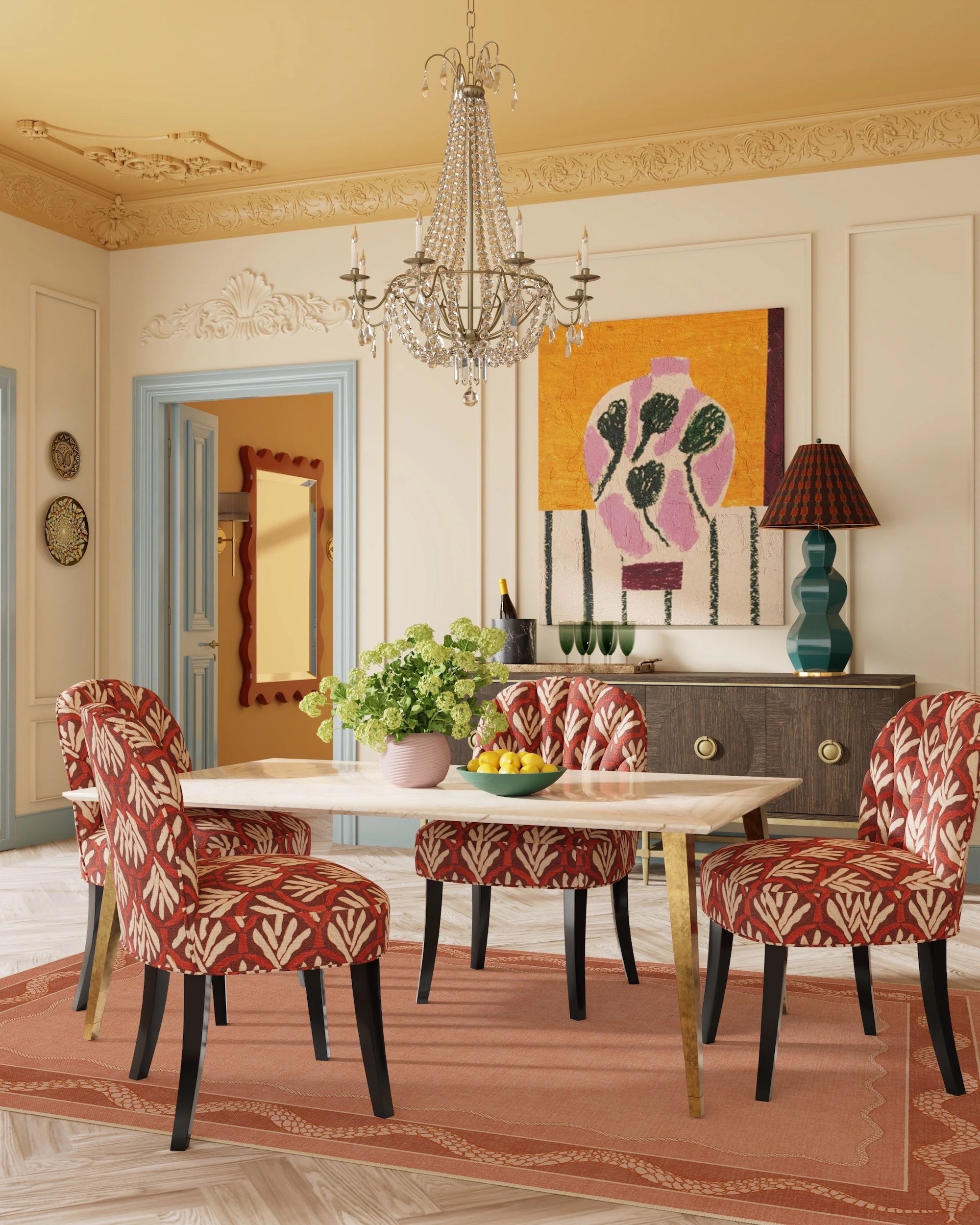
Luxury spaces almost never use more than three or four main colors. Too many competing tones make a room feel busy instead of upscale. Think deep, saturated colors paired with warm metallics.
Popular Luxury Dining Room Color Palettes
| Palette Name | Wall Color | Accent Color | Metal Finish |
|---|---|---|---|
| Moody Emerald | Deep Green | Cream | Brass |
| Warm Neutral | Greige | Terracotta | Bronze |
| Classic Navy | Navy Blue | Ivory | Gold |
| Modern Charcoal | Charcoal Gray | Blush | Matte Black |
Practical tip: Pick your metal finish first, then build your color scheme around it so everything feels intentional.
Coastal homes tend to swap dark tones for soft blues and sandy neutrals but keep the same three-color rule. Once your palette is locked in, it’s time to think about the finishing touches on your table.
7. Set the Table with Layered Tablescape Details

An empty table looks unfinished, even in a gorgeous room. Layering a table runner, cloth napkins, and a low centerpiece adds that “styled” look you see in design magazines.
Keep centerpieces low so they don’t block conversation across the table. Candles, a shallow bowl of fruit, or a small vase of greenery all work well.
Practical tip: Use a table runner instead of a full tablecloth for a more modern, layered look.
Traditional homes love white linen with silver accents. Modern spaces go for matte black candle holders and minimal greenery. With the table styled, let’s move up to the ceiling for one more layer of drama.
8. Add Architectural Interest with Ceiling Details
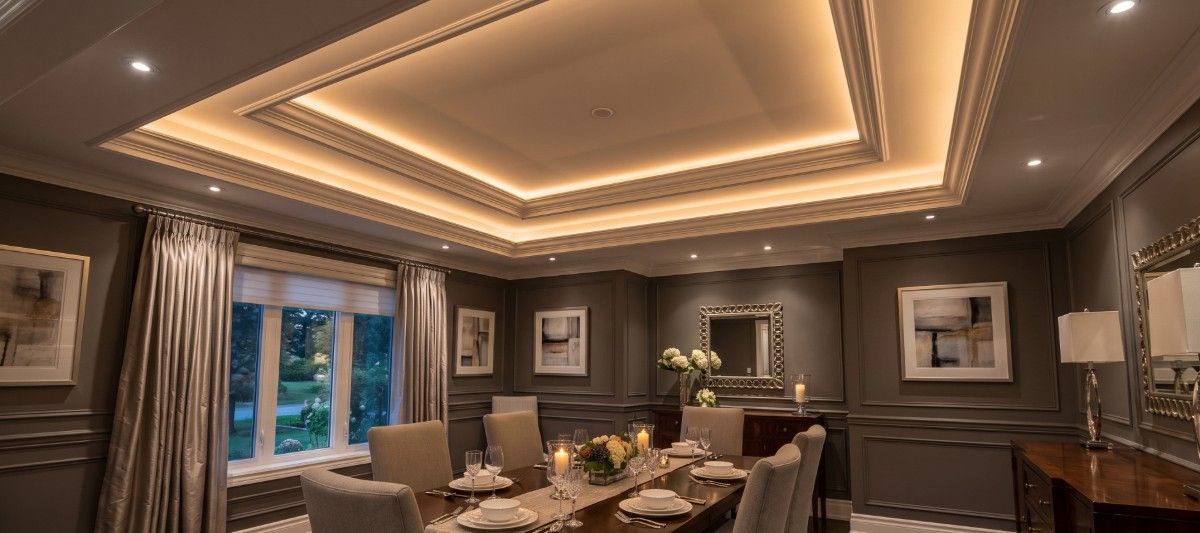
A plain flat ceiling is a missed opportunity in a formal dining room. Coffered ceilings, exposed beams, or a simple painted ceiling in a deep color add unexpected drama when you look up.
This doesn’t need to be a huge renovation. Even applying peel-and-stick beams or painting the ceiling a shade darker than your walls creates depth.
Practical tip: Paint the ceiling in a matte finish to avoid glare from your chandelier.
Traditional homes often add real wood beams, while modern homes prefer a single bold paint color overhead. Now let’s talk about a feature that a lot of people skip but shouldn’t: the sideboard.
9. Bring in a Statement Sideboard or Buffet

A sideboard does double duty. It gives you storage for dishware and linens, and it acts as a display surface for decor or serving food during dinner parties. Skipping this piece is one of the biggest reasons dining rooms feel unfinished.
Go for a piece with interesting hardware or a unique material, like a fluted wood front or a stone top. This becomes a secondary focal point in the room.
Practical tip: Place a large mirror or art piece above the sideboard to balance the height of the space.
Coastal homes like rattan-front sideboards, while modern spaces prefer sleek walnut with brass pulls. Once you’ve got storage sorted, let’s add some greenery to soften the room.
10. Bring the Room to Life with Statement Greenery
A dining room full of hard surfaces, wood, stone, glass, needs something soft and alive. A large potted plant in the corner or a trailing vine on the sideboard breaks up all that rigidity.
Fiddle leaf figs, olive trees, and snake plants are popular because they’re low maintenance and look sculptural. Avoid tiny plants that get lost in a big room.
Practical tip: Choose a planter that matches your metal finish for a cohesive look.
Traditional homes love a classic potted palm, while modern spaces go minimal with a single architectural cactus. Greenery softens the room, but art on the walls adds personality.
11. Hang Gallery-Worthy Art at the Right Height
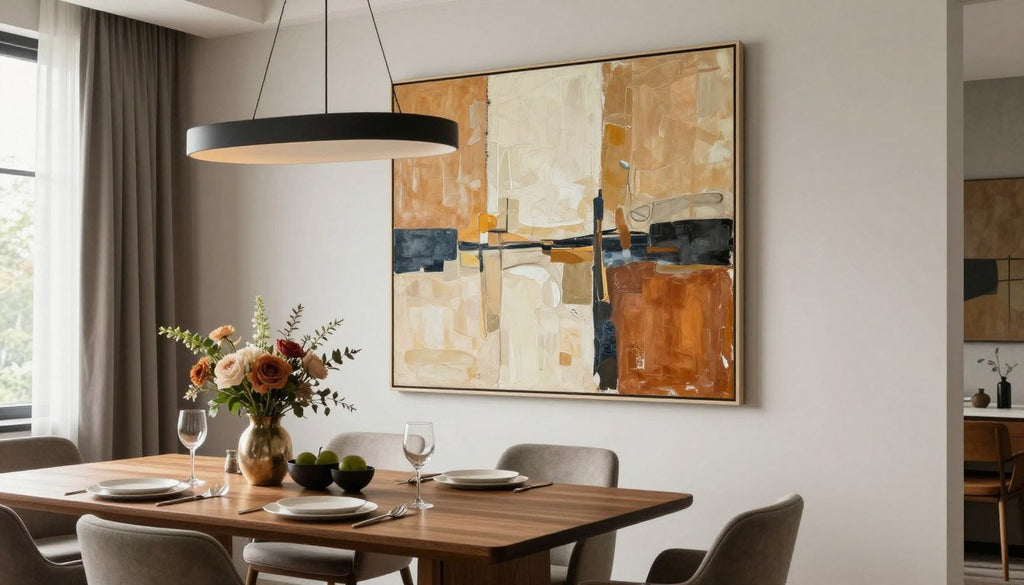
Bare walls are a luxury dining room’s biggest enemy. One large piece of art, or a small curated gallery wall, gives the room a finished, gallery-like feel.
The center of your art should sit around 57 to 60 inches from the floor, which is standard museum height. This keeps everything feeling proportional no matter your ceiling height.
Practical tip: Choose art with colors that echo your rug or chair fabric to tie the room together.
Modern homes lean toward abstract prints, while traditional spaces favor framed still life or landscape pieces. Once your walls are dressed, don’t forget the windows.
12. Dress Windows with Floor-to-Ceiling Drapery
Short curtains or bare windows can make even a beautiful dining room feel unfinished. Floor-length drapery in a heavier fabric, like linen or velvet, adds softness and makes ceilings look taller.
Hang your curtain rod as close to the ceiling as possible, even if it’s above the window frame. This trick alone makes a room feel more expensive without changing anything else.
Practical tip: Choose drapery about two inches off the floor so it skims without dragging.
Coastal homes use light linen in white or sand tones, while traditional rooms often go for heavier jacquard patterns. With windows dressed, the last touch is adding layered lighting beyond the chandelier.
13. Layer in Wall Sconces or a Buffet Lamp

A single chandelier can leave dark corners in a larger dining room. Adding wall sconces near the sideboard or a small lamp on the buffet creates warm, layered light that feels more like a restaurant than a kitchen.
Dimmable sconces let you shift the mood from bright family dinners to moody date-night lighting.
Practical tip: Put your chandelier and sconces on separate dimmer switches so you can control the mood independently.
Modern homes like sleek brass sconces with clean lines, while traditional rooms favor fabric-shaded sconces for a softer glow. With all thirteen ideas in place, your dining room should feel layered, intentional, and genuinely upscale.
Tips for Success
- Start with lighting and the rug before buying furniture, since these set the scale for everything else.
- Don’t match every metal finish exactly. Mixing brass with matte black feels more curated than one uniform metal.
- Buy the biggest rug and chandelier your budget allows. Undersized pieces are the most common budget mistake.
- Keep a “hero piece” in mind, whether it’s the chandelier or the table, and let everything else support it.
- Test paint colors in the actual room at night, since dining rooms are used more in evening light.
- Add at least one vintage or antique piece, even a small one, to keep the room from feeling too showroom-perfect.
Common Mistakes and How to Avoid Them
Undersized Lighting
: Fixing this means measuring your table width and choosing a chandelier that’s at least half that width, not just something that “looks about right.”
Too Many Colors
: Stick to three or four core colors max, and repeat them in fabric, walls, and accessories so the room feels pulled together.
Skipping the Rug
: An area rug isn’t optional in a luxury dining room. Choose one large enough that chairs stay on it even when pulled out.
Ignoring Ceiling Height
: Hang curtains and art higher than feels natural. It tricks the eye into seeing a taller, grander room.
Overcrowding the Table
: Leave breathing room on the table itself. A cluttered centerpiece competes with the food and the conversation.
Buying Furniture Before Measuring the Room
: Always tape out furniture dimensions on the floor first, especially for tables and sideboards, since even a few extra inches can cramp the flow.
Similar Variations
- Modern Glam Dining Room – Focuses on mirrored surfaces, metallics, and bold geometric patterns for a bolder, flashier take on luxury.
- Traditional Formal Dining Room – Leans on classic wood furniture, tufted upholstery, and symmetrical layouts for a timeless feel.
- Coastal Luxury Dining Room – Swaps dark tones for sandy neutrals, linen fabrics, and natural textures like rattan and driftwood.
- Industrial Luxury Dining Room – Mixes raw materials like exposed brick and metal with softer luxury touches like velvet chairs.
- Minimalist Luxury Dining Room – Strips things down to a few high-quality pieces, letting materials and craftsmanship speak for themselves.
- Art Deco Dining Room – Uses bold geometric patterns, lacquered furniture, and rich jewel tones for a glamorous, vintage-inspired look.
Building a dining room like this isn’t about spending a fortune on every single item. It’s about choosing fewer, better pieces and layering them with intention, from the rug under your feet to the light fixture above your head. If you take even four or five of these ideas and apply them well, your space will start feeling like one of those 13 luxury dining room examples people pin and save for inspiration.
Leave a Reply