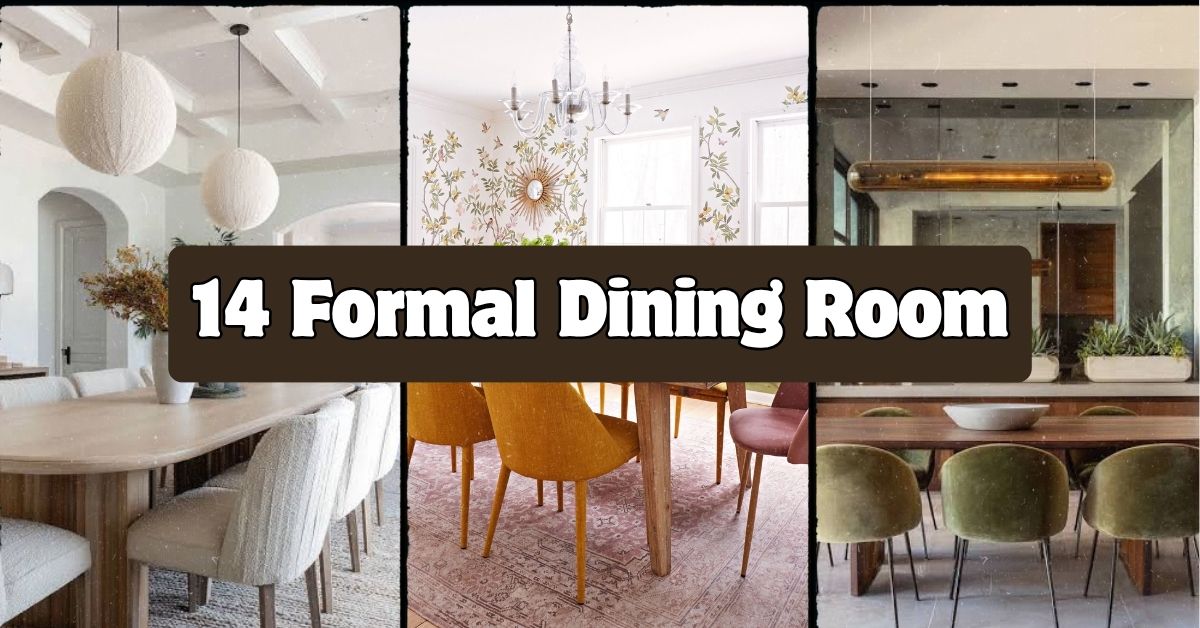
If you’ve been searching for real answers on how to pull off a 14 Formal Dining Room look, you’re in the right spot. I’ve dug through what actually works (and what falls flat) so you don’t have to waste time guessing.
A formal dining room is a dedicated space designed for structured, sit-down meals, typically featuring a large table, matching chairs, a chandelier, and coordinated decor that signals elegance and intention rather than casual everyday eating.
Stick around, because I’m about to show you 14 ways to make your dining room feel like something out of a magazine, without hiring a designer.
What Makes a Dining Room “Formal” Anyway?
I used to think formal just meant fancy and stiff. Turns out it’s more about balance and intention. A formal dining room has a clear focal point, usually the table, and everything else supports it. Think symmetry, matching furniture, and lighting that sets a mood instead of just lighting up the room. It’s the space you use for holidays, dinner parties, or that one night a week you actually sit down as a family without phones. It doesn’t have to feel cold or untouchable. Done right, it feels special but still warm enough that people want to linger after dessert.
1. Anchor the Room With a Statement Chandelier
Nothing says formal faster than a great light fixture hanging over the table. I’m talking about something with presence, crystal, brass, or even a modern sculptural piece if that’s more your speed. The chandelier becomes the first thing guests notice when they walk in.
Practical tip: hang it so the bottom sits about 30 to 36 inches above the tabletop. Too high and it loses impact. Too low and people bump their heads.
This idea flexes easily. Traditional homes love crystal drops, while modern spaces might go for a black metal geometric design. Coastal homes can even do a woven rattan pendant for a softer formal feel.
Once your lighting is set, the next thing to think about is what’s underneath it.
2. Choose a Table That Fits the Room, Not Just the Chairs
A lot of people buy the chairs first and the table becomes an afterthought. Flip that. The table sets the tone. Wood tables with turned legs feel classic. Glass tops feel sleek and modern. Marble or stone tops scream luxury but need more upkeep.
Actionable tip: leave at least 36 inches of clearance around the table so chairs can pull out and people can walk by without squeezing.
For traditional rooms, go with dark wood and detailed legs. Modern spaces do better with clean lines and mixed materials like wood and metal. Coastal or farmhouse styles can use lighter woods with a distressed finish.
Once the table is picked, you’ll want seating that matches its energy without overpowering it.
3. Pick Chairs With Consistent Lines but Some Personality

Matching chairs used to be the rule. Now, a lot of designers mix upholstered head chairs with simpler side chairs. It keeps things formal but not boring.
Tip: stick to one fabric family (like all velvets or all linens) even if the chair styles differ slightly. That keeps the room from feeling mismatched.
Traditional rooms often use wingback or tufted chairs. Modern rooms lean toward chairs with slim metal legs. Transitional spaces blend both, which honestly gives you the most flexibility long term.
Now that your seating is sorted, let’s talk about what goes on the walls around all this furniture.
4. Layer in Moody, Rich Wall Colors
Formal dining rooms can handle darker, bolder colors better than most rooms in the house. Deep navy, hunter green, or charcoal gray make the space feel intimate and grown up, especially at night with the lights dimmed.
Tip: paint the ceiling a shade lighter than the walls to keep the room from feeling like a box.
Modern homes might do a matte charcoal with white trim for contrast. Traditional spaces often pair navy or green with white wainscoting. Coastal dining rooms can lighten things up with a soft sage instead of going full dark.
Color Palette Combinations for Formal Dining Rooms
| Style | Wall Color | Trim/Accent | Metal Finish |
|---|---|---|---|
| Traditional | Hunter Green | Cream | Brass |
| Modern | Charcoal Gray | White | Matte Black |
| Coastal | Soft Sage | White | Brushed Nickel |
| Transitional | Deep Navy | Warm White | Antique Gold |
| Moody Luxe | Black | Dark Walnut Trim | Aged Brass |
Once your walls have personality, the floor needs to hold its own too.
5. Add a Rug That Grounds the Whole Table Setup

A rug under the dining table pulls the whole room together. It also softens footsteps and adds warmth, especially if you’ve got hardwood or tile floors.
Tip: your rug should extend at least 24 inches beyond the table’s edge on all sides so chairs stay on the rug even when pulled out.
Traditional rooms often go with a Persian or Oriental pattern. Modern spaces prefer a simple geometric or solid wool rug. Coastal homes can use a jute or sisal rug for texture without pattern overload.
With the floor handled, let’s move up to the windows.
6. Dress Windows With Full-Length Drapes
Short curtains or bare windows can make a formal room feel unfinished. Floor-length drapes add height and drama, and they frame the whole room nicely, especially during dinner parties when the lights are low.
Tip: hang curtain rods 4 to 6 inches above the window frame and let the panels just kiss the floor or puddle slightly for a luxe look.
Traditional homes love heavy velvet or silk drapes. Modern rooms do better with simple linen panels in a neutral tone. Coastal dining rooms might skip heavy fabric altogether and use light linen sheers instead.
Now that the windows are dressed, it’s time to think about what sits on your table when it’s not set for a meal.
7. Style the Table With a Simple, Repeatable Centerpiece

An empty table looks unfinished, but an overdone one feels cluttered. I like a centerpiece that works daily and can be dressed up for events. Think a low bowl of greenery, a runner with candlesticks, or a simple vase arrangement.
Tip: keep centerpieces under 14 inches tall so they don’t block sightlines across the table during conversation.
Traditional rooms often use silver candelabras. Modern spaces prefer a single sculptural object or minimalist vase. Coastal rooms can use a bowl of shells or a driftwood centerpiece for texture.
Once your table has a personality of its own, the walls around it deserve some attention too.
8. Hang Art That Matches the Room’s Formality
A formal dining room needs art that feels intentional, not like leftover pieces from other rooms. Large-scale art, a gallery wall of framed prints, or even a single oversized mirror can do the job.
Tip: hang art so the center sits at eye level, about 57 to 60 inches from the floor, regardless of ceiling height.
Traditional dining rooms often go with classic oil paintings or gilded mirrors. Modern spaces prefer abstract art or black-and-white photography. Transitional rooms mix both for a collected-over-time feel.
Speaking of mirrors, they deserve their own spotlight next.
9. Use a Large Mirror to Bounce Light and Add Depth
Formal dining rooms often get less natural light than other rooms, especially if they’re tucked away from windows. A big mirror on one wall reflects light and makes the space feel larger without any construction.
Tip: place the mirror across from a window or light source, not directly beside it, so it reflects the most light into the room.
Traditional homes love an ornate gold-framed mirror. Modern rooms do well with a simple round or arched mirror with a thin frame. Coastal spaces might use a weathered wood frame for texture.
Now let’s think about what holds your dishes and serving pieces.
10. Add a Buffet or Sideboard for Function and Style
A sideboard isn’t just storage, it’s a display opportunity. It holds your china, extra linens, and serving dishes while giving you a spot to style with lamps, trays, or art above it.
Tip: leave at least 42 inches of walking space between the sideboard and the dining table so traffic flow doesn’t feel cramped.
Traditional rooms use wood buffets with hardware detailing. Modern spaces go for flat-front sideboards with clean handles. Coastal rooms often choose whitewashed or rattan-front cabinets.
Furniture Size Guide for a 12-Seat Formal Dining Room
| Item | Recommended Size | Notes |
|---|---|---|
| Table Length | 96-120 inches | Allows 24 inches per seat |
| Sideboard | 60-72 inches wide | Leave 42 inches clearance in front |
| Area Rug | Table size + 4 feet | Prevents chairs from sliding off |
| Chandelier Width | 1/2 to 2/3 of table width | Keeps proportions balanced |
| Room Size Minimum | 14 x 16 feet | Fits table, chairs, and walking space |
With storage sorted, let’s talk about the small details that make the room feel finished.
11. Layer Textures With Table Linens and Napkins

A formal table needs texture, not just color. Linen tablecloths, cloth napkins, and textured runners add depth that a bare wood table can’t give on its own.
Tip: choose napkins in a contrasting texture to your tablecloth, like a nubby linen napkin against a smooth cotton cloth, so the table doesn’t look flat.
Traditional tables often use white linen with lace trim. Modern rooms prefer solid color linen in neutral tones. Coastal spaces might use striped cotton napkins for a relaxed but still put-together look.
Once the linens are set, your dishware and glassware take center stage.
12. Invest in Cohesive Dishware and Glassware Sets

Mismatched plates might work for casual brunches, but formal dining calls for a cohesive set. This doesn’t mean boring. Mixing a patterned charger with a solid plate still counts as cohesive if the colors align.
Tip: buy one “everyday formal” set and one “special occasion” set so you’re not constantly hand-washing your best china.
Traditional homes love gold-rimmed china. Modern spaces prefer matte black or all-white dishware. Coastal dining rooms might choose blue and white patterns for a classic but breezy feel.
Now that the table setting is handled, let’s zoom out to the ceiling one more time.
13. Add Millwork or Wainscoting for Architectural Interest
Plain walls can feel unfinished in a formal dining room. Wainscoting, picture frame molding, or even a coffered ceiling adds a custom, high-end feel without needing a full renovation.
Tip: paint wainscoting a shade lighter or darker than the wall above it to create subtle contrast without looking busy.
Traditional homes go all in with raised panel wainscoting. Modern spaces might use simple flat panel molding for clean lines. Transitional rooms often paint the wainscoting and wall the same color for a monochromatic, quiet look.
Last but not least, let’s talk about tying the whole room together with one final layer.
14. Bring in Greenery or Florals for a Living Touch
A formal dining room can feel stiff without something alive in it. Fresh flowers, a potted plant in the corner, or even a small tree by the window softens all the hard lines from furniture and molding.
Tip: choose low-maintenance plants like a snake plant or ZZ plant for corners that don’t get much natural light.
Traditional rooms often use fresh floral arrangements that change seasonally. Modern spaces prefer a single sculptural plant like a fiddle leaf fig. Coastal rooms might add a potted palm for a relaxed, breezy finish.
Tips for Success
- Start with the table size and work outward. Everything else in the room should scale to it.
- Test your chandelier height with painter’s tape on the wall before committing to a mounting spot.
- Keep a rotation of two tablecloth colors so the room feels fresh without buying new decor constantly.
- Use dimmer switches on your dining room lighting so the mood can shift from bright family dinners to soft dinner parties.
- Don’t skip the smell. A lightly scented candle on the sideboard (not the table) adds to the formal atmosphere without overwhelming food smells.
- Keep extra chairs nearby but not crowding the room, so you can expand seating without a scramble.
Common Mistakes and How to Avoid Them
Buying a chandelier too small for the table
: Measure your table width first and pick a fixture that’s roughly half to two thirds that size so it doesn’t look lost above the table.
Skipping the rug because “it’s just a dining room”
: A rug adds warmth and softens the whole look. Choose a low-pile option so chairs still glide easily.
Overcrowding the table with decor
: Keep centerpieces low and simple so there’s still room for actual plates and glasses during meals.
Ignoring the room’s natural light
: Add a mirror or lighter wall color if the room feels dark, instead of just adding more overhead lighting.
Choosing chairs before measuring walking space
: Always leave at least 36 inches around the table for movement, even if that means a slightly smaller table.
Matching everything too perfectly
: A little variation, like mixed metals or a patterned rug against solid walls, keeps the room from feeling like a showroom instead of a home.
Similar Variations
- Transitional Dining Room – blends traditional furniture shapes with modern color palettes for a softer formal look.
- Modern Farmhouse Dining Room – combines formal table setups with rustic wood tones and simple lighting.
- Coastal Formal Dining Room – keeps the structure of a formal room but lightens it up with airy colors and natural textures.
- Moody Luxe Dining Room – leans into dark colors, brass accents, and dramatic lighting for a nighttime dinner party feel.
- Minimalist Formal Dining Room – strips down the decor but keeps the structure and symmetry that makes a room feel formal.
If you take nothing else from this, remember that a formal dining room is really about balance. Good lighting, a table that fits the space, and a few intentional details go further than trying to fill every corner with decor. Whether you go bold with dark walls or keep things bright and airy, these ideas give you a real starting point for building a 14 Formal Dining Room that people actually want to sit in for hours.
Leave a Reply