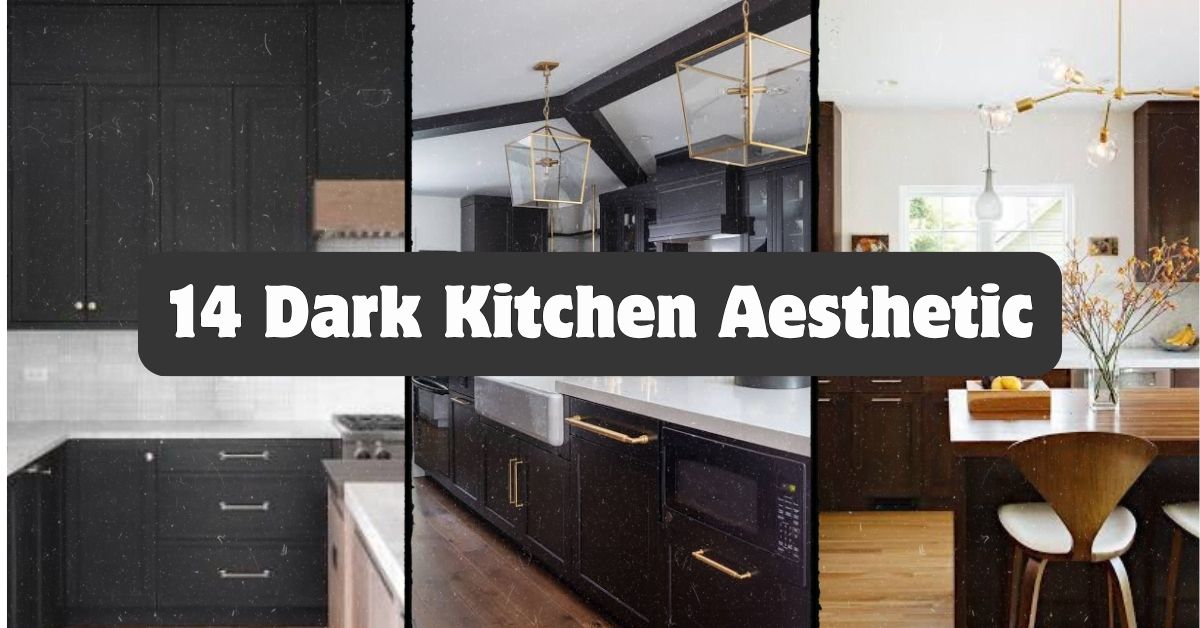
I’ve spent way too many hours scrolling through kitchen photos, and I can tell you the 14 dark kitchen aesthetic trend is one of the few design moves that looks just as good in real life as it does on a screen. This article pulls together the most practical, tested ideas so you don’t have to guess what actually works.
A dark kitchen aesthetic uses deep colors like black, charcoal, navy, or forest green as the main palette for cabinets, walls, or islands, paired with lighter accents to keep the space from feeling too heavy. It works in small and large kitchens alike when lighting and contrast are handled correctly.
Stick around, because I’m about to walk you through 14 specific ways to pull this look off, plus the mistakes that trip up most people who try it.
What Even Is a Dark Kitchen Aesthetic?
Okay, so here’s the deal. A dark kitchen aesthetic just means you’re leaning into moody, rich colors instead of the usual white-on-white kitchen look. Think black cabinets, deep green islands, or charcoal walls. It sounds scary at first. I get it. People worry a dark kitchen will feel like a cave.
But when you do it right, it feels cozy, expensive, and dramatic in a good way. The trick is balance. You pair dark tones with good lighting, some warm wood, and a few bright surfaces. That’s really the whole secret. Now let’s get into the actual ideas.
1. Start With Matte Black Cabinets as Your Anchor
Matte black cabinets are the backbone of most dark kitchen designs I’ve seen work well. They soak up light instead of bouncing it around, which gives the room a grounded, calm feeling. Pair them with brass or matte gold hardware for contrast, or go stealth with black-on-black pulls for a sleeker look.
Practical tip: choose a matte finish over glossy. Glossy black shows fingerprints and smudges way faster.
This idea flexes across styles too. In a modern kitchen, pair black cabinets with clean lines and no upper cabinets. In a farmhouse kitchen, pair them with a butcher block counter and open shelving.
Once your cabinets are set, the next question is what goes on the walls behind them.
2. Use Charcoal or Deep Green Paint on an Accent Wall
You don’t have to commit to dark everywhere. A single accent wall in charcoal gray or hunter green can do a lot of heavy lifting. It adds depth without swallowing the whole room in shadow.
I’d suggest picking the wall that gets the least natural light for this treatment, since darker paint there won’t fight with sunlight glare. Add open shelving in a lighter wood tone against that wall to break it up.
This works beautifully in traditional kitchens with crown molding, and it also fits coastal kitchens if you go with a deep navy instead of green.
Once your wall color is locked in, think about how your countertops will play off that base tone.
3. Pair Dark Cabinets With Light Quartz or Marble Countertops
Contrast is everything in a dark kitchen aesthetic. If your cabinets are black or navy, your countertops should lean light. Think white quartz, cream marble, or even a pale gray stone with subtle veining.
This combo keeps the kitchen from feeling like a black hole. It also makes food prep easier since you can actually see what you’re chopping.
Practical tip: ask for a sample slab before committing. Lighting in the showroom is different from your kitchen’s lighting.
Modern kitchens do this with waterfall edges. Traditional kitchens do it with beveled edge countertops and a more classic vein pattern.
Now that your surfaces are settled, let’s talk about how metal finishes tie the whole thing together.
Countertop and Cabinet Combos That Work
| Cabinet Color | Best Countertop Pairing | Style Vibe |
|---|---|---|
| Matte Black | White Quartz | Modern, sleek |
| Charcoal Gray | Cream Marble | Traditional, soft |
| Navy Blue | Pale Gray Quartz | Coastal, calm |
| Forest Green | Butcher Block Wood | Farmhouse, warm |
| Espresso Brown | White Quartz | Transitional, classic |
4. Mix Metal Finishes for Depth
A dark kitchen aesthetic can look flat if every metal detail matches perfectly. I like mixing brass faucets with matte black cabinet handles, or pairing brushed nickel appliances with copper light fixtures.
The mixing adds texture and keeps your eye moving around the room instead of getting stuck on one flat surface.
Practical tip: pick one dominant metal (say brass) and one secondary metal (say black) so it still feels intentional, not random.
Industrial kitchens lean into raw steel and black iron. Traditional kitchens do brass and bronze instead.
Once the metals are figured out, lighting becomes your next big decision, and it’s honestly the most important one.
5. Layer Three Types of Lighting to Avoid a Cave Effect
This is the part people mess up the most. A dark kitchen without enough light just feels gloomy. You need three layers: ambient (overhead), task (under cabinet), and accent (pendant lights or a statement fixture).
Under-cabinet LED strips are a game changer here. They light up your counters directly so you’re not squinting while cooking, and they make dark cabinets look intentional instead of dim.
Practical tip: go with warm white bulbs, around 2700K to 3000K, instead of cool white. Cool white makes dark colors feel cold and sterile.
Farmhouse kitchens love exposed bulb pendants. Modern kitchens go with sleek recessed lighting and minimal fixtures.
Speaking of fixtures, let’s talk about how a statement piece can become the heart of the room.
6. Add a Bold Pendant Light Over the Island
A dark kitchen aesthetic loves a good focal point, and a bold pendant light over the island does exactly that. Go with black metal, smoked glass, or even a brass cage design depending on your style.
This single fixture can pull the whole room together visually. It draws the eye up and gives the space a sense of intention rather than just being dark for the sake of it.
Practical tip: hang pendants 30 to 36 inches above the island counter for the best proportion and light spread.
Coastal kitchens might choose woven rattan pendants even in a dark palette. Industrial kitchens go for exposed filament bulbs in black metal cages.
Now let’s zoom out and think about the island itself as a color statement.
7. Make the Island a Contrasting Color Statement
Sometimes the smartest move is to keep your perimeter cabinets a lighter tone and make the island the dark, dramatic piece. Navy blue or black islands against white or wood-toned surrounding cabinets create a really striking two-tone look.
This approach is great for smaller kitchens too, since you’re not committing the entire room to dark cabinetry, which can feel overwhelming in tight spaces.
Practical tip: pick a countertop for the island that contrasts with the cabinet color, like a white marble top on a black island.
Transitional kitchens use this trick constantly. Modern farmhouse kitchens do it too, often with a black island and white shaker cabinets around it.
Next, let’s bring in some natural texture to soften all that boldness.
8. Bring in Warm Wood Tones to Soften the Darkness
Dark colors alone can feel a little cold or hard. Adding warm wood, like open shelves, a wood island top, or wood bar stools, softens everything and adds a cozy, lived-in feel.
I really think this is the step that separates a dark kitchen that feels chic from one that feels like a basement. Wood brings warmth and texture that paint or metal just can’t.
Practical tip: choose wood with warm undertones, like oak or walnut, rather than cold gray-washed wood.
Scandinavian kitchens use light oak against dark walls for max contrast. Rustic kitchens go heavier with reclaimed barnwood beams.
With warmth handled, let’s think about how patterns and textiles play into this.
Wood Tone Pairings for Dark Kitchens
| Wood Type | Best Paired With | Overall Feel |
|---|---|---|
| Light Oak | Black Cabinets | Scandinavian, airy |
| Walnut | Charcoal Walls | Warm, modern |
| Reclaimed Barnwood | Forest Green Island | Rustic, cozy |
| Teak | Navy Blue Cabinets | Coastal, natural |
| Ash | Matte Black Hardware | Minimalist, clean |
9. Add Texture With a Woven Rug or Runner
A flat dark kitchen floor can feel a little sterile. Tossing in a woven jute rug or a patterned runner near the sink or stove adds texture and comfort underfoot.
It also helps break up the visual weight of dark cabinets by giving your eyes something soft and detailed to land on near the floor.
Practical tip: choose a low-pile, washable rug for kitchen use since spills are inevitable.
Boho kitchens go all in with patterned Moroccan rugs. Modern kitchens keep it simple with a solid charcoal runner.
Now let’s talk backsplash, because this is where a lot of personality can shine through.
10. Choose a Textured Backsplash to Break Up Flat Surfaces
Subway tile is fine, but a dark kitchen aesthetic really shines when the backsplash has some texture or shine to it. Think handmade zellige tiles, glossy black subway tile, or even a fluted stone panel.
This little detail catches light differently throughout the day, which keeps a dark kitchen from feeling one-dimensional.
Practical tip: if your cabinets are already dark, choose a backsplash with some reflective quality, like glossy or textured tile, to bounce light around.
Mediterranean kitchens love hand-glazed zellige tile. Industrial kitchens might go with dark subway tile and contrasting white grout.
Once your backsplash is sorted, let’s think bigger about how ceilings play into this whole look.
11. Paint the Ceiling to Create a Cocooned Feel
This one surprises people, but painting the ceiling the same dark color as your walls or cabinets creates an intentional, wrapped-in feeling rather than making the room feel shorter. Designers call this effect “cocooning,” and it works especially well in kitchens with exposed beams.
It sounds bold, I know. But it actually tricks your eye into not noticing where the wall ends and the ceiling begins, which makes the whole room feel bigger and more unified.
Practical tip: only do this if your kitchen has good natural light or strong overhead lighting, otherwise it can feel too heavy.
Traditional kitchens with beams look incredible with this trick. Modern kitchens use it in combination with recessed lighting to keep things sleek.
Let’s move down from the ceiling to something just as important: your appliances.
12. Choose Black or Slate Appliances Over Stainless Steel
Stainless steel appliances kind of fight with a dark kitchen aesthetic. They reflect too much and can look out of place. Black stainless steel or slate finish appliances blend in much better and keep that cohesive moody look going.
This swap alone can make a huge visual difference without touching your cabinets or walls at all.
Practical tip: if you already have stainless steel and can’t replace it yet, use appliance panels or wraps as a temporary fix.
Modern kitchens go full black stainless for a sleek uniform look. Farmhouse kitchens sometimes mix in a vintage-style black range for character.
Now, let’s talk about greenery, because even the darkest kitchen needs some life in it.
13. Add Greenery for a Living Contrast
Plants are an easy, cheap way to soften a dark kitchen. A trailing pothos on top of a cabinet, a small herb garden on the windowsill, or a single fiddle leaf fig in the corner adds color and life against all that deep tone.
Green plants specifically pop hard against black or navy backgrounds, way more than they do against white walls.
Practical tip: choose low-light tolerant plants like pothos or snake plants since dark kitchens often have less reflected light bouncing around.
Boho kitchens go heavy with hanging plants everywhere. Minimalist kitchens might stick to one single statement plant.
Last but not least, let’s talk about a detail people often forget: window treatments.
14. Use Sheer or Light Curtains to Balance the Darkness
If your dark kitchen has windows, don’t cover them with heavy dark drapes. Use sheer white or light linen curtains instead. This lets in as much natural light as possible, which is crucial for keeping a dark kitchen from feeling closed in.
Natural light is honestly your best friend in this whole aesthetic. It’s what keeps dark colors looking rich instead of gloomy.
Practical tip: skip heavy blackout curtains in the kitchen entirely unless privacy is a major concern.
Coastal kitchens use breezy linen curtains. Traditional kitchens might use light café curtains that cover just the bottom half of the window.
That’s all 14 ideas, but before you run off to repaint your cabinets, let’s cover a few more things that’ll help you actually pull this off successfully.
Tips for Success
- Test paint colors on a large board first, not a tiny swatch, and view it at different times of day.
- Keep at least 60% of your kitchen in a lighter tone if you’re nervous about going too dark.
- Invest in good lighting before you invest in dark cabinets. Lighting makes or breaks this whole look.
- Use glossy or textured finishes somewhere in the room to bounce light around.
- Don’t skip the hardware. Cheap plastic-feeling pulls will make expensive dark cabinets look off.
- Live with sample cabinet doors for a week before committing to the full kitchen.
- Photograph your kitchen at night under your actual lighting before finalizing colors, since photos reveal shadows you might miss in person.
Common Mistakes and How to Avoid Them
Going dark everywhere with no contrast
Balance dark cabinets or walls with light countertops, flooring, or a bright backsplash so the room doesn’t feel like a closet.
Using cool white lighting
Stick to warm white bulbs around 2700K to 3000K so the dark tones feel rich instead of cold.
Ignoring natural light sources
Keep windows uncovered or use sheer curtains so daylight can still get in and soften the space.
Choosing glossy black cabinets in a high-traffic kitchen
Go matte instead, since glossy finishes show fingerprints, water spots, and scratches much faster.
Forgetting texture
Mix in wood, woven rugs, plants, or textured tile so the kitchen doesn’t feel flat or one-note.
Matching all metal finishes exactly
Mix two complementary metals, like brass and black, to add depth and keep the space from feeling too uniform.
Similar Variations
- Moody Farmhouse Kitchen: Combines dark cabinets with rustic wood beams and vintage-style hardware.
- Coastal Dark Kitchen: Uses navy tones paired with light linen textures and natural rattan accents.
- Industrial Dark Kitchen: Leans into raw steel, exposed brick, and black iron fixtures.
- Scandinavian Dark Kitchen: Pairs black or charcoal cabinets with light oak and minimal decor.
- Mediterranean Dark Kitchen: Uses deep green or terracotta tones with hand-glazed zellige tile.
- Modern Minimalist Dark Kitchen: Sticks to black, white, and gray with zero clutter and sleek lines.
Pulling off a dark kitchen aesthetic really just comes down to balance. Dark colors, good lighting, warm textures, and a few bright surfaces working together instead of against each other. Get those pieces right, and you’ll end up with a kitchen that feels rich and cozy instead of gloomy, which is really the whole point of the 14 dark kitchen aesthetic in the first place.
Leave a Reply