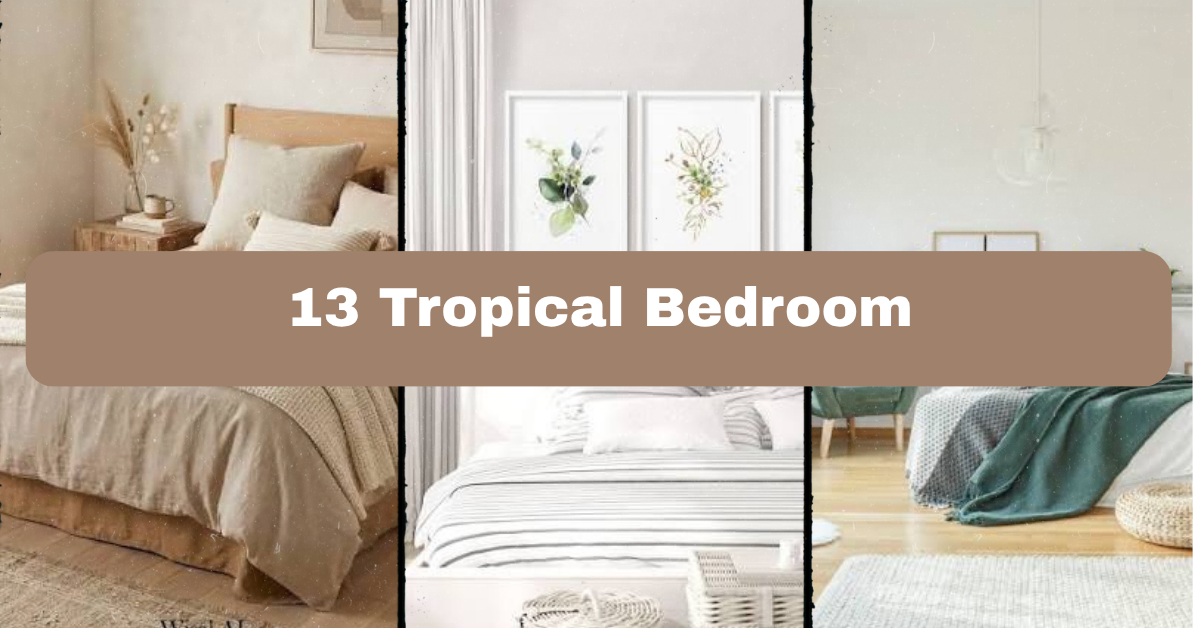
If you’ve been searching for real, workable 13 tropical bedroom ideas instead of the same five pictures floating around Pinterest, you’re in the right spot. I’ve pulled together a mix of practical design moves and decor tricks that actually hold up in everyday life, not just in a photoshoot. By the end of this, you’ll know exactly how to turn your bedroom into a breezy escape without gutting your budget or your sanity.
A tropical bedroom uses warm colors, natural textures, and plant-inspired patterns to recreate the relaxed feeling of a beach getaway or rainforest retreat. Common elements include rattan furniture, palm leaf prints, linen bedding, and pops of color like coral, turquoise, or sunny yellow.
Stick around, because I’m about to walk you through 13 specific ways to pull this look off, plus a few mistakes I’ve seen people make that you’ll want to skip.
What Makes a Bedroom Feel “Tropical” Anyway?
I used to think tropical decor just meant slapping a palm leaf print on a throw pillow and calling it done. Turns out there’s a bit more to it. Tropical style leans on natural materials like rattan, bamboo, and jute, plus colors pulled straight from nature: deep greens, ocean blues, sandy neutrals, and the occasional hit of hot pink or orange. Texture matters a lot here too. Think woven baskets, linen curtains, and rough wood grain. The goal isn’t to make your room look like a hotel lobby in Bali. It’s to make it feel warm, breathable, and a little bit escapist, like you could wake up and hear waves even if you’re nowhere near a beach.
1. Start With a Rattan or Bamboo Headboard
Your bed is the first thing people notice, so start there. A rattan or bamboo headboard instantly signals “tropical” without you having to say a word. These materials are lightweight, natural, and full of texture, which makes them stand out against plain painted walls.
Pair it with simple white or cream bedding to keep the headboard as the star. If you’re on a budget, look for peel-and-stick rattan panels that mount right onto an existing headboard frame.
This idea works in coastal, boho, and even mid-century modern bedrooms since rattan has been a staple in all three styles for decades.
Once your headboard sets the tone, it’s time to think about what covers the bed itself.
2. Layer Linen Bedding in Sandy, Neutral Tones
Linen is breathable, slightly wrinkled looking (in a good way), and holds up in humid climates. That makes it perfect for a tropical bedroom, especially if you live somewhere warm.
Stick to sandy beiges, soft whites, or pale greens for your sheets and duvet. Add one or two throw pillows in a bold tropical print for contrast.
Practical tip: wash linen in cold water and skip the dryer sheets. It keeps the fabric soft without weighing down that airy texture you’re going for.
This works beautifully in coastal and Scandinavian-inspired rooms too, since both styles favor natural, unfussy fabrics.
Now that your bed is dressed, let’s talk about what’s hanging on the walls behind it.
3. Hang a Large Botanical Print Above the Bed
A big leafy print, whether it’s a monstera leaf, banana leaf, or a full jungle scene, gives your room an instant tropical anchor. Go for one large piece instead of a bunch of small ones. It reads as more intentional and less cluttered.
Frame it simply in black, white, or natural wood to keep the focus on the print itself. If you want something less permanent, a removable wall decal works just as well and won’t leave holes when you move.
This idea adapts well to modern farmhouse or eclectic bedrooms, since a single statement print can anchor almost any style around it.
Once your walls have some green energy, you’ll want real plants to match.
4. Bring In Real (or Very Good Fake) Plants
Nothing says tropical like actual greenery. A fiddle leaf fig, a bird of paradise, or a few potted palms instantly warm up a room and clean the air while they’re at it.
If you don’t have a green thumb, don’t stress. High-quality faux plants have gotten really good, and nobody will know unless they touch the leaves. Cluster a few different heights together near a window or in an empty corner for the best effect.
Practical tip: group plants in odd numbers, like three or five, for a more natural, less staged look.
This works in almost every style, from modern minimalist to traditional, since plants soften hard lines and add life to any room.
Speaking of color, let’s talk about picking a palette that pulls this whole look together.
Tropical Bedroom Color Palette Guide
| Palette Name | Wall Color | Accent Colors | Best For |
|---|---|---|---|
| Beach Bungalow | Warm white | Coral, seafoam green | Small rooms, coastal homes |
| Rainforest Retreat | Deep green | Gold, terracotta | Bold, dramatic bedrooms |
| Sunset Palm | Soft peach | Turquoise, mustard yellow | Rooms with lots of natural light |
| Minimal Tropic | Off-white | Sage green, natural wood tones | Modern or Scandinavian spaces |
| Island Night | Charcoal grey | Hot pink, emerald green | Bedrooms wanting a moody vibe |
5. Add a Ceiling Fan With Wood Blades
This one’s practical and stylish at the same time. A ceiling fan with wood or wood-look blades keeps your room cool, especially if you don’t have great AC, and it looks like something straight out of a beach house.
Skip the plain white plastic fans. Go for wood tones or matte black to keep it looking intentional instead of like an afterthought.
Practical tip: install a fan with a light kit built in so you’re not adding extra fixtures to the ceiling.
This idea fits coastal, farmhouse, and even industrial bedrooms, since wood-blade fans have a timeless, unfussy look.
Once the air is moving, let’s get your windows dressed for the part too.
6. Choose Woven Wood or Linen Window Shades
Heavy blackout curtains can feel out of place in a tropical room. Instead, go for woven wood shades or light linen curtains that let some natural light filter through.
These materials keep the room feeling airy and let you control light without blocking it out completely. If you need more privacy or darkness for sleeping, layer a blackout curtain behind the woven shade.
Practical tip: choose shades in a light bamboo or driftwood tone to match rattan furniture elsewhere in the room.
This adapts well to Japandi and coastal farmhouse styles, both of which favor natural materials over heavy fabrics.
With the windows sorted, let’s move to the floor.
7. Use a Jute or Sisal Area Rug
Natural fiber rugs add texture underfoot without competing with your other tropical elements. Jute and sisal both have a rough, earthy look that pairs perfectly with rattan furniture and linen bedding.
Go for a large rug that extends well past the sides of the bed so your feet land on something soft every morning. Avoid rugs with busy, printed patterns here since the texture alone does enough visual work.
Practical tip: layer a smaller printed rug on top of the jute rug for extra color and softness near the bed.
This works in bohemian, coastal, and rustic bedrooms, since natural fiber rugs are a staple across all three.
Now let’s bring in some color through textiles.
8. Introduce Tropical Print Throw Pillows and Blankets
This is the easiest and cheapest way to test the tropical look before committing to bigger changes. Look for prints with palm leaves, hibiscus flowers, or toucans in bold, saturated colors.
Mix two or three prints together, but keep them in the same color family so it doesn’t look chaotic. A good rule: one large print, one small print, one solid color.
Practical tip: swap these out seasonally if you want a cooler, calmer look in winter and a bolder one in summer.
This idea works in literally any bedroom style since pillows and throws are easy to swap without commitment.
Once your textiles are in place, think about what’s sitting on your nightstands.
9. Style Nightstands With Natural Materials
Skip the plain plastic or laminate nightstands. Look for pieces made from rattan, bamboo, teak, or reclaimed wood instead. These materials naturally fit the tropical theme and add warmth to the room.
Top them with a small lamp that has a woven or paper shade, a stack of books, and maybe a small potted plant or a shell you picked up from a real vacation.
Practical tip: keep nightstand décor to three items max so it doesn’t look cluttered.
This works in mid-century, coastal, and bohemian bedrooms alike, since natural wood nightstands are a shared feature across those styles.
Let’s talk lighting next, since it changes the whole mood of the room.
10. Add Warm, Layered Lighting
Bright overhead lighting kills the relaxed tropical vibe fast. Instead, layer your lighting with a dimmable overhead fixture, a bedside lamp, and maybe some string lights or a small floor lamp in the corner.
Go for warm white bulbs, not cool white, since warm light feels more like sunset and less like an office.
Practical tip: use a smart bulb or dimmer switch so you can adjust the mood depending on the time of day.
This idea adapts to nearly every style, but it’s especially important in tropical and coastal rooms where the whole point is a relaxed, golden-hour feel.
Budget Tiers for a Tropical Bedroom Makeover
| Budget Level | What You Can Afford | Estimated Cost |
|---|---|---|
| Starter | Pillows, throw, plants, small decor | $50–150 |
| Mid-Range | Rug, curtains, lamp, wall art | $200–600 |
| Full Room | New bedding, headboard, rug, lighting, furniture | $800–2,500 |
| Splurge | Custom furniture, ceiling fan install, professional styling | $3,000+ |
11. Paint an Accent Wall in Deep Jungle Green
If you want drama without going overboard, paint just one wall, usually the one behind your bed, in a deep green shade. This gives you that lush, jungle feeling without making the whole room feel dark or heavy.
Keep the other walls white or a light neutral to balance it out. Add gold or brass accents nearby to make the green pop even more.
Practical tip: test the paint color on the wall at different times of day before committing, since green shades shift a lot depending on light.
This works especially well in traditional and eclectic bedrooms, where a bold accent wall adds personality without overwhelming the space.
Now let’s talk about ceiling and floor textures you might not have considered.
12. Add a Bamboo or Wood-Look Ceiling Treatment
This one’s a bit more advanced, but it makes a huge impact. Adding bamboo panels, wood slats, or even a wood-look wallpaper to your ceiling creates a canopy effect that feels like you’re under a beach hut roof.
You don’t need to do the whole ceiling. Even a section above the bed works well.
Practical tip: peel-and-stick wood panels are a renter-friendly way to try this without permanent changes.
This idea shows up often in coastal and rustic cabin bedrooms, since both styles use natural materials overhead to add warmth.
Finally, let’s finish with the small details that tie everything together.
13. Finish With Natural Textures and Personal Souvenirs
The last touch is all about the little things. Woven baskets for storage, a bamboo tray on your dresser, seashells from an actual trip, or a carved wood bowl all add authenticity that store-bought decor can’t fully replicate.
These pieces don’t need to match perfectly. In fact, a little mismatch makes the room feel collected over time instead of bought all at once.
Practical tip: rotate a few pieces seasonally so the room doesn’t feel static year-round.
This works in every style because personal items always add character, no matter what the base design looks like.
Tips for Success
- Stick to a maximum of three main colors so the room doesn’t feel busy.
- Mix textures (wood, woven fiber, linen) instead of relying on color alone for interest.
- Keep furniture lightweight and airy looking to match the relaxed tropical feel.
- Add at least one living plant, even if it’s small, for a more authentic feel.
- Don’t skip lighting. Warm, layered light makes a bigger difference than people expect.
- Shop secondhand for rattan and wood furniture since it’s often cheaper and already has character.
- Test paint and fabric colors in your actual room lighting before buying in bulk.
Common Mistakes and How to Avoid Them
Overdoing the prints
: Stick to one or two bold prints max. Too many competing patterns make the room feel chaotic instead of relaxed.
Choosing cheap, shiny plastic decor
: Go for natural materials like rattan, wood, or woven fiber instead. They age better and look far more authentic.
Skipping texture
: A tropical room needs texture to feel finished. Add rugs, woven baskets, and linen fabrics, not just color.
Using cool, harsh lighting
: Swap to warm bulbs and layered lighting sources. Cool light makes the room feel clinical instead of cozy.
Forgetting the ceiling and floor
: Most people only decorate walls. Adding texture above and below (rugs, wood panels) makes the room feel complete.
Ignoring your climate
: Heavy fabrics and dark colors can clash with the airy tropical feel. Choose breathable materials suited to your actual environment.
Similar Variations
- Coastal Boho – blends beachy blues and whites with bohemian layered textiles and macrame accents.
- Jungle Modern – pairs bold botanical prints with sleek, minimal furniture for a cleaner tropical look.
- Desert Boho – swaps tropical greens for warm terracotta and sandy tones, inspired by desert landscapes instead of beaches.
- Plantation Style – uses dark wood furniture, white linens, and shuttered windows for a more colonial-inspired tropical feel.
- Zen Tropical – combines tropical textures with Japandi minimalism for a calm, low-clutter bedroom.
- Retro Palm Springs – leans into mid-century furniture, bold pastel colors, and palm print accents for a playful, vintage tropical vibe.
Putting together a tropical bedroom doesn’t mean buying everything at once or ripping your room apart. Start small, maybe with pillows and plants, then build toward bigger changes like furniture or an accent wall when you’re ready. The whole point is creating a space that feels warm, breathable, and a little bit like a permanent vacation. Whichever ideas you pick from this list, you now have a real, practical roadmap for building your own 13 tropical bedroom that actually feels like home.
Leave a Reply