I’ve spent way too many weekends crawling around flooring showrooms, so let me save you the trouble with these 13 bathroom flooring ideas that actually work in real homes, not just showroom displays.
Bathroom flooring needs to handle water, temperature changes, and daily foot traffic while still looking good. The best options include porcelain tile, luxury vinyl plank, natural stone, and heated floor systems, each offering different balances of cost, durability, and style.
Stick around, because I’m about to walk you through everything from budget-friendly picks to the fancy stuff your contractor probably didn’t mention.
What Makes Bathroom Flooring Different From Everywhere Else
Bathrooms are weird rooms. They’re small, wet, and get used every single day. That means your flooring choice can’t just look pretty. It has to survive splashes, steam, and the occasional dropped hairdryer.
I learned this the hard way when I put hardwood in a half bath years ago. Big mistake. Water seeped into the seams and warped the boards within a year.
So before you pick anything based on looks alone, think about your bathroom’s specific challenges. Is it a steamy shower room? A kid’s bathroom that floods twice a week? Once you know that, the right flooring option becomes way easier to spot.
1. Porcelain Tile for Everyday Durability
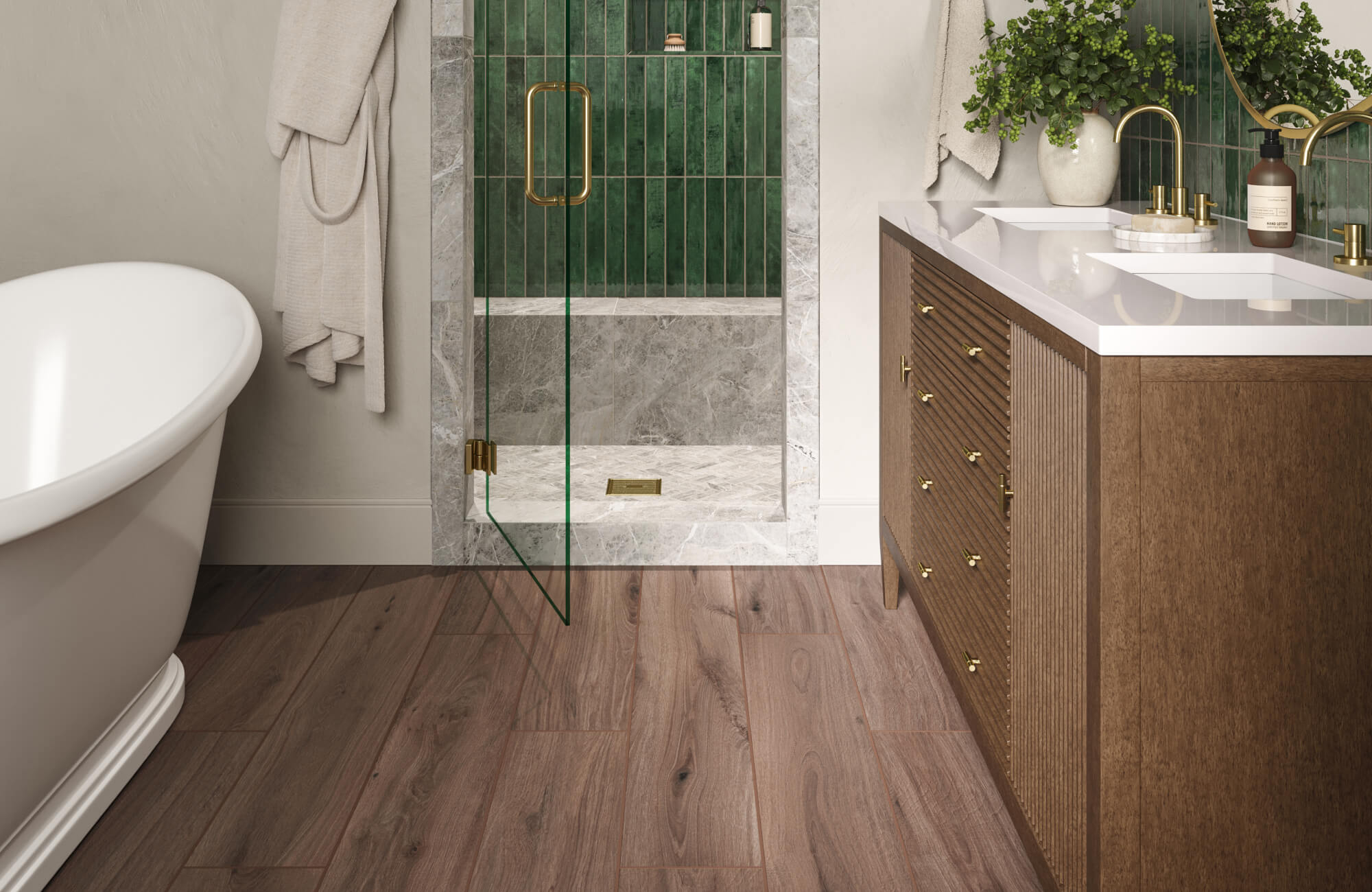
Porcelain tile is my go-to recommendation for most bathrooms. It’s dense, water resistant, and comes in colors and patterns for basically any style you want.
You can find porcelain that mimics wood, marble, or even concrete. That means you get the durability of tile with the look of pricier materials.
Practical tip: Choose a matte or textured finish instead of high gloss. Wet glossy tile gets slippery fast.
This style works great in modern bathrooms with clean lines, but it also fits farmhouse or traditional spaces if you pick a wood-look pattern. Next up, let’s talk about a material that brings warmth without sacrificing water resistance.
2. Luxury Vinyl Plank for Budget-Friendly Warmth
Luxury vinyl plank, or LVP, has become a favorite for good reason. It’s waterproof, soft underfoot, and way cheaper than real hardwood or stone.
I actually installed this in my own bathroom last year. It took a weekend, cost less than $500 for a small space, and looks like real wood from three feet away.
Practical tip: Look for a wear layer of at least 12 mils if you want it to last through years of daily use.
LVP works especially well in coastal or farmhouse bathrooms where you want that wood look without the wood problems. Speaking of wood looks, let’s compare a few material options side by side.
Material Comparison Table
| Material | Water Resistance | Cost Per Sq Ft | Lifespan | Best For |
|---|---|---|---|---|
| Porcelain Tile | Excellent | $3-$10 | 20+ years | High-traffic bathrooms |
| Luxury Vinyl Plank | Excellent | $2-$7 | 10-20 years | Budget renovations |
| Natural Stone | Good (needs sealing) | $8-$20 | 25+ years | Luxury spaces |
| Ceramic Tile | Very Good | $2-$8 | 15-20 years | Standard bathrooms |
| Sheet Vinyl | Excellent | $1-$5 | 10-15 years | Rental properties |
3. Natural Stone for a Spa-Like Feel
If you want your bathroom to feel like a five-star hotel, natural stone delivers. Travertine, marble, and slate all bring texture and elegance you can’t fake with tile.
The catch? Stone needs sealing every year or two to stay water resistant. Skip that step and you’ll end up with stains or cracks.
Practical tip: Ask your installer for honed (not polished) stone. It grips better when wet, which matters a lot in a bathroom.
Natural stone shines in traditional and Mediterranean-style bathrooms, though slate also works in modern minimalist spaces. Now let’s look at an option that solves the “cold floor” problem once and for all.
4. Heated Flooring Systems for Cold Mornings

Nobody likes stepping onto an ice-cold tile floor at 6 a.m. Radiant floor heating fixes that problem completely.
These systems sit under your tile or stone and warm the surface using electric coils or hot water tubes. Most homeowners install them during a full renovation since they need to go under the flooring itself.
Practical tip: Pair heated flooring with porcelain or stone since both materials conduct heat evenly.
This upgrade fits any style since it’s invisible once installed. Whether you’re going modern or traditional, warm floors just feel like a luxury nobody regrets. Next, let’s talk about a flooring trend that’s taking over Pinterest boards everywhere.
5. Patterned Tile for a Statement Floor

Patterned tile has exploded in popularity, and I get why. A bold geometric or floral design turns a plain bathroom into something people actually notice.
These tiles work best in smaller bathrooms since too much pattern in a large space can feel overwhelming. Powder rooms and half baths are perfect candidates.
Practical tip: Keep your walls and fixtures simple if you go with patterned flooring. Let the floor be the star.
Patterned tile adapts beautifully to Moroccan, bohemian, or vintage-inspired bathrooms. It also works in modern spaces if you choose a black-and-white geometric design. Let’s shift gears now to something more budget-conscious.
6. Sheet Vinyl for Quick, Affordable Updates
Sheet vinyl doesn’t get much love, but it deserves more credit. It’s completely waterproof, affordable, and installs faster than almost any other option.
Modern sheet vinyl comes in realistic wood and stone patterns, so it doesn’t look cheap the way it used to decades ago.
Practical tip: Hire a pro for installation. Sheet vinyl needs a perfectly smooth subfloor, or every bump will show through.
This option works great for rental properties or bathrooms you plan to update again in a few years. It fits almost any style since the pattern options are so wide-ranging. Now, let’s talk about a flooring choice that’s great for households with kids or pets.
7. Textured Tile for Slip Resistance
Safety matters just as much as looks, especially in bathrooms used by kids or older family members. Textured tile gives your feet extra grip, even when the floor is wet.
You’ll usually see this labeled as “R10” or higher on the slip-resistance rating scale. That number tells you how much traction the tile provides.
Practical tip: Save textured tile for shower floors and wet zones, and use smoother tile for the rest of the room to balance safety and comfort.
Textured tile fits any design style because manufacturers now make it in wood-look, stone-look, and solid color finishes. Speaking of shower zones, let’s dig into a flooring choice built specifically for wet areas.
8. Pebble Tile for a Natural Shower Floor
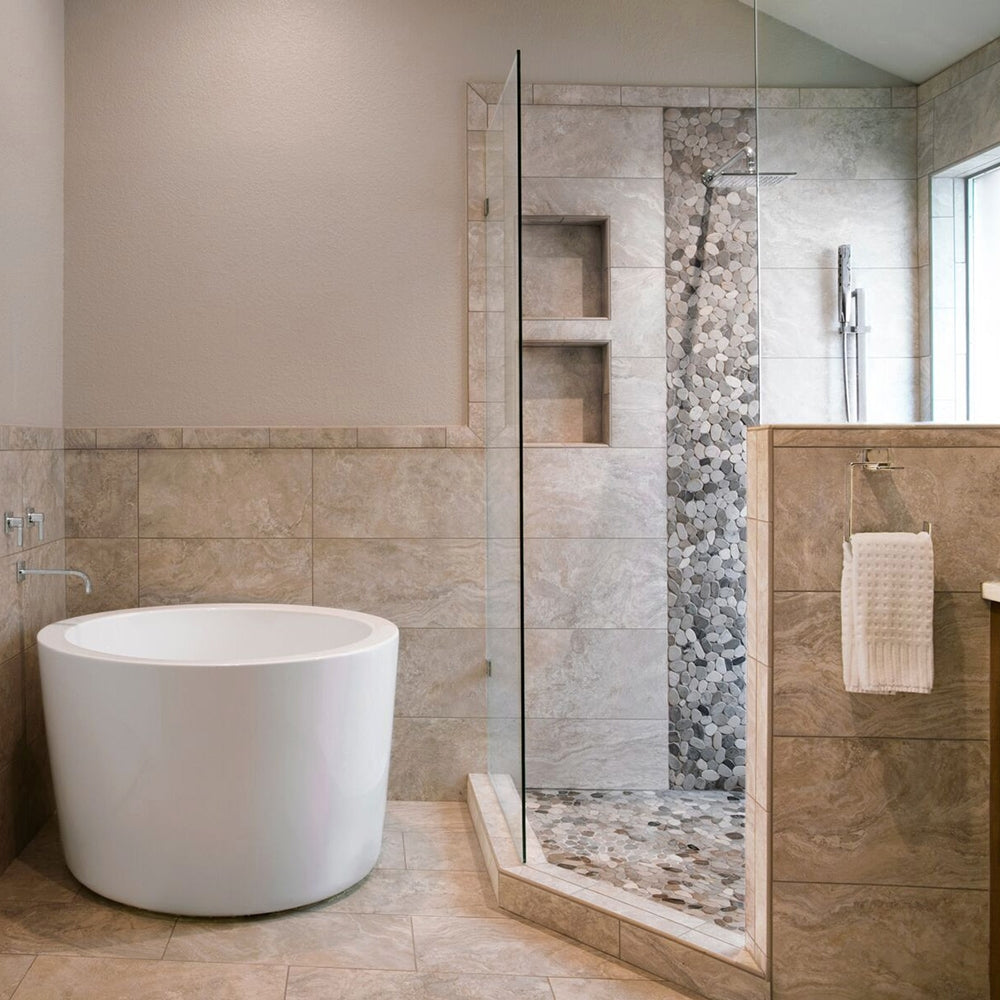
Pebble tile turns your shower floor into something that feels like a walk on a riverbed. It’s textured, slip-resistant, and adds a spa-like touch you won’t get from flat tile.
The downside is grout lines. With so many small stones, you’ll have more grout to clean and reseal over time.
Practical tip: Choose a darker grout color to hide water spots and mineral buildup between cleanings.
This style pairs perfectly with rustic, coastal, or zen-inspired bathrooms. It’s less common in strict modern designs, but a gray pebble tile can still work if kept simple. Let’s move on to a flooring trend inspired by old European homes.
9. Encaustic Cement Tile for Old-World Charm

Cement tile has a handmade look that feels like it belongs in a Spanish villa or a New Orleans townhouse. Each tile is individually pigmented, so slight color variations are part of the charm.
These tiles are porous, which means they need sealing to resist water and stains, similar to natural stone.
Practical tip: Order 10% more tile than you think you need. Cement tile batches can vary slightly, and you’ll want extras from the same batch for repairs later.
This flooring style fits Mediterranean, bohemian, and eclectic bathrooms best. It doesn’t usually suit sleek modern spaces since the whole appeal is that imperfect, handcrafted look. Next, let’s cover a material that’s gaining popularity for its eco-friendly reputation.
10. Cork Flooring for an Eco-Friendly Option
Cork might sound like an odd choice for a bathroom, but hear me out. When properly sealed, cork resists water, feels warm underfoot, and comes from a renewable resource.
It’s not as tough as tile, so I wouldn’t recommend it for a high-traffic family bathroom. But for a guest bath or powder room, it works beautifully.
Practical tip: Reseal cork flooring every one to two years to maintain its water resistance.
Cork fits earthy, Scandinavian, or minimalist bathroom styles especially well. Now, let’s talk budget tiers so you can figure out where your project actually lands.
Budget Tier Breakdown
| Budget Level | Price Range (100 sq ft) | Best Materials | What to Expect |
|---|---|---|---|
| Budget | $200-$800 | Sheet vinyl, basic ceramic | DIY-friendly, quick install |
| Mid-Range | $800-$2,500 | Luxury vinyl plank, porcelain tile | Pro installation, good durability |
| High-End | $2,500-$6,000 | Natural stone, cement tile | Custom patterns, longer lifespan |
| Luxury | $6,000+ | Heated stone floors, imported marble | Full renovation, premium finishes |
11. Large Format Tile for a Seamless Look
Large format tiles, usually 12×24 inches or bigger, create a clean, seamless look with fewer grout lines. That means less cleaning and a bathroom that feels more spacious.
Because there are fewer seams, water has fewer places to seep through, which helps with long-term durability too.
Practical tip: Make sure your subfloor is perfectly level before installing large tiles. Uneven surfaces cause big tiles to crack more easily than small ones.
This style is a favorite in modern and minimalist bathrooms, but it also works in transitional spaces if you choose a warmer color tone. Let’s look at a flooring choice that brings a splash of personality through color.
12. Colorful Terrazzo for a Retro Touch
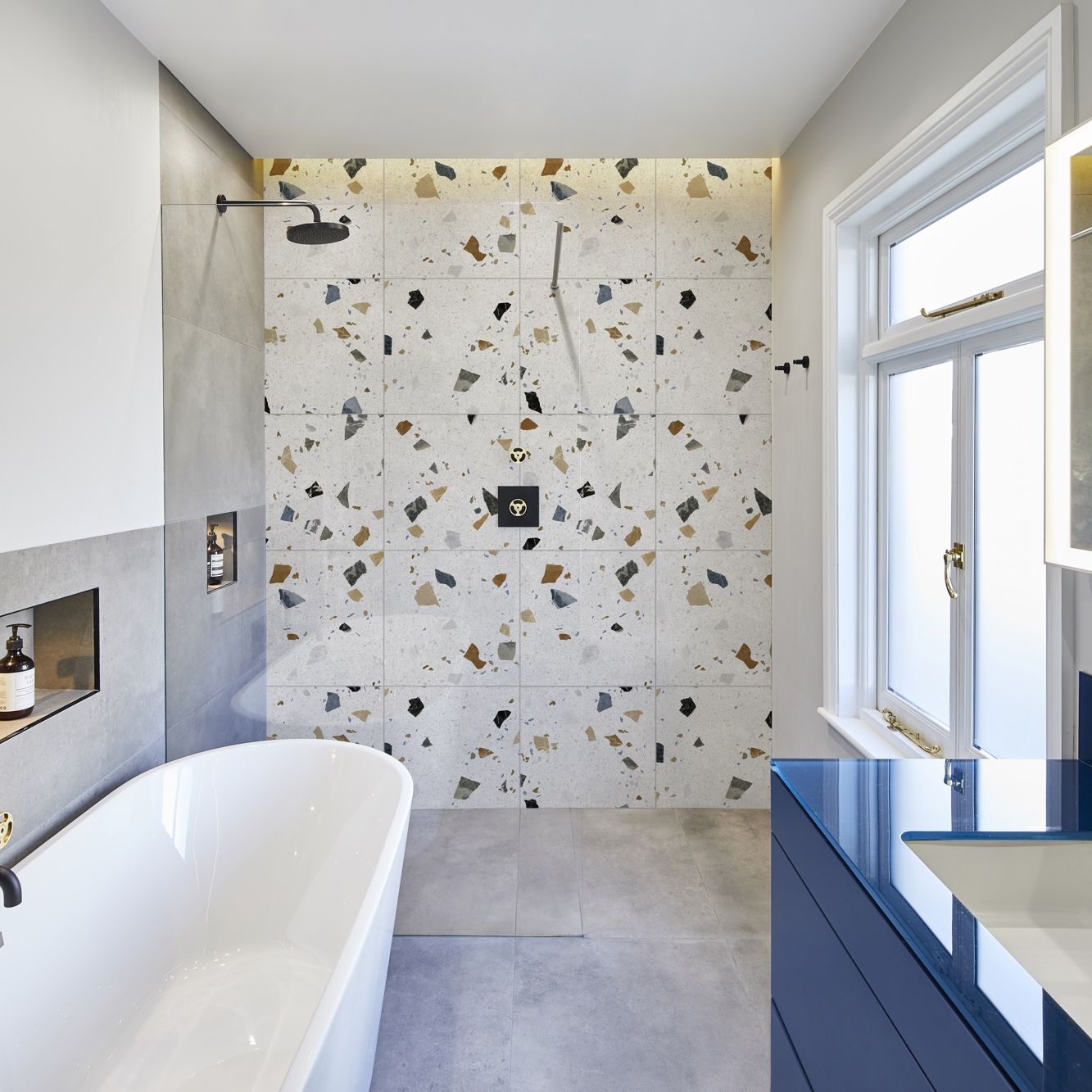
Terrazzo is having a major comeback, and honestly, I’m here for it. This speckled flooring style mixes chips of marble, quartz, or glass into a solid base, creating a fun, retro look.
It’s incredibly durable and low maintenance once sealed, making it a smart long-term investment despite the higher upfront cost.
Practical tip: Choose a terrazzo pattern with colors that match your existing tile or wall paint so it doesn’t clash with the rest of the room.
Terrazzo works wonderfully in retro, mid-century modern, or eclectic bathrooms. It can also work in a modern space if you pick a neutral, subtle pattern. Finally, let’s finish with an option that blends two materials for the best of both worlds.
13. Mixed Material Flooring for Custom Zones

Why settle for one material when you can combine two? Mixed material flooring uses different materials in different zones, like tile in the shower and wood-look vinyl everywhere else.
This approach lets you get the durability you need in wet areas while adding warmth and softness in dry zones.
Practical tip: Use a metal or stone transition strip where materials meet to create a clean, finished edge.
Mixed flooring adapts to nearly any style since you’re customizing the combination yourself. It’s especially popular in larger bathrooms with separate wet and dry zones. Now that you’ve seen all 13 options, let’s talk about how to make sure your choice actually succeeds long-term.
Tips for Success
- Always check the slip-resistance rating before buying, especially for shower floors and areas near the tub.
- Order extra material, at least 10%, to account for cuts, mistakes, and future repairs.
- Match your grout color to your maintenance habits. Light grout shows dirt fast; dark grout hides it better.
- Get a moisture barrier installed under your flooring, especially in humid climates or homes with radiant heating.
- Test flooring samples in your actual bathroom lighting before committing. Showroom lighting can make colors look totally different.
- Hire a licensed installer for stone or large format tile. These materials are unforgiving if installed incorrectly.
- Think about resale value if you’re not planning to stay in your home long-term. Neutral tile tends to appeal to more buyers than bold patterns.
Common Mistakes and How to Avoid Them
Skipping the sealant on natural stone or cement tile
: Reseal these materials every 12 to 18 months to prevent staining and water damage.
Choosing glossy tile for the whole bathroom
: Save high-shine finishes for walls and vertical surfaces, and stick to matte or textured tile for the floor.
Ignoring the subfloor condition before installation
: Have a contractor check for levelness and moisture issues before laying any new flooring material.
Picking flooring based on trends instead of household needs
: Match your material choice to your family’s actual lifestyle, whether that means kids, pets, or heavy daily use.
Forgetting about grout maintenance
: Reseal grout lines once a year to prevent mold growth and water seepage.
Installing hardwood or hardwood-look materials without waterproofing
: Choose waterproof LVP instead of real wood if you love the wood look but need water resistance.
Similar Variations
- Spa-Inspired Bathroom Flooring: Focuses on natural stone, heated floors, and neutral tones for a relaxing retreat feel.
- Industrial Bathroom Flooring: Uses concrete-look tile, dark grout, and metal fixtures for an urban, edgy vibe.
- Coastal Bathroom Flooring: Leans on light wood-look vinyl, white tile, and sandy color palettes for a beachy feel.
- Vintage Bathroom Flooring: Combines patterned tile, cement tile, or terrazzo for a nostalgic, old-home charm.
- Minimalist Bathroom Flooring: Sticks to large format tile in neutral tones with minimal grout lines for a clean, simple look.
- Farmhouse Bathroom Flooring: Pairs wood-look porcelain or LVP with shiplap walls and vintage-style fixtures.
Picking the right bathroom floor really comes down to knowing your space, your budget, and how much upkeep you’re willing to do. Some materials cost more upfront but save you money over time, while others give you a quick, affordable refresh that still looks great. Whatever direction you choose, I hope these 13 bathroom flooring ideas give you a clear starting point for your next project.
Leave a Reply