
If you’ve been scrolling through a hundred different sites trying to figure out how to nail that rustic farmhouse dining room look, I get it. I’ve done the same thing, and honestly, most of those lists just repeat the same tired tips. This article is different. I’m going to walk you through real, specific ideas you can actually use.
A rustic farmhouse dining room combines natural wood furniture, neutral color palettes, vintage accents, and cozy textiles to create a warm, inviting space for meals and gatherings. The style draws from old barns, country kitchens, and simple craftsmanship.
Stick around, because I’m about to show you eleven ways to bring that cozy, lived-in charm into your own dining space, plus some mistakes to dodge along the way.
What Makes a Dining Room “Rustic Farmhouse” Anyway?
Okay, so before we jump into the list, let’s chat about what this style actually means. Rustic farmhouse is all about looking like your furniture has a story. Think reclaimed wood tables, chairs that don’t all match, and metal light fixtures that look like they came from an old barn. It’s not fancy. It’s not shiny. It’s warm, textured, and a little imperfect on purpose.
I love this style because it feels lived in from day one. You don’t need brand new furniture that looks pristine. You want pieces with character, dents, and grain patterns that show real wood. It’s cozy without trying too hard, and that’s exactly the point.
1. Choose a Chunky Reclaimed Wood Table
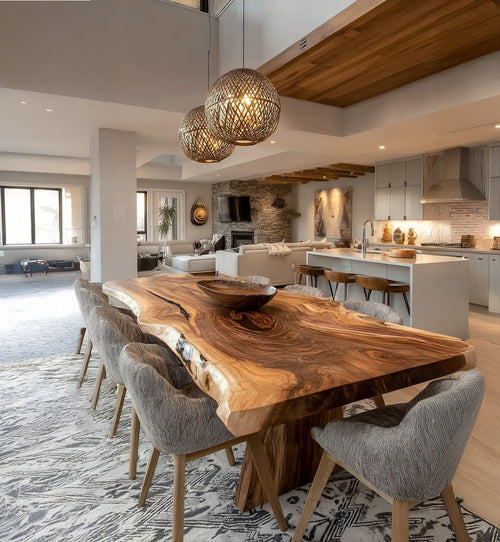
The dining table is the heart of this whole look. Go for a thick, solid wood table with visible grain and maybe even a few knots or cracks. Reclaimed barn wood is perfect because it already has that weathered charm built in.
Practical tip: look for tables with a matte or low-sheen finish instead of glossy. Glossy wood reads more traditional or modern, not rustic.
This idea works across styles too. In a modern farmhouse space, pair the table with sleek black metal legs. In a more traditional home, stick with an all-wood pedestal base.
Once you’ve got your table sorted, the chairs around it matter just as much, so let’s talk seating next.
2. Mix and Match Your Dining Chairs

Here’s a secret: you don’t need matching chairs. Rustic farmhouse dining rooms often use a mix of wooden chairs, maybe a bench on one side, and even a couple of upholstered seats at the ends. This mismatched look actually makes the room feel more collected over time, not staged.
Try pairing ladder-back wood chairs with a simple bench along one side of the table. Add a cushion to the bench for comfort.
Practical tip: keep the wood tones similar even if the shapes differ. That way things still feel cohesive.
Coastal farmhouse spaces might swap in whitewashed chairs, while modern farmhouse leans toward black metal seats mixed with wood.
Now that your seating is sorted, let’s bring in some color.
3. Stick to a Neutral, Earthy Color Palette

Rustic farmhouse rooms lean heavy on whites, creams, tans, and soft grays. These colors let the natural wood and textures do the talking. Walls in a warm white or soft greige make the room feel open and calm.
Add small pops of color through pillows, table runners, or artwork, but keep the base palette neutral.
Color Palette Options for Rustic Farmhouse Dining Rooms
| Palette Name | Wall Color | Accent Color | Wood Tone |
|---|---|---|---|
| Warm Cream | Antique White | Terracotta | Honey Oak |
| Soft Gray | Dove Gray | Navy Blue | Weathered Gray |
| Classic White | Chalk White | Sage Green | Walnut Brown |
| Earthy Tan | Warm Beige | Rust Orange | Reclaimed Barn Wood |
Practical tip: paint one accent wall in a deeper tone like clay or forest green if you want a little drama without overwhelming the space.
This palette adapts easily. Farmhouse coastal style just adds more blue and white, while farmhouse traditional leans into deeper browns and burgundy accents.
With your colors picked, let’s talk about lighting because that changes everything.
4. Hang a Wrought Iron or Wood Bead Chandelier
Lighting sets the whole mood in a dining room. For rustic farmhouse, skip the crystal chandeliers. Instead, go for wrought iron fixtures, wood bead chandeliers, or lantern-style pendants with an aged bronze or black finish.
Practical tip: hang your fixture about 30 to 34 inches above the table for the right proportion.
These fixtures look great with warm bulb tones, around 2700K, which gives off that soft, golden glow instead of harsh white light.
Modern farmhouse spaces might choose a simpler black metal fixture with clean lines, while traditional farmhouse leans into more ornate wrought iron designs with scrollwork.
Once your lighting is set, it’s time to think about what goes on the walls.
5. Add a Statement Shiplap or Wood Plank Wall
One accent wall covered in shiplap or wood planks instantly makes a room feel farmhouse. You can use real wood boards or budget friendly MDF shiplap panels from a hardware store.
Paint it white for that classic look, or leave it natural wood for more warmth.
Practical tip: install shiplap horizontally for a classic feel, or try vertical planks if you want the ceiling to feel taller.
This idea works in almost any style. Coastal homes often whitewash the wood, while industrial farmhouse spaces might leave the wood raw and unfinished.
Now let’s dress up your table with the right centerpiece.
6. Style Your Table with a Wood Slab Centerpiece
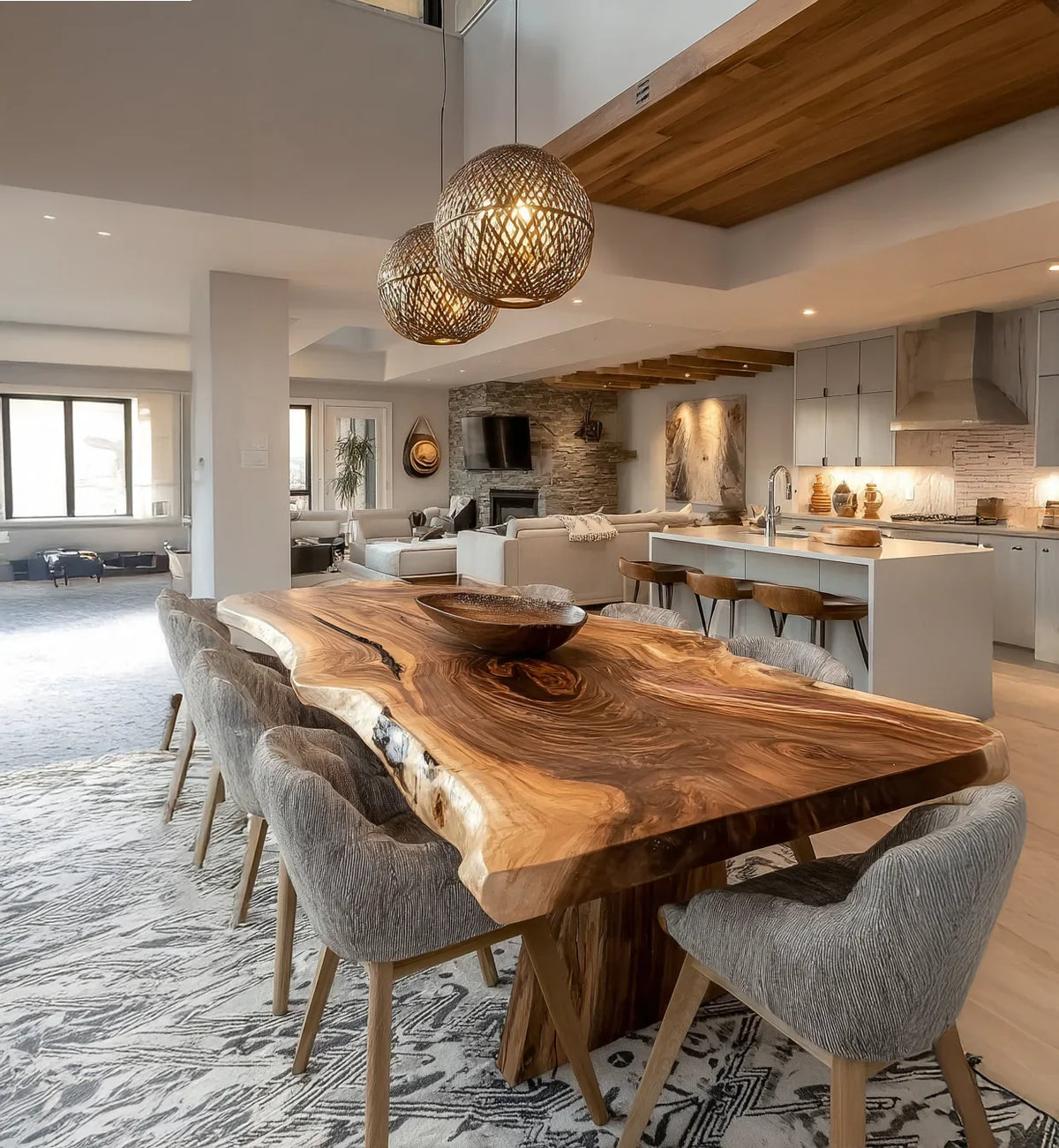
Skip the fancy vase and go for something simple. A wood slab runner down the middle of the table with a few mason jars, dried wheat stems, or candles creates that effortless farmhouse feel.
Practical tip: keep your centerpiece low, under 12 inches tall, so people can still see each other across the table during meals.
Add seasonal touches like small pumpkins in fall or greenery in spring to keep things fresh without buying new decor every season.
This works beautifully across styles too. Modern farmhouse might use a concrete or metal tray instead of wood for contrast.
Next, let’s talk about what’s underneath your feet.
7. Layer a Jute or Wool Area Rug

A natural fiber rug like jute or wool adds texture and warmth under your dining table. These materials feel earthy and durable, perfect for catching crumbs and spills.
Practical tip: your rug should extend at least 24 inches beyond the table edge on all sides so chairs don’t slide off when pulled out.
Rug Size Guide by Table Shape
| Table Shape | Table Size | Recommended Rug Size |
|---|---|---|
| Rectangular | 60″ x 36″ | 8′ x 10′ |
| Rectangular | 72″ x 40″ | 9′ x 12′ |
| Round | 48″ diameter | 8′ x 8′ round |
| Square | 42″ x 42″ | 7′ x 7′ square |
A jute rug fits coastal and bohemian farmhouse spaces well too, while a darker wool rug leans more traditional.
With your floor covered, let’s move up to window treatments.
8. Dress Windows with Simple Linen Curtains

Skip heavy drapes. Rustic farmhouse dining rooms usually feature light, airy linen curtains in white, cream, or soft gray. They let natural light pour in while still adding softness to the room.
Practical tip: hang curtain rods about four to six inches above the window frame to make windows look taller and the ceiling feel higher.
Avoid patterns here. Solid linen keeps the focus on texture rather than busy prints.
For a coastal farmhouse twist, add a subtle blue stripe. For a more traditional farmhouse feel, choose curtains with a slight texture like waffle weave.
Now let’s talk storage, because every dining room needs a spot for dishes and linens.
9. Bring in a Vintage Farmhouse Hutch or Sideboard
A weathered wood hutch or sideboard gives you storage and serious character at the same time. Look for pieces with distressed paint, visible wood grain, or aged brass hardware.
Practical tip: if you can’t find an authentic vintage piece, distress a new one yourself with sandpaper and a dry brush technique using white or cream paint.
Style the top with stacked plates, a few books, and a small plant for that collected-over-years look.
This piece adapts well too. Paint it a soft sage or navy for a more traditional feel, or keep it raw wood for a modern farmhouse vibe.
Once your storage is sorted, let’s add some softness with textiles.
10. Add Texture with Woven Placemats and Table Runners
Instead of shiny placemats, go for woven textures like rattan, jute, or linen. These add that handmade, natural feel that defines rustic farmhouse style.
Practical tip: mix textures instead of matching everything exactly. Try a linen runner with rattan placemats underneath simple white dishes.
Layering textures like this makes the table feel styled without looking overly decorated or fussy.
Modern farmhouse spaces might swap in a solid canvas runner, while traditional spaces lean toward more textured, woven table linens.
Finally, let’s finish the room with the right wall decor.
11. Hang Vintage Signs, Mirrors, or Botanical Prints

Wall decor ties the whole room together. Rustic farmhouse spaces often feature vintage metal signs, distressed wood frames, botanical prints, or a large round mirror with a black metal frame.
Practical tip: hang art at eye level, roughly 57 to 60 inches from the floor to the center of the piece, for the most natural look.
Group a few smaller pieces together in a gallery wall format if you have an empty wall, mixing frame styles and sizes for that collected-over-time feel.
Coastal farmhouse spaces might add botanical prints of grasses or shells, while traditional farmhouse leans into family portraits in simple wood frames.
Tips for Success
- Start with your table and build everything else around its wood tone and shape.
- Don’t buy everything new. Thrift stores and estate sales often have the best rustic farmhouse pieces for less money.
- Keep at least 70 percent of your color palette neutral so accent colors actually stand out.
- Measure your space before buying a rug or table so scale feels right, not cramped or too small.
- Layer textures on purpose. Wood, wool, linen, and metal should all show up somewhere in the room.
- Add greenery, even fake, to soften all the hard wood surfaces and bring life into the space.
- Change small details seasonally, like table runners or centerpieces, to keep the room feeling fresh without a full redesign.
Common Mistakes and How to Avoid Them
Buying furniture that’s too polished
: Rustic farmhouse depends on texture and imperfection. Choose pieces with visible grain, distressing, or matte finishes instead of glossy, perfect surfaces.
Overloading the room with too many accents
: Pick a few strong focal points, like a chandelier and a statement wall, rather than covering every surface with decor.
Ignoring lighting temperature
: Cool white bulbs clash with warm wood tones. Stick to warm bulbs around 2700K for a cozy glow that matches the style.
Choosing a rug that’s too small
: A rug that doesn’t extend past the chairs looks awkward and can bunch up when chairs get pulled out. Always size up.
Skipping texture variety
: A room full of only wood can feel flat. Mix in woven baskets, metal fixtures, and soft textiles for balance.
Matching every piece of furniture perfectly
: Perfectly matched furniture reads more like a showroom than a home. Let pieces vary slightly in tone and shape.
Similar Variations
- Modern Farmhouse Dining Room: Cleaner lines, black metal accents, and a slightly more minimal approach to decor.
- Coastal Farmhouse Dining Room: Lighter wood tones, blue and white palettes, and beachy textures like rope or rattan.
- Industrial Farmhouse Dining Room: Raw metal fixtures, exposed brick or concrete, paired with reclaimed wood furniture.
- Traditional Farmhouse Dining Room: Richer wood tones, more ornate details, and classic patterns like plaid or gingham.
- Scandinavian Farmhouse Dining Room: Lighter woods, simple shapes, and a heavier focus on white and pale gray tones.
- Southern Farmhouse Dining Room: Warmer color palettes, vintage floral touches, and cozy, layered textiles.
Bringing rustic charm into your dining space doesn’t require a total renovation or a huge budget. Small changes like swapping light fixtures, layering the right rug, or mixing your chairs can transform the whole feel of the room. Start with one or two ideas from this list, live with them for a bit, and build from there. That’s really how the best 11 Rustic Farmhouse Dining Room spaces come together over time, one thoughtful piece at a time.
Leave a Reply