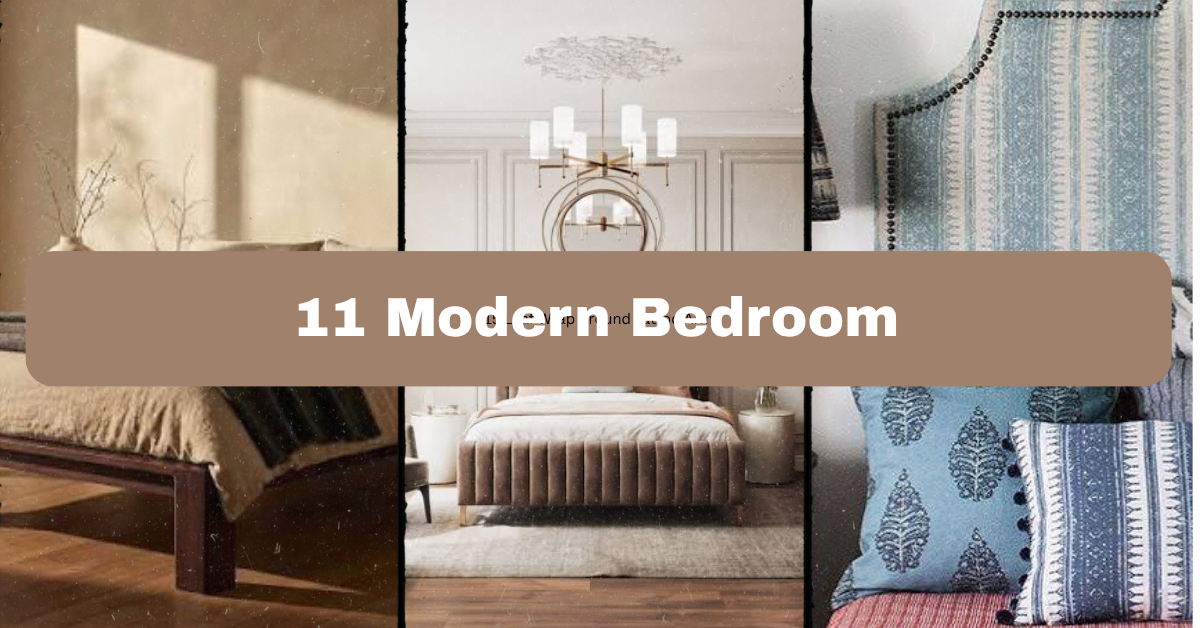
I’ve spent way too many hours scrolling through bedroom inspo, and I finally put together this guide because I kept seeing the same tired advice everywhere. This list of 11 modern bedroom ideas is built from real design logic, not just pretty pictures that look good for five seconds on a screen.
A modern bedroom uses clean lines, a limited color palette, functional furniture, and minimal clutter to create a calm, restful space. The style favors quality over quantity and avoids heavy ornamentation in favor of texture and light.
Stick around, because I’m about to walk you through the exact pieces, colors, and layout tricks that make a bedroom feel modern without feeling cold or sterile.
What Even Is “Modern Bedroom” Style, Anyway?
Okay, so here’s the thing about modern design. People think it means white walls and zero personality. That’s not it at all. Modern bedroom style is really about intention. Every item in the room has a job. Nothing’s there just to fill space.
Think smooth surfaces, neutral tones with maybe one bold accent, and furniture that’s low to the ground with simple silhouettes. Natural light matters a ton too. And honestly, less stuff on your nightstand equals less stress in your brain. That’s not just a design opinion, that’s basically how our eyes process a room. A cluttered space feels loud even when it’s silent.
Now let’s get into the actual ideas you can steal.
1. Choose a Low-Profile Platform Bed as Your Anchor
Your bed is the star of the show, so start there. Platform beds sit low, have clean edges, and skip the fussy headboard carvings you’d see in traditional styles. They instantly make a room feel more open because they don’t tower over everything else.
Go for wood, upholstered fabric, or a mix of both. Stick to neutral colors like charcoal, oatmeal, or walnut brown so the bed doesn’t fight with your other decor.
Practical tip: measure your ceiling height first. Low beds work best in rooms with at least 8-foot ceilings, otherwise the room can feel top-heavy and weird.
This idea flexes well too. In a coastal home, pick a light oak platform bed. In a traditional space, use it as a quiet base and let your bedding carry the classic details. Once your bed is set, the next move is picking a color scheme that actually ties everything together.
2. Stick to a Two-or-Three Color Palette Max
Modern bedrooms breathe because they don’t overload your eyes with color. Pick one dominant neutral, one secondary tone, and maybe one accent color. That’s it. That’s the whole trick.
I always tell people to test paint swatches on the actual wall for a few days before committing. Light changes color perception like crazy, and what looked great on a tiny card might look totally different across a full wall.
Popular Modern Bedroom Color Palettes
| Palette Name | Dominant Color | Secondary Color | Accent Color | Best For |
|---|---|---|---|---|
| Warm Minimalist | Warm White | Taupe | Terracotta | Small rooms, low light |
| Cool Scandi | Light Gray | White | Sage Green | North-facing rooms |
| Moody Modern | Charcoal | Deep Navy | Brass/Gold | Bold sleepers, larger rooms |
| Desert Neutral | Sand Beige | Cream | Rust Orange | Southwestern or boho-modern |
| Classic Contrast | White | Black | Natural Wood | Any style, high versatility |
Once your palette’s locked in, everything else, from bedding to art, gets way easier to choose. Speaking of bedding, let’s talk about layering it right.
3. Layer Textures Instead of Patterns
Since your color palette is simple, texture becomes your best friend. Think linen sheets, a chunky knit throw, a velvet accent pillow, maybe a woven bench at the foot of the bed. Mixing textures keeps the room from feeling flat or boring even with limited colors.
Practical tip: aim for at least three different textures in your bedding alone. Smooth cotton sheets, a slightly rough waffle-knit blanket, and a soft faux fur pillow work great together.
This trick adapts everywhere. Coastal bedrooms love linen and jute. Farmhouse spaces lean into chunky knits and canvas. Traditional rooms might add silk or velvet for a richer feel.
Once your bed is dressed, your eye naturally moves to the walls, so let’s cover what goes up there next.
4. Hang One Statement Art Piece, Not a Gallery Wall
Modern design usually favors one bold piece over a cluttered gallery wall. Pick something large scale, abstract, or graphic. It should feel intentional, like it was chosen, not just found on sale somewhere.
Hang it at eye level above your bed or dresser. A good rule is picking art that’s roughly two-thirds the width of your headboard.
Practical tip: if you’re nervous about commitment, try a large mirror instead of art. It bounces light around and does double duty as decor and function.
This idea works everywhere too. Traditional homes might use an oil painting in a simple frame. Coastal spaces do better with abstract wave-inspired prints or black and white photography.
Now that your walls have something interesting going on, let’s talk lighting, because it changes everything.
5. Install Layered Lighting Instead of One Overhead Fixture
A single ceiling light makes any room feel flat and clinical. Modern bedrooms use layered lighting: an overhead fixture, bedside lamps, and maybe a floor lamp in a reading nook.
Dimmable bulbs are non-negotiable here. You want the option to go bright for cleaning and soft for winding down at night.
Practical tip: choose warm white bulbs (around 2700K to 3000K) instead of cool white for bedrooms. Cool light feels more like an office than a place to relax.
Modern homes often use sculptural pendant lights or sleek sconces. Traditional bedrooms might stick with a classic table lamp with a fabric shade. Coastal rooms do well with woven rattan pendant shades.
With your lighting sorted, it’s time to think about what’s actually sitting on your nightstands.
6. Keep Nightstands Functional, Not Decorative Junk Drawers
Your nightstand should hold what you need at night. A lamp, a small tray, maybe a book or a plant. That’s honestly plenty. Modern design hates clutter, and nightstands are usually the biggest clutter magnets in any bedroom.
Pick a nightstand with at least one drawer to hide charging cables and random stuff. Floating nightstands are a great option too if you want the room to feel even more open.
Practical tip: match your nightstand height to your mattress top, give or take two inches. It keeps the room visually balanced and makes reaching for your phone way easier at 2 a.m.
This holds up across styles. A farmhouse room might use a small wood crate as a nightstand. A glam bedroom might go for a mirrored finish instead.
Once your nightstands are settled, let’s zoom out and think about how much furniture your room actually needs.
7. Furnish for Function, Not for Filling Space
This one’s huge. Modern bedrooms don’t try to fill every corner. If you don’t need a bench, skip it. If your dresser already fits everything, don’t add a second one just because there’s an empty wall.
Ask yourself what you actually do in your bedroom. Sleep, get dressed, maybe read. Furnish for those actions only.
Furniture Checklist by Room Size
| Room Size | Must-Haves | Optional Additions | Skip These |
|---|---|---|---|
| Under 120 sq ft | Bed, one nightstand, small dresser | Wall-mounted shelf | Bench, armchair |
| 120-200 sq ft | Bed, two nightstands, dresser | Bench, small desk | Second seating area |
| Over 200 sq ft | Bed, two nightstands, dresser, seating | Reading nook, vanity | Nothing, go for it |
Practical tip: if you’re between sizes, always underfurnish. You can add later, but removing a piece you already love is way harder.
This mindset works no matter your style. A minimalist room takes it to the extreme. A traditional room might still keep it lean but add one ornate piece for character.
Now let’s talk about something people forget completely: the ceiling and floor.
8. Add a Textured Area Rug to Ground the Room
Hardwood or laminate floors look great in modern bedrooms, but they need something soft underfoot. A textured area rug, think wool, shag, or a flatweave with subtle pattern, adds warmth without breaking your color scheme.
Size matters a lot here. Your rug should extend at least 18 inches beyond each side of the bed. Too small, and it looks like an afterthought floating in the middle of the room.
Practical tip: layer a smaller patterned rug over a larger neutral one if you want extra texture without going overboard on color.
Coastal bedrooms love jute or sisal rugs. Traditional spaces often go for Persian-inspired patterns in muted tones. Modern rooms usually stick to solid colors or subtle geometric designs.
Once your floor feels grounded, the next step is thinking about what’s hiding your stuff, because storage makes or breaks a modern look.
9. Choose Hidden Storage Over Visible Organization
Open shelves look nice in photos, but real life is messy. Modern bedrooms hide the mess. Think under-bed storage drawers, a closet with sliding doors, or a dresser with deep drawers instead of open cubbies.
Practical tip: measure your under-bed clearance before buying storage bins. Most modern platform beds sit low, so you might need slim, flat containers instead of the bulky kind.
This idea flexes based on style too. Traditional homes might use an armoire instead of an open closet. Coastal bedrooms sometimes use woven baskets that still look tidy even when they’re technically “open” storage.
With storage handled, let’s talk about something small but mighty: your window treatments.
10. Use Simple Window Treatments That Control Light Well
Heavy drapes with tassels don’t belong in a modern bedroom. Instead, go for simple linen curtains, roller shades, or wood blinds. The goal is clean lines and good light control, not fancy trim.
Blackout linings are worth the extra cost if you’re a light sleeper. You get the clean look on the outside and total darkness when you need it.
Practical tip: hang curtain rods a few inches above your window frame and let the curtains fall all the way to the floor. It tricks the eye into thinking your ceilings are taller.
Traditional rooms might keep some drapery but simplify the pattern. Coastal spaces do well with sheer white linen that lets light filter through softly.
Now that your windows are sorted, let’s finish with two ideas that tie the whole room together.
11. Bring in One Live Plant for Softness
A room full of hard edges and neutral tones needs something alive in it. One decent-sized plant, like a snake plant or a fiddle leaf fig, softens all those clean lines without adding visual clutter.
Practical tip: pick a plant that matches your light situation honestly. Low light room? Go with a pothos or snake plant. Don’t set yourself up to kill a fiddle leaf fig in a dark corner.
This works in every style. Boho rooms might use three or four plants. Modern rooms usually stick to just one strong specimen plant for impact.
12. Add a Bench or Bassinet-Style Seat at the Foot of the Bed
A simple upholstered bench at the end of your bed adds function and a nice visual anchor. Use it to sit while putting on shoes, or just toss a throw blanket over it for extra texture.
Practical tip: choose a bench about two-thirds the width of your bed frame for the best proportions.
Traditional homes might use a tufted bench with wood legs. Coastal rooms often go for a woven rattan bench instead.
That wraps up the main ideas, but let’s cover a few extra things that’ll help you avoid common slip-ups.
Tips for Success
- Test paint colors in both daylight and lamp light before committing to a full wall
- Buy furniture with slightly rounded edges if you want modern without feeling harsh
- Keep your closet doors closed in design photos and real life, visible clutter kills the vibe fast
- Invest in good sheets before spending on decorative pillows, comfort always wins
- Rotate your decor seasonally instead of buying all new pieces every year
- Measure twice before buying a rug, an undersized rug is one of the most common mistakes
- Keep your color palette consistent between your bedroom and the hallway leading to it
Common Mistakes and How to Avoid Them
Overloading the nightstand
: Keep only a lamp, a small dish, and one or two personal items. Everything else goes in a drawer.
Choosing a rug that’s too small
: Measure your bed dimensions first and buy a rug that extends well beyond the frame on all sides.
Mixing too many wood tones
: Stick to one or two wood finishes in the whole room, like your bed frame and dresser matching, or intentionally contrasting light and dark.
Skipping window treatments entirely
: Even a simple roller shade adds privacy and softens harsh light. Bare windows can make a modern room feel unfinished.
Going too cold with lighting
: Swap out any cool white bulbs for warm white ones, especially near the bed.
Forgetting about scale
: Always measure your room before buying furniture. A bed that’s too big for the space kills the open, airy feeling modern design relies on.
Similar Variations
- Scandinavian Modern: Lighter woods, more white space, cozy textiles for a softer take on modern
- Japandi Bedroom: Blends Japanese minimalism with Scandinavian warmth, low furniture and natural materials
- Industrial Modern: Exposed metal accents, darker tones, and raw materials like concrete or brick
- Modern Coastal: Keeps clean lines but swaps in beachy neutrals, linen, and natural fiber textures
- Modern Farmhouse: Combines clean modern shapes with rustic wood and cozy, lived-in details
- Minimalist Modern: Strips everything down even further, focusing on function and almost zero decor
Putting together a modern bedroom really comes down to restraint and intention. Pick pieces that matter, keep your palette tight, and let texture and light do the heavy lifting instead of clutter. Once you start editing your space instead of just adding to it, the whole room feels calmer almost instantly. That’s really the heart of these 11 modern bedroom ideas, less noise, more comfort, and a room that actually helps you rest.
Leave a Reply