
If you’re trying to figure out how an 11 chandelier dining room actually works in real homes, you’ve landed in the right spot. I’ve spent way too many hours studying lighting layouts, and I’m going to walk you through exactly what makes this look click.
An 11 chandelier dining room refers to a dining space lit by a chandelier featuring 11 arms or light points, often chosen for larger tables or rooms needing balanced, symmetrical illumination. This fixture size typically suits tables seating 8 to 12 people comfortably.
Stick around, because I’m about to show you twelve ways to style this exact setup, plus mistakes that trip up almost everyone.
What Makes an 11 Chandelier Dining Room Different
Okay, so why does the number matter? An 11-light chandelier sits in a weird sweet spot. It’s bigger than your standard 6-arm fixture but not as massive as a giant 20-light ballroom piece. That means it gives you serious presence without swallowing a normal-sized room whole.
I like to think of it as the “goldilocks” fixture. Not too small, not too much. It works great over long rectangular tables or big rounds where you need light spread evenly across a wide surface. The odd number also creates a natural focal point since the arms usually branch out symmetrically from a center point, which just looks balanced to the eye.
Now let’s get into the actual design ideas.
1. Center It Over a Long Rectangular Table
This one seems obvious, but people mess it up constantly. Your 11 chandelier needs to hang dead center over the table length and width, not just eyeballed close to it. Measure the table’s midpoint and drop a plumb line from the ceiling to double-check placement before you install anything.
For a rectangular table, an 11-arm chandelier with an elongated or oval shape looks more intentional than a round one. It echoes the table’s lines instead of fighting them.
Practical tip: hang the fixture so its bottom sits 30 to 34 inches above the tabletop for standard 8-foot ceilings.
This setup works beautifully in traditional and transitional homes, though modern spaces can pull it off too with a sleeker, matte-finish fixture.
Once you’ve nailed placement, the next thing to think about is how tall your ceiling actually is.
2. Adjust Chain Length for Ceiling Height
Ceiling height changes everything about how your chandelier reads in the room. A fixture that looks perfect in a 9-foot room can feel cramped or awkwardly low in a 12-foot one if you don’t adjust the chain or rod length.
Most 11 chandelier fixtures come with adjustable chains specifically for this reason. Add length for higher ceilings so the fixture doesn’t look lost floating up near the crown molding. For every additional foot of ceiling height above 8 feet, add roughly 3 inches to your hanging height.
Quick tip: stand at the doorway and look at the fixture from across the room, not just from your dining chair. That’s the view guests see first.
In coastal or farmhouse homes, longer chains with rope or wood accents feel right at home, while modern spaces often prefer clean metal chains.
Getting height right matters, but so does picking a finish that actually matches your room’s personality.
3. Match the Metal Finish to Your Hardware
Here’s something I see missed all the time. People pick a gorgeous 11 chandelier dining room fixture in brushed brass, then leave their cabinet pulls in oil-rubbed bronze and door handles in chrome. It creates visual chaos even if each piece is beautiful on its own.
Pick one dominant metal finish and stick with it across your lighting, hardware, and any metal furniture legs. Brass and gold tones warm up a space and pair nicely with jewel tones or deep greens. Black and bronze finishes add drama and work well in moody, traditional rooms.
Actionable tip: bring a hardware sample to the lighting store so you can compare finishes side by side under real light.
Farmhouse and industrial styles lean toward blackened metal, while glam and traditional spaces often favor gold or brass.
Once your metals are consistent, it’s time to think about what’s happening underneath that gorgeous fixture.
H3: Chandelier Metal Finish Guide by Style
| Home Style | Best Metal Finish | Complementary Table Base |
|---|---|---|
| Modern | Matte black or brushed nickel | Sleek metal or glass |
| Traditional | Antique brass or bronze | Dark wood, carved legs |
| Farmhouse | Aged black or wrought iron | Reclaimed wood |
| Coastal | Brushed gold or whitewashed wood | Light oak or white-painted wood |
| Glam | Polished brass or chrome | Lacquered or mirrored surfaces |
4. Layer a Statement Rug Beneath the Table
A rug grounds the whole dining area and keeps the eye moving from the chandelier down to the floor in a cohesive way. Choose a rug that extends at least 24 inches beyond the table’s edge on all sides so chairs stay on the rug even when pulled out.
Wool and jute blends hold up well under daily chair-scooting, and patterned rugs hide crumbs better than solid colors, trust me on that one.
Practical tip: go with a low pile height, under half an inch, so chair legs don’t wobble or catch.
Traditional rooms look great with Persian-style patterns, while modern spaces often go for geometric or solid neutral rugs.
With your rug sorted, let’s talk about what goes on the walls surrounding this whole scene.
5. Add Wall Sconces for Layered Light

An 11-arm chandelier gives you plenty of overhead light, but a dining room needs more than one light source to feel warm and finished. Wall sconces flanking a buffet, mirror, or window add a softer glow at eye level, which makes everyone at the table look better too, not just the room.
Choose sconces that echo the chandelier’s finish and general shape so they feel like part of the same family rather than an afterthought.
Tip: put sconces on a separate dimmer switch from the chandelier so you can control mood independently during dinners versus daytime.
Coastal rooms love glass or frosted sconces, while traditional spaces often go for candle-style arms that mimic old-world lighting.
Speaking of dimmers, let’s dig into that a bit more because it changes everything about how your chandelier performs.
6. Install a Dimmer Switch for Mood Control
This is the cheapest upgrade with the biggest impact, hands down. An 11 chandelier dining room fixture on full blast can feel like an interrogation room during a relaxed dinner party. A dimmer lets you shift from bright task lighting for homework or bill-paying to soft, flattering light for evening meals.
Most electricians can add a dimmer switch in under an hour, and LED-compatible dimmers work with nearly any bulb type these days.
Practical tip: test your dimmer with the actual bulbs you plan to use, since not all LED bulbs dim smoothly with every dimmer switch.
This upgrade works in literally every home style because mood lighting is universal, whether your dining room is farmhouse casual or sleek modern.
Now that lighting control is handled, let’s think about scale and how your chandelier relates to the table beneath it.
7. Size the Chandelier to the Table, Not Just the Room
A common mistake is choosing chandelier size based on room square footage alone. What actually matters more is the table dimensions. For an 11-light chandelier, you generally want a table at least 84 inches long to give the fixture room to breathe without overwhelming a shorter table.
The general rule of thumb is that your chandelier’s width should measure about half to two-thirds of your table’s width.
Tip: use painter’s tape on the ceiling to outline the chandelier’s footprint before buying, so you can visualize the actual scale in your space.
Modern dining rooms often go slightly smaller and sleeker, while traditional or formal rooms embrace bigger, more ornate scale.
H3: Table Length to Chandelier Width Guide
| Table Length | Recommended Chandelier Width | Seating Capacity |
|---|---|---|
| 60-72 inches | 24-30 inches | 6-8 people |
| 72-84 inches | 30-36 inches | 8-10 people |
| 84-96 inches | 36-42 inches | 10-12 people |
| 96+ inches | 42-48 inches | 12+ people |
Now let’s talk color, because your chandelier doesn’t exist in a vacuum.
8. Choose a Wall Color That Lets the Fixture Shine
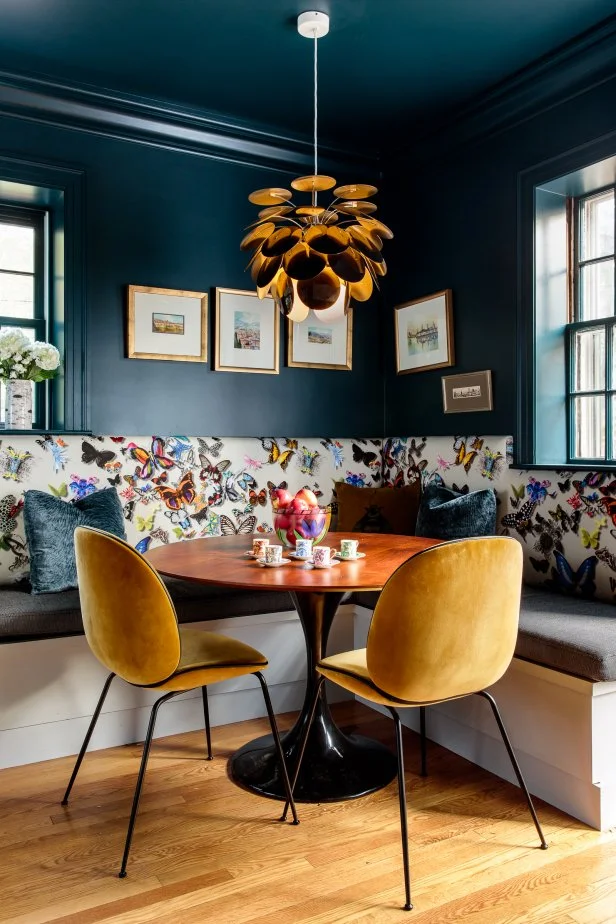
Busy wallpaper or a super bold accent wall can compete visually with an ornate 11-arm chandelier. If your fixture already has a lot of detail, crystal drops, curved arms, multiple candle covers, give your walls a break with a calmer, more neutral backdrop.
Soft greens, warm greiges, and muted blues all let the fixture stay the star of the show without feeling washed out.
Tip: paint a large sample swatch and view it under the chandelier’s actual light at night, not just daytime, since bulb color temperature changes how paint reads.
Coastal homes lean toward soft blues and whites, while traditional rooms often prefer deep, rich hues like hunter green or navy.
Once your walls are settled, think about what’s sitting on your table besides food.
9. Coordinate Table Settings With the Fixture’s Tone
Little details tie a room together more than people expect. If your chandelier has warm gold accents, pull that same warmth into your table runner, candle holders, or even napkin rings. It creates a cohesive story from ceiling to tabletop.
I’m not saying match everything exactly, that gets boring fast. Instead, pick two or three recurring tones that show up in the fixture, the rug, and the table decor.
Practical tip: keep a small fabric or paint swatch from your dining room in your phone’s photo album so you can shop for matching decor on the go.
Glam spaces love metallic table accents, while farmhouse rooms do better with matte, natural textures like linen and wood.
Let’s move to something people often forget entirely, the ceiling itself.
10. Treat the Ceiling as Part of the Design
Your 11 chandelier dining room fixture hangs from the ceiling, so why leave that surface totally blank? A simple ceiling medallion behind the fixture adds architectural interest and makes the whole installation look custom-built rather than store-bought.
Wood beam details or a fresh coat of paint in a soft contrasting tone above the chandelier also draws the eye upward in a good way.
Tip: choose a medallion slightly larger than the chandelier’s canopy so it peeks out from underneath rather than hiding completely.
Traditional and colonial-style homes love ornate plaster medallions, while modern spaces might opt for a recessed tray ceiling instead.
With the ceiling handled, let’s zoom back down to seating, because chairs matter more than most people realize.
11. Pick Dining Chairs That Balance the Fixture’s Weight
An ornate, heavy-looking 11-arm chandelier can make delicate chairs look flimsy by comparison. Balance visual weight by choosing chairs with a bit of substance, upholstered backs, carved wood details, or a slightly thicker frame.
That said, you don’t need chairs that scream for attention. Simple silhouettes in a complementary tone often work best so the chandelier stays the focal point.
Practical tip: mix a few statement end chairs with simpler side chairs if you want variety without visual competition.
Modern rooms often go with sculptural, minimal chairs, while traditional dining rooms favor classic wingback or Chippendale-style seating.
Last but not least, let’s talk about something that ties every single idea above together.
12. Plan Your Bulb Choice for Warmth and Longevity
The bulbs you choose change everything about how your chandelier actually feels in daily life. Warm white bulbs, around 2700K to 3000K, flatter skin tones and food way better than cool white or daylight bulbs, which can feel clinical in a dining setting.
LED candelabra bulbs now mimic that flickering warm glow of old-school incandescent without the energy cost or constant bulb replacement.
Practical tip: buy one extra bulb when you purchase your set, so you have a matching replacement ready when one eventually burns out.
Every style, from farmhouse to glam to coastal, benefits from warm-toned bulbs since they make food and faces look their best.
Tips for Success
- Always test chandelier placement with painter’s tape on the ceiling before drilling anything permanent.
- Buy your rug and paint samples before the chandelier if you’re starting from scratch, since lighting is easier to match later.
- Keep at least 7 feet of clearance from the floor to the bottom of the chandelier so tall guests don’t bump their heads.
- Clean crystal or glass elements every few months since dust dulls sparkle fast and is very noticeable under direct light.
- Don’t skip the dimmer switch. It’s the single easiest way to make an 11-arm fixture feel intentional rather than harsh.
- Photograph your dining room at night before buying decor, so you understand how the fixture actually casts light and shadow.
Common Mistakes and How to Avoid Them
Hanging the chandelier too low
: Keep at least 30 inches of clearance above the tabletop so it doesn’t interfere with sightlines across the table during meals.
Choosing a fixture too small for the table
: Measure your table width first and pick a chandelier that’s roughly half to two-thirds that width for proper scale.
Mixing too many metal finishes
: Stick to one dominant metal tone across lighting and hardware to avoid a disjointed, thrown-together look.
Skipping additional light sources
: Pair the chandelier with sconces or lamps so the room doesn’t feel flat or overly bright from a single source.
Ignoring bulb color temperature
: Choose warm white bulbs between 2700K and 3000K to keep the dining room feeling cozy rather than clinical.
Forgetting to plan for chain or rod adjustment
: Measure ceiling height accurately before installation so the fixture hangs proportionally, not too high or too low.
Similar Variations
- Tiered Crystal Chandelier Dining Room: Multiple stacked layers of crystal for a more dramatic, formal dining statement.
- Linear Chandelier Dining Room: A single elongated fixture perfect for narrow or extra-long tables.
- Rustic Wagon Wheel Chandelier: Wood and iron combo that suits farmhouse and cabin-style dining spaces.
- Drum Shade Chandelier Dining Room: A fabric or metal drum shade softens light for a cozier, modern feel.
- Sputnik Chandelier Dining Room: Mid-century modern starburst design that adds a retro, artsy edge.
- Candle-Style Wrought Iron Chandelier: Mimics old-world European dining halls with a moodier, traditional vibe.
Getting your dining room lighting right isn’t about following rigid rules, it’s about balance between scale, finish, and light quality. Once you nail those basics, everything else, the rug, the chairs, the wall color, just falls into place naturally around that centerpiece. An 11 chandelier dining room, when done thoughtfully, becomes the kind of space people remember long after dinner’s over.
Leave a Reply