
I’ve spent way too many hours scrolling through lighting stores trying to find the right dining room chandelier, so I put together this guide to save you that headache. This isn’t a rushed list. I actually dug into what works, what doesn’t, and why, so you get real answers instead of generic fluff.
A dining room chandelier is a hanging light fixture installed above a dining table, usually centered, that provides both ambient lighting and a decorative focal point. The right size, height, and style depend on your table dimensions, ceiling height, and the room’s overall design.
Stick around, because I’m about to walk you through 12 chandelier ideas, a sizing table, a budget breakdown, and the mistakes I see people make over and over again.
What Makes a Dining Room Chandelier Actually Work
Here’s the thing about chandeliers. They’re not just lights. They’re basically jewelry for your ceiling. A good one pulls the whole room together, sets the mood for dinner, and gives guests something to look up at (literally) when they walk in.
But a chandelier that’s too small looks lost. One that’s too big feels like it’s about to swallow your table. The trick is balancing size, height, and style with the rest of your room. I’ll show you exactly how to do that with real examples below, so by the end you’ll know which direction fits your space best.
1. Go Bold with an Oversized Statement Chandelier

If your dining room has high ceilings, don’t be shy. An oversized chandelier fills empty space above the table and instantly becomes the room’s main event. Think dramatic metal frames, cascading crystals, or a mix of both.
The key is proportion. Your chandelier’s width should be about half to two-thirds of your table’s width. So if your table is 72 inches long, look for a fixture around 36 to 48 inches wide.
Practical tip: measure your ceiling height first. You need at least 30 to 36 inches of clearance between the chandelier’s bottom and the table.
This idea works great in traditional and glam homes, but you can find oversized fixtures in matte black or brass for a more modern look too. Now let’s talk about what happens when your ceilings aren’t quite so tall.
2. Choose a Low-Profile Drum Shade for Modest Ceilings
Not every dining room has soaring ceilings, and that’s fine. A drum shade chandelier hugs closer to the ceiling and still delivers plenty of light without eating up vertical space. These usually come in fabric, metal, or frosted glass.
I like drum shades because they diffuse light softly, which makes dinner conversations feel warmer and less harsh. Pair a linen drum shade with a wood table for a cozy, understated look.
Actionable tip: measure from your ceiling to the tabletop. If it’s under 8 feet, a drum shade keeps things proportional without crowding the room.
This style adapts beautifully to farmhouse, transitional, and minimalist homes. Next, let’s look at a chandelier style that brings texture into the mix.
3. Add Warmth with a Wood and Iron Combo Chandelier
Mixing materials gives your dining room depth without trying too hard. Wood and iron chandeliers combine rustic charm with an industrial edge, which works surprisingly well in almost any home.
The wood adds warmth. The iron adds structure. Together they feel grounded instead of fussy. I’ve seen these in circular ring designs, wagon-wheel shapes, and even boxy geometric frames.
Practical tip: match the wood tone to your existing furniture. If your table is a light oak, look for a chandelier with a similar finish so things don’t clash.
This combo shines in farmhouse and rustic spaces, but a blackened iron frame with dark walnut accents can lean more modern industrial too. Speaking of modern, let’s talk metal finishes next.
4. Try a Matte Black Fixture for Modern Drama
Matte black chandeliers have been everywhere lately, and honestly, I get why. Black grounds a room. It adds contrast against white walls or light ceilings, and it pairs with almost any color palette you already have going.
These fixtures usually come in linear designs, sputnik styles, or simple candle-style arms. They photograph beautifully too, which matters if you’re the type who likes your dining room to look good on camera.
Tip: if your dining room already has a lot of black accents (chairs, frames, hardware), a black chandelier ties everything together instead of adding more contrast.
Matte black adapts to modern, industrial, and even traditional spaces when paired with warm wood tones. Now, let’s swing toward something with a little sparkle.
5. Bring in Crystal Accents Without Going Overboard
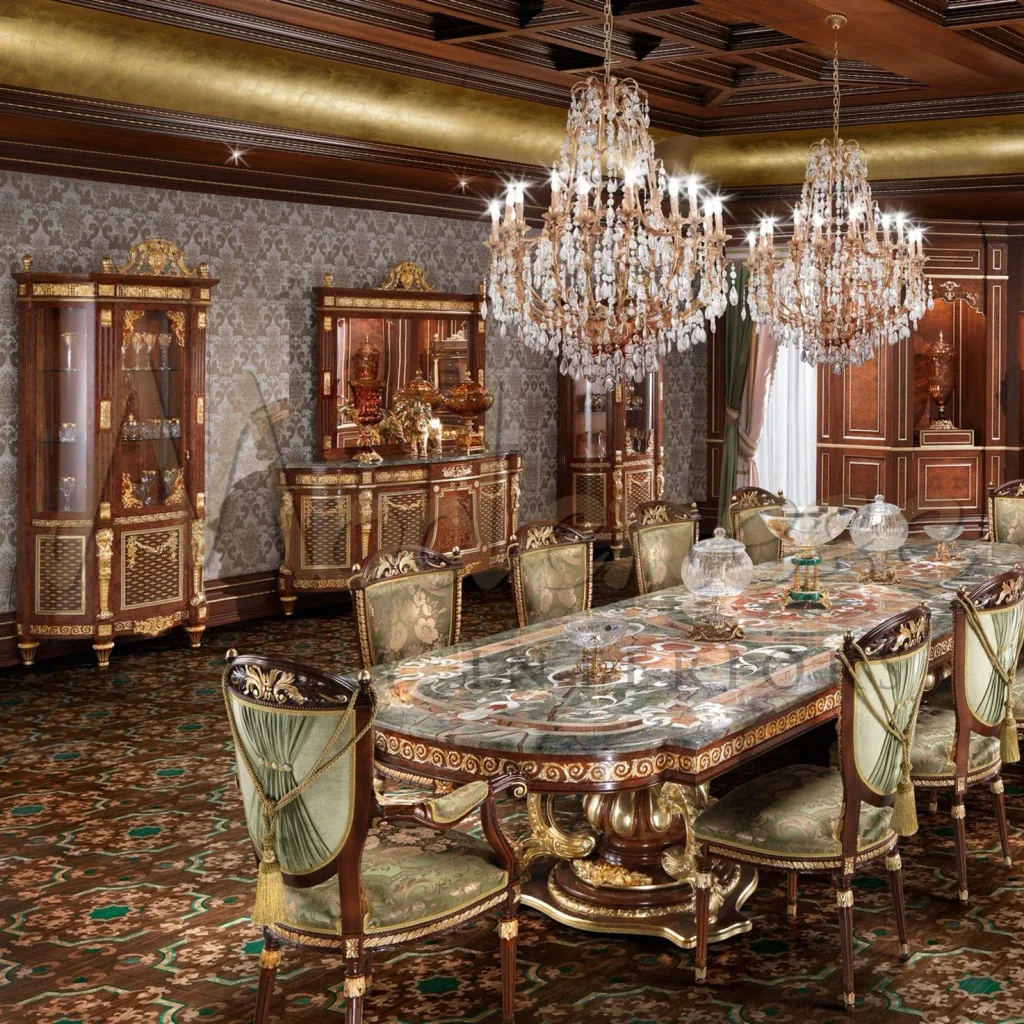
Crystal chandeliers get a bad reputation for looking too fancy or old-fashioned, but modern versions have changed that. Think smaller crystal clusters on a sleek metal frame instead of a giant ballroom-style fixture.
This gives you sparkle and light reflection without turning your dining room into a wedding venue. Crystals catch candlelight beautifully too, which is a nice touch for evening dinners.
Practical tip: choose a chandelier with removable or minimal crystal strands if you want flexibility to dress it up or down later.
This style works in glam, transitional, and even coastal homes when paired with white or sea glass toned crystals. Let’s move to something with a more natural feel next.
6. Use a Rattan or Woven Chandelier for Coastal Vibes
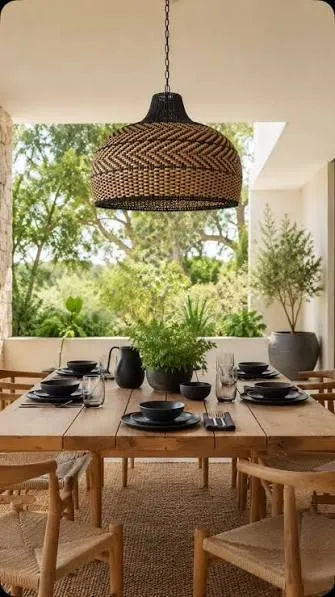
If your dining room leans coastal or boho, a rattan or woven chandelier softens the space instantly. These fixtures often look like oversized pendant lights with a basket-like shape, and they cast really pretty shadows on the ceiling when lit.
I love these because they bring texture without adding visual clutter. They’re lightweight looking, which helps in smaller dining rooms that can’t handle a heavy metal fixture.
Tip: pair a woven chandelier with linen curtains and a light wood table to keep the coastal theme consistent throughout the room.
This idea fits coastal, boho, and even Mediterranean-style homes surprisingly well. Now here’s a quick sizing table before we keep going.
Chandelier Size Guide by Table Length
| Table Length | Chandelier Width | Recommended Hanging Height Above Table |
|---|---|---|
| 48 inches | 24 to 30 inches | 30 to 34 inches |
| 60 inches | 30 to 36 inches | 30 to 34 inches |
| 72 inches | 36 to 44 inches | 32 to 36 inches |
| 84 inches | 42 to 50 inches | 32 to 36 inches |
| 96+ inches | 50+ inches or double fixtures | 34 to 38 inches |
7. Install a Linear Chandelier Over a Long Table
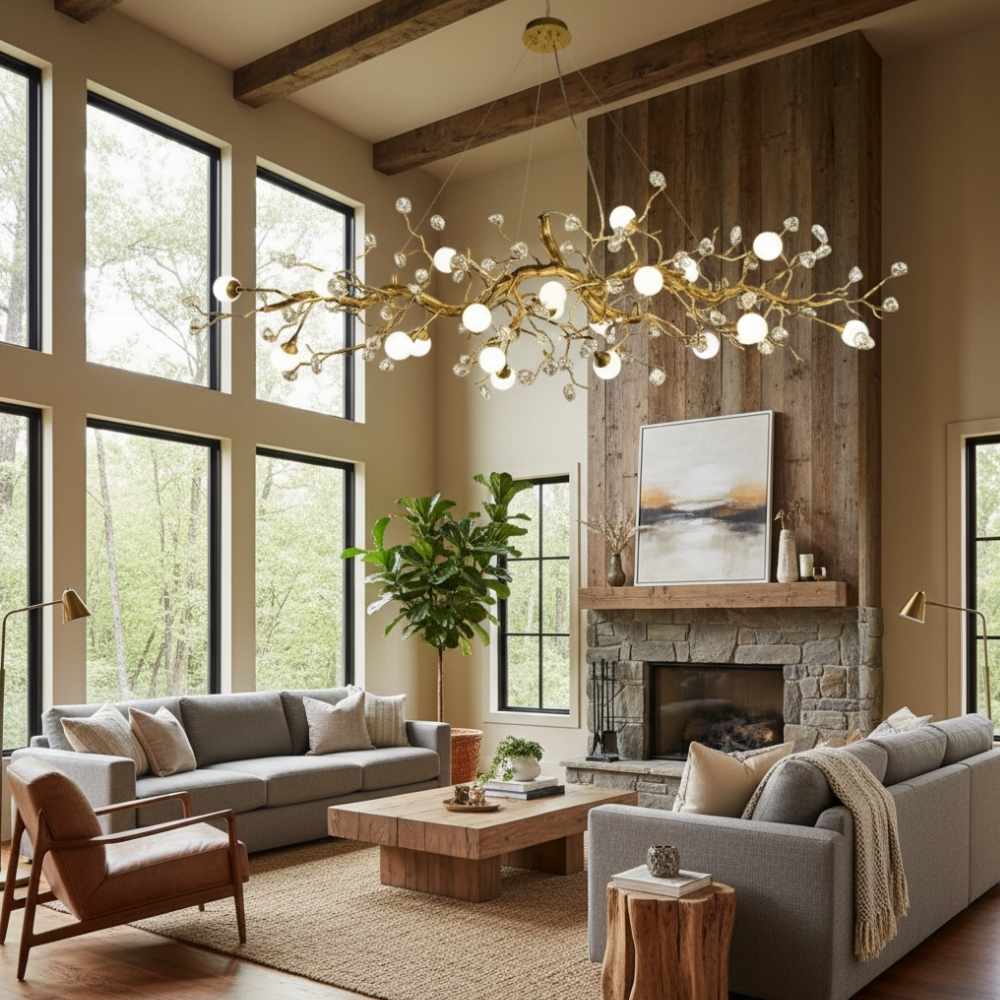
Round chandeliers look great over square or round tables, but if your table is long and rectangular, a linear chandelier fits the shape much better. These fixtures stretch horizontally instead of hanging in a single cluster, which spreads light more evenly down the table.
Linear designs often come in sleek metal finishes with exposed bulbs or small shades along the length. They look especially sharp in modern and contemporary dining rooms.
Practical tip: center the linear fixture over the table, not the room, since dining tables aren’t always centered in the space.
This works well in modern, industrial, and Scandinavian style homes. Next, let’s talk about a chandelier option that saves you money without sacrificing style.
8. Save Money with a Budget-Friendly Chandelier Alternative

Not everyone wants to drop hundreds of dollars on lighting, and that’s completely fair. Budget-friendly chandeliers made from lightweight metal, acrylic crystals, or basic fabric shades can still look expensive if you choose the right shape and finish.
Look for simpler silhouettes with fewer decorative extras since ornate details usually drive up the price. A clean, symmetrical design in a trending finish like brushed gold or matte black often looks more expensive than it actually cost.
Tip: shop clearance sections at lighting stores in January and July, when stores tend to clear out seasonal stock.
This approach works in any home style since budget doesn’t limit design. Now let’s go the opposite direction and talk about investing in a statement piece.
Chandelier Budget Tiers
| Budget Tier | Price Range | What You Typically Get |
|---|---|---|
| Budget | $80 to $200 | Basic metal or fabric shade, standard finishes |
| Mid-range | $200 to $500 | Better materials, more finish options, larger sizes |
| High-end | $500 to $1,200 | Designer brands, crystal accents, mixed materials |
| Luxury | $1,200+ | Custom sizing, imported materials, statement scale |
9. Splurge on a Designer Piece as Your Room’s Focal Point

Sometimes it’s worth spending more on one great chandelier instead of dropping money on lots of smaller decor pieces. A designer chandelier becomes the anchor of your whole dining room, meaning you can actually simplify other elements like wall art or table decor.
These pieces often use higher quality materials like hand-blown glass, solid brass, or genuine crystal, which age better and hold up longer than budget versions.
Practical tip: if you’re splurging, choose a timeless shape (like a classic tiered design or simple sputnik) so it doesn’t feel dated in five years.
This works especially well in traditional, glam, and transitional homes. Let’s shift gears now to something a little more playful.
10. Add Personality with a Colored Glass Chandelier
White and clear glass get most of the attention, but colored glass chandeliers add a fun pop of personality. Amber, smoky gray, or even soft blue glass shades add warmth or coolness depending on the tone you pick.
These work especially well if your dining room has neutral walls and furniture, since the chandelier becomes the color statement without overwhelming the space.
Tip: choose warm tones like amber or smoked topaz if your room gets a lot of natural light, since these colors glow beautifully at sunset.
This idea fits midcentury modern, eclectic, and transitional homes really well. Now, let’s talk about layering multiple light sources instead of relying on just the chandelier.
Tips for Success
- Always measure your table and ceiling height before shopping, not after you fall in love with a fixture online.
- Bring a paint swatch or fabric sample from your dining room when shopping in person, since lighting finishes can look different under store lighting.
- Consider the bulb type and color temperature, warm white (2700K to 3000K) usually feels more inviting than cool white.
- Don’t ignore the chain or rod length, most chandeliers can be adjusted but double check before buying if your ceiling is unusually tall or short.
- Think about cleaning and maintenance, crystal chandeliers need more upkeep than simple metal or glass fixtures.
- Test the switch compatibility, older homes sometimes need an electrician to update wiring for dimmable fixtures.
Common Mistakes and How to Avoid Them
Hanging the chandelier too high
: Keep it 30 to 36 inches above the tabletop so it doesn’t feel disconnected from the dining experience.
Choosing a fixture that’s too small for the table
: Follow the half to two-thirds width rule based on your table’s length to keep proportions balanced.
Ignoring the room’s overall style
: Pick a finish and shape that complements your existing furniture instead of shopping in isolation.
Forgetting about dimmer compatibility
: Check the fixture’s specs and your home’s wiring before installation to avoid returning it later.
Centering the chandelier on the room instead of the table
: Measure from the table’s center, especially if your table isn’t centered in the actual room layout.
Overlooking bulb color temperature
: Stick with warm white bulbs for most dining rooms since cool white can feel clinical during meals.
Similar Variations
- Kitchen Island Pendant Lighting: smaller scale fixtures hung over kitchen islands instead of dining tables
- Foyer Chandeliers: taller, narrower designs meant for entryways with high ceilings
- Bedroom Chandeliers: softer, smaller fixtures used as a statement piece above a bed or reading nook
- Outdoor Chandeliers: weather-resistant versions designed for covered patios or outdoor dining spaces
- Multi-Tier Ballroom Style Chandeliers: larger, layered designs typically reserved for formal or oversized dining rooms
- Mini Chandeliers for Breakfast Nooks: compact versions scaled down for smaller eating areas
Picking the right chandelier really comes down to knowing your space, your table size, and the mood you’re going for. Once you nail those three things, everything else, the finish, the material, the price, becomes a lot easier to figure out. I hope this list gave you a clearer picture of what to look for the next time you’re standing in a lighting aisle wondering where to even start with a 10 Dining Room Chandelier decision.
Leave a Reply