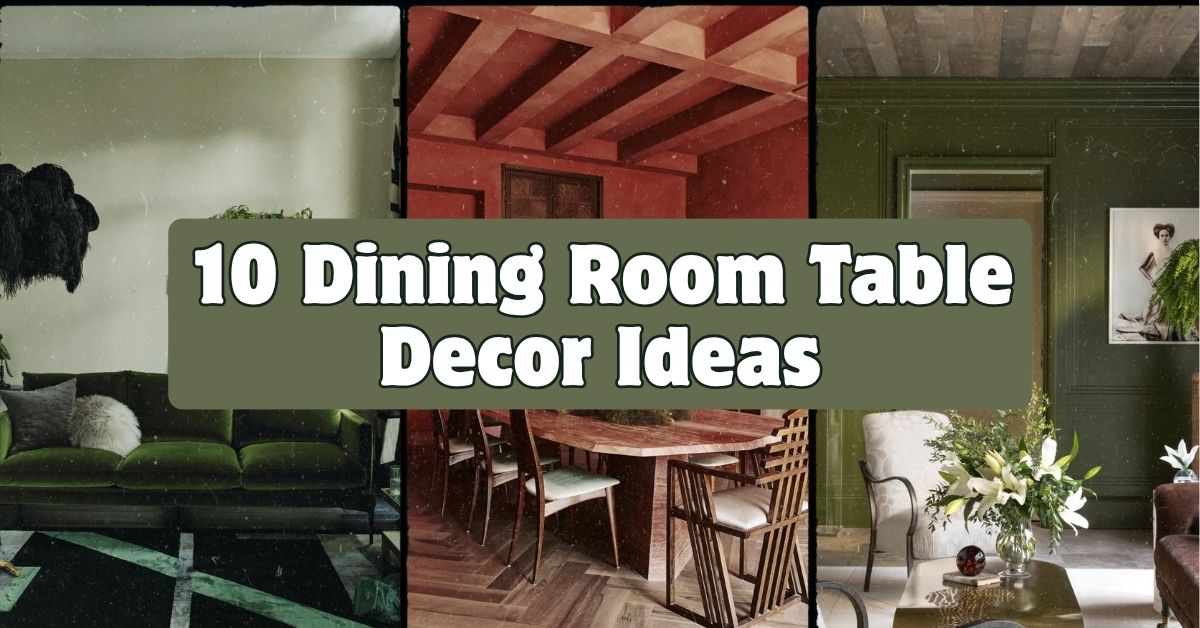
If you’ve ever stared at your dining table wondering why it looks like a leftover storage spot instead of the heart of your home, I’ve got you covered with 10 dining room table decor ideas that actually work. I’ve tested most of these in my own house, and I’ve watched what makes guests say “wow” versus what makes them squint and look away.
A dining table centerpiece should balance height, color, and texture without blocking conversation across the table. The most functional setups use low or narrow arrangements, natural materials, and a repeatable color scheme tied to the room’s overall palette.
Stick around, because I’m about to walk you through everything from budget-friendly runner tricks to seasonal swaps that take five minutes but change the whole vibe of the room.
What Makes Dining Table Decor Actually Work
Here’s the thing about dining table decor. It’s not just about looking pretty in photos. It has to survive real life. Kids knocking elbows. Guests reaching for the mashed potatoes. Wine glasses clinking too close to your favorite vase.
Good dining table decor does three things at once. It looks nice when the table’s empty. It doesn’t get in the way during meals. And it can flex between “everyday casual” and “holiday fancy” without a full redo.
I think a lot of people overthink this. You don’t need a designer eye. You just need a few smart pieces and a plan for how they work together. Let’s get into it.
1. Anchor the Table With a Textured Runner

A table runner is the easiest way to add instant style without committing to anything permanent. It gives your eye a place to land and helps ground whatever centerpiece you put on top. I like linen or woven cotton runners because they add texture without screaming for attention.
Pick a runner that contrasts slightly with your tabletop. Dark wood table? Go with a cream or oatmeal runner. Light wood or white table? Try a deeper charcoal or rust tone.
Practical tip: leave at least six inches of table showing on each side of the runner so it doesn’t look cramped.
This works in almost any style. Farmhouse loves a chunky waffle-weave runner. Modern spaces do better with a slim, solid-color linen strip. Once your runner’s down, you’re ready to build height with your centerpiece.
2. Build a Low-Profile Centerpiece for Everyday Use
Tall centerpieces look great in photos, but they’re annoying during actual meals. Nobody wants to duck around a giant vase to see the person across from them. That’s why I always tell people to keep everyday centerpieces low, under 12 inches tall.
A wooden bowl with lemons, a shallow tray with candles, or a cluster of small potted succulents all work great. The goal is visual interest without blocking sightlines.
Actionable tip: measure your centerpiece height while sitting down at the table, not standing. That’s the real test.
Traditional homes might use a silver bowl with fruit. Coastal spaces do well with a driftwood tray and shells. Once you’ve nailed the everyday look, you can start layering in seasonal swaps.
3. Swap Centerpieces With the Seasons

This one’s simple but people skip it constantly. Your table decor shouldn’t look the same in July as it does in December. Seasonal swaps keep things feeling fresh without spending much money.
Fall calls for small pumpkins, dried wheat, or cinnamon sticks tied with twine. Winter wants candles, pinecones, or sprigs of eucalyptus. Spring and summer are perfect for fresh flowers or a bowl of citrus.
Practical tip: keep a small storage bin specifically for seasonal table decor so you’re not digging through boxes every few months.
This idea adapts to any style because you’re just swapping materials, not the whole concept. Modern homes keep the swaps minimal and monochrome. Traditional homes go bigger with color and abundance. Speaking of color, let’s talk about how to actually choose one.
Seasonal Color Palette Guide
| Season | Primary Colors | Materials to Use | Budget Estimate |
|---|---|---|---|
| Spring | Blush, sage, soft yellow | Fresh flowers, ceramic vases | $15-$40 |
| Summer | White, coral, ocean blue | Citrus, glass jars, linen | $10-$30 |
| Fall | Rust, mustard, deep brown | Dried wheat, pumpkins, twine | $10-$35 |
| Winter | Forest green, cream, gold | Pinecones, candles, eucalyptus | $15-$45 |
4. Choose a Color Scheme That Ties to the Whole Room
Your dining table decor shouldn’t feel disconnected from the rest of the room. If your walls are warm and earthy, don’t throw a bright turquoise centerpiece on the table. Pick two or three colors max and repeat them in small doses across your runner, candles, and dishware.
I like starting with the wall color, then pulling one accent from your rug or curtains. That accent becomes your “pop” color on the table.
Practical tip: hold your centerpiece items up against your dining chairs before buying. If they clash, put them back.
Modern homes do well with a strict two-color rule. Traditional and eclectic spaces can handle three or four colors as long as they share a common tone family. Once your palette is locked in, layering in candles adds warmth fast.
5. Layer in Candles for Instant Warmth
Candles are cheap, easy, and they make any table feel more intentional. I like using a mix of heights, three or five candles in varying sizes, clustered together instead of spread out.
Taper candles in simple holders look elegant without trying too hard. Pillar candles in glass hurricanes work great if you’ve got kids or pets knocking into things.
Practical tip: unscented candles are better for the dining table since scented ones can compete with food smells.
Coastal homes love white taper candles in driftwood holders. Traditional dining rooms often go with brass candlesticks. Farmhouse spaces do well with candles in mason jars. Next, let’s talk about what’s underneath all this, your dishware.
6. Mix Your Dishware Instead of Matching It Perfectly
I used to think you had to buy a matching dish set to look “put together.” Turns out, mixing textures and shapes actually looks more interesting. Try pairing a solid-color dinner plate with a patterned salad plate, or mixing matte and glossy finishes.
The trick is picking one common color that ties everything together, even if the patterns are different.
Practical tip: buy dishware in sets of two colors max so mixing stays intentional instead of chaotic.
Eclectic and boho homes thrive on this mismatched look. Modern spaces should keep mixing subtle, maybe just two plate styles in the same color family. Once your table is set, it’s time to think about what’s happening above it.
7. Hang a Statement Light Fixture Above the Table

Your dining table decor doesn’t stop at the tabletop. What’s hanging above matters just as much. A pendant light or small chandelier draws the eye up and makes the whole space feel finished.
The general rule is hanging your fixture 30 to 36 inches above the table surface. Too high and it feels disconnected. Too low and people bonk their heads.
Practical tip: measure your ceiling height first. Standard 8-foot ceilings need a more compact fixture than a room with vaulted ceilings.
Modern homes love sculptural metal pendants. Traditional dining rooms go for crystal chandeliers. Farmhouse spaces often use a row of small glass globes. With the lighting sorted, let’s ground the whole space with a rug.
8. Add a Rug to Define the Dining Zone
A rug under your dining table does more than add comfort underfoot. It defines the space, especially in open-concept homes where the dining area blends into the living room.
Pick a rug that extends at least 24 inches beyond the edge of the table on all sides. This way, chairs stay on the rug even when pulled out.
Practical tip: flat-weave rugs are way easier to clean under a dining table than thick shag styles. Trust me on this one.
Coastal homes love jute or sisal rugs. Traditional spaces often choose patterned wool. Modern dining rooms tend to go with a simple geometric print in neutral tones. Once the floor’s handled, let’s look at your walls.
Rug Size Guide by Table Shape
| Table Shape | Table Size | Recommended Rug Size |
|---|---|---|
| Rectangular | 6-seat table | 6×9 feet |
| Rectangular | 8-seat table | 8×10 feet |
| Round | 4-seat table | 6×6 feet round or 8×8 feet |
| Square | 4-seat table | 6×6 feet |
9. Dress Up the Walls With Art at Eye Level
A dining table doesn’t exist in isolation. The walls around it are part of the decor too. Hang art at eye level when seated, roughly 60 inches from the floor to the center of the piece.
I like using a gallery wall of small framed prints on one side, and a single large statement piece on the other side of the room for balance.
Practical tip: measure from a seated position, not standing, since that’s how most people will actually view the art during meals.
Traditional homes lean toward framed landscapes or family portraits. Modern spaces prefer abstract art or black-and-white photography. With walls sorted, let’s think about texture on the table itself.
10. Bring in Natural Texture With Wood, Stone, or Woven Elements
Texture makes a table feel layered and lived-in instead of flat. Think wooden trays, stone coasters, or woven placemats. These materials add depth without adding clutter or color competition.
I always keep at least one natural material on my table at all times, even when I swap out seasonal decor. It’s like a home base for the whole setup.
Practical tip: rotate between wood and stone textures every few months so the table doesn’t feel stagnant.
Boho and coastal homes go heavy on woven textures like rattan and jute. Modern spaces might use a single sleek stone tray instead of multiple pieces. Now let’s talk about greenery, because no table feels complete without a little life in it.
Tips for Success
- Start with function first. Decide how the table gets used daily before adding decorative layers.
- Buy versatile pieces that work for both everyday meals and special occasions.
- Keep a decor storage bin so seasonal swaps take minutes, not hours.
- Test centerpiece height while seated, not standing, every single time.
- Stick to a three-color max rule for a cohesive look across runners, dishware, and candles.
- Don’t ignore what’s above the table. Lighting changes the whole mood of the room.
- Rotate textures every few months to keep the space feeling fresh without buying new stuff.
Common Mistakes and How to Avoid Them
Centerpiece too tall
: Guests can’t see each other across the table. Keep everyday centerpieces under 12 inches.
Matching everything perfectly
: The table looks stiff and impersonal. Mix textures and finishes with one shared color.
Ignoring the rug size
: A too-small rug makes the whole area look off-balance. Always add 24 inches beyond the table edge.
Overcrowding the table
: Too many objects leave no room for actual dinnerware. Stick to three or four decor items max.
Skipping seasonal updates
: The table feels stale year-round. Swap small elements every few months to keep it feeling current.
Hanging lighting too high or low
: The fixture either floats awkwardly or blocks sightlines. Keep it 30 to 36 inches above the table.
Similar Variations
- Coastal Dining Decor – light woods, jute textures, and blue and white color palettes for a beachy feel.
- Farmhouse Dining Decor – reclaimed wood, mason jars, and neutral linens for a cozy, rustic look.
- Modern Minimalist Dining Decor – clean lines, monochrome palettes, and sculptural centerpieces.
- Traditional Formal Dining Decor – crystal, silver accents, and rich wood tones for a classic feel.
- Boho Dining Decor – mixed patterns, woven textures, and warm earthy colors layered together.
- Scandinavian Dining Decor – light woods, simple ceramics, and soft neutral tones with minimal clutter.
Getting your dining table decor right isn’t about following one strict formula. It’s about layering small choices, color, texture, height, and personal touches, until the space feels like it belongs to you. Start small, test what works during actual meals, and build from there instead of trying to nail everything at once. I hope these 10 dining room table decor ideas give you a clear starting point for making your dining table feel like the best seat in the house.
Leave a Reply