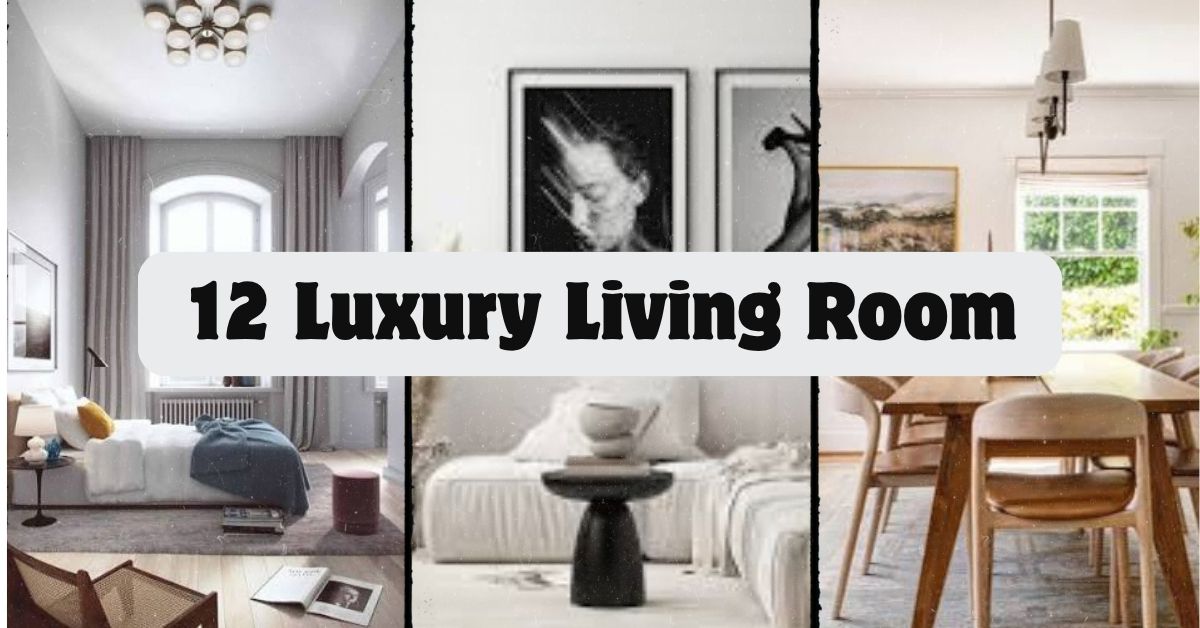
I’ve spent way too many hours scrolling design sites looking for a 12 luxury living room roundup that doesn’t just show pretty pictures without telling you how to actually pull the look off, so I put together the guide I wish I’d found first. This one covers real furniture picks, real color combos, and real budget numbers so you’re not left guessing.
A luxury living room is a space designed with high-end materials, layered lighting, and curated furniture to create a hotel-like, upscale atmosphere. It focuses on quality over quantity, using rich textures, tailored furniture, and intentional color palettes.
Stick around, because I’m about to walk you through twelve specific ways to get there, plus the mistakes that quietly wreck the whole vibe.
What Makes a Living Room Feel “Luxury” Anyway?
Here’s the thing nobody tells you: luxury isn’t about spending the most money. It’s about intention. A luxury living room feels calm, put-together, and a little bit indulgent, like someone thought hard about every choice in the room. It usually means fewer pieces, but better ones. Think a single gorgeous sofa instead of three mismatched ones. Think soft lighting instead of one harsh overhead bulb. It’s rich fabrics, clean lines, and colors that feel expensive even if they weren’t. Once you get the formula, you can recreate it in a tiny apartment or a huge house. Let’s get into the specifics.
1. Start With a Neutral Base and Let Texture Do the Talking
Luxury rooms almost never scream with color. They whisper with texture instead. Think creamy whites, warm greiges, soft taupes, and deep charcoals. The magic happens when you layer different materials on top of that quiet base: a bouclé chair, a velvet throw pillow, a linen sofa, a leather ottoman.
My tip: pick one neutral as your wall color, then bring in three or four textures through furniture and soft goods. Don’t rely on paint alone to create interest.
This works in every style. Modern spaces keep textures sleek and simple, while traditional rooms pile on more layers like tassels and brocade. Once your neutral canvas is set, you’re ready to bring in a furniture piece that anchors the whole room.
2. Invest in One Statement Sofa Instead of Several Average Ones
If there’s one place to spend real money, it’s the sofa. A high-quality sofa with a solid wood frame, down-blend cushions, and a tailored silhouette instantly makes a room feel expensive. Skip the boxy, mass-produced look. Go for curved arms, channel tufting, or a low-profile design instead.
Actionable tip: measure your room and buy a sofa that fits the scale. Oversized furniture in a small room kills the luxury feel fast.
For coastal homes, pick a slipcovered linen sofa in ivory. For modern spaces, try a sleek leather sectional. Traditional rooms do well with rolled arms and nailhead trim. Once your sofa is set, the coffee table becomes your next big decision.
3. Choose a Coffee Table That Doubles as Art
A luxury coffee table isn’t just a surface for your remote control. It’s a sculptural piece. Marble tops, brass bases, and organic wood slabs all read as high-end. The key is picking one material that contrasts nicely with your sofa fabric.
Practical tip: if your sofa is soft and textured, balance it with a hard, reflective coffee table like glass or polished stone.
Modern homes lean toward smoked glass and matte black metal. Traditional spaces often use carved wood with a rich, dark finish. Coastal rooms prefer bleached wood or rattan. With your table chosen, let’s talk about the floor beneath it.
4. Layer a Plush Area Rug for Instant Warmth
Nothing kills a luxury vibe faster than a bare floor or a thin, scratchy rug. A dense, plush area rug grounds the whole room and adds that “sink your feet in” comfort factor. Wool and wool-blend rugs are the gold standard because they hold their shape and feel soft for years.
Tip: size your rug so all four legs of your sofa sit on it. A too-small rug is one of the fastest ways to make a room look cheap.
Modern spaces like abstract or solid-color rugs. Traditional rooms go for oriental or medallion patterns. Coastal homes often choose jute or a soft blue and white weave. Once the rug is down, lighting is next on the list.
5. Layer Your Lighting Instead of Relying on One Fixture
Hotels never light a room with a single overhead light, and neither should you. Luxury rooms use at least three light sources: ambient (a chandelier or flush mount), task (a floor lamp by the reading chair), and accent (small table lamps or picture lights).
Actionable tip: put every light source on a dimmer. Being able to lower the brightness instantly makes a room feel more upscale in the evening.
Modern homes like sculptural, metal fixtures. Traditional spaces often use crystal chandeliers. Coastal rooms prefer woven pendant shades. Lighting sets the mood, but window treatments finish the frame around it.
6. Hang Floor-to-Ceiling Drapes, Even If Your Windows Are Small
This is one of the cheapest tricks that makes the biggest difference. Hanging curtains from near the ceiling down to the floor, rather than just above the window frame, tricks the eye into thinking the ceiling is taller. Use a heavier fabric like velvet or a lined linen for a rich drape.
Tip: mount your curtain rod six to eight inches above the window frame and let the panels just kiss the floor or puddle slightly.
Modern rooms like simple, solid panels in neutral tones. Traditional spaces add trim or a valance. Coastal homes prefer sheer, breezy linen. Once your windows are dressed, it’s time to think about color and how the whole palette works together.
Luxury Color Palette Combinations by Style
| Style | Wall Color | Accent Color | Metal Finish | Best Fabric Pairing |
|---|---|---|---|---|
| Modern | Warm White | Charcoal | Matte Black | Leather + Bouclé |
| Traditional | Soft Cream | Deep Emerald | Antique Brass | Velvet + Silk |
| Coastal | Sandy Beige | Ocean Blue | Brushed Nickel | Linen + Jute |
| Glam | Blush Grey | Gold | Polished Brass | Velvet + Satin |
| Transitional | Greige | Terracotta | Warm Bronze | Wool + Linen |
7. Add a Gallery of Art With Matching Frame Finishes
Bare walls read as unfinished, but mismatched art frames can look cluttered fast. Luxury rooms usually stick to one or two frame finishes across a whole gallery wall, like all matte black or all warm wood tones. This keeps things looking curated instead of thrown together.
Tip: pick artwork with a similar color story, even if the subjects differ, so the wall reads as one cohesive collection.
Modern spaces like abstract prints in thin metal frames. Traditional rooms go for oil-style paintings in ornate gold frames. Coastal homes lean toward framed botanical prints or beach photography. With your walls dressed, let’s bring in some greenery.
8. Bring in Large-Scale Greenery, Not Tiny Desk Plants
Little plants scattered around actually make a room feel busier and less put-together. Luxury spaces use one or two large statement plants, like a fiddle leaf fig or an olive tree, in a simple ceramic or woven planter.
Actionable tip: place your large plant in an empty corner that feels awkward. It fills the space without adding clutter.
Modern rooms like sculptural plants in geometric planters. Traditional spaces prefer classic ferns or palms in brass urns. Coastal homes often use potted palms in woven baskets. Once your greenery is in place, think about how your furniture is arranged.
9. Arrange Furniture to Create a Cozy Conversation Zone
A common mistake is pushing all the furniture against the walls. Luxury living rooms pull seating inward to create an intimate cluster, even in a big room. Two chairs facing the sofa with a coffee table in the middle feels far more upscale than everything lined up against the perimeter.
Tip: leave about 30 to 36 inches of walking space between furniture pieces so the room still feels open, not cramped.
Modern spaces like symmetrical, minimal arrangements. Traditional rooms often add a loveseat plus two chairs for a fuller conversational circle. Coastal homes keep it breezy with fewer, lighter pieces. Now let’s talk about the small details that pull it all together.
10. Style Your Shelves and Surfaces Like a Boutique Hotel Lobby
Cluttered shelves are a dead giveaway that a room isn’t fully considered. Luxury spaces style shelves and side tables in odd-numbered groupings, usually three items, mixing height, texture, and one meaningful object like a small sculpture or a stack of coffee table books.
Practical tip: use the rule of three. One tall item, one medium, one small, grouped close together on any surface.
Modern rooms keep styling minimal, maybe just one object per shelf. Traditional spaces layer in more collected pieces like framed photos and small antiques. Coastal homes add shells, coral, or glass objects. Once your surfaces are styled, don’t forget the ceiling above you.
11. Add Architectural Detail With Molding or a Coffered Ceiling
This one takes more effort, but it’s a total game-changer. Adding crown molding, wainscoting, or a coffered ceiling gives a room instant architectural weight. It’s the kind of detail that makes people ask, “Wait, is this a new build or an old one?”
Tip: if a full renovation isn’t in the budget, peel-and-stick molding panels or a simple picture-frame wall treatment can fake the look for a fraction of the price.
Modern homes keep molding simple and thin. Traditional spaces go bold with deep coffered ceilings. Coastal rooms often use shiplap instead of formal molding. With the architecture handled, let’s talk about scent and sound, two details people forget.
12. Layer in Scent and Sound for a Full Sensory Experience
Luxury isn’t just visual. Hotels use signature scents and soft background music for a reason: it makes a space feel finished and intentional. A quality candle or reed diffuser near the seating area, plus a small speaker for soft music, rounds out the whole experience.
Actionable tip: pick one signature scent for your living room and stick with it. Consistency is part of what makes luxury spaces feel memorable.
Modern homes prefer woody, smoky scents. Traditional spaces like warm vanilla or amber. Coastal rooms lean toward sea salt or citrus. And that wraps up the twelve ideas, but let’s make sure you avoid the traps that undo all this good work.
Budget Tiers for a Luxury Living Room Refresh
| Budget Tier | Total Range | What You Can Prioritize |
|---|---|---|
| Starter | $800 – $2,000 | Rug, lighting, throw pillows, curtains |
| Mid-Range | $2,000 – $6,000 | Add a statement sofa and coffee table |
| High-End | $6,000 – $15,000 | Custom upholstery, molding, art collection |
| Full Renovation | $15,000+ | Coffered ceiling, built-ins, whole-room redesign |
Tips for Success
- Buy fewer, better pieces instead of filling every corner with something.
- Stick to a maximum of three main colors in the whole room.
- Always dim your lights in the evening, even if you think the room looks fine as is.
- Clean and press your throw pillows and blankets weekly. Wrinkled fabric ruins a polished look fast.
- Swap seasonal accents like pillow covers or a smaller rug layer to keep the room feeling fresh.
- Keep cords and remotes hidden in a small basket or drawer near the seating area.
- Step back and photograph your room. Cameras catch clutter your eyes get used to.
Common Mistakes and How to Avoid Them
Too Many Accent Colors
: Stick to a core neutral plus one or two accent colors max. More than that starts to look chaotic instead of curated.
Undersized Rug
: Always size up. A rug that only fits the coffee table makes the whole room look smaller and cheaper than it is.
Skipping Window Treatments
: Bare windows feel unfinished. Even simple linen panels hung high add instant polish.
Overhead Lighting Only
: One bright bulb in the ceiling flattens a room. Add lamps and dimmers for depth and warmth.
Mismatched Metal Finishes
: Pick one or two metal tones, like brass and black, and repeat them throughout the room in hardware and fixtures.
Ignoring Furniture Scale
: A sofa that’s too big or too small for the room throws off the whole balance. Measure before you buy.
Similar Variations
- Modern Glam Living Room – Mixes clean modern lines with glossy metallics and plush velvet for extra sparkle.
- Old Money Living Room – Leans into heirloom-style furniture, deep wood tones, and understated traditional pieces.
- Coastal Luxury Living Room – Keeps the airy, beachy palette but swaps in higher-end linen and natural stone accents.
- Dark Academia Living Room – Uses deep greens, browns, and leather with lots of books and moody lighting.
- Minimalist Luxury Living Room – Strips things back to just a few high-quality pieces with almost no clutter at all.
- Art Deco Revival Living Room – Brings back bold geometric patterns, brass details, and jewel-tone velvet seating.
Getting a true 12 luxury living room look really comes down to a few habits: choosing quality over quantity, layering your lighting and textures, and keeping your color palette tight and intentional. Do those three things well, and the rest of the details fall into place a lot easier than you’d expect. Start with just one or two ideas from this list, live with them a while, and you’ll be amazed how quickly the rest of your 12 luxury living room vision comes together.
Leave a Reply