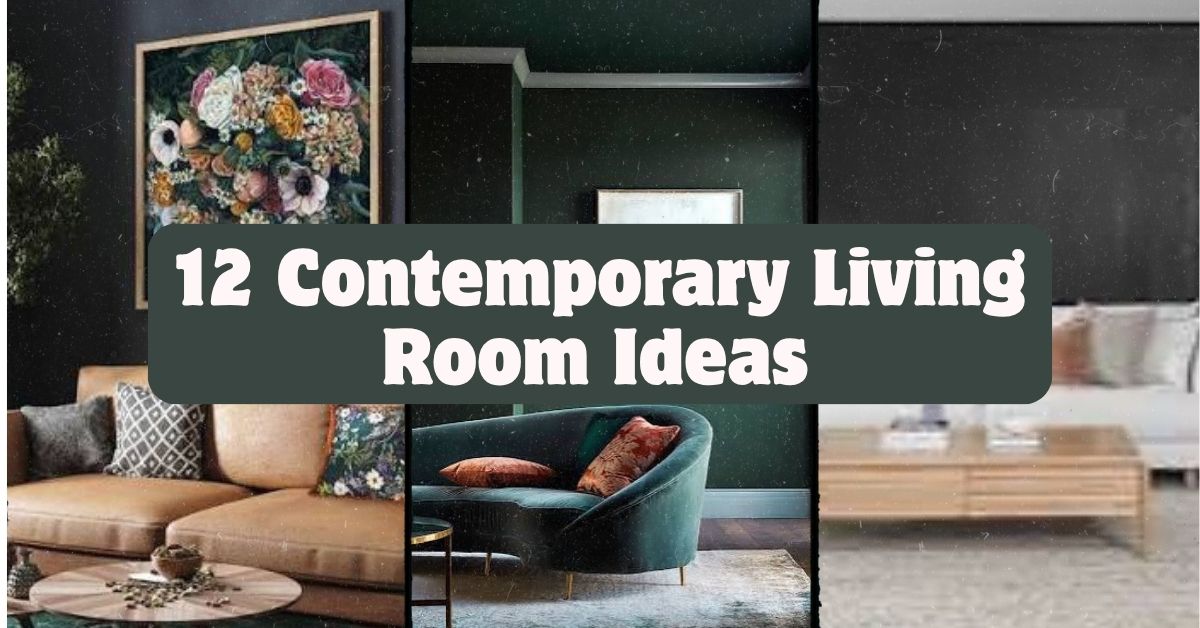
If you’re hunting for 12 Contemporary Living Room ideas that don’t look like a furniture showroom, you’re in the right spot. I’ve pulled together the most practical, real-world tested design moves that work whether you’re renting an apartment or redoing a forever home. This isn’t a list of vague inspiration, it’s an actual playbook.
Contemporary living room design refers to a current, ever-evolving style that favors clean lines, neutral palettes with bold accents, mixed textures, and functional furniture layouts. Unlike “modern” (a fixed historical style from the 1920s to 1950s), contemporary reflects what’s popular right now.
Stick around, because I’m about to break down exactly how to pull this look off in your own space, room by room, choice by choice.
What Makes a Living Room “Contemporary” Anyway?
Okay, so here’s the thing. People mix up “contemporary” and “modern” all the time. I did too for years. Modern design is locked in a time period. Think mid-century stuff. Contemporary is more like a moving target. It changes with the times, but it usually means clean lines, a calm color base, natural light, and furniture that doesn’t scream for attention. It’s less “look at me” and more “feel good in here.” That’s really the goal with this style. You want a room that feels current without feeling cold or showroom-fake.
1. Start With a Neutral Base and Build Up
Every contemporary living room I’ve ever loved started with a neutral foundation. Think warm whites, greige, soft taupe, or light gray on the walls and big furniture pieces. This isn’t boring, it’s smart. Neutrals let you change your mind later without repainting everything.
Pick one dominant neutral for walls and sofas, then layer in texture through pillows, throws, and rugs. Add one bold accent color through art or a single chair.
Practical tip: paint a large swatch (at least 2×2 feet) on your wall and look at it morning, noon, and night before committing.
This approach works in coastal homes with sandy tones, or in traditional spaces with warmer creams. Once your base is set, it’s time to think about what sits on top of it.
2. Choose Furniture With Clean, Low-Profile Lines
Contemporary furniture doesn’t have carved details or fussy trim. Sofas sit lower. Legs are thin and often metal or light wood. Arms are simple, sometimes barely there.
Look for a sofa with track arms and a low back. Pair it with a coffee table that has clean edges, glass, metal, or simple wood. Skip anything with heavy scrollwork or bulky cushions.
Actionable tip: measure your room and make sure your coffee table is about two-thirds the length of your sofa. That ratio just looks right.
In a farmhouse-style home, you can soften this with a wood table that still has straight lines. In a glam space, swap metal legs for brass ones. Once your big pieces are chosen, the color story ties it all together.
3. Anchor the Room With a Bold Accent Color
Neutral doesn’t mean boring. Contemporary rooms often have one punchy color that shows up in a few spots. Think a deep emerald pillow, a mustard throw, or a burnt orange accent chair.
The trick is repetition without overdoing it. Pick your accent color and let it show up three times in the room. Maybe a pillow, a piece of art, and a vase.
Practical tip: use the 60-30-10 rule. 60% neutral, 30% secondary color, 10% bold accent.
Color Palette Combos That Work
| Base Neutral | Secondary Tone | Accent Pop | Best For |
|---|---|---|---|
| Warm white | Soft gray | Terracotta | Coastal, boho |
| Greige | Navy blue | Mustard yellow | Traditional, transitional |
| Light taupe | Charcoal | Emerald green | Moody, eclectic |
| Cream | Sage green | Blush pink | Feminine, soft modern |
| Pale gray | Black | Cobalt blue | Minimalist, industrial |
This kind of color planning keeps the room from feeling flat. Once your palette is locked, lighting becomes your next big move.
4. Layer Lighting Instead of Relying on One Fixture
A single overhead light makes a room feel like an office. Contemporary spaces use layers: ambient, task, and accent lighting working together.
Add a floor lamp near a reading chair. Put a table lamp on a console. Use a dimmer on your overhead fixture so you can shift the mood at night.
Practical tip: aim for at least three light sources in any living room bigger than 150 square feet.
In a coastal home, choose rattan or woven shades. In a moody or industrial space, go with black metal fixtures. Good lighting sets the stage, but your rug ties the floor plan together.
5. Anchor the Space With a Well-Sized Area Rug
A too-small rug is one of the most common design mistakes I see. It makes furniture look like it’s floating on an island. Contemporary rooms use large rugs that all the front legs of your furniture can sit on.
Go for a low-pile rug in a neutral tone with subtle pattern, or a solid color if your pillows and art already have pattern.
Practical tip: for an average 12×14 living room, aim for at least a 9×12 rug.
Traditional homes might lean toward a rug with a subtle border. Modern farmhouse spaces often choose jute or a chunky woven texture. Once the rug is down, it’s time to think about what goes on the walls.
6. Hang Oversized Art Instead of Several Small Pieces
Small art pieces scattered around can make a contemporary room feel cluttered. Instead, go big. One large piece of art above the sofa creates a focal point without visual noise.
Choose abstract art, a large photograph, or even a bold textile piece. The scale matters more than the subject.
Practical tip: your art should be about two-thirds the width of the furniture below it.
For a more traditional feel, choose framed botanical prints in a large scale. For eclectic spaces, try a gallery wall but keep the frames matching so it still reads as one cohesive piece. With your walls handled, let’s talk about how furniture gets arranged in the room.
7. Float Furniture Away From the Walls
This one surprises people. Pushing every couch and chair against the wall actually makes a room feel smaller and less inviting. Contemporary design floats furniture toward the center, creating conversation areas.
Pull your sofa a few inches from the wall. Add a console table behind it if you have the space. Arrange chairs facing each other, not just facing a TV.
Practical tip: leave at least 30 inches of walking space between furniture pieces for comfortable flow.
This works in small apartments too, just scale down the pieces. In larger homes, floating furniture creates multiple zones in one big room. Once your layout works, texture is what makes it feel finished.
8. Mix at Least Three Different Textures
A room with only smooth surfaces feels flat and cold. Contemporary spaces thrive on texture contrast: a smooth leather sofa next to a chunky knit throw, a glass table beside a woven basket.
Combine materials like wood, metal, linen, and wool in the same space. This is what makes a neutral room feel rich instead of boring.
Practical tip: touch everything before you buy it. If it feels flat in your hand, it’ll feel flat in the room.
Coastal homes lean into rattan and linen. Industrial spaces mix leather and raw metal. Scandinavian style leans on wood and wool. Once texture is handled, greenery is the next easy win.
9. Bring in Real or High-Quality Faux Plants
Plants soften hard lines and bring life into a room full of straight edges and neutral tones. Contemporary rooms almost always have at least one big plant, like a fiddle leaf fig or a snake plant.
Choose a simple, unglazed pot in a neutral tone. Skip the ornate planters, they clash with the clean look.
Practical tip: if you don’t have a green thumb, a high-quality faux plant works just as well from a few feet away.
In a boho space, add more plants and mix pot styles. In a minimalist room, stick to just one or two large statement plants. Now let’s talk about the TV, because contemporary rooms handle this differently than you’d think.
10. Treat the TV Like Part of the Design, Not an Afterthought
So many living rooms have a TV that looks bolted on with zero thought. Contemporary design treats the TV as part of the wall composition, not something to hide or ignore.
Mount it at eye level when seated, and surround it with a media console that matches your other furniture lines. Some people build a gallery wall around it so it blends in instead of standing alone.
Practical tip: the center of your TV should sit about 42 inches from the floor for comfortable seated viewing.
In traditional homes, a cabinet with doors can hide the TV when not in use. In modern spaces, a floating console keeps things sleek. Once the TV zone is sorted, storage is the next piece of the puzzle.
11. Choose Storage That Hides Clutter Without Looking Bulky
Contemporary rooms look calm because clutter is tucked away. But storage furniture still needs to follow the same clean-line rules as everything else.
Look for consoles with flat fronts, no ornate hardware. Baskets work great for blankets and toys, just pick one material and stick with it throughout the room.
Practical tip: baskets with lids hide more mess than open ones, use those in family rooms.
Storage Options by Budget
| Storage Type | Budget Tier | Best Use | Approx. Price Range |
|---|---|---|---|
| Woven baskets | Low | Blankets, magazines | $20-$60 |
| Media console | Mid | TV, electronics | $200-$600 |
| Built-in shelving | High | Books, display items | $1,000+ |
| Storage ottoman | Low-Mid | Remotes, small items | $50-$150 |
| Modular cabinets | Mid-High | Mixed storage | $400-$900 |
Good storage keeps the room breathing. Once that’s sorted, it’s time to think about how the ceiling and walls can add architectural interest.
12. Add Architectural Interest With Molding or Wall Paneling
A flat, blank wall can feel unfinished in a contemporary room, even with great furniture. Simple wall paneling, picture frame molding, or a slatted wood accent wall adds depth without clutter.
Keep the lines simple and geometric. Avoid ornate crown molding, that leans traditional. A single accent wall behind the sofa or TV works best.
Practical tip: paint the paneling the same color as the wall for a subtle, tone-on-tone look that still adds texture.
In a Scandinavian-inspired room, slatted wood paneling in natural tones works beautifully. In a moody space, painted paneling in charcoal or black adds drama. With your walls and furniture dialed in, your contemporary living room is basically complete.
Tips for Success
- Buy furniture in stages. Get your big pieces first (sofa, rug, coffee table), then layer in decor over a few months.
- Keep a “no” list of things that clash with contemporary style, like ornate frames or heavy tassels, so you don’t get tempted at the store.
- Test paint colors in the actual room, lighting changes everything.
- Don’t be afraid of a little pattern, just keep it to one or two spots max.
- Shop your own house first. You might already own pieces that fit the style.
- Leave breathing room. Contemporary design needs negative space to feel calm.
- Update accent pieces seasonally instead of buying all new furniture every few years.
Common Mistakes and How to Avoid Them
Overcrowding the coffee table
: Keep it to a tray, a candle, and maybe a small stack of books. Less is more here.
Choosing a rug that’s too small
: Always size up. All front legs of major furniture should sit on the rug.
Matching everything too perfectly
: A matched furniture set can look like a showroom. Mix in one or two different finishes for personality.
Ignoring scale
: A tiny piece of art over a big sofa looks off. Always check proportions before buying.
Skipping texture
: An all-smooth room feels sterile. Add at least one woven, knit, or textured piece.
Pushing all furniture against the walls
: Float pieces toward the center to create a cozier, more usable layout.
Similar Variations
- Modern Farmhouse – contemporary lines mixed with warm wood tones and shiplap details.
- Scandinavian Contemporary – lighter woods, an even more minimal color palette, and cozy textiles.
- Industrial Contemporary – exposed brick or metal accents paired with the same clean furniture shapes.
- Coastal Contemporary – the same clean lines but in sandy, blue, and white color families.
- Transitional Style – a blend of contemporary and traditional, softer curves with clean overall lines.
- Japandi – contemporary simplicity meets Japanese minimalism, with lots of natural materials.
Pulling together a great living room doesn’t happen overnight, and that’s totally fine. Start with your neutral base, get your big furniture pieces right, then layer in color, texture, and lighting one step at a time. Every idea on this list works alone, but they really shine when you combine a few together. That’s really the heart of these 12 Contemporary Living Room ideas: simple choices, made thoughtfully, that add up to a space you actually want to spend time in.
Leave a Reply