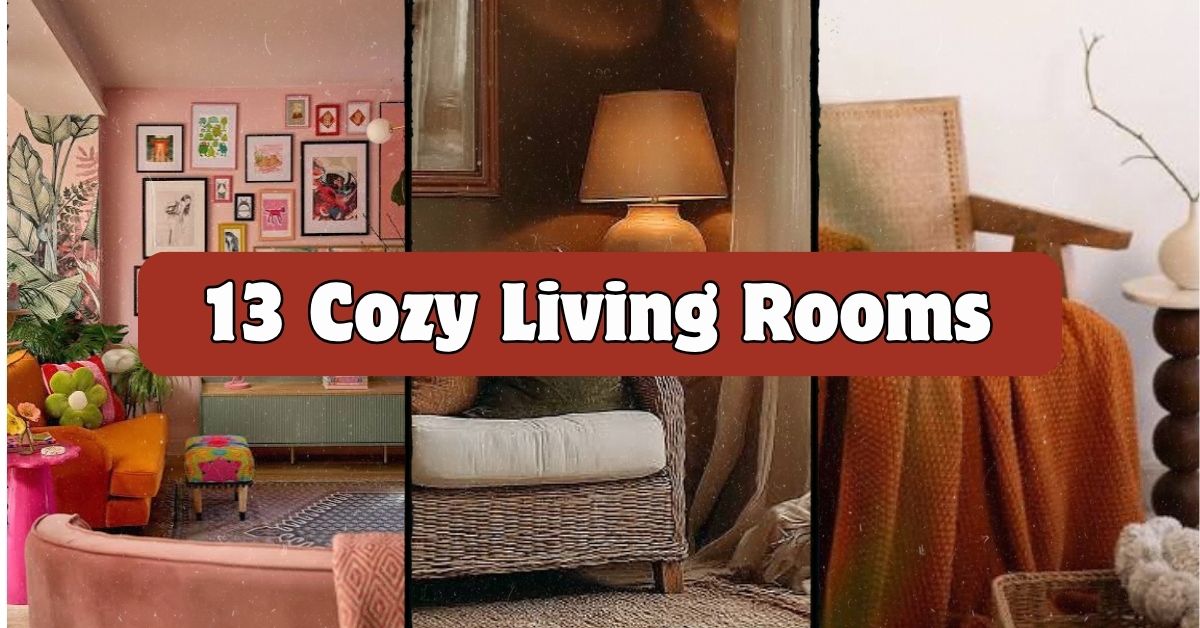
I’ve pulled together 13 cozy living rooms that show exactly how to turn a stiff, cold space into the kind of room where everyone wants to hang out. I’ve tested a lot of these tricks in my own house, and I’ve watched what actually works versus what just looks good in a photo. So let’s get into it.
A cozy living room is a space designed with soft textures, warm lighting, and comfortable furniture layouts that invite relaxation. The formula usually includes layered fabrics, a neutral or warm color palette, and lighting that’s soft rather than harsh.
Stick around, because I’m about to show you 13 different ways to get that warm, “come sit down and stay awhile” feeling in your own living room, no matter your budget or style.
What Makes a Living Room Feel “Cozy” Anyway?
Cozy isn’t one specific look. It’s a feeling. It’s the difference between a room that looks nice in photos and a room where you actually want to curl up with a blanket and a book. I think of coziness as a mix of texture, warmth, and clutter control. You need soft things to touch, warm colors or lighting to look at, and just enough stuff around to feel lived-in without feeling messy. Some people get this with a rustic cabin vibe. Others get it with clean modern lines and a few plush throws. There’s no single right way to do it. That’s actually good news for you, because it means you can make any style of living room feel cozy with the right tweaks.
1. Layer a Chunky Knit Throw Over Every Seat
A throw blanket is the fastest, cheapest way to make a room feel warmer instantly. I keep one draped over the arm of my couch and one folded on my reading chair. Chunky knits work best because the texture catches your eye and begs to be touched. Stick to warm neutrals like oatmeal, rust, or deep green so they don’t clash with your existing decor.
Practical tip: buy at least two throws in slightly different textures (like a cable knit and a faux fur) so the layering looks intentional, not random.
This works in almost any style. Modern homes can use a chunky throw in charcoal gray, while a farmhouse living room might go with a cream waffle-knit version. Once your seating feels soft and touchable, it’s time to think about what’s under your feet.
2. Ground the Room with a Thick, Textured Rug
A rug does more than protect your floors. It anchors the whole room and adds a layer of warmth you feel with your feet, not just your eyes. I always recommend going one size bigger than you think you need. A too-small rug makes a room look disconnected and cold.
Wool and jute rugs tend to feel the coziest because of their natural texture. Darker, warmer tones like terracotta or deep navy hide stains and add visual weight to the room.
Practical tip: your front two legs of the couch should sit on the rug, not float above it.
Coastal living rooms often use light jute rugs, while traditional spaces lean toward patterned wool. Once the floor feels grounded, the next step is adding light that actually feels warm instead of clinical.
3. Swap Harsh Overhead Lighting for Warm Lamps
Overhead lighting is the enemy of coziness. It’s flat, harsh, and makes everything look a little sterile. I switched most of my overhead bulbs for warm-toned lamps years ago, and it changed the whole mood of my living room.
Table lamps, floor lamps, and even string lights create pools of warm light instead of one flat wash. Aim for bulbs around 2700K to 3000K color temperature, which gives off that golden, sunset-like glow.
Practical tip: use at least three separate light sources in your living room at different heights (a floor lamp, a table lamp, and a smaller accent light) for a layered glow.
Modern homes might use sleek brass floor lamps, while cottage-style rooms lean into vintage-style lamp shades. Speaking of brass and vintage touches, let’s talk about how your color palette ties all of this together.
Cozy Color Palette Combinations
| Style | Wall Color | Accent Color | Metal Finish |
|---|---|---|---|
| Modern Cozy | Warm White | Terracotta | Matte Black |
| Farmhouse | Cream | Sage Green | Aged Brass |
| Coastal | Soft Sand | Ocean Blue | Brushed Nickel |
| Traditional | Warm Taupe | Deep Burgundy | Antique Gold |
| Scandinavian | Off-White | Charcoal Gray | Matte Black |
4. Choose a Warm, Neutral Base Color for Walls
White walls can feel cold and clinical if you’re not careful. I always suggest going for warm whites, creams, or soft taupes instead of stark bright white. These colors reflect light in a softer way and instantly make a room feel more inviting.
If you want more drama, try a deep, warm color like terracotta or chocolate brown on one accent wall. Dark colors don’t always make a room feel smaller. Done right, they make a room feel like a hug.
Practical tip: test paint samples on your wall at different times of day before committing. Lighting changes how warm or cold a color reads.
Traditional homes often use warm taupes, while modern spaces might go bold with a deep green accent wall. Once your walls set the tone, your furniture arrangement needs to back it up.
5. Arrange Seating in a Close, Conversational Circle
I can’t stress this enough: furniture placement changes everything. A room where all the seats face a TV against the wall, spaced far apart, will never feel as cozy as one where seating faces inward, closer together, encouraging conversation.
Try angling chairs slightly toward the couch instead of lining everything up like a waiting room. Add a coffee table in the middle to anchor the grouping.
Practical tip: keep no more than 3 feet between seats so conversation feels natural, not shouted across a room.
This idea works in small apartments and large great rooms alike. Once your seating feels intimate, you’ll want soft textures on every surface people touch.
6. Mix Textures Instead of Matching Everything
A mistake I see all the time is people matching every fabric and material in a room. It looks stiff. Real coziness comes from mixing textures: a linen couch, a velvet pillow, a wool rug, a wood coffee table. Each texture adds a different sensory layer.
Practical tip: aim for at least four different textures in one room (soft, rough, smooth, and woven) to keep things visually interesting.
Boho living rooms thrive on mixed textures like rattan and macrame, while minimalist spaces might stick to just two or three textures for a cleaner look. Once your textures are working together, layering pillows is the next easy win.
7. Layer Pillows in Odd Numbers and Varying Sizes
Pillows are cheap and easy to swap out, which makes them one of the best coziness tools you have. I always go with an odd number, usually three or five, in varying sizes and textures. Two large ones in back, one or two smaller accent ones in front.
Practical tip: mix at least two patterns with one solid color pillow so it doesn’t look too busy or too plain.
Coastal rooms might use striped and woven pillows, while traditional rooms lean into florals or damask patterns. With your seating dressed up, let’s talk about adding warmth through your fireplace or a fireplace alternative.
8. Add a Fireplace (Real or Electric) as a Focal Point
There’s a reason fireplaces are the classic cozy symbol. The flicker of flame instantly warms up a room, both literally and visually. If you don’t have a real fireplace, electric inserts have gotten incredibly realistic and can be added to almost any room.
Practical tip: arrange your main seating to face the fireplace, not just the TV, so it becomes the heart of the room.
Modern homes often use sleek linear electric fireplaces, while farmhouse living rooms go for a stacked stone surround. Once you’ve got a focal point, it’s time to bring in some greenery.
9. Bring in Plants for Life and Softness
Plants add color, texture, and a sense of life to a room. Even a couple of low-maintenance plants like a snake plant or pothos can soften hard edges and fill empty corners.
Practical tip: group plants in odd numbers at varying heights (one tall floor plant, one medium tabletop plant) for a more natural look.
Bohemian rooms often go plant-heavy with hanging macrame planters, while minimalist rooms might stick to just one or two statement plants. With some greenery in place, let’s talk about window treatments.
Budget Tiers for a Cozy Living Room Refresh
| Budget Level | What You Can Do | Estimated Cost |
|---|---|---|
| Small ($50-150) | New throw pillows, a throw blanket, warm bulbs | $50-150 |
| Medium ($150-500) | Add an area rug, table lamps, a few plants | $150-500 |
| Large ($500-1500) | New accent chair, curtains, electric fireplace | $500-1500 |
| Full Refresh ($1500+) | New sofa, paint, custom lighting, rug, art | $1500-4000+ |
10. Hang Soft, Floor-Length Curtains
Curtains do more than block light. Long, flowing curtains in a soft fabric add warmth and make ceilings feel taller. I always recommend hanging curtain rods a few inches above the window frame and letting the fabric fall just past the floor.
Practical tip: choose linen or cotton blends in warm, muted colors rather than stiff, shiny fabrics that feel cold to the touch.
Traditional homes often use heavier drapes with tiebacks, while modern spaces prefer simple linen panels. Once your windows are dressed, wall decor is the next cozy layer to think about.
11. Fill Walls with Personal, Warm-Toned Art
Empty walls make a room feel unfinished and cold. I like filling wall space with a mix of personal photos, warm-toned art, and maybe a mirror to bounce light around. Gallery walls work great here because they add visual interest without needing one giant, expensive piece.
Practical tip: stick to a common color thread across your art pieces (like warm earth tones) so the gallery wall feels cohesive, not random.
Farmhouse spaces might use vintage-style prints, while modern rooms lean into abstract art in black frames. With your walls dressed up, let’s talk about a small but powerful detail: candles and scent.
12. Add Candles or a Diffuser for Warm Scent
Coziness isn’t just visual. Smell plays a huge role in how a room feels. I always keep a few candles around, even if I don’t light them every day, because warm scents like vanilla, sandalwood, or cinnamon instantly make a space feel more inviting.
Practical tip: group candles of varying heights on a tray for a more styled, intentional look rather than scattering single candles around the room.
Coastal rooms might lean into driftwood or sea salt scents, while traditional spaces often go for classic vanilla or amber. Once your senses are covered, don’t overlook the small function pieces like blankets and baskets for storage.
13. Use Woven Baskets for Cozy, Practical Storage
Clutter kills coziness fast. But storage bins don’t have to look cold or clinical. Woven baskets made from seagrass, rattan, or jute add texture while hiding blankets, magazines, or toys. I keep two baskets by my couch, one for blankets and one for stray remote controls and odds and ends.
Practical tip: choose baskets with handles so they’re easy to grab and move when you need quick cleanup before guests arrive.
Boho and coastal rooms use natural fiber baskets heavily, while modern spaces might opt for baskets in solid, muted colors. Now that you’ve seen all 13 ideas, let’s cover some quick tips to tie it all together.
Tips for Success
- Start with lighting before furniture. Warm bulbs alone can transform a room’s mood.
- Don’t be afraid of an oversized rug. Bigger almost always looks better than too small.
- Layer at least three textures in every seating area to avoid a flat, one-note look.
- Keep a consistent warm undertone across your paint, wood, and metal finishes.
- Add one “living” element, whether it’s a plant or a candle, to every room refresh.
- Rotate pillows and throws seasonally to keep the space feeling fresh without a full redo.
- Always test paint and lighting changes before committing to a full room overhaul.
Common Mistakes and How to Avoid Them
Too much matching furniture
: Buying a full matching furniture set can make a room feel like a showroom. Mix in one or two different pieces, like a vintage chair or a unique coffee table, for character.
Only using overhead lighting
: Overhead lights alone flatten a room and make it feel cold. Add lamps at different heights for a warm, layered glow.
Rugs that are too small
: A tiny rug floating in the middle of the room makes everything feel disconnected. Size up so at least the front legs of your furniture sit on it.
Skipping texture variety
: An all-smooth or all-matching room feels stiff. Mix knits, wood, wool, and linen for a lived-in feel.
Ignoring scent and sound
: Coziness isn’t only visual. Warm candles, soft music, or even a rug that muffles echo all add to the feeling.
Overcrowding with decor
: Too many trinkets and accessories can tip a room from cozy into cluttered. Edit down to items you actually love and use.
Similar Variations
- Scandinavian Cozy (Hygge Style): Clean lines mixed with soft textures, muted colors, and lots of natural light.
- Farmhouse Cozy: Rustic wood tones, cream and sage colors, and vintage-inspired accents.
- Coastal Cozy: Light woods, ocean-inspired blues, and natural fiber textures like jute and rattan.
- Bohemian Cozy: Layered patterns, macrame, plants, and warm earthy tones all mixed together.
- Traditional Cozy: Rich, deep colors, classic furniture shapes, and heavier fabrics like velvet.
- Industrial Cozy: Exposed brick or metal softened with warm lighting, leather seating, and thick textiles.
At the end of the day, coziness comes down to a handful of simple choices repeated with intention: warm light, soft textures, a color palette that feels like a hug, and furniture arranged for actual conversation. You don’t need a huge budget or a full renovation to get there. Small swaps, like better bulbs, a bigger rug, or a few well-placed pillows, add up fast.
I hope these 13 cozy living rooms gave you some real, doable ideas to bring that warm, inviting feeling into your own space.
Leave a Reply