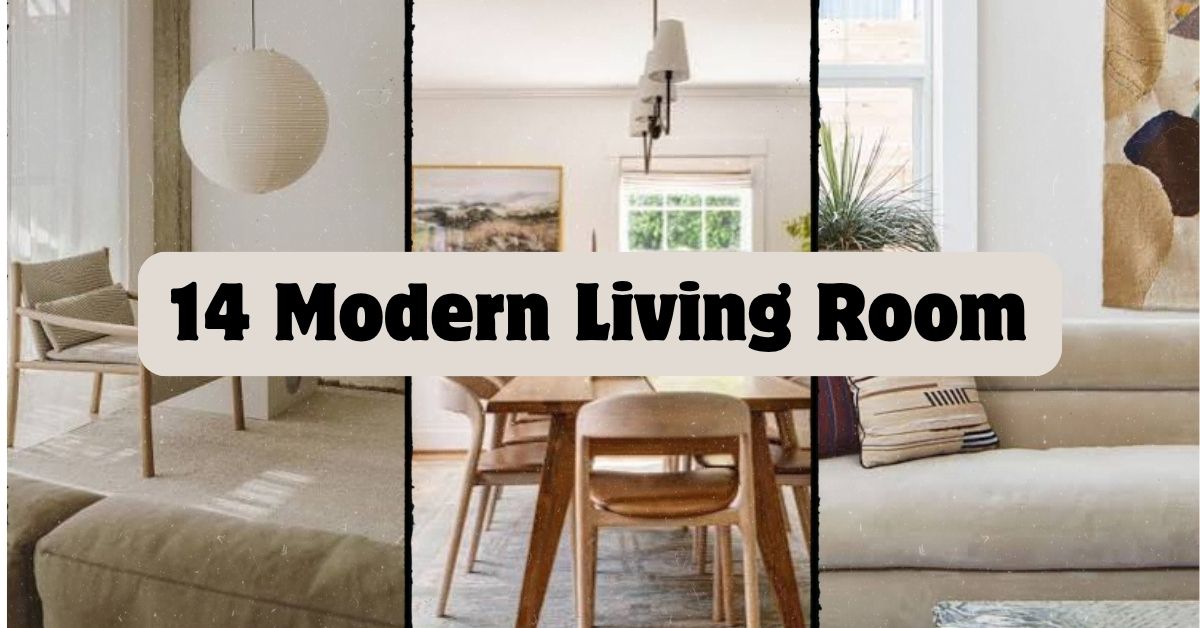
I’ve spent way too many weekends scrolling through 14 Modern Living Room inspiration pics, trying to figure out what actually makes a space feel “modern” instead of just cold and empty. If you’re here, you’re probably doing the same thing.
A modern living room design uses clean lines, a neutral or muted color palette, minimal clutter, and a mix of natural materials like wood, stone, and metal. The goal is function paired with simplicity, not bare walls and uncomfortable furniture.
Stick around, because I’m about to walk you through 14 specific ways to pull this look off in your own home, no design degree needed.
What Even Is “Modern” Living Room Style?
Okay, so here’s the thing. People throw around “modern” like it means one specific look, but it’s actually pretty flexible. At its core, modern design is about simplicity. Think straight lines, open floor plans, and furniture that doesn’t scream for attention. No fancy carvings, no heavy drapes, no clutter on every surface.
Colors tend to stay neutral. Materials feel honest, like real wood or brushed metal instead of fake finishes. And every piece usually has a job to do. Nothing’s just sitting there for decoration’s sake. Once you get that mindset, the ideas below will make a lot more sense.
1. Start With a Neutral Color Foundation
Modern rooms almost always start with a neutral base. Think white, gray, beige, or greige walls. This isn’t boring, it’s smart. Neutral walls let your furniture and art pieces do the talking instead of competing with busy wallpaper.
Pick warm whites if your room gets lots of natural light, and cooler grays if it faces north and stays dim. Add texture through fabric and wood grain instead of color to keep things interesting.
Practical tip: paint one wall a slightly darker shade than the rest to add depth without going bold.
This works across styles too. Coastal rooms use the same neutral base but add blue accents, while traditional spaces might layer in cream and gold instead. Once your walls are set, it’s time to think about what sits against them.
2. Choose Low-Profile Furniture With Clean Lines
Modern furniture sits low and looks lean. Sofas have straight arms instead of rolled ones. Coffee tables have thin legs, not chunky carved bases. This creates visual breathing room, especially in smaller spaces.
Look for pieces with exposed wood or metal legs. They make furniture feel like it’s floating instead of weighing down the floor. Avoid anything overly plush or oversized unless you have a huge room to fill.
Quick tip: measure your room before buying. Modern sofas often run slightly smaller in depth than traditional ones, so check dimensions twice.
If you’re more into farmhouse style, you’d swap sleek legs for turned wood ones. Coastal fans might pick a slipcovered version in the same low profile. Next, let’s talk about what goes on the floor beneath that furniture.
3. Layer In a Geometric Area Rug
A good rug ties a modern room together without adding visual noise. Geometric patterns in muted tones, think charcoal, cream, or soft blue, work great here. Skip busy florals or ornate medallion designs, they clash with the clean furniture lines.
Wool and wool-blend rugs feel more substantial underfoot and hide small stains better than flat weaves. Size matters a lot too. A rug that’s too small makes the whole room feel disconnected.
Practical tip: your rug should be big enough that at least the front legs of your sofa and chairs sit on it.
| Room Size | Recommended Rug Size |
|---|---|
| Small (under 150 sq ft) | 5′ x 7′ |
| Medium (150-250 sq ft) | 8′ x 10′ |
| Large (250+ sq ft) | 9′ x 12′ or larger |
| Open concept living/dining | 10′ x 14′ |
Coastal and Scandinavian styles love this same geometric approach but stick to lighter colors. Bohemian rooms go the opposite direction with layered, patterned rugs. Now let’s get some texture going on your walls.
4. Add Texture Through Wood Accent Walls
A plain white wall can feel flat after a while. Wood accent walls fix that instantly. Think slatted wood panels or a single feature wall in warm walnut or oak tones. It adds warmth without introducing more color.
You don’t need real hardwood either. Peel-and-stick wood panels or engineered wood slats cost way less and install in an afternoon. This works especially well behind a TV or sofa, giving the eye something to rest on.
Practical tip: keep the wood tone one shade different from your furniture to avoid everything blending together into mush.
Modern farmhouse rooms take this even further with reclaimed wood beams. Minimalist spaces might use just one thin strip of wood trim instead of a full wall. Once your walls have some texture, lighting becomes the next big decision.
5. Mix Statement Lighting With Functional Task Lamps
Lighting makes or breaks a modern room. You want at least three light sources: ambient (ceiling), task (reading lamps), and accent (smaller decorative lights). A single overhead light leaves shadows everywhere and feels flat.
Go for a sculptural pendant or chandelier as your statement piece. Something with clean geometric shapes, brass or matte black finishes work great. Pair it with simple task lamps that have exposed bulbs or linen shades.
Practical tip: install a dimmer switch. It’s a $20 fix that instantly makes any room feel more intentional and cozy at night.
Traditional homes might swap the sculptural pendant for a crystal chandelier, keeping the same layered lighting idea. Coastal spaces often use rattan or woven shades instead. Speaking of layering, let’s talk about how to arrange your seating.
6. Create Conversation-Friendly Seating Arrangements
Modern living rooms aren’t just about looking good, they’re built for actual living. Arrange seating so people face each other, not the TV exclusively. Two facing sofas, or a sofa paired with two accent chairs, work great for this.
Keep a coffee table in the center, low enough that it doesn’t block sightlines. Leave at least 30 inches of walking space between furniture pieces so the room doesn’t feel cramped.
Practical tip: float your sofa away from the wall if your room allows it. This instantly makes a space feel more thoughtfully designed instead of pushed to the edges.
Open concept modern homes often use this seating style to define a “living room zone” without walls. Traditional formal living rooms use a similar facing setup but with more ornate chairs. Let’s move on to something that ties a room together fast: art.
7. Hang Large-Scale Abstract Art
One big piece of art beats five small ones every time in a modern space. Abstract art with soft color palettes, think muted blues, blacks, or earthy tones, fits the modern aesthetic without feeling too busy.
Scale matters here. A piece should take up roughly two-thirds the width of the furniture below it. A tiny picture frame over a huge sofa looks off balance and kind of sad, honestly.
Practical tip: hang art so the center sits about 57-60 inches from the floor, that’s standard eye level for most adults.
Traditional rooms might swap abstract pieces for classic landscape paintings in the same oversized scale. Coastal homes often go with black and white photography instead. Now, let’s talk about something people always forget: the ceiling.
8. Don’t Ignore the Fifth Wall (Your Ceiling)
Most people decorate four walls and completely forget the ceiling exists. A plain white ceiling works fine, but adding a subtle detail up there takes a room from average to genuinely designed.
Try a slightly darker paint color, exposed wood beams, or even a simple tray ceiling detail if you’re renovating. Even a stylish ceiling fan with clean blades counts as a fifth-wall upgrade.
Practical tip: if painting the ceiling feels like too much, start small with a statement light fixture that draws the eye upward instead.
Mid-century modern spaces often use wood-paneled ceilings for warmth. Industrial lofts leave ductwork and beams exposed on purpose. With walls and ceiling handled, let’s talk storage, because clutter kills the modern look fast.
9. Hide Clutter With Closed Storage Solutions
Open shelving looks great in photos and terrible in real life once mail, remotes, and random cords pile up. Modern rooms rely heavily on closed storage, think media consoles with doors, ottomans with hidden compartments, and floating cabinets.
This keeps surfaces clear, which is honestly half the battle in making a room feel modern. A cluttered coffee table undoes even the best furniture choices.
Practical tip: get a storage ottoman for your living room. It doubles as extra seating and hides blankets, magazines, and game controllers in seconds.
Scandinavian design leans hard into this idea, prioritizing function over decoration. Bohemian rooms embrace a little more visible mess as part of the charm. Now let’s add some life back into the room with plants.
10. Bring in Statement Greenery
A modern room can feel sterile without something living in it. One or two large plants, like a fiddle leaf fig or snake plant, add color and texture without cluttering the space. Skip the tiny scattered plants and go big with one or two statement pieces instead.
Choose simple planters in matte ceramic, concrete, or woven textures. Avoid busy patterned pots, they compete with the clean lines everywhere else.
Practical tip: if you don’t trust yourself with real plants, high-quality faux versions look shockingly real these days and need zero maintenance.
Bohemian spaces go bigger with lots of plants everywhere. Minimalist rooms might stick to just one perfect specimen plant. Speaking of finishing touches, let’s talk metal accents next.
11. Mix Metal Finishes for Depth
A room using only one metal finish, like all brass or all black, can feel a little flat after a while. Modern design actually loves mixing two complementary metals. Try matte black hardware with brushed brass light fixtures, or chrome accents paired with warm gold picture frames.
The key is keeping ratios balanced, roughly 60/40 between your two metals, so it looks intentional instead of random.
Practical tip: pick your dominant metal first based on your light fixtures, since those are usually the hardest to change later.
Industrial style leans heavily on black metal and raw steel. Glam living rooms mix gold with mirrored surfaces for extra shine. Now, let’s talk about something small but mighty: throw pillows.
12. Use Throw Pillows to Add Color Without Commitment
If your walls and furniture are neutral, pillows are where you get to have fun. Two or three pillows in complementary colors and textures can completely change the mood of a room, without any painting or furniture shopping required.
Mix textures like linen, boucle, and velvet for depth. Stick to two or three colors max so it doesn’t turn into a rainbow explosion.
Practical tip: odd numbers look more natural than even ones. Try three pillows instead of two or four on a standard sofa.
Color Palette Combinations for Modern Rooms
| Palette Name | Wall Color | Accent Colors | Best For |
|---|---|---|---|
| Warm Minimalist | Warm White | Terracotta, Walnut | Small apartments |
| Cool Contemporary | Light Gray | Navy, Chrome | North-facing rooms |
| Earthy Modern | Greige | Olive, Rust | Family living rooms |
| Monochrome Bold | Charcoal | Black, White | Statement spaces |
Traditional rooms use pillows with tassels and patterns, while coastal homes stick to stripes and blues. Let’s wrap up the furniture talk with something people often overlook, window treatments.
13. Choose Simple, Streamlined Window Treatments
Heavy drapes with tons of pattern don’t belong in a modern room. Instead, go for simple linen curtains in a neutral tone, or even clean roller shades if you want a minimal look. The goal is letting light in without visual clutter blocking the windows.
Hang curtain rods higher than the window frame, close to the ceiling if possible. This trick makes ceilings look taller and windows feel bigger than they actually are.
Practical tip: curtains should just barely brush the floor, not pool dramatically or hover awkwardly above it.
Farmhouse style might add a simple woven valance for warmth. Coastal rooms often skip curtains entirely and use sheer linen for a breezy feel. Finally, let’s talk about the one thing that pulls every idea together.
14. Anchor the Room With One Bold Focal Point
Every great modern living room has one thing that grabs your attention first. It could be a fireplace, a piece of oversized art, a statement chair in an unexpected color, or even a striking light fixture. Without a focal point, a room can feel like a collection of nice things with no real direction.
Pick just one. Too many “statement” pieces cancel each other out and create visual chaos instead of interest.
Practical tip: arrange your furniture to naturally point toward this focal point, it guides the eye and makes the whole room feel planned.
Mid-century modern homes often use a fireplace as this anchor. Eclectic spaces might use a bold piece of vintage furniture instead. With all fourteen ideas in place, your room should already feel more pulled together.
Tips for Success
- Test paint colors on your actual wall before committing, lighting changes everything throughout the day.
- Buy furniture in person when possible, photos can make scale really hard to judge.
- Start with your rug and biggest furniture piece, then build color and accents around those.
- Don’t rush the process. Great rooms usually come together over months, not one weekend shopping trip.
- Keep a “one in, one out” rule for decor to avoid slow clutter creep over time.
- Live in the space for a few weeks before hanging art, you’ll notice traffic patterns you didn’t expect.
Common Mistakes and How to Avoid Them
Buying furniture too big for the room
: Measure your space first and leave at least 30 inches of walkway between pieces.
Choosing trendy colors over timeless neutrals
: Stick to neutral bases for big furniture pieces, save trends for pillows and small decor you can swap easily.
Skipping window treatments entirely
: Even minimal rooms need some softness at the windows, try simple linen panels instead of nothing at all.
Overdoing matching furniture sets
: Mix pieces from different sources so the room feels curated instead of showroom-copied.
Forgetting about lighting layers
: Add task and accent lighting, not just one overhead fixture, to avoid flat, shadowy rooms.
Hanging art too high
: Keep the center of your artwork around 57-60 inches from the floor for a balanced look.
Similar Variations
- Scandinavian Modern: Even lighter color palettes, tons of natural wood, and a focus on cozy textures like sheepskin.
- Mid-Century Modern: Warmer wood tones, tapered furniture legs, and retro-inspired shapes from the 1950s and 60s.
- Japandi: A mashup of Japanese minimalism and Scandinavian warmth, heavy on natural materials and quiet colors.
- Industrial Modern: Exposed brick, black metal accents, and a rawer, unfinished feel throughout.
- Coastal Modern: The same clean lines but with blue and white palettes and lighter, breezier fabrics.
- Modern Farmhouse: Clean lines mixed with rustic wood beams and cozy, lived-in textures.
Pulling off a modern look isn’t about spending a fortune or hiring a designer. It’s really about picking a handful of ideas that fit how you actually live and committing to them instead of trying to do everything at once. Start small, maybe with a rug or a lighting swap, and build from there. Before you know it, you’ll have put together your very own version of a 14 Modern Living Room that feels both stylish and genuinely comfortable to live in.
Leave a Reply