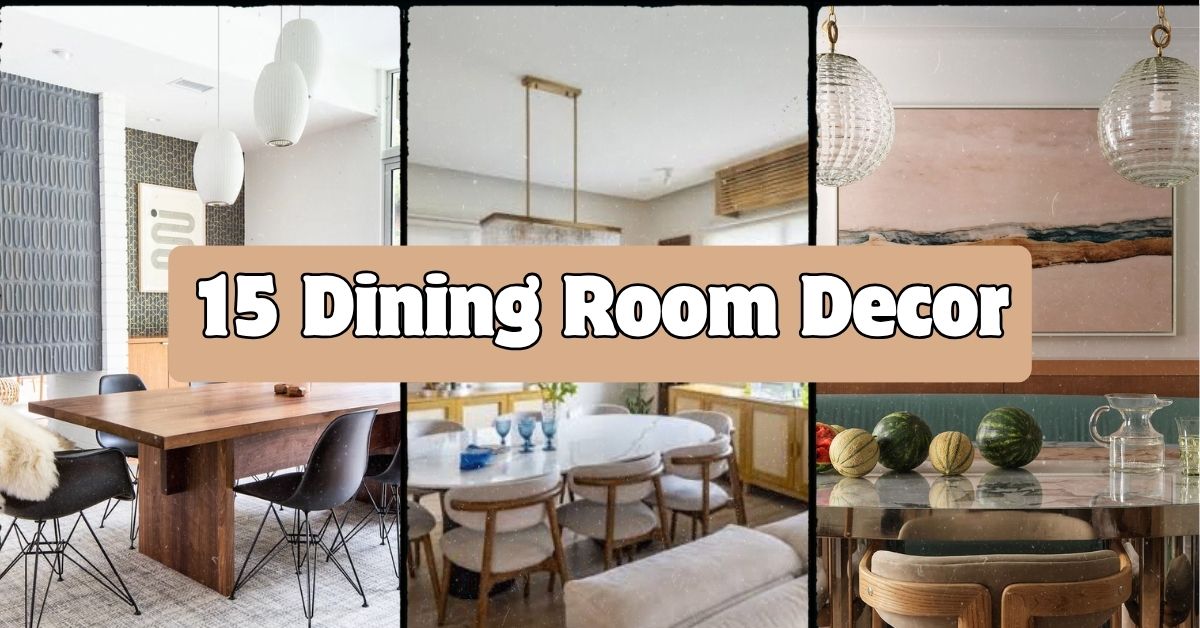
I’ve spent way too many hours scrolling through home decor pages trying to figure out what makes a dining room feel special, and I think I finally cracked it. This guide pulls together 15 dining room decor ideas that actually work in real homes, not just magazine spreads.
Dining room decor refers to the furniture, colors, lighting, and accessories used to design a space for eating and gathering. A well-decorated dining room balances function with style, using elements like a table, chairs, lighting, and wall art to create a welcoming atmosphere.
Stick around, because I’m about to show you exactly how to turn that boring table-and-chairs setup into a room people don’t want to leave.
What Makes Dining Room Decor Actually Work
Here’s the thing about dining rooms. They’re kind of the forgotten middle child of home design. Everyone obsesses over the living room and kitchen, but the dining room just sits there with a table and some chairs, looking sad.
But a good dining room does more than hold furniture. It sets a mood. It makes people want to linger after dinner instead of bolting for the couch. The best dining rooms mix comfort with a little bit of drama, some texture, some color, and lighting that actually flatters people instead of making everyone look tired.
Let’s get into the ideas.
1. Hang a Statement Chandelier Above the Table

Nothing changes a dining room faster than swapping a boring ceiling fixture for a statement chandelier. It becomes the focal point the second someone walks in. I’m talking oversized, sculptural, maybe even a little weird looking.
Pick something that matches your table’s vibe. A wood table pairs great with a wrought iron or rattan fixture. A glass or marble table looks amazing under something sleek in brass or chrome.
Practical tip: hang it so the bottom sits about 30 to 34 inches above the table surface. Any higher and it loses impact.
This idea flexes easily. Modern homes go for geometric metal shapes. Traditional spaces love crystal. Coastal rooms lean into woven rattan pendants.
Once your lighting is sorted, it’s time to think about what’s happening below it.
2. Layer a Patterned Rug Under the Table
A rug grounds the whole room. Literally and visually. It adds warmth, softens hard floors, and gives you a chance to bring in color or pattern without repainting a wall.
Choose a rug that extends at least 24 inches beyond the table edge on all sides. That way chairs stay on the rug even when pulled out.
Wool rugs handle spills better than you’d think, and jute rugs add texture if you want something more relaxed. Avoid high pile rugs here. Chair legs get stuck and it drives you nuts.
Farmhouse dining rooms look great with a vintage-style faded rug. Modern spaces do well with abstract geometric patterns.
Next up, let’s talk about the table itself, because size and shape matter more than people realize.
3. Choose a Table Shape That Fits the Room’s Flow
Rectangular tables are the default for a reason, but they’re not always right. Round tables work better in smaller or square rooms because they let people flow around them easier. Oval tables split the difference nicely.
Here’s a quick sizing guide I use when helping friends pick a table.
Dining Table Size Guide
| Room Size | Best Table Shape | Recommended Seating | Table Length/Diameter |
|---|---|---|---|
| Small (under 120 sq ft) | Round or Square | 4 people | 36-44 inches |
| Medium (120-200 sq ft) | Rectangular or Oval | 6 people | 60-72 inches |
| Large (200+ sq ft) | Rectangular | 8-10 people | 84-108 inches |
| Open concept/great room | Oval or rectangular with rounded ends | 6-8 people | 72-96 inches |
Practical tip: leave at least 36 inches of clearance between the table edge and the nearest wall or furniture so chairs can slide out without bumping anything.
Modern homes favor sleek rectangular tables with thin legs. Traditional rooms love a solid wood oval with turned legs. Once the table’s picked, chairs bring in the next layer of personality.
4. Mix Chair Styles Instead of Matching Everything
I know matching chair sets feel safe. But mixing styles makes a dining room feel collected and intentional instead of showroom stiff. Try pairing upholstered chairs at the head of the table with simpler wood chairs on the sides.
This works because it adds visual interest without chaos. Keep one thing consistent, like wood tone or fabric color family, so it doesn’t look random.
Practical tip: if you’re nervous about mixing, start small. Just swap the two end chairs for a different style and leave the sides matching.
Coastal dining rooms mix woven and painted wood chairs beautifully. Industrial spaces pair metal chairs with a single leather bench.
Speaking of benches, let’s talk about that option next.
5. Add a Bench on One Side for Flexibility

A bench on one side of the table is a small change that makes a big difference. It’s casual, it saves space, and it lets more people squeeze in when needed. Kids especially love benches, honestly.
Pick a bench with a similar wood tone to your table, or go bold with a contrasting color for a fun pop. Upholstered benches add comfort and soften the room’s overall look.
Practical tip: leave about 24 inches of space per person when figuring out how many can sit on a bench comfortably.
Farmhouse and Scandinavian styles use benches constantly. Modern spaces use sleek upholstered versions instead of the classic wood farmhouse bench.
Now let’s move to the walls, because empty walls waste so much potential.
6. Create a Gallery Wall Instead of One Big Piece
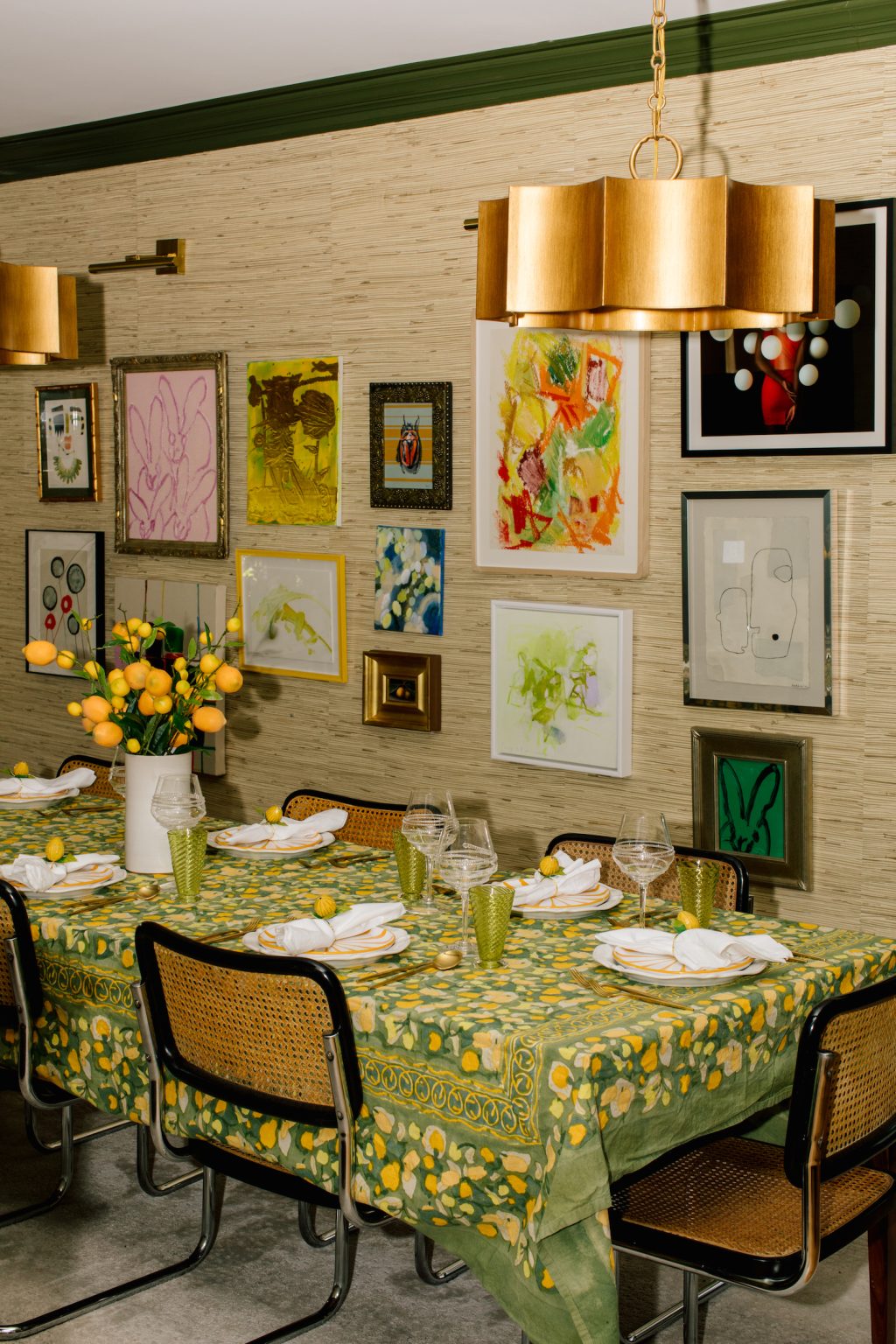
One large piece of art is fine, but a gallery wall tells a story. Mix frame sizes, colors, and even mediums like photos, prints, and small mirrors. It gives the eye more to explore during long dinners.
Keep spacing consistent, about 2 to 3 inches between frames, so it looks organized instead of cluttered.
Practical tip: lay the frames out on the floor first before hanging anything. Trust me, this saves so many nail holes.
Traditional homes lean into ornate gold frames. Modern spaces prefer black frames and abstract art. Minimalist rooms might do just three large-scale prints instead of a dozen small ones.
If a gallery wall feels like too much commitment, wallpaper might be your answer instead.
7. Use Bold Wallpaper on One Accent Wall
Wallpaper had a rough reputation for a while, but it’s back and better than ever. A bold pattern on just one wall gives the room personality without overwhelming the whole space.
Botanical prints, geometric shapes, and textured grasscloth are all popular right now. Pick a pattern that complements your table and chairs instead of fighting with them.
Practical tip: apply wallpaper on the wall behind a china cabinet or sideboard so furniture doesn’t hide the pattern.
Coastal homes love grasscloth texture. Modern spaces go for geometric black and white patterns. Traditional rooms often choose floral or damask designs.
Once your walls have some personality, it’s worth thinking about what sits against them.
8. Bring In a Sideboard or Buffet for Storage and Style
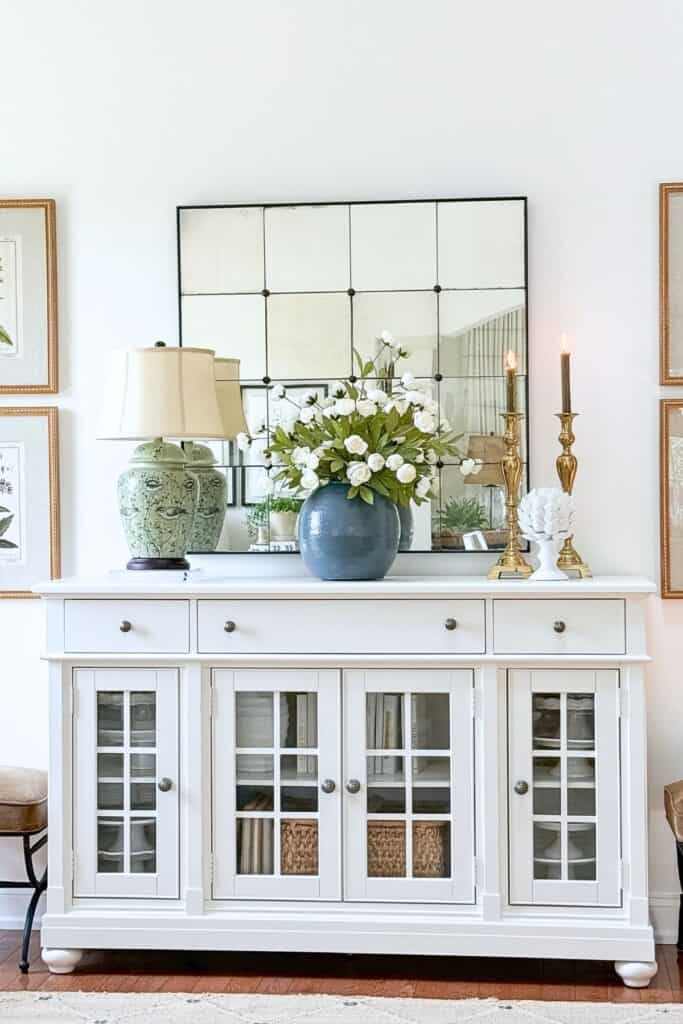
A sideboard does double duty. It stores linens, dishware, and serving pieces while giving you a surface to style with decor. Think a stack of books, a vase, maybe a small lamp.
Choose a piece with some contrast to your table. If your table is light wood, a dark wood or black sideboard adds nice depth.
Practical tip: leave the top third of the sideboard open for styling and use the rest for actual storage.
Modern homes favor sleek sideboards with hidden hardware. Traditional rooms use ornate wood pieces with carved details.
Dining Room Color Palette Ideas
| Palette Name | Wall Color | Accent Color | Best For |
|---|---|---|---|
| Warm Neutral | Greige or warm white | Terracotta or rust | Farmhouse, traditional |
| Moody Modern | Deep charcoal or navy | Brass or gold | Modern, industrial |
| Coastal Fresh | Soft white or pale blue | Sandy beige, sea green | Coastal, cottage |
| Earthy Natural | Sage green or olive | Warm wood tones | Boho, organic modern |
With your color palette locked in, let’s talk about how texture plays into the mood of the room.
9. Layer in Texture With Textiles and Table Linens
A tablecloth or runner instantly makes a table feel finished. Linen is a great choice because it wrinkles in a way that looks intentional rather than sloppy.
Cloth napkins beat paper ones every time for everyday elegance. Keep a small stack in a drawer so they’re easy to grab.
Practical tip: layer a runner over a solid tablecloth for texture without overdoing the pattern.
Boho spaces love mixed textures like jute placemats with linen napkins. Traditional dining rooms often use classic white linens with embroidered edges.
Now, let’s not forget one of the easiest wins in any room: greenery.
10. Add Greenery With a Centerpiece or Potted Plant
Nothing freshens up a dining room like a plant. A tall potted plant in the corner adds life to the room even when the table is bare. A low centerpiece of greenery or flowers works for everyday use since it doesn’t block sightlines across the table.
Practical tip: keep centerpieces under 14 inches tall so people can actually see each other while eating.
Modern homes prefer sculptural plants like a fiddle leaf fig. Farmhouse rooms love simple eucalyptus or wildflowers in a mason jar.
Once your table has some life to it, mirrors are the next trick worth trying.
11. Hang a Mirror to Bounce Light Around the Room
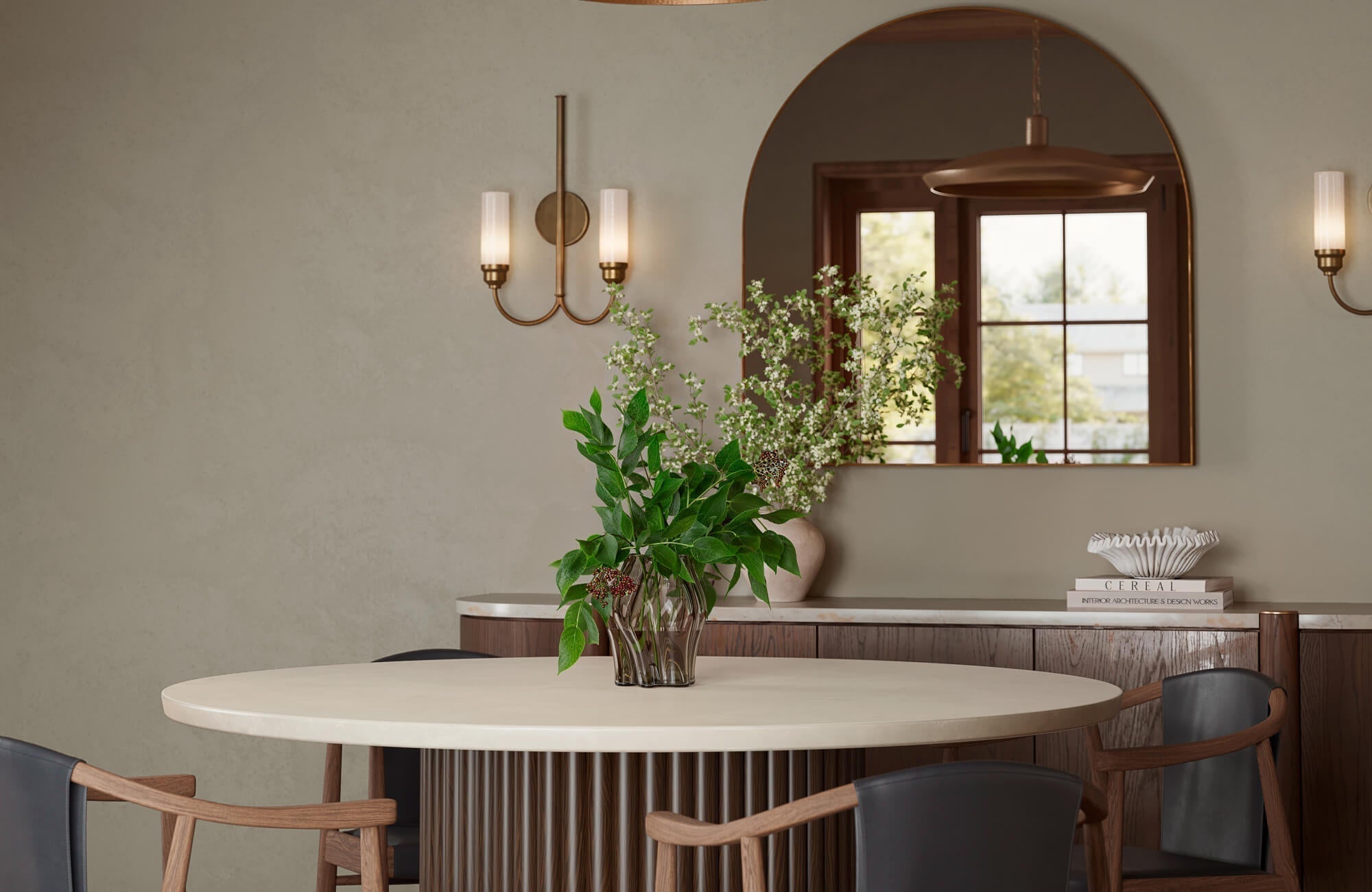
Dining rooms often don’t get much natural light, especially if they’re tucked away from windows. A large mirror on one wall bounces light around and makes the whole space feel bigger.
Position it across from a window if possible, or reflect the chandelier for extra sparkle at night.
Practical tip: choose a mirror that’s about two-thirds the width of the furniture piece below it, like a sideboard or console table.
Traditional homes love ornate framed mirrors. Modern rooms go for simple round or arched mirrors with thin metal frames.
Speaking of sparkle, let’s chat about how candles change the whole vibe of a meal.
12. Set the Mood With Candles and Dimmable Lighting
Candles are cheap and instantly cozy. Group a few different heights down the center of the table for a relaxed dinner party look. Dimmable overhead lighting also matters a ton. Bright light is great for homework, but nobody wants that during dinner.
Practical tip: install a dimmer switch on your chandelier or overhead light. It’s a small update that changes the whole feel of the room.
Coastal spaces love simple white pillar candles. Moody modern rooms use black taper candles in brass holders for drama.
Let’s move to something a little unexpected next: ceiling decor.
13. Don’t Ignore the Ceiling
Most people forget the ceiling exists. But a painted ceiling, some wood beams, or even wallpaper up top adds a surprising wow factor. It’s called the “fifth wall” for a reason.
A deep color on the ceiling makes a small dining room feel cozy and intentional instead of cramped. Practical tip: if painting the whole ceiling feels risky, try it in a small dining nook first to test the effect.
Traditional homes use exposed wood beams. Modern spaces might paint the ceiling a deep matte black for drama.
Now, let’s talk about something practical but often overlooked: window treatments.
14. Frame Windows With Simple, Functional Drapes
Curtains soften a dining room and add another layer of color or texture. Go for something simple, like linen drapes in a neutral tone, unless you’re going for a bold statement look.
Practical tip: hang curtain rods a few inches above the window frame to make ceilings feel taller.
Coastal rooms love light, breezy linen. Traditional spaces often use heavier fabrics with tiebacks for a formal look.
Last but not least, let’s finish with something that ties the whole room together.
15. Display a Curated Collection on Open Shelving
Open shelving near the dining area gives you a spot to show off dishware, glassware, or a small book collection. It feels more personal than a closed cabinet and keeps the room from feeling too formal.
Practical tip: group items in odd numbers, like three or five, for a more natural, balanced look.
Modern homes use floating shelves with minimal styling. Farmhouse rooms stack mismatched vintage plates for a collected-over-time feel.
Tips for Success
- Start with lighting first, since it affects how every other color and material looks in the room.
- Measure your space before buying furniture. A table that looks small online can overwhelm a room in person.
- Stick to two or three main colors so the room doesn’t feel busy.
- Add at least one soft texture, like a rug or curtains, to balance out hard surfaces like wood and glass.
- Rotate your centerpiece with the seasons to keep the room feeling fresh without a full redesign.
- Test paint colors on the wall at different times of day before committing.
- Don’t forget the smell. A simple candle or diffuser makes the whole room feel more inviting.
Common Mistakes and How to Avoid Them
Hanging the chandelier too high
: Keep it 30 to 34 inches above the table so it still feels connected to the space below.
Buying a rug that’s too small
: Make sure the rug extends past the chair legs even when they’re pulled out, usually 24 inches beyond the table edge.
Matching every piece of furniture exactly
: Mix wood tones and chair styles slightly for a more collected, lived-in look.
Overcrowding the table with a tall centerpiece
: Keep centerpieces low, under 14 inches, so people can see each other while eating.
Ignoring natural light sources
: Position mirrors and light fixtures to work with existing windows instead of against them.
Forgetting a dimmer switch
: Add one during any lighting update. It instantly makes evening meals feel more relaxed.
Similar Variations
- Farmhouse Dining Decor – Focuses on reclaimed wood, neutral colors, and cozy textiles for a relaxed, homey feel.
- Modern Minimalist Dining Decor – Clean lines, monochrome colors, and very little clutter on surfaces.
- Coastal Dining Decor – Light woods, blues and whites, and natural textures like rattan and linen.
- Industrial Dining Decor – Metal fixtures, exposed brick or concrete, and darker color palettes.
- Boho Dining Decor – Mixed patterns, warm earthy colors, and lots of plants and woven textures.
- Traditional Dining Decor – Rich wood furniture, classic patterns, and formal lighting like crystal chandeliers.
Putting even a handful of these ideas together can completely change how your dining room feels, from a room people rush through to one they actually want to sit in. Start small if you need to, maybe just a rug or a lighting swap, and build from there as your budget and confidence grow. That’s really the heart of good 15 Dining Room Decor: mixing function, comfort, and a little bit of personality until the space feels like yours.
Leave a Reply