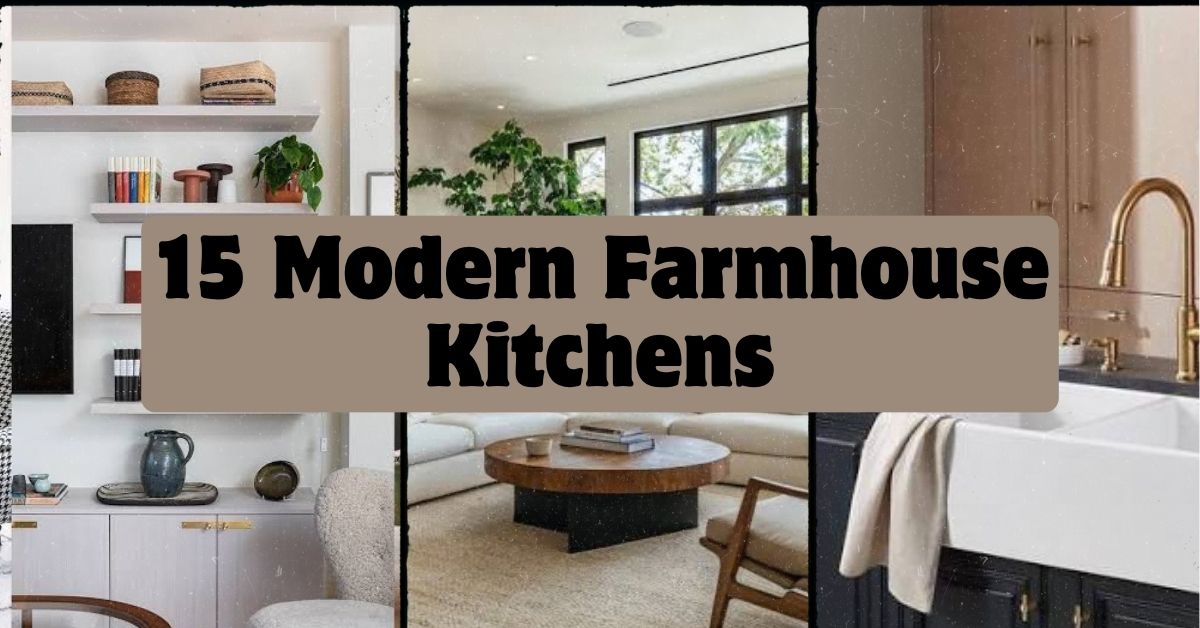
I’ve spent way too many hours scrolling through kitchen photos, and if you’re here looking for 15 Modern Farmhouse Kitchens that actually deliver on the hype, you’re in the right spot. This isn’t just another list of pretty pictures with no substance behind them. I’ve dug into what actually makes this style work, and I’m sharing all of it.
Modern farmhouse kitchens combine rustic materials like wood and stone with clean, minimal lines and neutral colors. The look mixes cozy textures with a streamlined, uncluttered layout, giving you warmth without visual chaos.
Stick around because I’m about to walk you through real design ideas you can actually use, not just stare at wistfully. By the end, you’ll know exactly how to bring this look into your own space.
What Makes a Kitchen “Modern Farmhouse” Anyway?
So here’s the thing about modern farmhouse style. It’s basically the lovechild of two opposites. You’ve got the cozy, lived-in feel of an old farmhouse kitchen. Think exposed wood, worn textures, a little imperfection. Then you mash that up with sleek modern lines, minimal clutter, and a more polished color scheme.
The result? A kitchen that feels warm but not messy. Clean but not cold. It’s the sweet spot between your grandma’s kitchen and a magazine spread. Most modern farmhouse kitchens lean on whites, creams, and soft grays as a base, then layer in natural wood and black metal accents to keep things grounded. It’s honestly one of the easiest styles to customize because it flexes with your personal taste.
1. Go With a Classic White and Wood Combo
This is the bread and butter of modern farmhouse design. White cabinets, wood countertops or floors, and you’re basically 80% of the way there. White keeps everything feeling bright and open. Wood adds that warm, natural touch so it doesn’t feel sterile.
Pick a warm white like Alabaster or Swiss Coffee instead of a stark white. It photographs better and feels cozier in person.
Practical tip: If you’re not ready to paint cabinets, start with a butcher block island. It’s a low-commitment way to test the look.
This combo adapts easily. Add brass hardware for a more traditional feel, or stick with matte black for something more contemporary. Once your base colors are set, it’s time to think about texture, and that’s where shiplap comes in.
2. Add Shiplap for Texture Without Overdoing It
Shiplap walls are basically the mascot of farmhouse style, thanks to a certain HGTV couple. But you don’t need to cover every wall. A shiplap accent wall behind your range or on a kitchen island gives you that texture without turning your kitchen into a barn.
Keep it painted white or a soft gray to match your cabinets. Too much contrast can make it look busy.
Actionable tip: Use shiplap on just one focal wall first. You can always add more later if you love it.
In coastal homes, shiplap already fits right in. In more traditional spaces, pair it with crown molding to soften the transition.
3. Choose Open Shelving for a Lighter Look
Open shelves make a kitchen feel less boxed in. Swap out a few upper cabinets for wood or black metal shelves. Style them with simple white dishes, a few plants, and maybe a stack of cookbooks.
This works best if you’re someone who actually keeps things tidy, because everything is on display.
Practical tip: Stick to a max of 3-4 items per shelf section. Overcrowded shelves lose that clean farmhouse vibe fast.
This idea shifts easily across styles. Modern homes can use floating steel shelves. Traditional kitchens might prefer wood brackets with a more ornate look.
Speaking of things on display, let’s talk about how your sink area can become a bigger design feature.
4. Install a Farmhouse Sink as Your Centerpiece
The farmhouse sink, also called an apron-front sink, is basically non-negotiable in this style. It’s deep, it’s wide, and it sticks out slightly from your cabinets for that classic look.
White fireclay is the most popular choice, but black or stainless versions work too if you want something a little different.
Practical tip: Pair your farmhouse sink with a gooseneck faucet in matte black or brass. It adds height and a nice visual anchor over the sink.
This feature works in almost any home style. Coastal kitchens love white fireclay sinks. Industrial kitchens might go with a stainless steel version instead.
Sink Material Comparison
| Material | Price Range | Durability | Maintenance | Best For |
|---|---|---|---|---|
| Fireclay | $$$ | High | Low | Classic farmhouse look |
| Cast Iron | $$$ | High | Medium | Traditional homes |
| Stainless Steel | $$ | Medium | Low | Modern or industrial style |
| Composite Granite | $$-$$$ | High | Low | Busy family kitchens |
Once your sink is set, the next thing people notice is usually your lighting, so let’s get into that.
5. Hang Statement Pendant Lights Over the Island
Nothing pulls a kitchen together like the right lighting. Two or three pendant lights hung over your island give the space some height and personality. Go with black metal, wire cages, or even glass globes depending on your vibe.
Keep your fixtures spaced evenly and hang them about 30-36 inches above the island surface.
Practical tip: Measure your island length and divide by three for even spacing between pendant lights.
Modern homes might choose sleek glass pendants. Traditional spaces often prefer lantern-style fixtures with warm bulbs.
Good lighting sets the mood, but your color palette does a lot of the heavy lifting too.
6. Build a Neutral Color Palette With Warm Undertones
Modern farmhouse kitchens rely heavily on a neutral base. Think whites, creams, greiges, and soft taupes. The key is choosing warm undertones instead of cool ones so the space feels inviting instead of clinical.
Practical tip: Test paint swatches on your actual wall at different times of day. Lighting changes how warm or cool a color reads.
Popular Modern Farmhouse Color Palettes
| Palette Name | Wall Color | Cabinet Color | Accent Color |
|---|---|---|---|
| Classic Cream | Alabaster White | Cream | Matte Black |
| Warm Gray | Agreeable Gray | White | Brass |
| Soft Sage | Pale Sage | White | Black Iron |
| Greige Base | Balboa Mist | Greige | Antique Bronze |
This palette style works across almost every home type, which is part of why it’s stayed so popular. Once your colors are locked in, it’s time to think about the materials that bring texture into the mix.
7. Mix Metal Finishes for Visual Interest
Don’t be afraid to combine matte black, brass, and even a little stainless steel. Modern farmhouse style actually loves a mix of metals as long as one finish clearly leads.
Practical tip: Pick one dominant metal for hardware and fixtures, then use a second metal sparingly for accents like a faucet or light fixture.
This works in nearly every style. Modern kitchens might lean more brushed steel. Traditional ones often favor brass and bronze combos.
Now let’s talk about something that ties the whole room together physically and visually: your flooring.
8. Choose Wide-Plank Wood Flooring
Wide-plank wood floors add instant warmth underfoot and visually ground the whole kitchen. Light to medium wood tones work best with the classic white-and-wood farmhouse combo.
Practical tip: Go with engineered wood if you’re worried about water damage near sinks and dishwashers. It holds up better than solid wood in high-moisture areas.
Coastal kitchens often go lighter, almost driftwood-toned. Traditional kitchens might choose a richer, darker wood for contrast.
Flooring sets your foundation, but don’t overlook your backsplash, because that’s where a lot of personality can shine through.
9. Use Subway Tile With a Twist
Classic white subway tile is a farmhouse staple, but you can make it more interesting with a herringbone pattern or dark grout for contrast. It keeps things simple while adding a little extra texture.
Practical tip: Dark grout hides stains better than white grout and adds subtle definition to each tile.
Modern kitchens might stretch subway tile all the way to the ceiling. Traditional spaces often stop it at standard backsplash height.
Once your backsplash is sorted, let’s talk about the island, because this piece usually becomes the heart of the whole room.
10. Make Your Island the Focal Point
Your kitchen island can be a different color or material than the rest of your cabinets. A navy blue or charcoal island against white perimeter cabinets creates contrast without overwhelming the space.
Practical tip: If your kitchen is small, keep the island the same color as your cabinets to avoid visually shrinking the room.
This idea flexes easily. Coastal kitchens might use a soft blue island. Industrial farmhouse kitchens often go with a dark, almost black finish.
Now let’s move from big furniture pieces to the smaller details that really finish off the look.
11. Add Black Framed Windows for Contrast
Black-framed windows are a modern farmhouse signature. They add a crisp, graphic contrast against white walls and cabinets, almost like drawing an outline around your kitchen’s best views.
Practical tip: If replacing windows isn’t in the budget, black window film or paintable trim can mimic the look for less.
This detail adapts well. Modern homes might use thinner black frames for a minimalist look. Traditional homes often go with slightly thicker, more classic profiles.
Windows bring in natural light, but you’ll still need some greenery to soften all those hard lines.
12. Bring in Greenery for a Lived-In Feel
A few potted herbs on the windowsill or a hanging plant near the sink adds life to the space. It also softens all the wood and metal with something organic and a little unpredictable.
Practical tip: Herbs like basil, thyme, and rosemary do well in kitchen light and double as cooking ingredients.
This works across every style. Coastal kitchens might add trailing pothos in woven baskets. Traditional kitchens often prefer classic terra cotta pots.
Plants add life, but let’s not forget about the hardware details that pull every cabinet and drawer together.
13. Choose Cup Pulls and Bin Pulls for Cabinet Hardware
Farmhouse style loves classic hardware shapes like cup pulls and bin pulls in black or brass. They’re simple, functional, and instantly recognizable as part of this aesthetic.
Practical tip: Use knobs on upper cabinet doors and pulls on lower drawers for a classic farmhouse hardware pairing.
Modern kitchens might choose sleeker, more geometric pulls. Traditional kitchens often add more ornate, curved designs.
Hardware might seem small, but it’s these little details that make a kitchen feel finished instead of half-done.
14. Layer in Vintage or Antique Accents
A few older pieces, like an antique scale, vintage crocks, or an old wooden ladder used as towel storage, add character that new items just can’t fake.
Practical tip: Check local flea markets or estate sales for authentic vintage pieces at a fraction of retail price.
Coastal farmhouse kitchens might use weathered driftwood pieces. Traditional homes often lean into more formal antiques like silver serving trays.
These small touches add soul to your kitchen, but don’t forget the ceiling, because it’s often the most overlooked surface in the whole room.
15. Don’t Ignore the Ceiling
Exposed wood beams or a simple beadboard ceiling can add a ton of character overhead. It’s an easy way to bring in texture without taking up any floor space.
Practical tip: If real beams aren’t in the budget, faux wood beams are lightweight and much easier to install.
Modern kitchens might keep ceilings simple and white. Traditional or rustic kitchens often go all in with heavy, dark wood beams for drama.
That wraps up all fifteen ideas, but before you run off to start renovating, let’s cover a few extra tips to make sure everything comes together smoothly.
Tips for Success
- Start with your color palette before buying anything else. Everything else should build off that foundation.
- Don’t mix more than two or three metal finishes total, or the kitchen starts to feel busy instead of curated.
- Invest more money in high-touch items like faucets and hardware since you’ll notice their quality daily.
- Keep at least one wall or surface simple and uncluttered so your eye has somewhere to rest.
- Test paint colors in your actual kitchen lighting before committing to a full cabinet repaint.
- Balance rustic textures with at least one or two sleek, modern elements to keep the “modern” part of modern farmhouse alive.
Common Mistakes and How to Avoid Them
Overdoing the Rustic Elements
: Too much distressed wood and vintage decor can tip into “theme park farmhouse” territory. Balance it with clean lines and simple cabinetry.
Choosing Trendy Colors Without a Long-Term Plan
: Certain shades come and go fast. Stick to warm neutrals for big investments like cabinets, and save trendy colors for easy-to-change items like decor or a backsplash.
Ignoring Scale in Lighting Fixtures
: A tiny pendant over a huge island looks awkward. Measure your space first and size fixtures accordingly.
Skipping Functional Storage for Looks
: Open shelving looks great in photos but can create clutter fast. Mix it with closed cabinets for actual storage.
Mixing Too Many Patterns
: Combining busy tile, patterned rugs, and printed textiles all at once creates visual chaos. Pick one pattern to feature and keep everything else simple.
Similar Variations
- Coastal Farmhouse: Adds light blues, whites, and natural fibers like jute and rattan for a beachy twist.
- Industrial Farmhouse: Mixes raw metal, exposed brick, and factory-style lighting with classic farmhouse warmth.
- Modern Rustic: Leans more heavily into sleek lines and minimal decor while keeping natural wood tones.
- French Country Farmhouse: Incorporates softer curves, toile patterns, and a slightly more formal, romantic feel.
- Scandinavian Farmhouse: Combines Nordic minimalism with farmhouse warmth, favoring light woods and simple forms.
- Traditional Farmhouse: Sticks closer to vintage, historic details with less emphasis on modern minimalism.
At the end of the day, the modern farmhouse look works because it balances two things we all want in a kitchen: warmth and simplicity. You don’t need every single idea on this list to nail the style. Pick a few that fit your space and your budget, and build from there.
I hope this breakdown gave you a clearer picture of what actually makes this style tick, beyond just pretty photos. Whether you’re renovating from scratch or just updating a few details, these 15 Modern Farmhouse Kitchens ideas should give you a solid starting point for creating a space that feels both cozy and current.
Leave a Reply