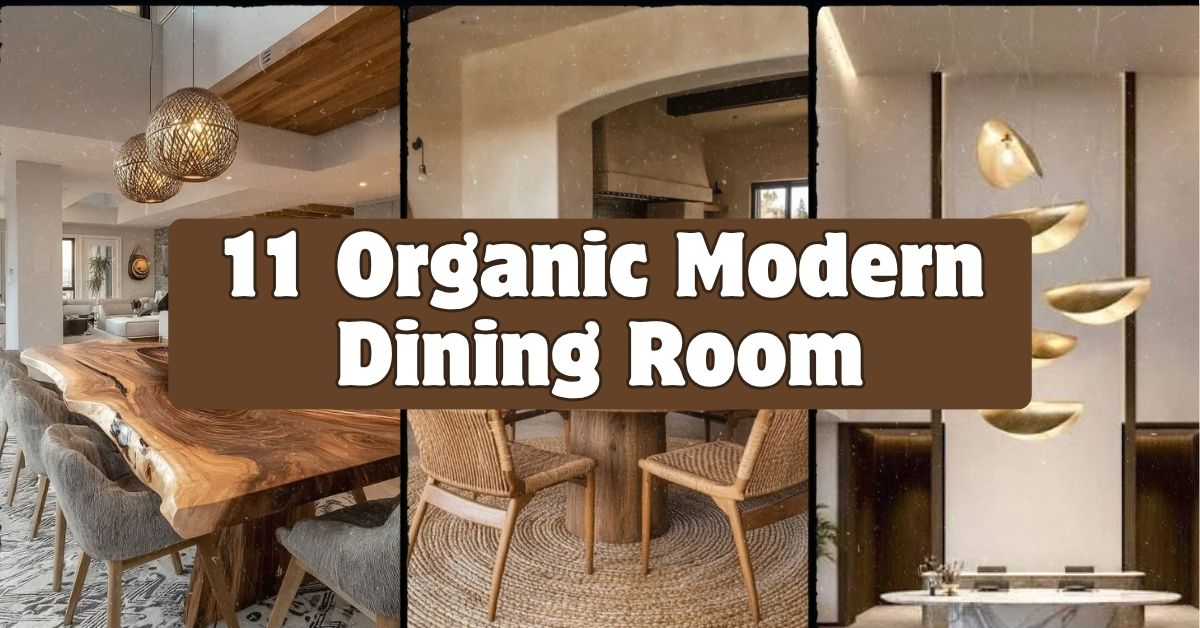
If you’ve been scrolling Pinterest for hours trying to figure out how to make your dining room feel warm but not cluttered, modern but not cold, you’re in the right place. I’ve spent way too much time studying this exact style, and I’m going to walk you through everything that actually works.
Organic modern dining room design blends clean, minimal lines with natural materials like wood, stone, rattan, and linen to create a space that feels calm, warm, and grounded rather than sterile or cluttered.
Stick around, because I’m about to show you 11 specific ways to pull this look off in your own space, no matter your budget or square footage.
What Even Is Organic Modern Style?
Okay so let’s break this down real quick. Organic modern is basically the marriage of two design styles that used to feel opposite. Modern design gives you clean lines, simple shapes, and a lack of clutter. Organic design brings in nature. Think wood grain, woven textures, curved edges, and earthy colors.
Put them together and you get a dining room that feels sleek but not sterile. It’s the style for people who want their home to feel calm, not showy. No harsh chrome. No stiff formal vibes. Just a space that feels like it breathes a little. That’s the whole point, and once you see it done right, you’ll notice it everywhere.
1. Choose a Live-Edge Wood Table as Your Anchor
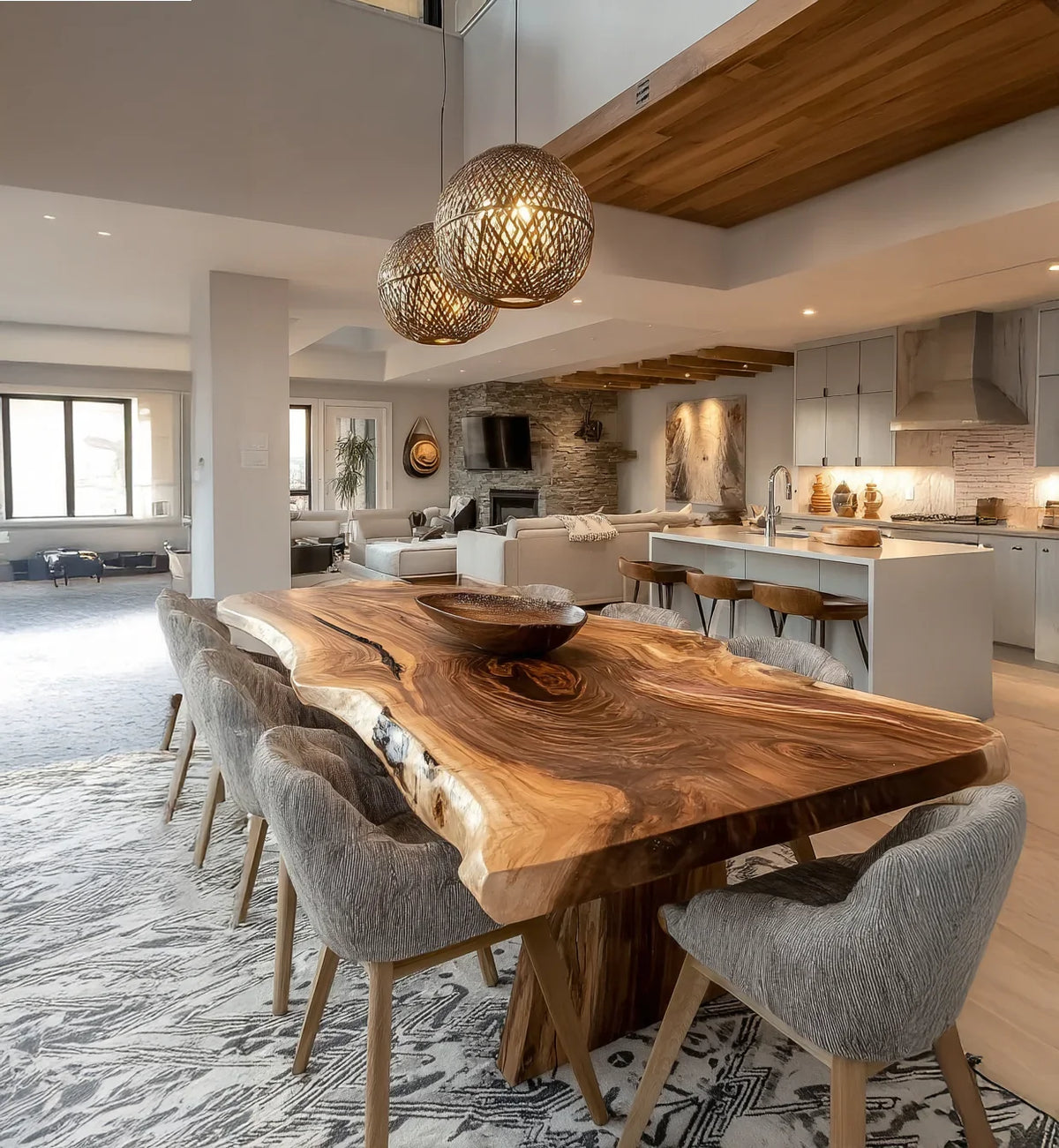
Your dining table sets the tone for everything else in the room. A live-edge wood table, one with the natural, uneven edge of the tree left intact, is basically the poster child of organic modern style. It brings texture and imperfection into a room that might otherwise feel too polished.
Go with walnut, oak, or acacia for that rich, warm grain. Pair it with simple straight legs, either wood or matte black metal, so the table doesn’t feel too rustic.
Practical tip: If a full live-edge table is out of budget, look for a live-edge bench or console instead. Same texture, smaller price tag.
This idea flexes well too. Coastal homes can go lighter with whitewashed wood, while traditional spaces can pair it with more formal chairs. Now let’s talk about what goes around that table.
2. Mix Chair Styles Instead of Matching Them
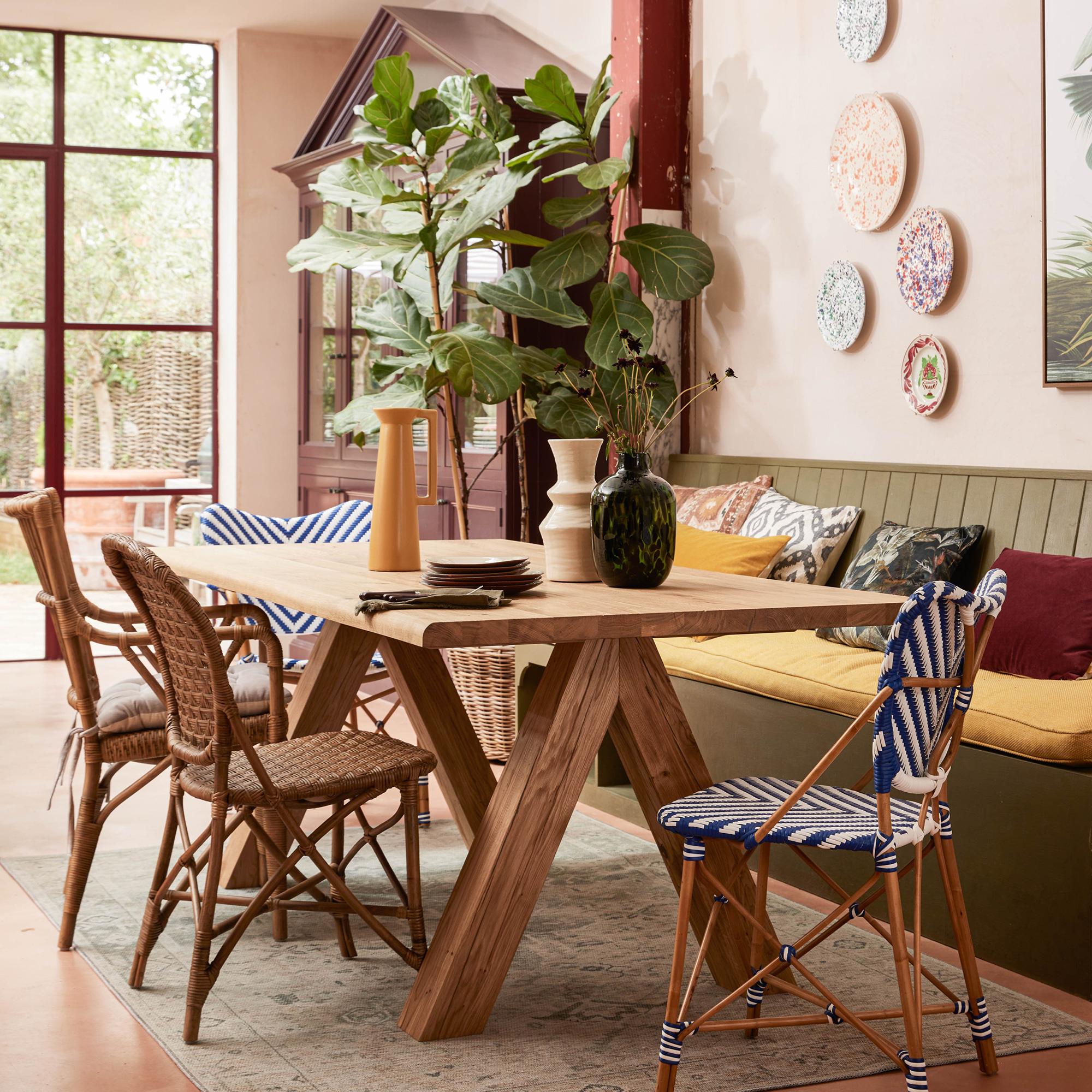
Here’s something that trips people up. They think every chair needs to match perfectly. Organic modern actually loves a little variety. Try pairing wood chairs on one side with upholstered chairs on the other, or add two woven rattan chairs at the head and foot of the table.
This mix keeps things visually interesting without looking chaotic, as long as you stick to a consistent color family. Neutral tones like cream, tan, sage, or soft brown work best.
Practical tip: Keep at least one shared material or color across all your chairs so the mix still feels intentional, not random.
This idea works beautifully in eclectic and coastal homes too, though traditional spaces might want to keep the variation more subtle.
Speaking of color, let’s talk palette, because that’s where a lot of organic modern rooms live or die.
3. Stick to a Warm, Earthy Color Palette

Organic modern isn’t about bold color. It’s about tone and warmth. Think sand, clay, olive, cream, and soft charcoal. These colors let the natural materials do the talking instead of fighting for attention.
Organic Modern Color Palette Guide
| Palette Name | Wall Color | Furniture Tone | Accent Color |
|---|---|---|---|
| Desert Warm | Warm White | Honey Oak | Terracotta |
| Coastal Neutral | Soft Sand | Whitewashed Wood | Sage Green |
| Moody Earth | Greige | Walnut | Rust Orange |
| Minimal Cream | Off-White | Light Ash Wood | Olive |
Practical tip: Pick one dominant neutral, one furniture wood tone, and just one accent color. That’s it. Adding more starts to muddy the whole vibe.
This palette approach adapts easily. Farmhouse spaces can lean cream and white, while Scandinavian rooms can go lighter and cooler overall.
Now that your colors are set, let’s bring in some texture through lighting.
4. Hang a Sculptural Pendant Light
Lighting is one of the easiest ways to make a dining room feel finished. In organic modern spaces, the pendant light often acts like a piece of art. Think woven rattan pendants, sculptural ceramic shades, or organic-shaped wood and metal fixtures.
Skip anything with sharp glass or shiny chrome. Those read more industrial or glam, not organic.
Practical tip: Hang your pendant about 30 to 36 inches above the table surface so it doesn’t block sightlines but still feels grounded.
This idea shifts easily across styles. Boho homes can go bigger and more textured with fixtures, while modern farmhouse spaces might choose a simpler wood bead chandelier.
Once your lighting is set, it’s time to think about what covers your floor.
5. Layer a Natural Fiber Rug Underneath
A jute or sisal rug under your dining table adds warmth and softens all those clean lines from your furniture. It also helps define the dining space, especially in open floor plans where the dining area blends into the living room.
Stick to a rug that’s big enough to fit under the entire table and chairs, even when they’re pulled out.
Dining Rug Size Guide
| Table Size | Recommended Rug Size |
|---|---|
| 4-seat round table | 6×6 ft round or square |
| 6-seat rectangular table | 8×10 ft |
| 8-seat rectangular table | 9×12 ft |
| 10-seat rectangular table | 10×14 ft |
Practical tip: Add a rug pad underneath. It keeps the rug flat and adds a little cushion under your dining chairs.
This idea works in almost any style. Traditional rooms might choose a patterned wool rug instead of jute, while coastal spaces might go with a light, textured seagrass option.
Next, let’s talk about the walls, because empty walls are a missed opportunity here.
6. Add Textured Wall Treatments Instead of Flat Paint
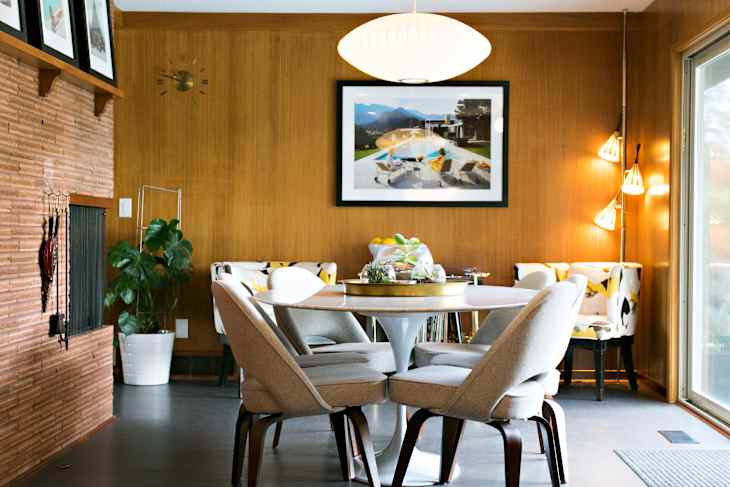
Flat painted walls can feel a little boring in an organic modern dining room. Instead, try lime wash paint, textured plaster, or wood paneling. These finishes add depth without adding clutter.
Lime wash paint especially gives that soft, cloudy, handmade look that feels very “organic modern.”
Practical tip: If a full textured wall feels like too much commitment, start with just one accent wall behind your table.
This idea flexes really well. Mediterranean-style homes love lime wash too, while mid-century modern spaces might prefer simple wood slat paneling instead.
Now let’s bring nature inside a little more directly.
7. Bring In Greenery With Simple, Sculptural Plants
Plants are basically non-negotiable in organic modern design. But it’s not about a jungle of plants everywhere. Choose one or two statement plants with simple, sculptural shapes, like a fiddle leaf fig, olive tree, or snake plant.
Skip the tiny plastic pots. Go for woven baskets, stone planters, or simple ceramic pots in neutral tones.
Practical tip: Place your plant in a corner near a window so it gets light but doesn’t crowd your walking path around the table.
This works in every home style honestly. Boho spaces can add more plants and layer in trailing varieties, while minimalist homes should stick to just one clean, simple plant.
With your greenery in place, let’s talk about what’s actually on your table.
8. Style Your Table With Organic, Low-Profile Centerpieces
Your centerpiece shouldn’t block conversation across the table. Think low wooden bowls filled with fruit, a simple ceramic vase with a few dried stems, or a small collection of stone objects.
Avoid anything too shiny, glittery, or seasonal-looking. Organic modern favors things that look like they were found, not bought at a holiday sale.
Practical tip: Keep your centerpiece under 12 inches tall so people can still see each other across the table.
This idea adapts really well too. Traditional homes might use a low floral arrangement instead, while coastal spaces could swap in dried coral or driftwood pieces.
Let’s move from the table to the seating cushions and soft textures around the room.
9. Use Linen or Boucle Fabric on Dining Chairs
If you’re adding upholstered chairs, skip anything too slick or shiny. Linen, boucle, and other textured, matte fabrics fit the organic modern look so much better. They add softness and a slightly imperfect, lived-in feel.
Stick to your neutral color palette here too. Cream, oatmeal, warm gray, and soft taupe all work beautifully.
Practical tip: Choose a stain-resistant linen blend if you have kids or pets. It gives you the look without the maintenance headache.
This idea works across styles easily. Traditional homes might choose a subtle textured fabric with piping detail, while modern homes can keep it super simple and clean.
Now, let’s zoom out and think about your storage pieces.
10. Choose a Sideboard With Curved Edges and Natural Materials
A sideboard or buffet gives you storage and a place to style decor, but the shape matters a lot here. Look for pieces with curved corners, woven cane fronts, or solid wood construction instead of sharp-edged, glossy furniture.
This piece can also be where you introduce a little more color or pattern if your table and chairs are pretty neutral.
Practical tip: Style the top of your sideboard with three items of varying height, like a lamp, a plant, and a stack of books, for an easy, balanced look.
This adapts well too. Mid-century modern homes might choose a sideboard with tapered wood legs, while traditional spaces could go with a slightly more detailed wood carving.
Let’s talk about one more often-overlooked detail: your window treatments.
11. Choose Simple, Natural Window Treatments
Heavy, formal curtains can clash with the organic modern vibe. Instead, go with simple linen curtains, woven roman shades, or bamboo blinds. These let in natural light while still adding texture.
Light and neutral colors work best here so the windows don’t compete with your other design elements.
Practical tip: Hang curtains close to the ceiling, not just above the window frame, to make your dining room feel taller and more open.
This idea shifts easily across styles too. Coastal homes might choose woven bamboo shades, while farmhouse spaces could add simple cotton curtains with a subtle texture.
Tips for Success
- Start with your furniture’s wood tone first, then build your color palette around it instead of the other way around.
- Don’t rush to fill every corner. Organic modern rooms need breathing room to feel calm, not empty.
- Mix at least three different textures in every room (wood, woven fiber, and soft fabric, for example) for that layered, natural feel.
- Choose quality over quantity with decor items. A few well-made pieces beat a bunch of cheap ones every time.
- Let natural light lead your window treatment choices. Sheer or light fabrics almost always work better here than heavy drapes.
- Repeat one material, like wood or rattan, in at least three spots around the room to tie everything together.
Common Mistakes and How to Avoid Them
Too much matching furniture
: Buying a full matching dining set makes the room feel stiff. Mix at least one or two pieces with different textures or finishes instead.
Overly bright or bold wall colors
: Bold colors fight with the natural materials for attention. Stick to warm neutrals and let your furniture and textures shine.
Skipping texture on the walls or floors
: Flat walls and hard floors with nothing else can feel cold. Add a rug, textured paint, or wood paneling to warm things up.
Choosing shiny, glossy finishes
: Glossy chrome or lacquered furniture clashes with the organic, natural feel. Look for matte finishes and natural materials instead.
Overcrowding the table with decor
: A cluttered centerpiece blocks conversation and visual flow. Keep table decor low, simple, and minimal.
Ignoring lighting temperature
: Cool, harsh white bulbs make a warm room feel clinical. Choose warm white bulbs, usually around 2700K to 3000K, for the coziest effect.
Similar Variations
- Japandi Dining Room – Combines Japanese minimalism with Scandinavian warmth for an even more pared-down, quiet look.
- Coastal Organic Modern – Adds lighter woods, breezy linens, and softer blues for a beachy twist on the same core style.
- Desert Modern Dining Room – Leans into terracotta, clay tones, and southwestern textures for a warmer, sun-baked feel.
- Modern Farmhouse Dining Room – Mixes organic modern’s natural materials with more traditional farmhouse shapes and details.
- Wabi-Sabi Dining Room – Focuses heavily on imperfection and handmade items, pushing the organic side even further than typical organic modern.
- Mid-Century Organic Dining Room – Blends retro mid-century shapes with organic modern’s natural material focus for a slightly more retro feel.
Pulling off this look really comes down to balance. You want clean lines without feeling cold, and natural texture without feeling messy. Once you get that mix right, the room just feels good to sit in, and that’s really the whole goal of good design anyway.
If you take away just one thing from this guide, let it be this: start with natural materials, keep your colors calm, and don’t be afraid to mix textures a little. Do that, and you’ll end up with an 11 Organic Modern Dining Room that feels warm, welcoming, and totally your own.
Leave a Reply