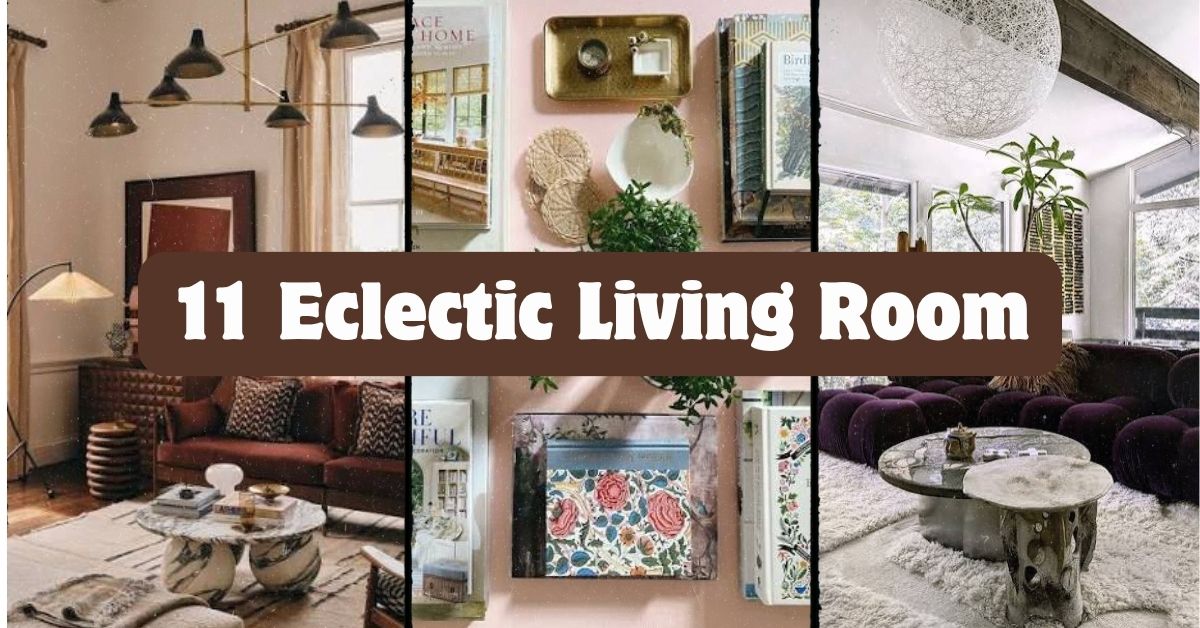
I’ve helped enough friends redo their living rooms to tell you this: an 11 eclectic living room isn’t about throwing random stuff together and hoping it looks cool. There’s a real method to it, and once you see it laid out, you’ll never look at your grandma’s vase or your thrift-store lamp the same way again.
An eclectic living room mixes different design styles, time periods, colors, and textures into one cohesive space. It works when pieces share a common thread, like color, scale, or a repeated material, instead of clashing at random.
Stick around, because I’m about to walk you through 12 specific ideas, a couple of handy tables, and the mistakes that trip up almost everyone who tries this look.
What Makes a Living Room “Eclectic” Anyway?
Okay, so here’s the thing about eclectic style. It’s not messy. It’s not “anything goes.” It’s actually one of the harder styles to pull off well because you’re breaking rules on purpose, not by accident. Think of it like a mixtape. You’ve got jazz next to punk rock next to a folk song, but somehow the playlist still flows. That’s eclectic design. You’re pulling from mid-century, boho, vintage, modern, whatever speaks to you, and tying it together with a smart color palette or a repeated shape. I promise, once you get the hang of the balance, it’s honestly one of the most fun styles to decorate in.
1. Anchor the Room With One Bold Vintage Piece
Every great eclectic room needs a hero item. Something old, something with a story, something that makes people go “wait, where did you get that?” This could be a carved wooden cabinet from a flea market, a mid-century armchair, or even your great-aunt’s coffee table.
Pick one standout piece and build everything else around it in scale and tone. Don’t let it fight with five other loud items in the same room.
Practical tip: if you’re not sure where to start, hit up estate sales before furniture stores. You’ll find one-of-a-kind pieces for less money.
This idea works in almost any home style, whether your base is modern minimalist or cozy farmhouse, because one vintage anchor adds character without overwhelming the room. Now let’s talk about how color ties all these mismatched pieces together.
2. Build a Color Story, Not a Color Match
Here’s a mistake I made early on: I tried to match colors exactly, like the throw pillow had to be the same green as the rug. That’s not eclectic, that’s just matchy. Instead, pick three to five colors that feel related, like they belong in the same sunset, and let each piece use those colors differently.
A rug might have rust and navy. A chair might be solid mustard. A lamp might have a cream shade. They don’t match, but they relate.
Actionable tip: pull your palette from one patterned item you already love, like a rug or curtain, and repeat those colors in smaller doses elsewhere.
Sample Eclectic Color Palettes by Mood
| Mood | Base Colors | Accent Pop | Best For |
|---|---|---|---|
| Warm & Earthy | Terracotta, cream, olive | Mustard yellow | Boho or Southwestern mixes |
| Moody & Rich | Charcoal, deep green, brass | Burgundy | Vintage or industrial mixes |
| Bright & Playful | White, sky blue, sage | Coral or pink | Coastal or modern mixes |
| Neutral Grounded | Beige, taupe, walnut brown | Black accents | Traditional or mid-century mixes |
Once your palette is locked in, it’s way easier to add pattern without things looking chaotic.
3. Layer Patterns With a Common Color Thread
Pattern mixing scares people, but it’s honestly the fun part. The trick is that every pattern in the room, whether it’s a floral pillow, a striped rug, or a geometric throw, needs to share at least one color with its neighbors.
Try three patterns max in one seating area to start. Any more and your eye won’t know where to rest.
Practical tip: vary the scale of your patterns. Pair a big bold floral with a tiny geometric print and a solid color in between as a buffer.
This trick flexes easily. In a coastal-leaning room, mix stripes with rattan textures. In a traditional room, mix damask with plaid. The rule stays the same even when the patterns change completely.
4. Mix Furniture Eras on Purpose
Don’t buy a matching living room set. Seriously, skip it. An eclectic space wants a mid-century sofa next to a Victorian side table next to a modern glass coffee table. The contrast is the point.
Keep one thing consistent, like wood tone or leg style, so the mismatched pieces still feel like they’re in conversation with each other.
Actionable tip: shop secondhand marketplaces and mix in at least one new piece so the room doesn’t feel like a museum of old furniture.
This works whether your home leans modern farmhouse or urban loft. The eras clash, but the room still feels pulled together because of that one repeated detail. Speaking of details, let’s talk about textures next.
5. Layer Textures for Depth
A room full of smooth surfaces feels flat, even if the colors are great. Eclectic style thrives on texture contrast: velvet next to woven rattan, chunky knit throws against sleek leather, a rough jute rug under a polished wood table.
Add texture through small, swappable items first, like pillows, throws, and baskets, before committing to big furniture texture changes.
Practical tip: aim for at least four different textures in your main seating area, like wood, woven fiber, metal, and soft fabric.
In a coastal eclectic room, this might mean linen and driftwood. In a moody, vintage-leaning room, it might mean velvet and dark leather. Same idea, totally different feel.
6. Use Art as the Great Unifier
Gallery walls are basically eclectic style’s best friend. Mixing photography, paintings, prints, and even textiles on one wall pulls a whole room together because it shows your personality is the theme, not a single decor “look.”
Frame styles matter here. Mix a few gold frames with black ones and a couple of unframed canvases for variety.
Practical tip: lay your art pieces on the floor first and arrange them before you touch a hammer. It saves your walls from a dozen extra nail holes.
Traditional homes might lean toward oil paintings and ornate frames, while modern spaces might mix abstract prints with sleek black frames. Either way, art on the walls sets the tone for everything below it.
7. Choose a Rug That Grounds Multiple Styles
Your rug is basically the referee of the room. It needs to calm down all the mismatched furniture and patterns happening above it. A busy vintage-style rug, like a Persian or Moroccan pattern, works great because it already contains a bunch of colors your other pieces can borrow from.
Size matters a lot here too. A too-small rug makes an eclectic room look unfinished instead of curated.
Rug Size Guide by Room Layout
| Living Room Size | Recommended Rug Size | Furniture Placement |
|---|---|---|
| Small (under 120 sq ft) | 5×7 ft | Front legs of furniture on rug |
| Medium (120–200 sq ft) | 8×10 ft | All furniture legs on rug |
| Large (200+ sq ft) | 9×12 ft or larger | All furniture legs on rug, with border showing |
Practical tip: go bigger than you think you need. Most people undersize their rugs and it makes the whole layout feel cramped.
Once the rug is set, lighting is your next big move.
8. Mix Lighting Styles Like You Mix Furniture
Don’t just use one overhead light and call it done. Eclectic rooms need layered lighting: a statement pendant, a quirky floor lamp, maybe a vintage sconce. Each fixture can be a totally different style as long as the metal finishes or bulb tones feel related.
Practical tip: stick to warm bulbs (around 2700K to 3000K) across all your fixtures so the room feels cohesive even if the lamp shapes don’t match.
A modern eclectic room might pair a sculptural floor lamp with a rattan pendant. A traditional-leaning room might mix a crystal sconce with a brass reading lamp. Different vibes, same layering trick.
9. Add Plants for Organic Contrast
Plants soften all the hard lines and mismatched furniture edges in an eclectic room. A big leafy plant in the corner, a trailing vine on a shelf, a small succulent on the coffee table, these add life without adding more “stuff” to clash visually.
Practical tip: vary your plant pot styles too, like a woven basket planter next to a ceramic pot, to keep the eclectic theme going all the way down to the details.
This idea works in literally every style variation, since greenery softens modern, traditional, boho, and coastal spaces equally well. Next, let’s talk about the often-overlooked coffee table styling.
10. Style Your Coffee Table Like a Mini Gallery
Your coffee table is basically a stage for tiny curated moments. Stack a few books, add a small sculptural object, toss in a candle or a small plant. The goal is variety in height and shape without cluttering the surface.
Practical tip: follow the “rule of three”: group items in sets of three for a naturally balanced look.
In a modern eclectic room, this might mean a marble tray with one bold sculpture. In a vintage-leaning room, it might mean stacked leather books with an old brass compass. The styling logic stays the same no matter the objects.
11. Don’t Skip Window Treatments
People forget curtains, but they’re a huge part of tying an eclectic room together. Skip the boring beige panels. Go for a bold pattern, a rich color, or even a textured linen that adds one more layer to your palette.
Practical tip: hang curtain rods close to the ceiling, not just above the window frame, to make your ceilings feel taller.
Coastal rooms might use light linen in soft blues, while moody eclectic rooms might use deep velvet drapes. Either way, don’t leave your windows as an afterthought.
12. Add One Unexpected “Wow” Item
Every great eclectic room has one thing that makes guests do a double-take. Maybe it’s a neon sign, a huge vintage mirror, or a funky sculptural chair nobody expected. This is your personality piece, and it’s what stops the room from feeling like a showroom.
Practical tip: pick something you genuinely love, not something trendy, because trends fade but personal favorites don’t.
This idea is honestly universal. Every home style benefits from one surprising, personal touch that breaks the pattern in a good way. And with that, you’ve got the full toolkit for building a space that feels curated, not chaotic.
Tips for Success
- Start with your rug or one statement piece, then build the rest of the room around it
- Keep a repeated material or color running through at least three items in the room
- Shop slowly. The best eclectic rooms are collected over months or years, not one weekend
- Take a photo of your room and check it in black and white to see if the contrast and balance actually work
- Leave a little negative space. Not every surface needs decor on it
- Trust your gut on pieces you love, even if they don’t seem to “match” anything else yet
Common Mistakes and How to Avoid Them
Too many focal points
: Pick one hero piece per room, like a bold rug or a statement chair, and let everything else support it quietly.
No color connection between pieces
: Choose a palette of three to five colors first, then shop within that palette even for mismatched styles.
Ignoring scale and proportion
: Balance one oversized piece with smaller, lighter items nearby so the room doesn’t feel top-heavy.
Overcrowding with too many patterns
: Cap yourself at three patterns per seating area and use solid colors as visual breathing room.
Forgetting a unifying material or finish
: Repeat one wood tone, metal finish, or fabric type across a few pieces to tie the whole look together.
Buying everything at once
: Add pieces slowly over time so the room feels collected and personal instead of staged.
Similar Variations
- Modern Boho – Clean lined furniture mixed with woven textures and warm earthy tones
- Vintage Maximalist – Heavy on antique furniture, bold wallpaper, and layered patterns everywhere
- Coastal Eclectic – Light, breezy fabrics and driftwood textures mixed with a few unexpected vintage finds
- Industrial Eclectic – Raw materials like metal and exposed brick paired with soft vintage furniture pieces
- Global Eclectic – Textiles, art, and furniture collected from different cultures and travels around the world
- Mid-Century Eclectic – Retro furniture shapes mixed with modern art and bold graphic patterns
Putting together a space like this really comes down to trusting your own taste while still following a few smart rules about color, scale, and texture. You don’t need a designer’s budget or a perfectly matched furniture set to make it work. You just need patience, a good eye for balance, and the willingness to mix things that maybe shouldn’t work together on paper. That’s the whole magic of an 11 eclectic living room: it looks like it happened naturally, even though every piece was chosen on purpose.
Leave a Reply