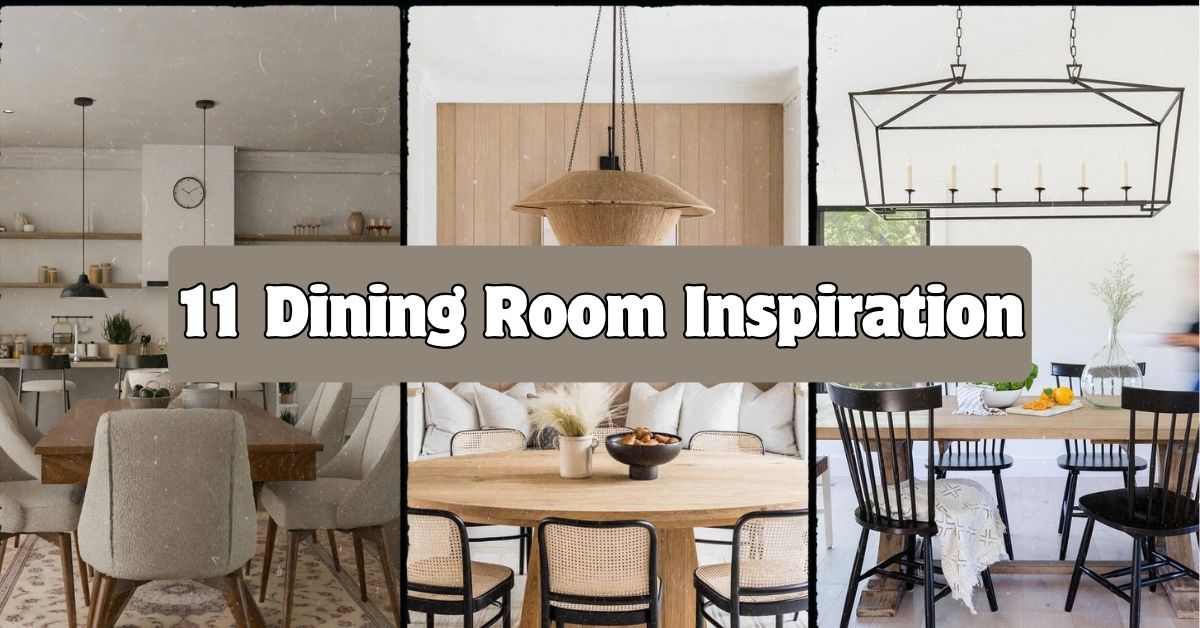
If you’ve been searching for 11 Dining Room Inspiration ideas that go beyond generic pins and actually help you plan a room you’ll love, you’re in the right spot. I’ve spent way too many hours scrolling design sites, and I’m going to save you that time by handing you the good stuff straight up.
A dining room makeover starts with a plan that covers layout, lighting, seating, and color, then layers in personal touches like art and textiles to make the space feel lived-in rather than staged. The best dining rooms balance function (can everyone fit and eat comfortably?) with mood (does the room feel warm and inviting?).
Stick around, because I’m about to walk you through twelve specific ideas, plus a couple tables that’ll help you pick colors and budgets without the guesswork.
What Makes a Dining Room Feel Special
Here’s the thing about dining rooms. They’re not just for eating. They’re where birthdays happen, where friends linger over wine, where kids do homework while dinner cooks. A good dining room has to work hard.
I think the mistake most people make is treating the dining room like an afterthought room. You buy a table, four chairs, call it done. But the best dining spaces have layers. Lighting that sets a mood. A rug that grounds the room. Art that gives you something to look at besides your phone. Once you start thinking of it as a full experience instead of just furniture, everything clicks.
Let’s get into the ideas.
1. Anchor the Room With a Statement Light Fixture
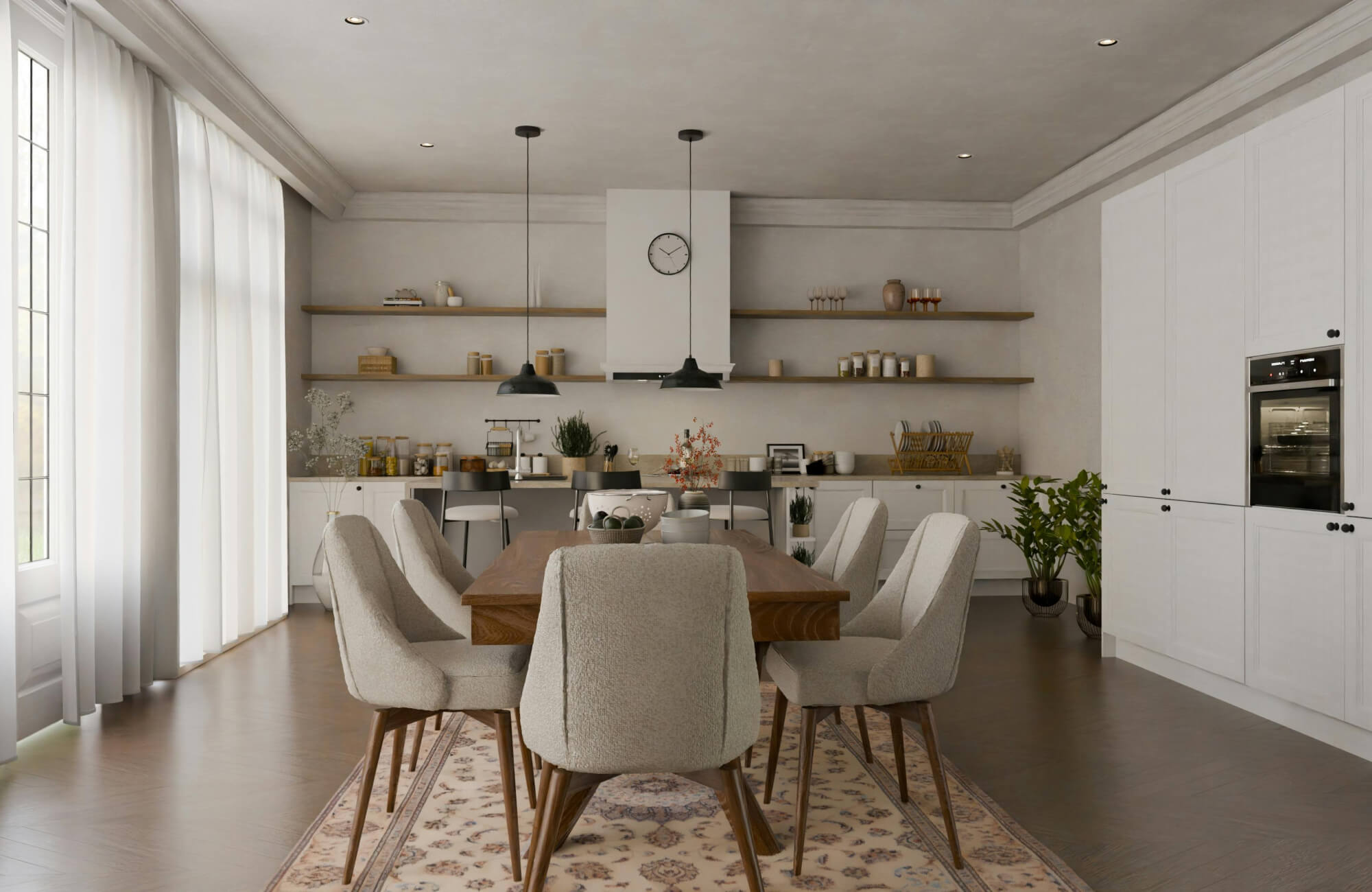
Nothing changes a dining room faster than swapping out a boring flush-mount light for something with personality. A big pendant, a chandelier with texture, or even a cluster of small hanging bulbs can become the focal point the second someone walks in.
Hang your fixture about 30 to 34 inches above the table for the best look and enough headroom. Brass and matte black are having a moment right now, but woven rattan pendants work great in coastal or boho spaces.
This idea flexes easily. Traditional homes might go for crystal chandeliers, while modern spaces lean toward sculptural metal fixtures. Once your lighting is set, the next step is figuring out what sits underneath it.
2. Pick a Table Shape That Matches Your Room

Table shape changes the whole feel of a room, not just the seating count. Round tables encourage conversation and work well in smaller or square rooms. Rectangular tables fit long, narrow spaces and seat more people. Oval tables split the difference nicely.
My actionable tip: measure your room and leave at least 36 inches of walking space around the table on all sides. That’s the minimum for pulling out chairs comfortably.
Farmhouse style loves long rectangular tables with bench seating. Modern minimalist rooms often go round with pedestal bases for a cleaner look underneath. Once the shape is locked in, color and material decisions get a lot easier.
3. Mix Chair Styles for Visual Interest

Matchy-matchy chair sets look fine, but mixing it up looks intentional and collected. Try pairing upholstered chairs at the head of the table with wooden chairs on the sides, or throw in a bench for casual flexibility.
This works because it breaks up visual monotony without creating chaos, as long as you keep one unifying element like wood tone or fabric color running through all the pieces.
Quick tip: start with two chair styles max when mixing. More than that starts to feel like a mismatched thrift haul instead of a curated choice.
Coastal dining rooms mix rattan and painted wood chairs beautifully. Industrial spaces might combine metal stools with a leather bench. Next, let’s talk about what goes under all that furniture.
4. Layer a Rug to Ground the Space

A rug under the dining table adds warmth, defines the space, and muffles sound, which matters more than people realize in rooms with hard floors.
Size matters here. Your rug should extend at least 24 inches beyond the table edge on all sides so chairs stay on the rug even when pulled out.
Rug Size Guide by Table Shape
| Table Shape | Table Size | Minimum Rug Size |
|---|---|---|
| Round (4 seats) | 42″ diameter | 6′ x 6′ round or square |
| Rectangular (6 seats) | 60″ x 36″ | 8′ x 10′ |
| Rectangular (8 seats) | 78″ x 40″ | 9′ x 12′ |
| Oval (6 seats) | 72″ x 42″ | 8′ x 10′ |
Low-pile rugs work best in dining rooms since they’re easier to clean and don’t trap crumbs like a shag rug would. Once your floor is sorted, it’s time to look at the walls.
5. Paint an Accent Wall Behind the Table
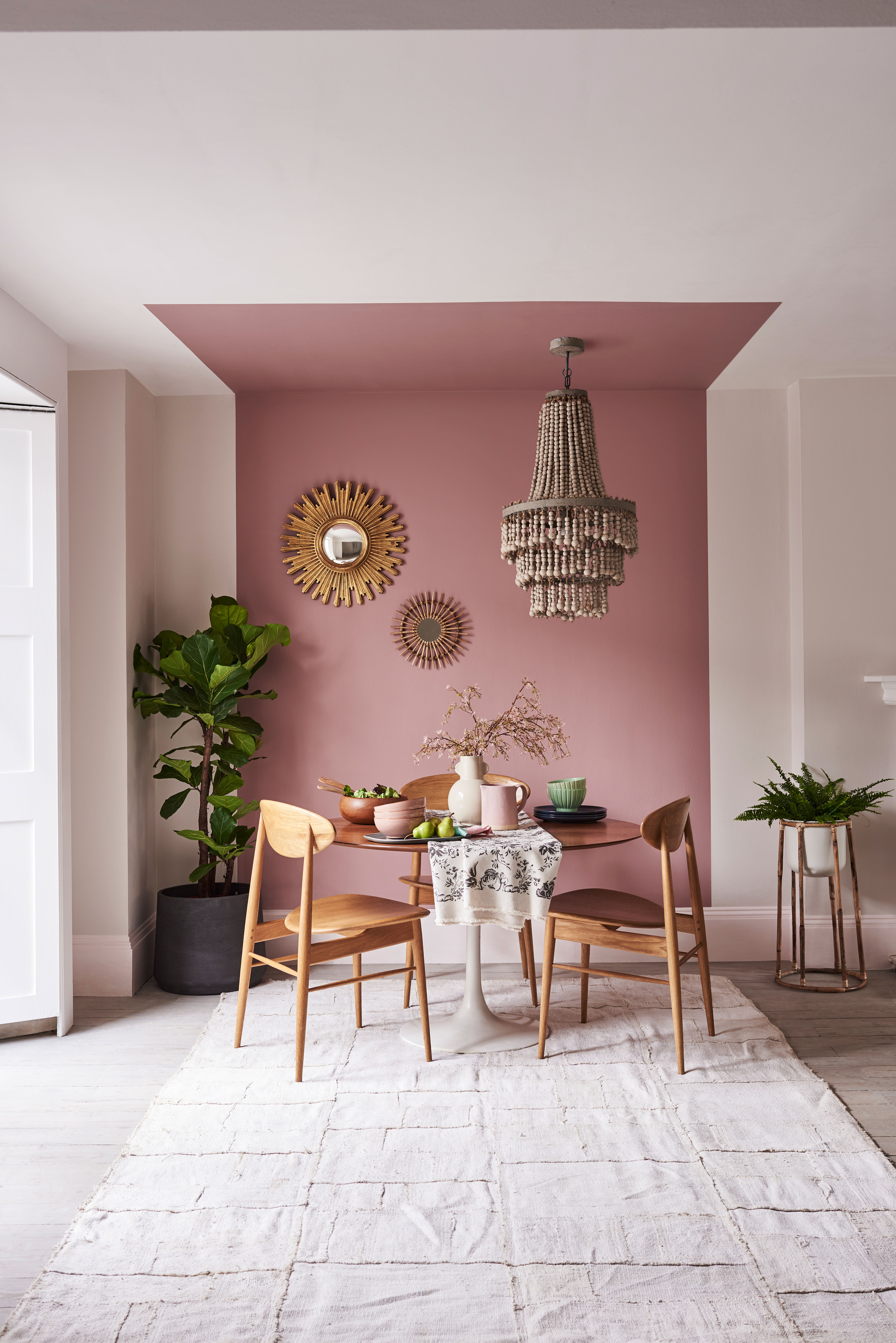
A single accent wall in a bold color instantly makes the dining table feel like the star of the show. Deep greens, navy blues, and warm terracottas are especially popular right now because they photograph well and feel cozy under warm lighting.
Try painting just the wall behind the table rather than the whole room. It gives you drama without committing to a full color overhaul, and it’s an easy weekend project.
Traditional homes might go with deep burgundy or hunter green paired with wood trim. Modern spaces often choose charcoal or matte black for contrast. With color sorted, let’s talk about what hangs on that wall.
6. Hang Art That Has a Story
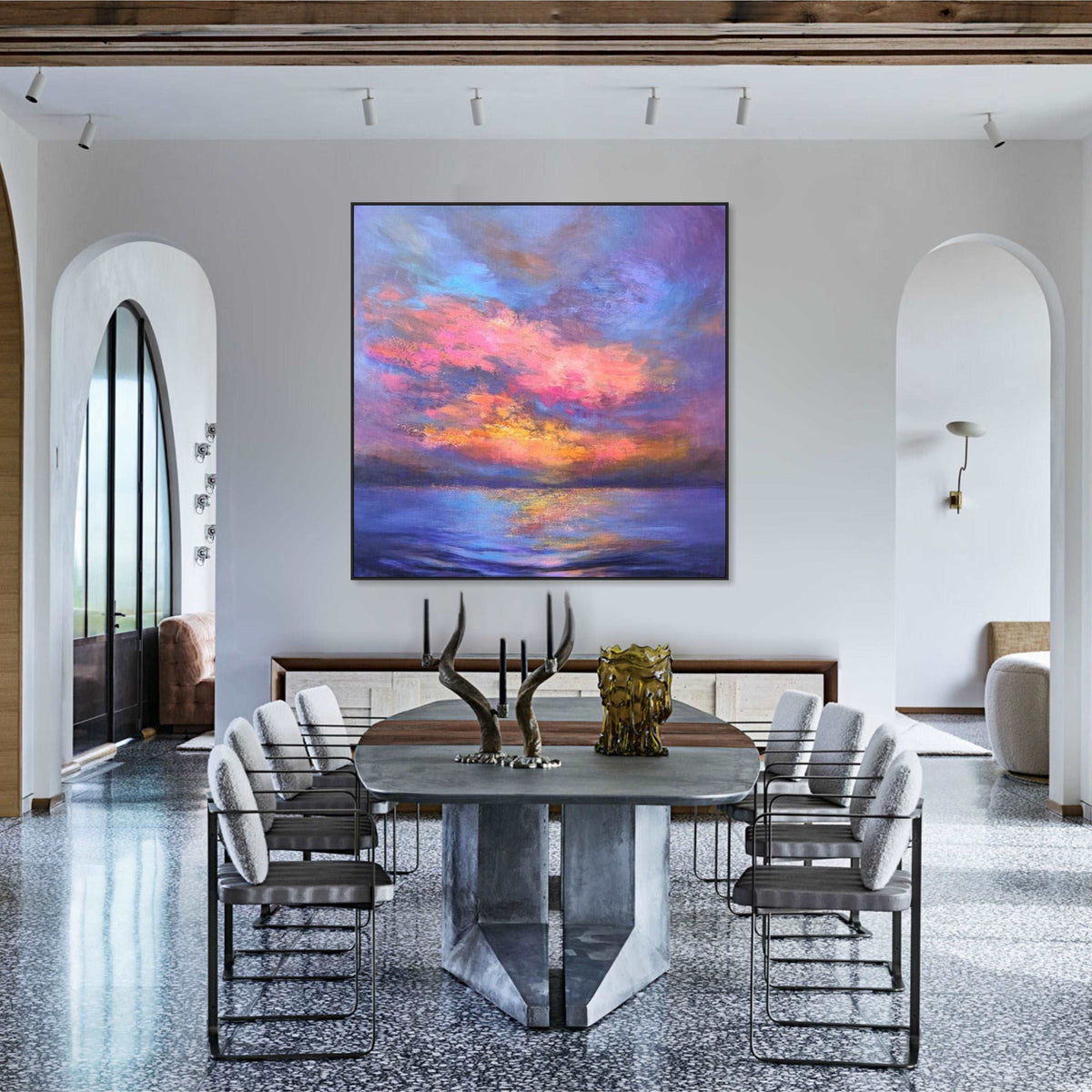
Empty walls make a dining room feel unfinished. Art gives people something to talk about and adds personality fast.
Go big. A single large piece of art usually looks better than a bunch of small frames scattered around. If you’re on a budget, a large framed print or even a tapestry works just as well as an original painting.
Coastal rooms love botanical prints or abstract wave art. Farmhouse spaces often go for vintage-style signs or black and white photography. Once the walls are dressed, the table itself needs some love.
7. Style the Table With a Simple Centerpiece

An empty table looks sad, but an overdone one looks cluttered. The sweet spot is a low centerpiece that doesn’t block sightlines across the table.
A wooden bowl with seasonal fruit, a low vase with greenery, or a row of candles in varying heights all work great. Keep the height under 12 inches so people can actually see each other while eating.
Practical tip: swap your centerpiece seasonally. Pinecones and candles in winter, fresh flowers in spring, a bowl of citrus in summer.
This idea works in literally every style, from farmhouse to modern to traditional, because it’s really about proportion, not aesthetic. Speaking of proportion, let’s talk about the room’s layout itself.
8. Create Zones With Furniture Placement
If your dining room is part of an open floor plan, use furniture and rugs to visually separate it from the living room or kitchen. A rug, a pendant light, and a buffet or sideboard can all signal “this is the dining zone” without needing walls.
I like adding a console table or sideboard against one wall. It gives you storage for linens and dishes, plus another surface for decor like a lamp or a stack of books.
Modern open-concept homes rely on this trick constantly. Traditional homes with separate dining rooms don’t need it as much, but a sideboard still adds function either way. Now let’s think about texture.
9. Add Texture Through Table Linens and Curtains

Texture makes a room feel finished, and dining rooms are an easy place to add it through linen tablecloths, woven placemats, and textured curtains.
Linen and cotton blends drape nicely and feel casual, while velvet curtains add a formal touch if that’s the vibe you’re going for. Even a simple runner down the center of the table adds depth without much effort.
Actionable tip: layer a woven placemat under a solid-color plate for instant texture at each place setting, even on a weeknight.
Boho dining rooms lean into heavy texture with macrame and jute. Minimalist spaces might just add one linen runner and call it done. Now, let’s talk budget, because not everyone wants to spend a fortune.
Dining Room Refresh Budget Tiers
| Budget Tier | What You Can Do | Estimated Cost |
|---|---|---|
| Small ($100-$300) | New light fixture swap, throw pillows on bench, art print | $100-$300 |
| Medium ($300-$800) | Accent wall paint, area rug, new chairs (2-4) | $300-$800 |
| Large ($800-$2,500) | New table, full chair set, statement chandelier | $800-$2,500 |
| Full Remodel ($2,500+) | New flooring, custom lighting, built-in buffet | $2,500+ |
10. Use a Sideboard or Buffet for Storage and Style

A sideboard does double duty. It hides your extra dishes, tablecloths, and serving platters, while also giving you a surface to style with lamps, art, or a mirror above it.
If your room feels a little bare, adding a buffet against the longest wall fills the space without crowding the table. Mirrors above a sideboard also bounce light around the room, which helps in dining rooms that don’t get much natural sunlight.
Farmhouse buffets often have a distressed wood finish. Modern sideboards go sleek with clean lines and hidden hardware. Once storage is handled, let’s think about how the room feels after dark.
11. Layer Your Lighting Beyond the Overhead Fixture
One light source makes a room feel flat. Adding a second layer, like wall sconces, a plug-in lamp on the sideboard, or even candles, creates depth and makes dinners feel more special.
Dimmer switches are a small investment that make a huge difference. Being able to dim the overhead light for a dinner party versus keeping it bright for homework time gives the room flexibility.
Traditional dining rooms often add wall sconces flanking a mirror or art piece. Modern spaces might use a slim LED strip under a floating shelf instead. With lighting layered, the last idea ties everything together.
Tips for Success
- Start with lighting and flooring before buying furniture. It’s easier to match a table to a rug than the other way around.
- Measure twice before buying anything big. A table that looks small online can swallow a room in real life.
- Choose a color palette of three tones max: one neutral, one accent, one metal or wood tone.
- Buy one statement piece and keep everything else simple. A bold chandelier doesn’t need a bold rug too.
- Test paint colors on the actual wall at different times of day before committing.
- Keep centerpieces low so conversation flows easily across the table.
- Don’t forget the ceiling. Paint or wallpaper up there adds a surprising amount of personality.
Common Mistakes and How to Avoid Them
Buying a table too big for the room
: Measure your space first and leave at least 36 inches of clearance around all sides for chairs to pull out.
Choosing a rug that’s too small
: Size up. The rug should extend well beyond the table edges so chair legs stay on it even when pulled back.
Only using one light source
: Add a second layer like sconces or a lamp on a sideboard so the room doesn’t feel flat at night.
Matching every single piece of furniture
: Mix textures and finishes slightly. A little variation makes the room feel curated instead of showroom-stiff.
Skipping art or leaving walls bare
: Add at least one large piece of art or a mirror to give the eye somewhere to land.
Ignoring the ceiling and ceiling height
: Hang fixtures at the right height (30-34 inches above the table) and consider paint or texture up top for extra character.
Similar Variations
- Coastal Dining – light woods, woven textures, and blue or sandy neutral tones that feel breezy.
- Farmhouse Dining – long wood tables, mixed chairs, and vintage-inspired lighting fixtures.
- Modern Minimalist Dining – clean lines, monochrome palettes, and one bold statement piece per room.
- Boho Dining – layered rugs, mismatched chairs, macrame, and lots of plants.
- Traditional Dining – formal wood furniture, chandeliers, and rich jewel-toned walls.
- Industrial Dining – metal accents, exposed materials, and moody dark color schemes.
Putting a dining room together doesn’t have to be complicated once you break it into layers: lighting, furniture, color, texture, and personal touches. Start with one or two ideas that excite you most, then build outward instead of trying to do everything at once. That’s really the whole secret behind good design anyway, small intentional choices stacked together. I hope this list of 11 Dining Room Inspiration ideas gave you a clear starting point for a room your family and friends will actually want to linger in.
Leave a Reply