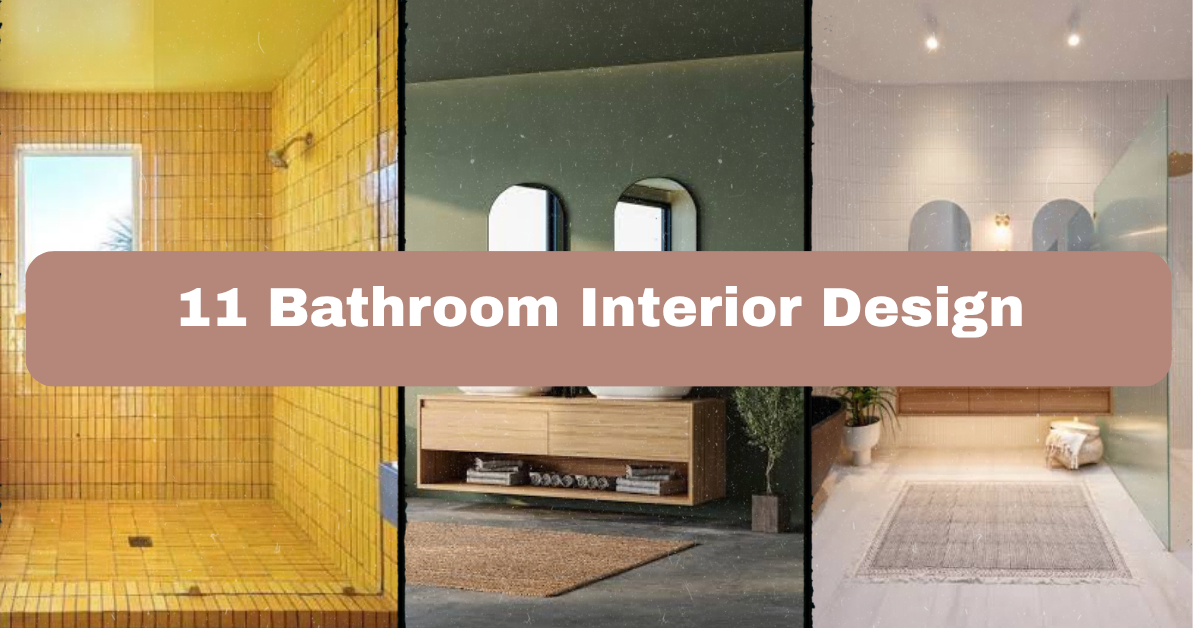
If you’re hunting for 11 Bathroom Interior Design ideas that go beyond generic advice, you’re in the right spot. I’ve spent way too many hours studying what actually works in real bathrooms, not just showroom photos, and I’m sharing all of it here.
Bathroom interior design refers to the planning and styling of layout, color, materials, lighting, and fixtures within a bathroom space. The goal is to create a room that is functional, comfortable, and visually cohesive while fitting the space and budget available.
Stick around, because I’m about to walk you through everything from tiny tweaks to bigger changes. Some of these ideas cost almost nothing. Others are worth saving up for.
What Makes Bathroom Interior Design Different From Other Rooms
Bathrooms are weird little rooms. They’re usually small, they deal with tons of moisture, and they need to work hard every single day. Unlike a living room where you can just add a cozy blanket and call it done, bathrooms need materials that survive water, heat, and constant use.
That’s why bathroom design is its own thing. You’re balancing looks with practicality the whole time. A gorgeous wallpaper means nothing if it peels off after one hot shower. I think that’s what makes this room so fun to design though. You get to solve a puzzle and make it beautiful at the same time.
1. Pick a Tile Pattern That Draws the Eye Upward
Small bathrooms feel bigger when your eye travels up instead of side to side. Herringbone tile on the floor or a vertical subway pattern on the walls does exactly that. It tricks your brain into thinking the ceiling is higher than it is.
Stick with one or two colors max so the pattern doesn’t feel busy. White and light gray is a safe combo. Black and white works if you want more drama.
Practical tip: use vertical tile stacking on just one accent wall behind the vanity if you don’t want to redo the whole room.
This trick works in modern spaces with clean lines, but it also fits traditional bathrooms if you pick classic subway shapes. Once your tile is sorted, the next thing to think about is what color story ties everything together.
2. Choose a Calming Color Palette Instead of Chasing Trends
Trendy colors come and go fast. A soft, calming palette lasts years and still feels fresh. Think sage green, warm beige, soft blue, or clay tones. These colors work with your skin tone under bathroom lighting too, which matters more than people realize.
Paint the walls in a muted tone and let your towels or bath mat bring in a pop of color. That way, updating the look later just means swapping textiles, not repainting.
Bathroom Color Palette Guide
| Style | Wall Color | Accent Color | Metal Finish |
|---|---|---|---|
| Coastal | Soft white | Seafoam green | Brushed nickel |
| Modern | Charcoal gray | Warm white | Matte black |
| Traditional | Cream | Navy blue | Polished brass |
| Farmhouse | Off-white | Sage green | Oil-rubbed bronze |
| Minimalist | Light gray | None (monochrome) | Chrome |
Pick your palette based on how much natural light your bathroom gets. Dark colors need bright rooms so they don’t feel like a cave. Once color is locked in, lighting becomes the next big piece of the puzzle.
3. Layer Your Lighting Instead of Relying on One Fixture
One overhead light makes shadows on your face and flattens the whole room. Layering fixes that. Add a vanity light on each side of the mirror, a ceiling fixture for general light, and maybe a small accent light near art or a shelf.
Warm white bulbs (around 2700K to 3000K) feel cozier than cool white ones. Cool white is better if you need bright task lighting for makeup or shaving.
Practical tip: install a dimmer switch so you can shift from bright morning light to soft evening light with one flip.
Coastal and farmhouse bathrooms look great with brass sconces. Modern spaces do better with sleek LED bars. Good lighting sets the mood, but the mirror you pair it with matters just as much.
4. Swap Your Basic Mirror for a Statement Piece
A plain rectangle mirror does the job, but it doesn’t do much for style. An arched mirror, a round mirror, or one with a wood or brass frame adds personality without taking up floor space.
Bigger mirrors also bounce more light around, which makes small bathrooms feel more open. If your bathroom is narrow, a tall mirror works better than a wide one.
Try a mirror with a slight tint or antique-style edges if you want an old-world feel. Clean-edge frameless mirrors suit modern spaces better.
This is one of the cheapest upgrades that makes the biggest visual difference. Speaking of easy upgrades, your vanity is next on the list.
5. Upgrade Vanity Hardware for an Instant Facelift
Sometimes you don’t need a new vanity at all. New knobs and pulls change the whole feel of a piece of furniture. Swap plain builder-grade knobs for brass, matte black, or ceramic pulls.
This costs maybe fifty dollars and takes an hour with a screwdriver. It’s one of the best value-for-effort changes you can make in any room, honestly.
Match your hardware finish to your faucet and light fixtures so everything feels intentional instead of random. Traditional and farmhouse styles love aged brass. Modern and minimalist spaces lean toward black or brushed steel.
Once your vanity looks sharp, storage is the next thing worth tackling.
6. Add Open Shelving for Storage That Doubles as Decor
Open shelves next to or above your vanity give you a spot for folded towels, plants, or pretty bottles. They also break up a wall of flat cabinetry.
Wood shelves warm up a bathroom that’s mostly tile and metal. Floating shelves look more modern than bracket-supported ones.
Practical tip: keep only a few items on each shelf. Overcrowded shelves look cluttered fast in a small room.
This works especially well in boho, coastal, and farmhouse bathrooms where a relaxed, lived-in feel is part of the charm. Once storage is sorted, let’s talk about what’s underfoot.
7. Choose Flooring That Handles Moisture and Looks Good Doing It
Bathroom flooring needs to survive water splashes daily. Porcelain tile, natural stone, and luxury vinyl plank are the top picks. Real wood almost never works long-term in a bathroom, no matter how nice it looks in photos.
Flooring Material Comparison
| Material | Water Resistance | Cost per Sq Ft | Best For |
|---|---|---|---|
| Porcelain tile | Excellent | $3 to $10 | Any style |
| Natural stone | Good (needs sealing) | $8 to $20 | Traditional, luxury |
| Luxury vinyl plank | Excellent | $2 to $7 | Budget renovations |
| Cork | Fair | $4 to $8 | Eco-friendly homes |
| Real wood | Poor | $5 to $15 | Not recommended |
Heated floors are a nice splurge if your budget allows it. Nothing beats stepping onto warm tile on a cold morning. Once your floor is settled, textiles are the next layer to think through.
8. Bring in Soft Textures With Towels, Rugs, and Curtains
Hard surfaces dominate bathrooms: tile, glass, porcelain. Soft textures balance that out. A chunky bath mat, textured towels, and a linen shower curtain add warmth instantly.
Stick to two or three colors max in your textiles so things feel put together, not mismatched. Neutral towels with one colorful mat is an easy formula that always works.
Practical tip: fold towels in thirds and stack them on open shelves for a spa-like look instead of just hanging them.
Coastal bathrooms love waffle-weave cotton in white or blue. Boho spaces do well with fringe details and warm earth tones. After textiles, let’s talk about the wall space you might be ignoring.
9. Use Wallpaper or Wall Molding on Just One Wall
A full room of wallpaper can feel overwhelming in a small bathroom. Try it on just one wall instead, usually behind the toilet or vanity. Peel-and-stick wallpaper now comes in moisture-resistant options that hold up fine in bathrooms.
If wallpaper feels risky, wainscoting or picture-frame molding adds texture and interest without any pattern commitment. Paint it a slightly different shade than the rest of the wall for subtle contrast.
Practical tip: test wallpaper samples in your actual bathroom for a few days before committing. Lighting changes how patterns and colors read.
Traditional and vintage-style bathrooms shine with floral or botanical wallpaper. Modern spaces do better with geometric prints or plain molding. Now let’s look at greenery, because plants change a bathroom more than people expect.
10. Add Real or Faux Plants That Can Handle Humidity
Plants make a bathroom feel alive instead of sterile. Not every plant survives bathroom conditions though. Pick ones that like humidity and low light, like pothos, snake plants, or ferns.
If your bathroom has zero natural light, go faux. Nobody will know unless they touch it, and it saves you from watching a plant die slowly by the sink.
Practical tip: group two or three plants of different heights near the tub or on a shelf for a fuller look instead of one lonely plant on the counter.
This idea fits basically every style. Boho bathrooms go heavy on plants. Modern spaces might use just one sculptural plant as a design statement.
11. Install a Statement Faucet or Showerhead

Your faucet gets touched every single day, so why not make it something nice to look at and use? A matte black faucet, a brass gooseneck style, or a rainfall showerhead upgrades the whole feel of the room.
This is a smaller purchase than a full vanity or tile job but it changes how the bathroom feels immediately. Match the finish to your hardware and lighting for a cohesive look.
Practical tip: if you’re renting, look for faucets that don’t require permanent plumbing changes so you can swap the old one back before moving out.
Traditional bathrooms lean toward brass and bronze fixtures. Modern and minimalist spaces usually go matte black or chrome. Speaking of finishing touches, don’t skip the small details either.
12. Don’t Forget Scent and Sound as Part of the Design
Design isn’t just visual. A nice candle, a nontoxic diffuser, or even a small speaker for music changes how a bathroom feels to actually use. This is the detail most people skip, but it’s the one that makes guests say “wow” without knowing exactly why.
Pick scents that aren’t overpowering. Something light like eucalyptus or citrus feels fresh instead of heavy in a small, enclosed space.
Practical tip: keep a small tray near the tub for a candle and a book so the space feels like a mini retreat, not just a functional room.
This idea works in literally any style bathroom because it’s about feeling, not furniture. Now that we’ve covered the big ideas, let’s talk about how to actually pull this off successfully.
Tips for Success
- Start with the biggest, most expensive item first (tile or vanity) and build your color scheme around it, not the other way around.
- Always buy an extra box of tile in case of future repairs. Matching discontinued tile later is a nightmare.
- Test paint colors in the actual bathroom lighting, both day and night, before committing to a full wall.
- Keep ventilation in mind. A pretty bathroom with mold problems isn’t a win.
- Measure twice before buying any vanity or mirror. Bathroom spaces are tight and mistakes are costly.
- Choose one “statement” element per bathroom, whether that’s wallpaper, tile, or a fixture. Too many statements compete with each other.
- Leave room in your budget for hardware and lighting. These small items add up fast but make a huge visual impact.
Common Mistakes and How to Avoid Them
Choosing trendy tile without thinking long-term
: Trends fade, but tile is expensive to replace. Pick patterns and colors you’ll still like in ten years, and save trendy touches for cheaper items like towels or art.
Ignoring proper ventilation
: Even the best design fails if moisture gets trapped. Install or upgrade your exhaust fan before focusing on looks.
Overcrowding a small space with too much decor
: Small bathrooms need breathing room. Stick to a few well-chosen pieces instead of filling every surface.
Mismatched metal finishes
: Random gold, chrome, and black fixtures together look chaotic. Pick one or two finishes and stay consistent throughout the room.
Skipping a lighting plan
: Relying on one overhead bulb creates harsh shadows. Layer at least two light sources for a balanced glow.
Forgetting about storage before decorating
: A beautiful bathroom with no place to put toiletries turns messy fast. Plan storage first, decor second.
Similar Variations
- Spa-Inspired Bathroom – Focuses on soft lighting, natural materials, and a calm, minimal color palette for a retreat-like feel.
- Coastal Bathroom – Light woods, white and blue tones, and natural textures inspired by beach houses.
- Industrial Bathroom – Exposed pipes, concrete-look tile, and black metal fixtures for an edgy, urban feel.
- Vintage Bathroom – Clawfoot tubs, patterned tile, and antique-style fixtures that nod to older design eras.
- Minimalist Bathroom – Clean lines, hidden storage, and a strict, limited color palette with almost no clutter.
- Farmhouse Bathroom – Shiplap walls, warm wood tones, and vintage-inspired hardware for a cozy, rustic look.
At the end of the day, good bathroom design isn’t about copying a magazine photo. It’s about picking a few ideas that fit your space, your budget, and how you actually live. Small changes like hardware and lighting add up just as much as big ones like tile and vanities.
I hope this list gave you a clearer picture of where to start, whether you’re doing a full renovation or just swapping a few small things this weekend. Any of these 11 Bathroom Interior Design ideas can help turn a boring, builder-grade bathroom into a space you actually enjoy spending time in.
Leave a Reply