
I’ve tested and researched 10 dining room curtains ideas so you don’t have to guess what actually works. If you’ve ever stared at your bare dining room windows wondering what would make the room feel finished, you’re in the right place. I promise you’ll walk away knowing exactly what to hang up.
Dining room curtains are fabric window treatments chosen specifically for dining spaces to control light, add privacy, and tie the room’s decor together. The best choices balance function (light control, easy cleaning near food) with style that matches your table setup and wall colors.
Stick around, because I’m about to show you curtain styles that go way beyond basic white panels, plus a few mistakes that make dining rooms look cheap instead of cozy.
What Makes Dining Room Curtains Different From Other Rooms
Dining rooms have their own rules when it comes to curtains. You’re dealing with food smells, spilled wine, sunlight hitting the table during dinner, and a room that needs to look good for guests but also survive daily life. I always tell people to think about fabric that’s easy to wipe or wash, colors that won’t clash with your table runner or dishes, and lengths that make the ceiling feel taller. It’s not just about picking pretty fabric. It’s about picking fabric that works as hard as your kitchen towels do, while still looking like it belongs in a magazine.
1. Floor-Length Linen Panels for an Airy Feel
Linen curtains that pool just slightly at the floor give your dining room an effortless, breezy look. This fabric has natural texture that catches light beautifully during dinner parties. I love how linen doesn’t feel stiff or formal, even in a nicer dining space.
Pick a soft white, oatmeal, or light gray linen to keep things neutral. Hang the rod close to the ceiling, not right above the window frame, to trick the eye into thinking your walls are taller.
Practical tip: Buy panels a few inches longer than your window height so you get that relaxed puddle effect at the bottom.
This style adapts well to coastal, farmhouse, and modern minimalist homes alike.
Next up, let’s talk about a bolder option for people who want their curtains to actually make a statement.
2. Bold Patterned Drapes as a Room Statement
If your dining room walls are plain and your furniture is simple, patterned curtains can be the thing that makes the whole room pop. Think botanical prints, geometric shapes, or even a subtle stripe. This works especially well in rooms with a lot of white or beige.
Choose one dominant color from the pattern and repeat it somewhere else in the room, like in your chair cushions or a piece of art. That repetition makes the whole space feel planned instead of random.
Practical tip: Test a fabric swatch against your wall color for a full day before buying, since patterns can look totally different in morning versus evening light.
This idea works great in eclectic, bohemian, or maximalist-style dining rooms.
Now let’s cool things down with a color that almost never goes wrong.
3. Deep Navy or Emerald Curtains for Drama
Dark curtains in navy blue or emerald green make a dining room feel rich and a little fancy, without trying too hard. These colors work especially well if your dining table is wood-toned or if you have brass light fixtures.
Pair dark curtains with lighter walls so the room doesn’t feel like a cave. A cream or soft gray wall next to navy drapes creates contrast that feels intentional and expensive.
Practical tip: Add curtain tiebacks in a metallic finish like brass or gold to break up the heavy color and add a little shine.
This look shines in traditional, transitional, and moody modern dining rooms.
Let’s move from drama to something a little more relaxed and breathable.
Color Palette Combinations for Dining Room Curtains
| Curtain Color | Best Wall Color Pairing | Room Style | Light Filtering Level |
|---|---|---|---|
| Navy Blue | Cream or light gray | Traditional | Medium |
| Emerald Green | Warm white | Transitional | Medium |
| Oatmeal Linen | Sage green | Coastal/Farmhouse | Light |
| Blush Pink | Soft gray | Modern feminine | Light |
| Charcoal | White or pale blue | Modern/Industrial | Heavy |
| Terracotta | Cream or tan | Boho/Southwest | Medium |
4. Sheer Curtains for Soft, Natural Light
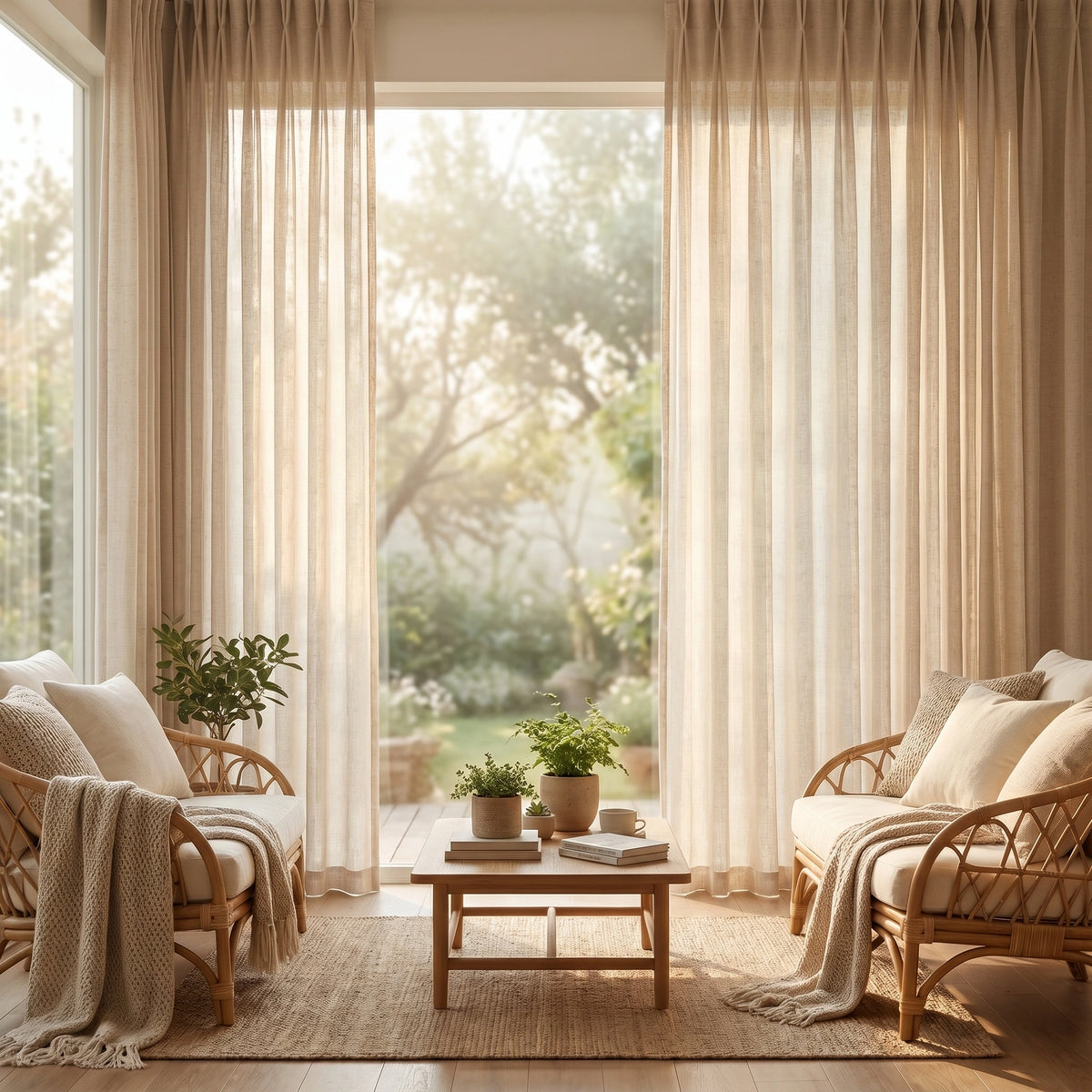
Sheers are perfect if your dining room doesn’t get a ton of natural light already. They let sunshine filter through during breakfast or lunch without making the room feel exposed. I like using sheers alone in rooms that don’t need privacy, like a dining room facing a backyard.
Go with white, ivory, or a very pale gray sheer fabric. Anything darker starts to look muddy when light passes through it.
Practical tip: Hang sheers on a double rod so you can add heavier drapes behind them later if you ever want more privacy or light control.
This works beautifully in coastal, Scandinavian, and cottage-style homes.
Now let’s talk about a texture that makes curtains feel more like art.
5. Textured Weave Curtains for Depth

Curtains with a woven or nubby texture add visual interest without needing a bold color or busy pattern. Think waffle weave, basketweave, or slubbed cotton. These fabrics catch shadows in a way flat fabric just can’t.
Stick to neutral tones like ivory, taupe, or light gray so the texture itself becomes the focal point instead of getting lost in a strong color.
Practical tip: Run your hand over a fabric sample before buying. If it feels interesting to touch, it usually reads as interesting when hung, too.
This idea fits warm minimalist, Japandi, and modern farmhouse dining rooms especially well.
Let’s switch gears and talk about curtains that do double duty as a design anchor.
6. Curtains That Match Your Table Runner or Rug

Here’s a trick interior designers use all the time. Pick a curtain fabric that shares a color or pattern with your table runner, placemats, or rug. It doesn’t have to be identical, just related enough that your eye connects the dots.
This creates a “designed on purpose” feeling even if you bought everything separately over time. A striped rug and a subtly striped curtain in a matching tone is a simple way to pull this off.
Practical tip: Bring a fabric swatch or photo of your rug when shopping for curtains so you can compare colors in person.
This approach works in literally every home style because it’s about coordination, not a specific look.
Speaking of coordination, let’s talk about length and how much it actually matters.
7. Floor-to-Ceiling Length for a Taller-Looking Room
One of the easiest upgrades you can make is simply hanging your curtains higher and longer. Instead of stopping at the windowsill, extend curtains from just below the ceiling down to the floor. This one change makes a dining room feel taller and more polished almost instantly.
Choose a rod that’s wider than your window frame too, so the curtains can fully open without blocking light when you want them pulled back.
Practical tip: Measure from about four inches below your ceiling down to a half inch above your floor for the ideal drop.
This trick works in every single style of home because it’s really about proportion, not aesthetics.
Now let’s look at a fabric choice that handles real-life dining room messes.
8. Easy-Clean Fabrics for Everyday Dining Rooms

If your dining room doubles as a homework spot, craft table, or everyday eating area, you need curtains that can handle a little chaos. Polyester blends and treated cotton are more stain-resistant than delicate silk or raw linen.
Look for fabrics labeled machine washable or spot-clean friendly. Darker colors and busier patterns also hide small stains better than solid white.
Practical tip: Avoid curtains that pool on the floor in high-traffic dining rooms since they collect dust and food crumbs fast.
This idea matters most in family-style, farmhouse, and casual modern dining rooms where the table gets used constantly.
Let’s talk next about a curtain style that adds softness without any pattern at all.
9. Layered Curtains for Function and Style
Layering means combining a sheer curtain with a heavier drape on the same window. During the day, you can close just the sheer for privacy while still letting light in. At night, close the heavier drape for full coverage and warmth.
This setup also just looks more finished. A single flat panel can feel plain, but layers add richness and depth, even in a small dining nook.
Practical tip: Use a double curtain rod, or two single rods mounted at slightly different depths, to make layering easy to open and close.
This works especially well in traditional, transitional, and English cottage-style dining rooms.
Now, let’s talk budget, because not everyone wants to spend a fortune on window treatments.
Budget Tiers for Dining Room Curtains
| Budget Level | Price Range (per panel) | Typical Fabric | Best For |
|---|---|---|---|
| Budget-Friendly | $15-$35 | Polyester blend | Rentals, temporary decor |
| Mid-Range | $40-$90 | Cotton, linen blend | Most homeowners |
| High-End | $100-$250 | Pure linen, velvet | Statement dining rooms |
| Custom/Designer | $300+ | Silk, custom prints | Formal or luxury spaces |
10. Velvet Curtains for a Cozy, Formal Touch
Velvet curtains add a plush, hotel-like feeling to a dining room. They’re heavier than most fabrics, which means they also block light and sound better than thinner options. I especially love velvet in dining rooms used for evening dinners or holiday gatherings.
Deep jewel tones like burgundy, forest green, or sapphire work best with velvet since the fabric already has a natural sheen that shows color richly.
Practical tip: Vacuum velvet curtains gently with a brush attachment every few months to keep the fabric looking fresh and dust-free.
This style fits traditional, glam, and formal dining rooms the best.
Let’s wrap up the main list with two more ideas that often get overlooked.
11. Café-Style Curtains for Half-Window Coverage
Café curtains only cover the bottom half of your window, leaving the top open for natural light. This works great in dining rooms where you want privacy from the street but still want sunlight pouring in from above.
These are especially handy in kitchen-adjacent dining nooks or breakfast areas near a busy sidewalk or neighboring house.
Practical tip: Use a tension rod mounted at the window’s midpoint so you can install these without drilling any holes.
This style is a favorite in farmhouse, cottage, and vintage-inspired dining rooms.
One more idea before we move into tips and common mistakes.
12. Ombre or Two-Tone Curtains for a Modern Twist

Ombre curtains fade from light to dark (or vice versa) along the fabric, creating a soft gradient effect. Two-tone curtains use color blocking instead, with a clean line separating two shades or fabrics.
Both options add visual interest without needing a busy pattern. They work particularly well in dining rooms with simple furniture and plain walls that need a little extra personality.
Practical tip: Hang ombre curtains so the darker portion sits near the floor. It grounds the room and looks more intentional than having dark fabric up top.
This idea suits modern, contemporary, and eclectic dining spaces especially well.
Tips for Success
- Measure your window width and multiply by 1.5 to 2 times for proper fabric fullness, so curtains don’t look flat and skimpy.
- Iron or steam curtains before hanging them, since fabric often arrives wrinkled from shipping or storage.
- Match your curtain rod finish to your light fixtures or cabinet hardware for a cohesive look.
- Wash or dry-clean dining room curtains more often than other rooms since food smells and grease cling to fabric.
- Choose blackout lining if your dining room windows face direct afternoon sun and heat up the room.
- Consider motorized curtains if your dining room has hard-to-reach or oversized windows.
- Don’t ignore curtain length rules. Too short makes a room look unfinished, no matter how nice the fabric is.
Common Mistakes and How to Avoid Them
Hanging curtains too low
: This chops the window visually and makes ceilings look shorter. Mount the rod close to the ceiling instead.
Choosing curtains too short for the window
: Curtains that stop above the floor look unfinished. Always measure and buy panels that reach at least the floor, if not slightly beyond.
Picking delicate fabric for a busy family dining room
: Silk and raw linen stain easily and are hard to clean. Choose polyester blends or treated cotton for everyday use.
Ignoring natural light direction
: A dining room facing west gets strong afternoon sun that fades fabric fast. Choose UV-resistant or lined curtains for sun-facing rooms.
Matching curtains exactly to the wall color
: This can make the window disappear into the wall instead of standing out as a design feature. Choose a complementary shade instead of an identical one.
Skipping curtain rings or clips
: Threading fabric directly onto a rod causes bunching and uneven folds. Rings or clips create cleaner, more even pleats.
Similar Variations
- Kitchen Curtains – Shorter, easier-to-clean versions often used near sinks and cooking areas.
- Living Room Drapes – Typically heavier and more formal, meant for lounging spaces rather than eating areas.
- Breakfast Nook Curtains – Smaller-scale curtains suited for cozy corner dining spots.
- Sunroom Curtains – Lightweight, UV-resistant fabrics made for rooms with heavy glass exposure.
- Formal Dining Room Drapes – Heavier fabrics like velvet or silk used in dedicated entertaining spaces.
- Farmhouse Café Curtains – Half-window coverage paired with rustic rod hardware for a cozy country look.
Picking the right window treatment really comes down to knowing your room’s light, your family’s habits, and the style you’re already working with. Whether you go bold with navy velvet or keep it airy with linen sheers, the goal is a dining room that feels finished and fits how you actually live. I hope this list of 10 dining room curtains gave you a clear starting point for your own space.
Leave a Reply