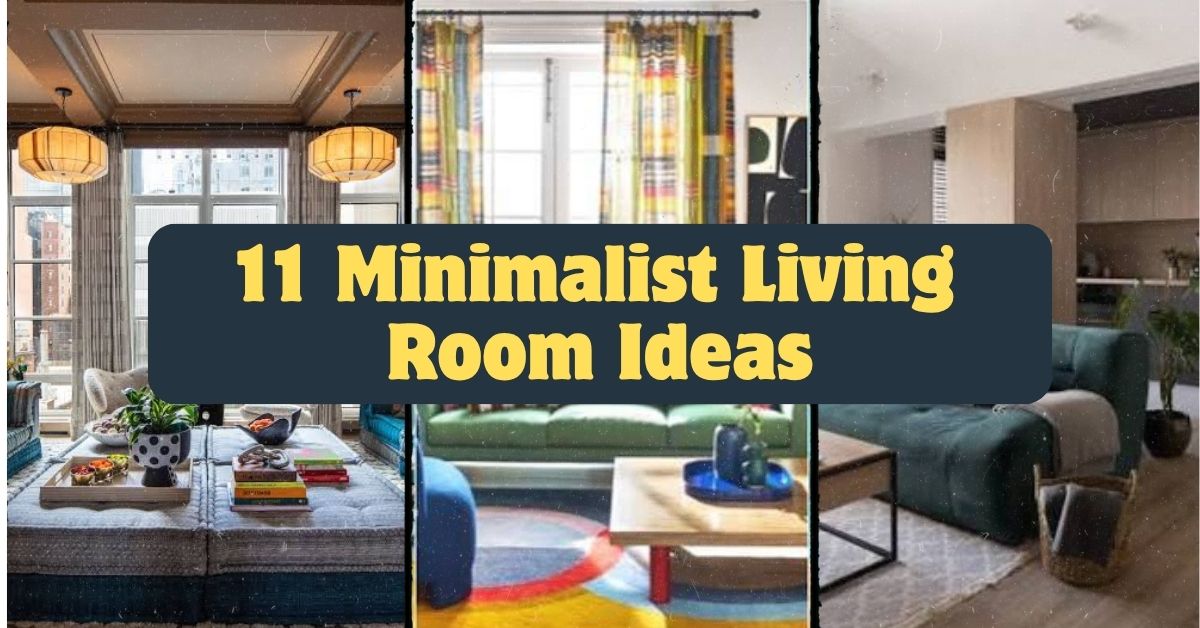
If you’re hunting for 11 Minimalist Living Room ideas that go beyond “just add a beige couch,” you’re in the right spot. I’ve spent way too many hours studying what actually makes a minimalist space feel calm instead of cold, and I’m going to walk you through everything I’ve learned.
A minimalist living room is a space designed around function, clean lines, and a limited color palette, using fewer furniture pieces and decorative items to reduce visual clutter and promote a sense of calm.
But here’s the thing nobody tells you: minimalist doesn’t mean boring, and I’m about to prove it.
What Minimalist Living Room Design Really Means
Ever walked into a room and just felt your shoulders drop? That’s what good minimalist design does. It’s not about owning nothing. It’s about owning things on purpose. Every chair, every lamp, every throw pillow earns its spot.
I think people get scared off because they picture sterile white boxes with one weird chair in the corner. That’s not it. Real minimalist living rooms still feel warm. They still have personality. They just don’t shout. The furniture is simple. The colors are quiet. The clutter is gone. That’s really the whole formula, and once you get it, you can’t unsee cluttered rooms the same way again.
1. Stick to a Neutral Color Foundation
Neutral colors are the backbone of any minimalist room. Think warm whites, soft greige, oatmeal, and soft charcoal. These shades don’t compete with each other, so your eye can actually rest.
Pick one dominant neutral for your walls and let your furniture sit a shade or two lighter or darker. This creates depth without adding visual noise. Skip bold accent walls here. They fight against the calm you’re trying to build.
Practical tip: paint a large sample swatch and check it in morning and evening light before committing. Neutrals shift a lot depending on lighting.
This approach works in modern lofts, but it also softens beautifully in traditional homes with wood trim.
Once your base color is locked in, the next step is figuring out what furniture actually deserves a place on top of it.
2. Choose Furniture With Clean, Simple Lines
Minimalist furniture avoids fussy details. No carved wood edges, no tufted buttons, no ornate legs. Think straight silhouettes, low profiles, and simple upholstery.
A sofa with clean lines instantly makes a room feel more open, even if the sofa itself is large. Pair it with a simple coffee table, maybe wood or a slab of stone, and skip anything with heavy ornamentation.
Actionable tip: measure your walking paths first. Minimalist rooms need at least 30 inches of clear space to walk through comfortably.
In coastal homes, this looks like light wood and linen. In modern homes, it’s often leather or bouclé in neutral tones.
Once your big furniture pieces are settled, you’ll want to think about what goes on the floor beneath them.
3. Layer in One Textured Rug, Not Three
A lot of people think minimalist means bare floors. Not true. One well chosen rug adds warmth and softens the room. The trick is picking just one, not layering multiple patterns.
Go for texture instead of pattern. A chunky wool rug or a subtle jute weave adds interest without adding visual clutter. Stick to a color close to your wall tone for the most cohesive look.
Quick tip: your rug should be big enough that at least the front legs of your sofa sit on it. Anything smaller looks like an afterthought.
Traditional homes can use a wool rug with subtle texture, while coastal spaces do well with natural jute or sisal.
Now that your floor has some warmth, let’s talk about what’s happening at eye level: your walls.
4. Keep Wall Decor to One or Two Pieces
Minimalist walls aren’t empty walls. They’re intentional walls. Pick one large art piece or a small curated grouping, and give it room to breathe.
Skip gallery walls packed with 15 frames. Instead, choose one statement piece, maybe a large abstract print or a simple framed photograph, and let negative space do the rest of the work.
Practical tip: hang art so the center sits at eye level, roughly 57 to 60 inches from the floor.
Modern homes might go for abstract art, while traditional spaces often use a single framed landscape or mirror.
Speaking of mirrors, let’s talk about how lighting and reflection play into this whole minimalist equation.
5. Use Layered Lighting Instead of One Overhead Fixture
A single ceiling light creates flat, harsh shadows. Minimalist rooms actually rely on layered lighting: a floor lamp, a table lamp, and maybe hidden LED strips behind a shelf.
This layering creates depth and mood without needing extra decor. Choose fixtures with simple shapes, like a slim arc lamp or a paper shade pendant.
Actionable tip: aim for three light sources per room minimum, placed at different heights.
Coastal homes love woven pendant shades, while modern rooms often use matte black or brushed brass fixtures.
Lighting sets the mood, but storage keeps that mood from getting ruined by clutter piling up again.
6. Choose Furniture That Doubles as Hidden Storage
Clutter is the enemy of minimalism, so smart storage matters more here than in any other style. A coffee table with a drawer, an ottoman that opens up, or a media console with closed cabinets all keep stuff out of sight.
This isn’t about hiding everything. It’s about giving your daily clutter, remotes, chargers, mail, a designated home so it’s not sitting out on every surface.
Practical tip: do a “surface sweep” once a week. If it’s been sitting out longer than a day, it needs a home.
Traditional homes often use a wood chest as a coffee table, while modern spaces lean toward sleek lacquered storage cubes.
Furniture Storage Comparison
| Furniture Piece | Storage Capacity | Best For | Average Price Range |
|---|---|---|---|
| Storage ottoman | Small (blankets, remotes) | Living room seating + hiding clutter | $80 to $250 |
| Media console with doors | Medium (electronics, games) | Hiding cables and devices | $200 to $600 |
| Lift-top coffee table | Small to medium (books, chargers) | Multi-use surface + storage | $150 to $400 |
| Built-in shelving with cabinets | Large (everything) | Whole-room organization | $500 to $2,000+ |
Now that clutter has a home, let’s zoom out and talk about how much furniture you actually need in the room.
7. Edit Your Furniture Down to the Essentials
Minimalist rooms don’t need six seating options. They need enough seating for your household, plus a little extra for guests, and nothing more.
A sofa, one or two accent chairs, and a coffee table is usually plenty for most living rooms. Resist the urge to add a second side table “just in case” or an extra ottoman that isn’t doing anything.
Practical tip: live with your current furniture arrangement for two weeks before adding anything new. You’ll quickly notice what you actually use.
In modern homes, this often means a low sectional and one chair. In traditional homes, it might mean a sofa and two matching wingbacks.
Once your furniture count is right, the next move is thinking about how everything is arranged in the actual space.
8. Arrange Furniture Around Natural Movement Paths
Minimalist layouts prioritize flow. That means furniture should be arranged so people can walk through the room without squeezing past a table or bumping a lamp.
Float your sofa away from the wall if the room allows it, and angle chairs to create a conversation area rather than lining everything up against the perimeter.
Actionable tip: sketch your room on paper first, using a scale like one square equals one foot, before moving heavy furniture around.
Coastal homes often float furniture toward a view, while modern lofts create defined “zones” within open floor plans.
With your layout dialed in, let’s talk about something people forget entirely: window treatments.
9. Choose Simple, Unfussy Window Treatments
Heavy drapes with tassels and multiple layers don’t belong in a minimalist room. Stick to simple linen curtains or clean roller shades in a color that matches your walls.
The goal is treatments that filter light softly without becoming a focal point themselves. If you want pattern, keep it extremely subtle, like a slight texture rather than a bold print.
Practical tip: hang curtain rods a few inches above the window frame to make ceilings feel taller.
Traditional homes might use simple wood blinds, while modern spaces often skip curtains entirely for clean sightlines.
Now let’s bring some life into the room with something a lot of minimalist spaces get wrong: plants.
10. Add One or Two Statement Plants, Not a Jungle
Plants add life and soften hard lines, but minimalist rooms use them sparingly. One large plant, like a fiddle leaf fig or an olive tree, does more for the room than five small scattered pots.
Choose a simple planter in a neutral material like terracotta, concrete, or matte ceramic. Skip patterned pots that pull focus.
Actionable tip: place your statement plant in a corner that otherwise feels empty. It fills space without adding clutter.
Coastal homes often go for palms, while modern spaces lean toward sculptural plants like snake plants or rubber trees.
Plants bring texture, but so does another often overlooked element: your throw pillows and blankets.
11. Limit Soft Textiles to a Consistent Color Story
Throw pillows and blankets can make or break a minimalist room. The mistake most people make is grabbing pillows in five different patterns because they liked each one individually.
Instead, pick two or three textiles max, all within your neutral palette, varying only in texture. A linen pillow next to a chunky knit blanket adds coziness without adding visual chaos.
Practical tip: stick to solid colors or extremely subtle texture, and avoid mixing more than two textures per seating area.
Traditional rooms might use a wool throw, while coastal rooms often go for a lightweight cotton waffle blanket.
With textiles sorted, there’s one more idea that ties the whole room together: negative space itself.
12. Treat Empty Space as a Design Element
This is the idea most people skip, and it’s honestly the most important one. Minimalist rooms need empty space on purpose. Not every wall needs art. Not every corner needs a plant or a chair.
Empty space gives your eye somewhere to rest. It’s what separates a calm room from a cluttered one, even if both rooms technically have the “same” amount of stuff.
Practical tip: after decorating, remove one item from the room. See if it still works. Repeat until it feels balanced, not empty.
This principle works across every style, modern, traditional, coastal, because breathing room is universal.
With these twelve ideas in place, you’ve got a real framework for building a minimalist living room that actually feels good to live in, not just look at.
Tips for Success
- Start with decluttering before you buy anything new. You might already own what you need.
- Test paint colors on the actual wall, not just a small chip, before committing.
- Buy fewer, better pieces instead of filling space with cheap filler furniture.
- Keep a “one in, one out” rule for decor to prevent slow clutter creep.
- Photograph your room monthly. Photos reveal clutter your eyes get used to.
- Choose furniture with legs rather than pieces that sit flush on the floor. It creates visual lightness.
- Don’t rush the process. Minimalist rooms often come together over months, not a single weekend.
Common Mistakes and How to Avoid Them
Overbuying matching decor sets
: Skip the pre-packaged decor bundles. Choose individual pieces that actually fit your space and needs.
Confusing “empty” with “minimalist”
: A minimalist room still needs warmth through texture, lighting, and a plant or two. Bare isn’t the goal.
Ignoring storage needs
: Hidden storage prevents clutter from creeping back. Always plan for it before you finish decorating.
Choosing trendy colors over timeless neutrals
: Trendy paint colors date fast. Stick to neutrals for walls and add trend colors through small, swappable items.
Mixing too many textures or patterns
: Limit yourself to two or three textures per seating area to keep things visually calm.
Forgetting about lighting layers
: One overhead light isn’t enough. Add lamps at different heights for a softer, more intentional feel.
Similar Variations
- Japandi Living Room – blends Japanese minimalism with Scandinavian warmth using natural wood and soft neutrals.
- Scandinavian Minimalist – focuses on light woods, cozy textiles, and bright, airy color palettes.
- Modern Farmhouse Minimalist – mixes clean lines with rustic wood accents and simple black or white details.
- Coastal Minimalist – uses light, breezy fabrics and natural textures like rattan and linen in a beachy palette.
- Industrial Minimalist – incorporates raw materials like exposed brick and metal with a stripped-down furniture approach.
- Warm Minimalist – adds richer wood tones and warmer neutrals to avoid the “cold” minimalist stereotype.
Building a calm, functional space doesn’t happen overnight, and that’s okay. Start small, edit often, and trust that less really can feel like more once you see it come together in your own home. Whatever style you lean toward, these 11 Minimalist Living Room ideas give you a solid, practical starting point for a space that finally feels like it fits you.
Leave a Reply