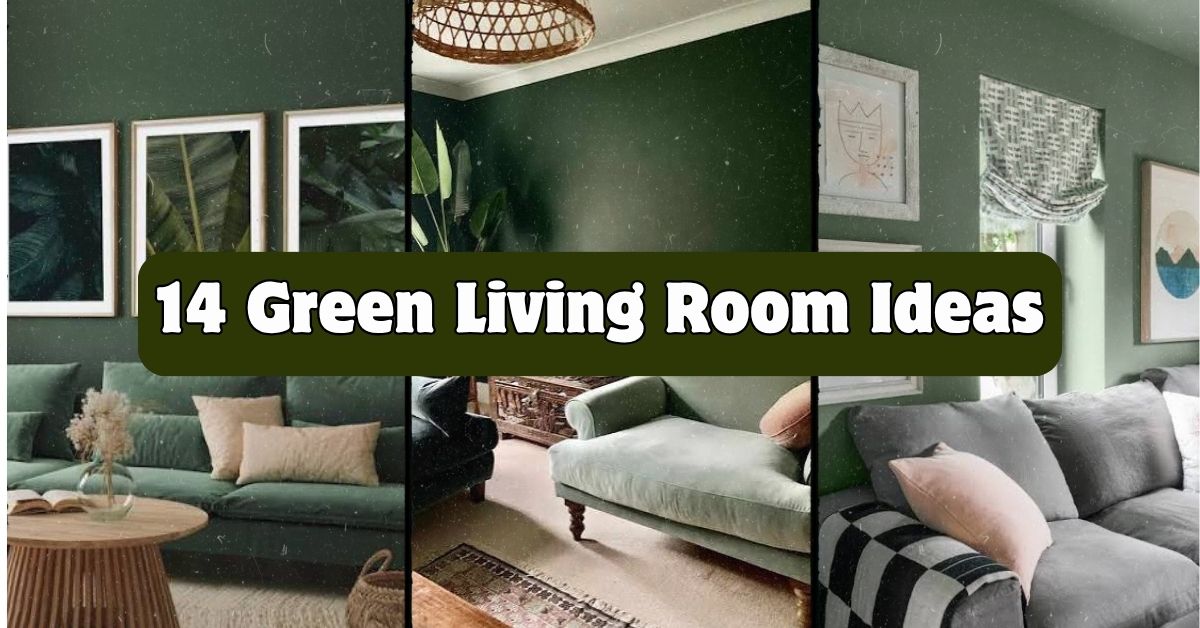
If you’re hunting for 14 green living room ideas that actually work in real homes (not just fancy showrooms), you’ve landed in the right spot. I’ve spent way too many hours scrolling through design sites and testing paint swatches on my own walls, so I know what actually holds up and what’s just a pretty photo.
Green living rooms use shades ranging from soft sage to deep emerald to bring nature indoors, paired with natural materials, warm woods, and layered textures to create a calming, grounded space. The result is a room that feels fresh without feeling cold.
Stick around and I’ll walk you through specific ways to use green in your living room, from paint picks to furniture choices, plus some mistakes I’ve made so you don’t have to repeat them.
What Makes a Green Living Room Work
So here’s the thing about green rooms. Green is basically the easiest color to live with because it’s everywhere in nature already. Your brain doesn’t fight it. It’s not like hot pink or neon orange where you either love it or hate it. Green just feels right.
But there’s a catch. Not all greens play nice together, and picking the wrong shade can make a room feel like a hospital waiting room instead of a cozy retreat. The trick is understanding which greens pair with which materials, and how lighting changes everything. I learned this the hard way after painting a wall a gorgeous forest green that turned muddy brown by 3pm every day. Let’s get into the ideas so you can skip that mistake.
1. Paint One Accent Wall in Deep Forest Green
Forest green on a single wall gives you drama without overwhelming the whole room. This works best on the wall behind your sofa or the one you see first when walking in. Pair it with white trim to keep things crisp.
Keep your furniture neutral, think cream or tan sofas, so the wall stays the star. Add a gold-framed mirror or brass lamp to warm things up.
Practical tip: test the paint at different times of day before committing. Forest green can look black in low light.
This idea adapts well to traditional and modern farmhouse styles, but skip it in coastal spaces where lighter greens feel more natural.
Once your wall is set, you’ll want furniture that doesn’t fight with it, which brings us to the next idea.
2. Choose a Sage Green Sofa as Your Anchor Piece
A sage green sofa is a commitment, but it’s a smart one. Sage sits between gray and green, so it goes with almost any other color you throw at it. It’s the chameleon of the paint world, except it’s fabric this time.
Build your room around it with warm wood side tables and a jute rug. Toss in a few mustard or rust pillows for contrast.
Actionable tip: choose a performance fabric if you have kids or pets. Sage shows stains less than you’d think, but durability still matters.
This piece works in mid-century modern, boho, and even minimalist spaces since sage never feels loud.
Now that your anchor piece is picked, let’s talk about what goes underneath it.
3. Layer a Jute or Sisal Rug for Texture
Green rooms need texture, or they start feeling flat. A jute or sisal rug adds that raw, natural element that makes the green feel intentional instead of random.
These rugs work because they’re neutral in color but rough in texture, which contrasts nicely against smooth green fabrics or painted walls. Go for a rug that’s at least eight inches wider than your sofa on each side for proper scale.
Practical tip: layer a smaller printed rug on top of the jute base if you want more pattern without losing the texture.
This works across nearly every style, though in coastal rooms you might swap jute for a lighter seagrass version.
Texture handled, now let’s bring in something living.
4. Add Real Plants, Not Just Green Decor
I know this sounds obvious, but hear me out. A green room without actual plants feels like it’s missing the point. Real plants tie the whole color scheme together and clean your air while they’re at it.
Go for a mix of heights: a tall fiddle leaf fig in a corner, a trailing pothos on a shelf, and a small snake plant on the coffee table. Use ceramic or woven pots that match your other textures.
Actionable tip: if you kill plants easily (no judgment), start with a snake plant or ZZ plant. They survive almost anything.
This idea fits every single style because plants are universal. Even the most minimalist room needs one.
Speaking of shelves, let’s talk about what else you can put on them.
Green Shade Comparison Table
| Shade Name | Best Used For | Mood It Creates | Pairs Well With |
|---|---|---|---|
| Sage Green | Sofas, accent chairs | Calm, soft | Cream, blush, brass |
| Forest Green | Accent walls, drapes | Dramatic, cozy | White, gold, navy |
| Olive Green | Textiles, pillows | Earthy, warm | Rust, mustard, wood tones |
| Mint Green | Small accents, vases | Fresh, light | White, pale pink, gray |
| Emerald Green | Statement furniture | Bold, luxurious | Black, gold, deep blue |
5. Mix Wood Tones for Warmth
Green and wood are basically best friends. But if you use only one wood tone, the room can feel flat. Mixing a light oak coffee table with a darker walnut bookshelf adds depth without clashing.
The key is keeping the undertones similar, either all warm or all cool, so nothing looks accidental. Warm woods like oak, walnut, and cherry pair beautifully with earthy greens like olive and forest.
Practical tip: bring a paint swatch to the furniture store so you can hold it against wood samples before buying.
This approach works especially well in Scandinavian and mid-century modern living rooms, where wood grain is already a design feature.
Now let’s talk about what hangs above all that wood.
6. Hang Botanical Art or Framed Leaves
Botanical prints reinforce the green theme without adding more paint or fabric. A gallery wall of simple leaf prints in thin black frames looks clean and pulled together.
Choose prints with white backgrounds so they don’t compete with your wall color. If your walls are already green, go with cream-colored mattes instead.
Actionable tip: press real leaves from your yard and frame them yourself for a personal touch that costs almost nothing.
Botanical art fits transitional and traditional homes especially well, giving the space a slightly formal but still natural feel.
Once your walls are dressed, it’s time to think about the little details that tie a room together.
7. Use Brass or Gold Hardware for Contrast
Green needs a metal to bounce off of, and brass does it best. Gold and green have this old-money look together that instantly makes a room feel more expensive than it is.
Swap out lamp bases, curtain rods, and picture frames for brass versions. Even small changes like drawer pulls on a media console add up.
Practical tip: mix matte and shiny brass finishes so it doesn’t look too matchy or showroom-perfect.
This combo shines in art deco and glam living rooms, but it also softens a farmhouse space nicely.
With metal accents in place, let’s talk about the fabric choices that pull everything together.
8. Layer Throw Pillows in Complementary Patterns
A green sofa or green walls need pillows that don’t just match, they need to talk to each other. Mix a solid cream pillow, a small floral print, and a textured knit throw pillow together.
Stick to three colors max in your pillow mix: your green, a neutral, and one accent color like rust or navy. Too many colors and the couch looks cluttered instead of curated.
Actionable tip: buy pillow inserts one size larger than your covers for a fuller, less deflated look.
This layering trick works in every style, from boho to traditional, since pillows are an easy, low-commitment way to test color combos.
Now that your seating area feels cozy, let’s zoom out to the bigger furniture pieces.
9. Choose a Green Accent Chair Instead of a Full Sofa
If a green sofa feels too bold, start smaller with an accent chair. A single emerald or olive velvet chair in the corner gives you all the color impact with way less commitment.
Pair it with a neutral sofa so the chair stands out as a focal point. Velvet fabric especially catches light in a way that makes the green look richer.
Practical tip: place the chair near a window so natural light hits the fabric throughout the day, showing off the color shifts.
This works great in eclectic and transitional rooms where you want one bold piece without overhauling everything.
Chairs are great, but let’s not forget what’s happening on the floor beneath your feet and walls around you.
Budget Tiers for a Green Living Room Makeover
| Budget Level | What You Can Afford | Estimated Cost Range |
|---|---|---|
| Small Budget | Paint accent wall, add plants, swap pillows | $100 to $300 |
| Mid Budget | Add accent chair, new rug, brass hardware | $500 to $1,200 |
| Full Budget | New sofa, custom drapes, art, full furniture refresh | $2,000 to $5,000+ |
10. Add Green Curtains for Softness
Curtains in a soft moss or sage green soften hard light and add color without touching your walls. This is a great option for renters who can’t paint.
Choose a linen or cotton blend so the fabric drapes naturally instead of looking stiff. Hang the rod a few inches above the window frame to make ceilings look taller.
Actionable tip: measure so your curtains just brush the floor, not pool excessively or hover awkwardly above it.
This idea works beautifully in cottage and coastal homes, where soft, flowing fabric feels right at home.
Curtains set the mood for light, and next we’ll talk about the light fixtures themselves.
11. Choose Warm-Toned Lighting Over Cool White Bulbs
Cool white light makes green look sickly, almost gray. Warm-toned bulbs, the kind labeled 2700K to 3000K, make green feel rich and inviting instead.
Swap your overhead bulbs first since that light affects the whole room. Then move to lamps and any accent lighting.
Practical tip: keep a warm bulb on hand and screw it into a lamp before buying a whole box, just to check the color against your specific green.
This tip applies to every single design style because bad lighting ruins any color scheme, no exceptions.
With the lighting sorted, let’s look at one more layer that often gets skipped.
12. Incorporate a Green and White Striped or Checkered Pattern
Patterns keep a green room from feeling like one giant color block. A striped ottoman or checkered throw blanket in green and white adds visual movement.
Use pattern in small doses, one piece is usually enough. Too much stripe or checker competes with your solid green pieces instead of complementing them.
Actionable tip: choose a pattern in a similar green shade to your main color so it reads as a variation, not a mismatch.
This pattern trick fits coastal, cottagecore, and modern farmhouse rooms especially well.
13. Use a Green Gallery Shelf for Books and Decor
Open shelving painted the same green as your walls creates a built-in look without construction. Books, small plants, and ceramic pieces pop against the color instead of disappearing into white shelves.
Keep the items on the shelf varied in height and texture, but limited in color palette so it doesn’t look chaotic. Group items in threes for a more curated feel.
Practical tip: leave some negative space on each shelf. Fully packed shelves look cluttered no matter how nice the items are.
This works great in eclectic and traditional homes where display pieces matter as much as furniture.
14. Bring in a Green Statement Rug as the Star
Instead of green walls or a green sofa, let a bold green patterned rug carry the whole color story. This works especially well if you’re renting and can’t paint or if you already have neutral furniture you love.
Choose a rug with green as the dominant color but with cream, rust, or navy woven through the pattern. Keep your walls and big furniture neutral so the rug gets the spotlight.
Practical tip: vacuum patterned rugs weekly since busy patterns hide dirt longer, which means it builds up before you notice.
This idea works in almost any style since a rug is easy to swap out later if your taste changes.
Tips for Success
- Start with one green element before committing to a whole room, like a pillow or small rug, to see how you feel about living with it daily
- Test paint swatches on at least two different walls since light changes throughout the day and room
- Balance cool greens with warm materials like wood and brass so the room doesn’t feel cold
- Shop secondhand for wood furniture pieces since vintage wood often has richer tones than new furniture
- Keep at least one plant alive in the room at all times, even if it’s fake, to reinforce the nature theme
- Photograph your room before and after changes so you can actually see the progress instead of just feeling it
Common Mistakes and How to Avoid Them
Using too many different greens at once
: Stick to two or three shades max in one room, or the space starts feeling busy instead of intentional.
Ignoring the room’s natural light direction
: North-facing rooms need warmer greens like olive, while south-facing rooms can handle cooler sage tones.
Skipping texture entirely
: Pair smooth painted walls with rough textures like jute, linen, or raw wood so the room doesn’t feel flat.
Choosing trendy shades over ones you actually love
: Pick a green that feels calming to you personally, not just what’s popular this year.
Forgetting to test lighting before buying furniture
: Bring fabric swatches home and view them under your actual lamps before finalizing a sofa or chair purchase.
Overdoing metallic accents
: One or two brass or gold pieces is plenty. More than that and the room starts looking like a jewelry store.
Similar Variations
- Botanical Boho: Mixes green tones with rattan furniture and lots of hanging plants for a jungle-like feel
- Coastal Green: Uses lighter mint and seafoam shades paired with white and natural wood for a beachy vibe
- Dark Academia Green: Combines deep forest green with leather furniture and vintage books for a moody, scholarly look
- Scandinavian Sage: Pairs soft sage walls with light wood and minimal decor for a clean, calm space
- Cottagecore Green: Uses olive and moss tones with floral patterns and vintage furniture for a cozy, homey feel
- Modern Emerald: Uses bold emerald green as a statement color against black and gold accents for a luxe look
Putting together a green living room isn’t about picking one perfect shade and calling it done. It’s about layering the right materials, lighting, and textures so the color feels natural instead of forced. Whether you start small with a few pillows or go all in with a painted wall and new sofa, these 14 green living room ideas give you plenty of ways to bring that calm, grounded feeling into your space.
Leave a Reply