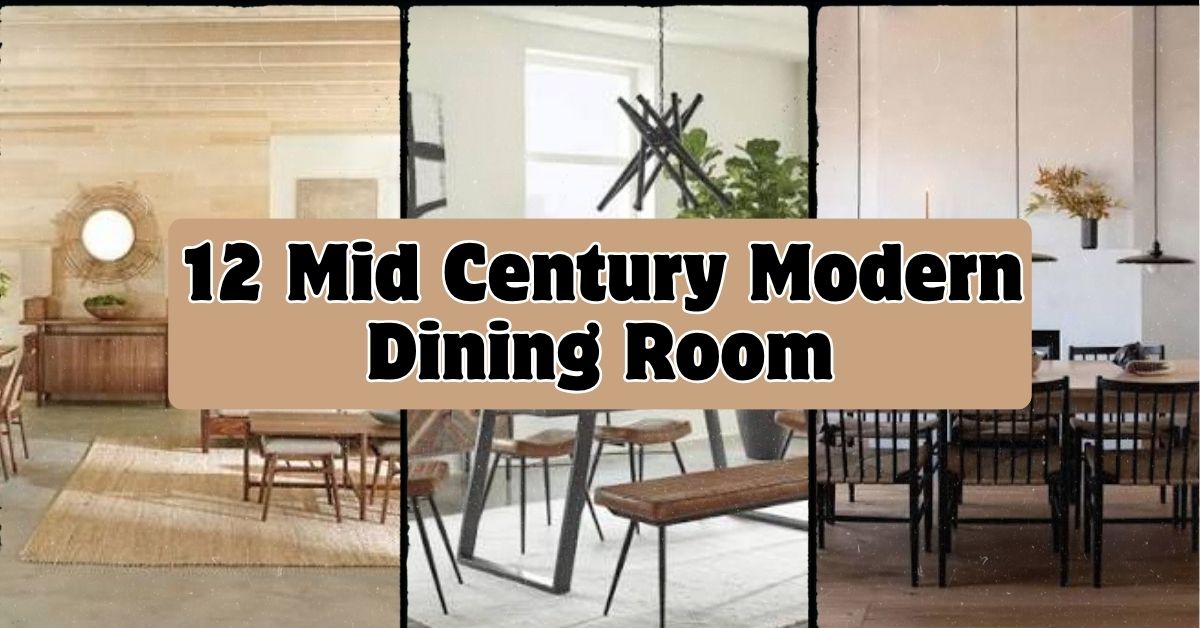
I’ve put together this guide on 12 mid century modern dining room ideas because I know how hard it is to find advice that actually matches your space, not some magazine photoshoot with a budget of a million dollars. Ever stood in your dining room, staring at your grandma’s old table, wondering how to make it feel current without tossing everything out? That’s exactly why I wrote this.
A mid century modern dining room typically features clean-lined wood furniture, tapered legs, warm color palettes, and minimal ornamentation drawn from design trends popular between 1945 and 1969. The style blends function with organic shapes, often using teak, walnut, and simple upholstered chairs.
Stick around, because I’m about to walk you through twelve specific ways to bring this look into your own home, plus a few tables and tips nobody else is talking about.
What Makes a Dining Room Mid Century Modern Anyway?
Okay, so before we jump into the list, let’s talk basics. Mid century modern isn’t just “old furniture that looks cool.” It’s a design movement born after World War II when people wanted homes that felt fresh, simple, and connected to nature. Think tapered wooden legs, warm walnut tones, and shapes inspired by nature like eggs, boomerangs, and clouds. There’s no clutter here. Everything has a job to do. When I think mid century dining rooms, I picture big windows, warm wood tables, and chairs that look like little sculptures. It’s cozy but never fussy. That’s the vibe we’re chasing.
1. Choose a Walnut or Teak Wood Dining Table
Wood is the backbone of any mid century modern dining room. Walnut and teak are the two classic choices because they have rich, warm tones that age beautifully. Look for a table with tapered legs, simple joinery, and clean edges. Avoid heavy carvings or ornate details.
Here’s a quick tip: if you can’t find an authentic vintage piece, look for reproduction tables. They’re often more affordable and just as sturdy.
This idea works great in modern farmhouse spaces too, just pair the wood table with more rustic accents. In coastal homes, a lighter teak keeps things breezy. Once you’ve got your table locked in, the next step is picking chairs that actually match the era’s spirit instead of clashing with it.
2. Mix Upholstered and Wood Chairs for Contrast
Don’t feel like every chair needs to match perfectly. A lot of authentic mid century rooms actually mixed materials. Try pairing two upholstered chairs at the ends of the table with simple wood chairs along the sides. This adds visual interest without looking chaotic.
Stick to earthy upholstery colors like mustard, burnt orange, or olive green. These were staple colors of the era and still look great today.
Practical tip: buy one extra chair in case one gets damaged over the years, matching fabric later can be a nightmare.
This mix-and-match approach adapts easily to eclectic or bohemian homes since those styles already embrace variety. Once your seating is sorted, it’s time to think about what hangs above the table.
3. Hang a Sculptural Pendant Light Fixture
Lighting makes or breaks a mid century dining room. Skip the generic chandelier and go for something sculptural, think globe pendants, starburst fixtures, or drum shades in brass or walnut finishes. These pieces double as art.
Hang your pendant about 30 to 34 inches above the table for the right visual balance. Too high and it feels disconnected, too low and people bump their heads.
This works beautifully across styles. In industrial spaces, swap brass for blackened metal. In traditional homes, a warm wood pendant softens the transition.
Lighting sets the tone for the whole room, but color does a lot of heavy lifting too, so let’s talk palettes next.
Mid Century Color Palette Guide
| Palette Name | Wall Color | Accent Color | Wood Tone | Best For |
|---|---|---|---|---|
| Classic Warm | Cream White | Burnt Orange | Walnut | Traditional homes |
| Retro Bold | Sage Green | Mustard Yellow | Teak | Eclectic spaces |
| Modern Neutral | Warm Gray | Terracotta | Oak | Contemporary homes |
| Coastal Mix | Soft White | Aqua Blue | Light Teak | Coastal or beach houses |
4. Add a Statement Rug With Geometric Patterns
Mid century designers loved bold, simple geometry, think diamonds, circles, and zigzags. A rug with these patterns grounds the room and adds texture underfoot. Look for wool or wool-blend rugs since they were common in the 1950s and 60s.
Practical tip: choose a rug that extends at least 24 inches beyond the table edge so chairs don’t slide off it when pulled out.
In minimalist homes, keep the rug pattern subtle. In maximalist spaces, go bold with color and shape combos. Once your rug anchors the room, you’ll want wall art that echoes those same clean shapes.
5. Choose Abstract or Minimalist Wall Art
Skip busy, detailed paintings. Mid century wall art favored simple abstract shapes, muted color blocks, and sometimes nature-inspired prints like leaves or branches. Framed prints in thin wood or brass frames finish the look.
One easy win: hang art at eye level when seated, not standing. This makes the room feel intentional, not like an afterthought.
This idea flexes well into Scandinavian design too, since both styles love simplicity. Now that your walls have personality, let’s bring some greenery into the mix.
6. Bring in Sculptural Plants Like Fiddle Leaf Figs
Plants were a big part of mid century interiors because they softened all those clean lines. Fiddle leaf figs, snake plants, and monstera all have bold, architectural leaves that fit the aesthetic perfectly.
Place one large plant in a corner rather than several small ones scattered around. It creates a cleaner, more intentional look.
Practical tip: use a ceramic or woven planter, plastic pots break the vintage vibe instantly.
This idea works in almost every style, from boho to modern farmhouse, since plants are basically universal. Speaking of texture, let’s talk about window treatments next.
7. Use Simple, Airy Curtains Instead of Heavy Drapes
Mid century homes loved natural light. Heavy, layered drapes weren’t really a thing. Instead, go for simple linen or cotton curtains in neutral or muted tones. They let light filter through while still adding softness to the room.
If privacy’s a concern, pair sheer curtains with simple wood blinds instead of thick blackout fabric.
This adapts really well to Japandi style homes too, since both aesthetics value light and simplicity. Once your windows are dressed, your buffet or sideboard deserves some attention.
8. Add a Mid Century Sideboard for Storage and Style
A low, long sideboard with tapered legs is basically a signature piece of this style. It’s where you’ll store dishes, table linens, and serving pieces, but it also acts as a display shelf for ceramics or art.
Look for pieces with sliding doors or angled hardware, both very common design details from the era.
Practical tip: keep the top styled with just two or three items, a lamp, a small plant, maybe a ceramic bowl. Overcrowding ruins the clean look.
This piece works beautifully in transitional homes too, bridging older traditional furniture with newer, simpler pieces. Now let’s chat about how table settings themselves can carry the theme.
9. Style the Table With Ceramic and Wood Tableware
Skip the fine china with gold trim. Mid century tables favored simple ceramic dinnerware, wooden serving bowls, and glassware with clean lines. Earthy tones like brown, cream, and orange feel right at home here.
Practical tip: mix textures on the table, a wood charger under a ceramic plate creates depth without looking busy.
This works great for rustic and farmhouse tables too, since both styles appreciate handmade, earthy textures. Once the table’s dressed, let’s talk about how to layer in some brass or metal accents.
10. Add Brass or Warm Metal Accents Throughout
Brass hardware, metal chair legs, and small decor accents in warm gold tones were everywhere during the mid century era. These little touches catch the light and add a subtle shine without feeling flashy.
Try swapping out plain drawer pulls on your sideboard for brass ones. It’s a small, budget-friendly update that makes a real difference.
This detail transitions well into glam or art deco spaces too, since both love a bit of metallic sparkle. Next, let’s think bigger picture with room layout.
Budget Tiers for a Mid Century Dining Room Makeover
| Budget Level | What You Can Afford | Example Items | Estimated Cost |
|---|---|---|---|
| Starter | Small accent updates | Curtains, wall art, plants | $150-$400 |
| Mid Range | Key furniture swaps | Sideboard, dining chairs | $800-$2,000 |
| Full Room | Complete overhaul | Table, chairs, lighting, rug | $3,000-$7,000 |
| Investment | Authentic vintage pieces | Original teak table, vintage lighting | $5,000-$15,000+ |
11. Keep the Layout Open and Uncluttered
Mid century modern design thrives on breathing room. Avoid packing your dining space with too much furniture. A table, chairs, one sideboard, and maybe a bar cart is plenty. Let the furniture pieces stand out instead of competing for attention.
Practical tip: measure your space and leave at least 36 inches of clearance around the table for easy walking room.
This principle applies to nearly every design style, since cluttered rooms rarely feel good no matter the aesthetic. Now let’s finish with one more idea that ties everything together.
12. Add a Gallery Wall of Vintage-Inspired Photography or Prints
Instead of one big art piece, try a small gallery wall with three to five framed prints. Black and white photography, abstract shapes, or botanical prints all work well. Keep the frames simple and in matching wood or metal tones for cohesion.
Practical tip: lay the frames out on the floor first to plan spacing before hammering any nails.
This idea adapts easily to modern and transitional homes alike, since gallery walls are pretty universally loved. With all twelve ideas in place, your dining room should feel warm, functional, and totally in step with the era’s best qualities.
Tips for Success
- Start with the table and chairs first, everything else builds around these two pieces.
- Stick to a limited color palette of three to four tones max to avoid visual chaos.
- Shop secondhand stores and estate sales for authentic vintage finds at lower prices.
- Balance warm wood tones with at least one cool accent color to avoid an overly orange room.
- Use dimmable lighting so your pendant fixture works for both daily meals and dinner parties.
- Don’t be afraid to mix reproduction pieces with real vintage furniture, nobody will notice the difference.
- Measure twice before buying furniture, mid century pieces often have unusual proportions compared to modern furniture.
Common Mistakes and How to Avoid Them
Overcrowding the room with furniture
: Stick to essential pieces only. A table, chairs, and one storage piece is usually enough for most dining rooms.
Choosing chairs that don’t match the table’s formality
: Keep chair style consistent with the table’s overall vibe, casual wood table pairs best with simple wood or lightly upholstered chairs.
Using cool, stark white walls
: Warm up your walls with cream, beige, or soft sage tones instead, stark white can feel too clinical for this style.
Ignoring lighting height
: Hang pendant lights 30 to 34 inches above the table surface for the best visual and functional balance.
Skipping texture variety
: Combine wood, ceramic, woven, and metal materials throughout the room to avoid a flat, one-note look.
Buying fake “mid century style” pieces with plastic details
: Look for real wood, metal hardware, and natural materials whenever possible to keep the look authentic.
Similar Variations
- Scandinavian Modern – Similar clean lines but with lighter woods and an even more minimal color palette.
- Danish Modern – A more specific subset of mid century style, heavily focused on Danish craftsmanship and teak furniture.
- Japandi Dining Style – Blends Japanese minimalism with mid century warmth for a calm, uncluttered look.
- Atomic Age Decor – Leans into bold, playful shapes like starbursts and boomerangs from the 1950s space-age era.
- Modern Organic – Focuses on curved furniture and natural materials, a softer cousin of mid century design.
- Retro Eclectic – Mixes mid century pieces with bold patterns and colors from multiple decades for a more playful space.
Pulling together a great dining space really comes down to picking pieces that feel warm, simple, and a little bit sculptural, then giving them room to breathe. You don’t need to buy everything at once or spend a fortune to get there. Start with one or two ideas from this list, live with them for a while, and build from there.
I hope this guide gave you a clear, honest look at how to bring this classic style into your own home without feeling overwhelmed. Whether you tackle one idea or all twelve, you’re well on your way to building one of the coziest, most timeless versions of a 12 mid century modern dining room your house has ever seen.
Leave a Reply